Acentrogobius caninus (Valenciennes, 1837)
Description
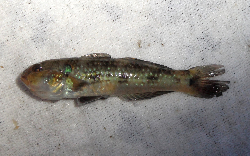
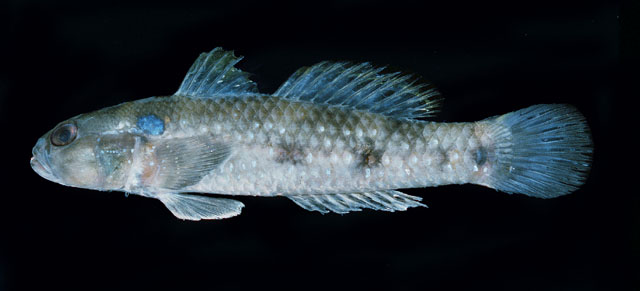
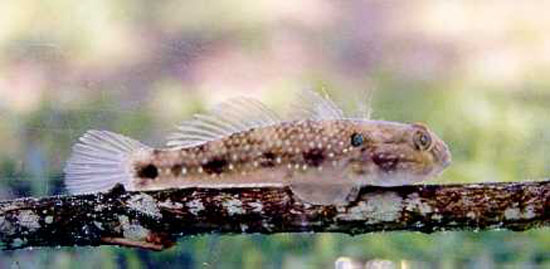
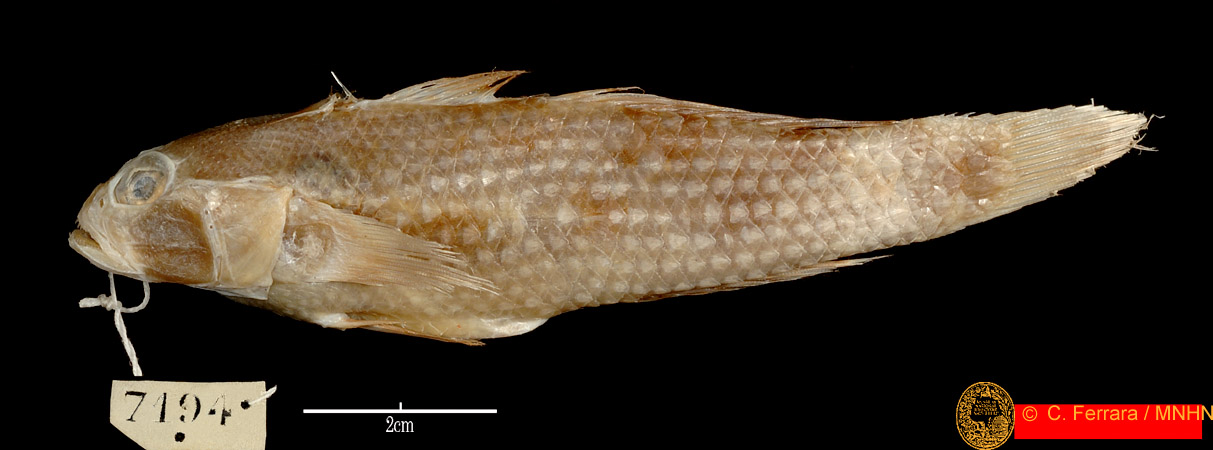
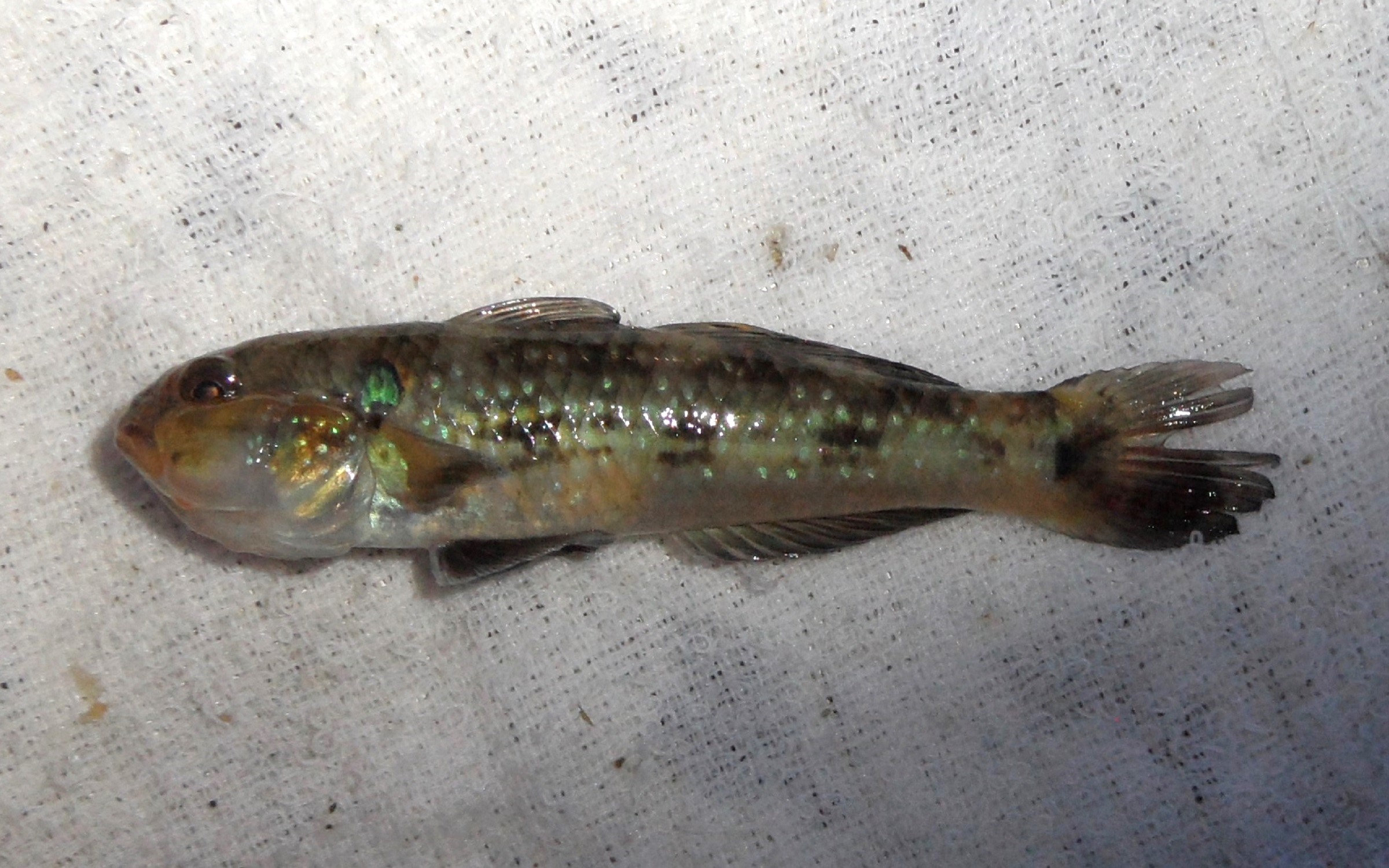
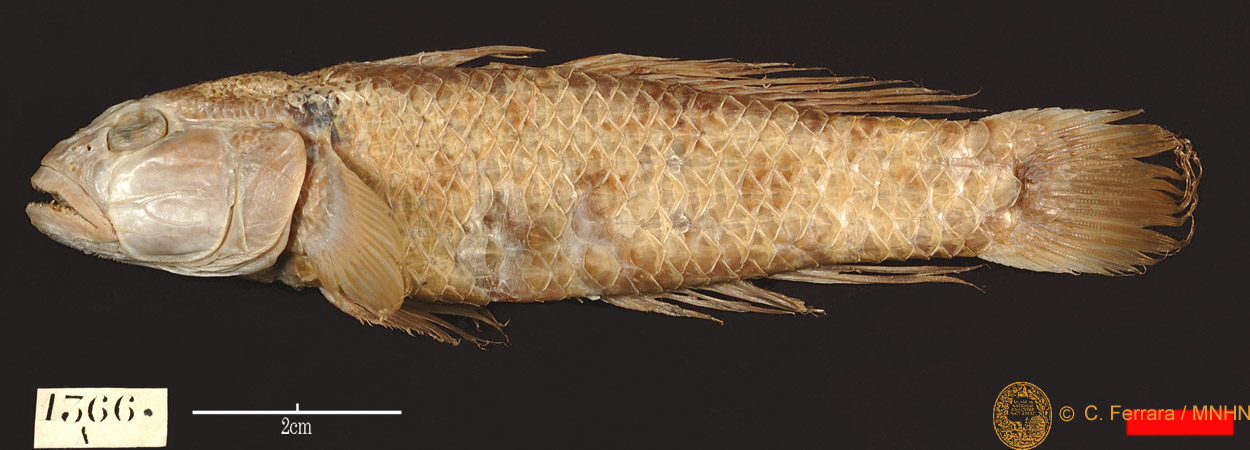
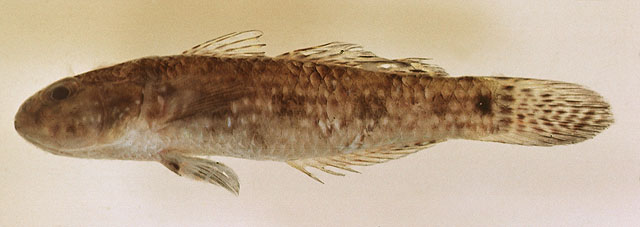
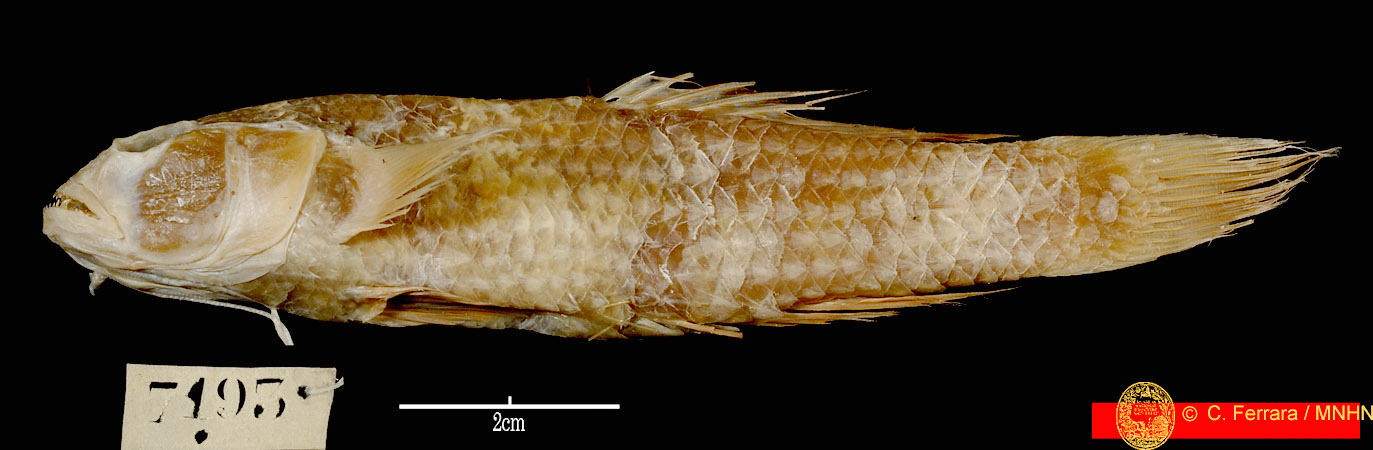
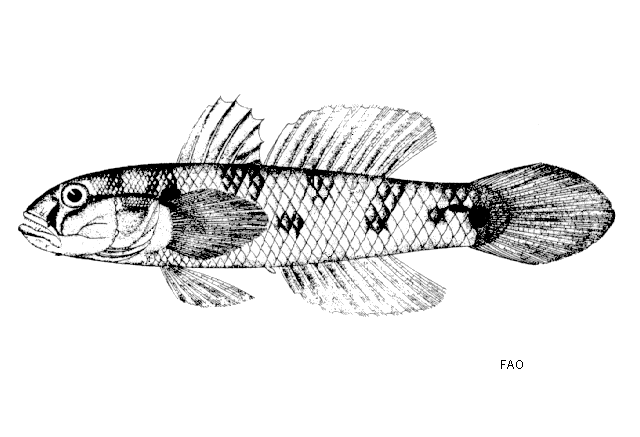
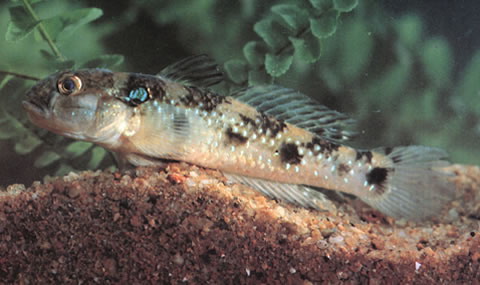
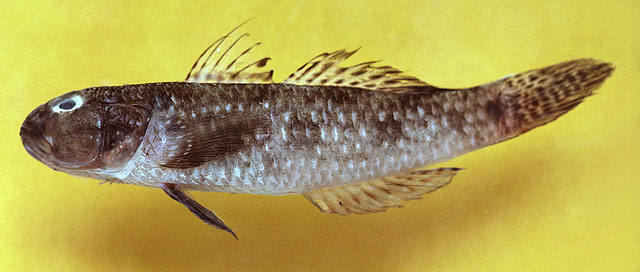
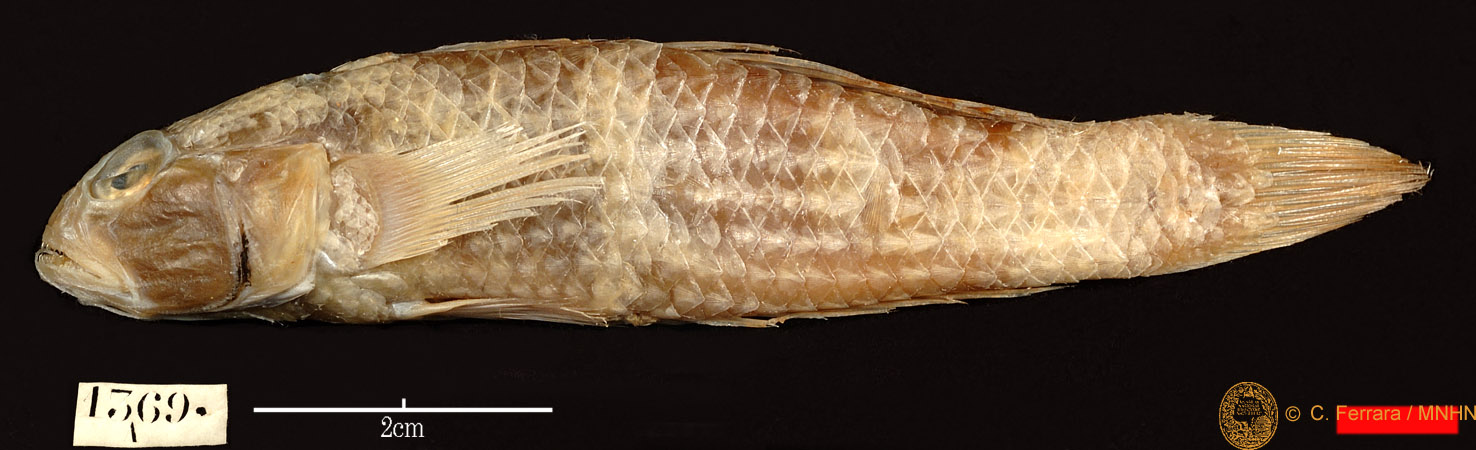
Dorsal spines (total): 6 - 7; Dorsal soft rays (total): 9 - 10; Anal spines: 1; Anal soft rays: 9. Characterized by pale grey body with five diffuse brown saddles along back; midside with 4-5 diffuse brown blotches; head and body with scattered white spots; presence of diagnostic greenish patch behind upper edge of operculum; rounded caudal fin; longitudinal scale series 25-26; scales absent on head except upper half of opercle and predorsal fully scaled; mainly ctenoid body scales; depth of body 5.3 in SL (Ref. 90102).
Common Names
Taxonomic Hierarchy
Kingdom: Animalia
Phylum: Chordata
Class: Teleostei
Order: Gobiiformes
Family: Gobiidae
Genus: Acentrogobius
Species: Acentrogobius caninus (Valenciennes, 1837)
Climate Zone
Location
- Indo-West Pacific. Freshwater records from Madagascar by Pellegrin were based on juveniles of unidentified species (Ref. 4343).
Biology
Occur along coastlines and in estuaries and harbors. Usually found in brackish tidal waters. Feed on invertebrates. Found to contain tetrodotoxin (TTX) and anhydrotetrodotoxin (anh-TTX) which causes paralytic food poisoning (Ref. 54777). Marketed fresh in Mekong delta (Ref. 12693).
Habitat
freshwater
Conservation Status
Least Concern
Threat to Humans
Poisonous to eat
Acentrogobius caninus (Valenciennes, 1837)