Forbesichthys agassizii (Putnam, 1872)

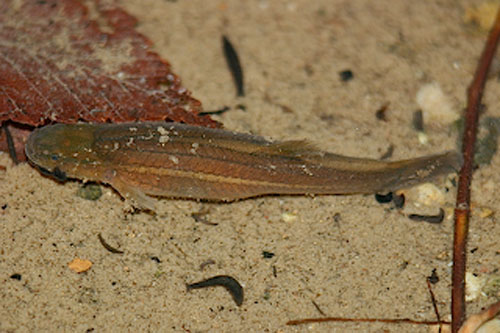
Description
Dorsal soft rays (total): 9 - 11; Anal soft rays: 9 - 11; Vertebrae: 33 - 35. Scales minute and embedded. Pelvic fins absent. Branched caudal fin rays 11-17; branchiostegal rays 6. Triads of sensory papillae occur midlaterally and scattered clusters of neuromasts are present on the head. Coloration uniform dark gray to back with paler venter.
Common Names
Taxonomic Hierarchy
Kingdom: Animalia
Phylum: Chordata
Class: Teleostei
Order: Percopsiformes
Family: Amblyopsidae
Genus: Forbesichthys
Species: Forbesichthys agassizii (Putnam, 1872)
Climate Zone
Biology
Adults occur in springs and caves (but almost always near surface). They live underground but emerge above ground in springs (Ref. 5723). Active in springs at night and usually retreat underground during the day. The few individuals which venture into the spring portions of their habitat may show strong rheotaxis for half to one-minute periods but usually show strong thigmotaxis and hide under rocks or debris (Ref. 34868). Feed at night on amphipods, midge larvae, tiny worms and micro-crustaceans. Fecundity averages about 100 eggs per female (Ref. 10294). Eggs are carried in gill chambers of females (Ref. 205).
Habitat
demersal
Conservation Status
Least Concern
Threat to Humans
Harmless
Forbesichthys agassizii (Putnam, 1872)