Euthynnus lineatus Kishinouye, 1920

Description
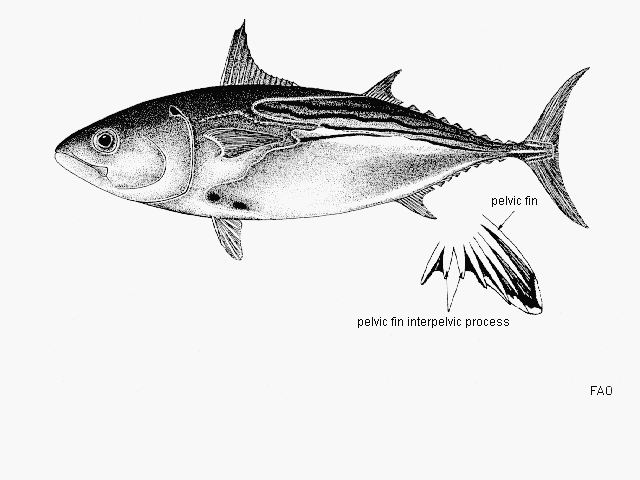
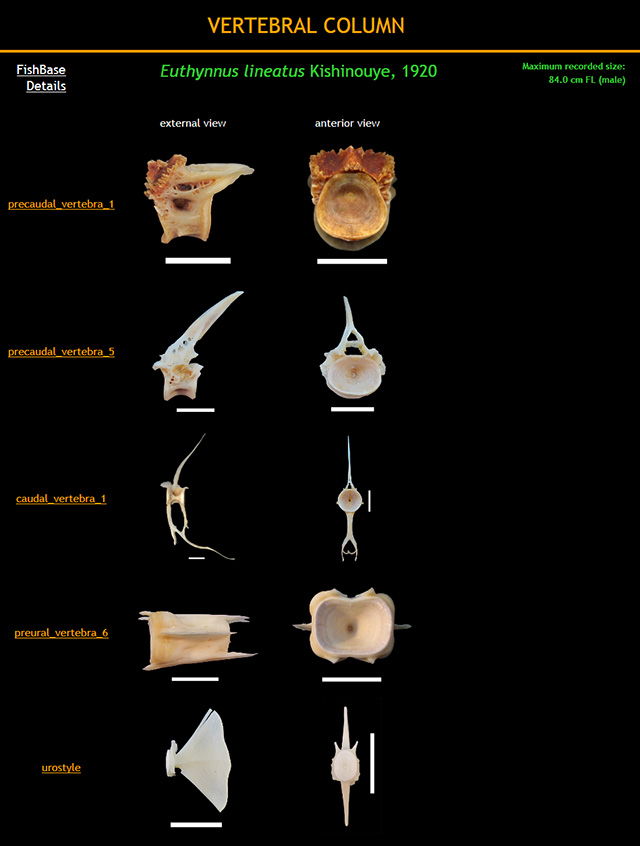
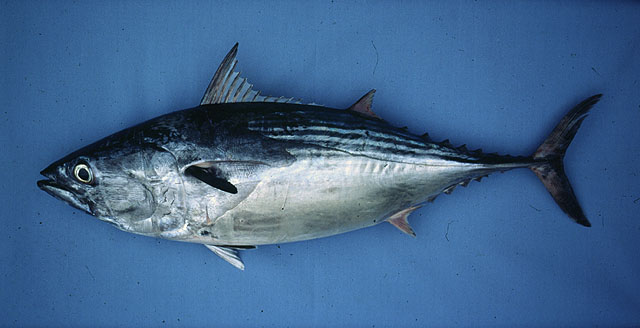
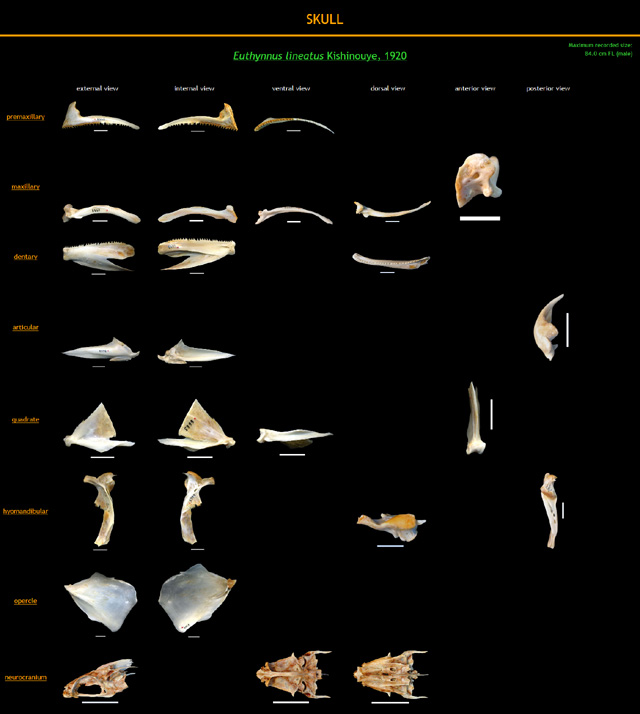
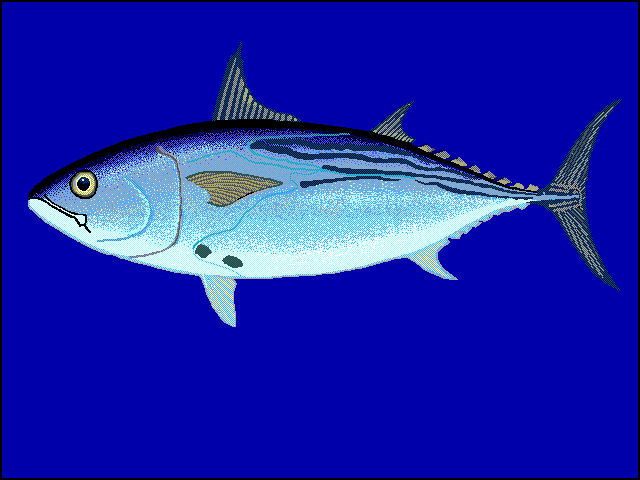
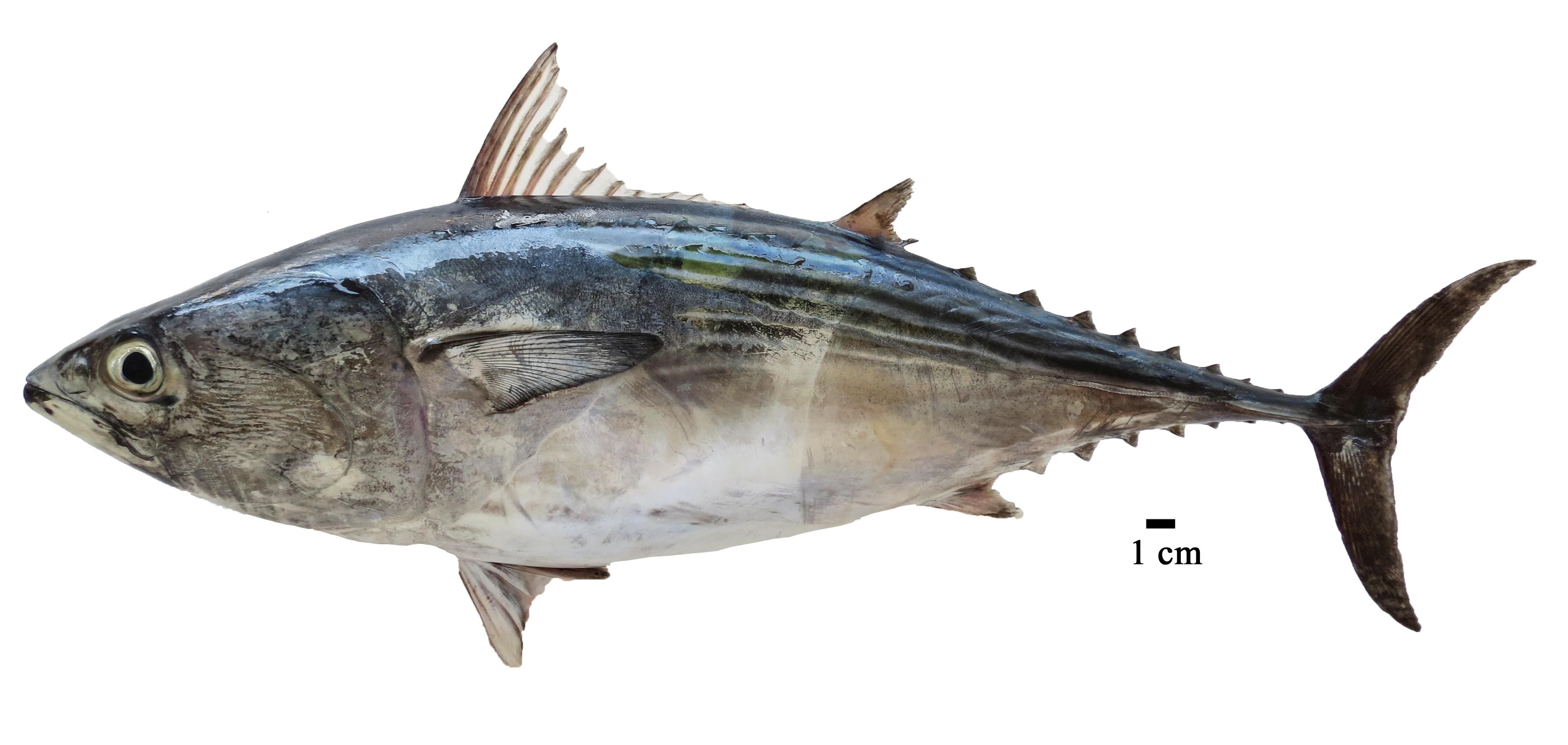
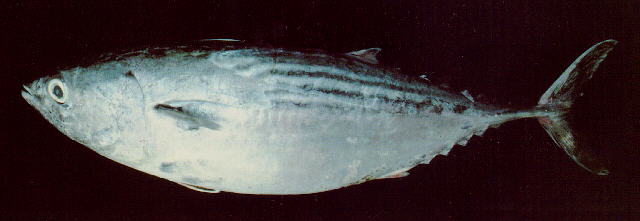
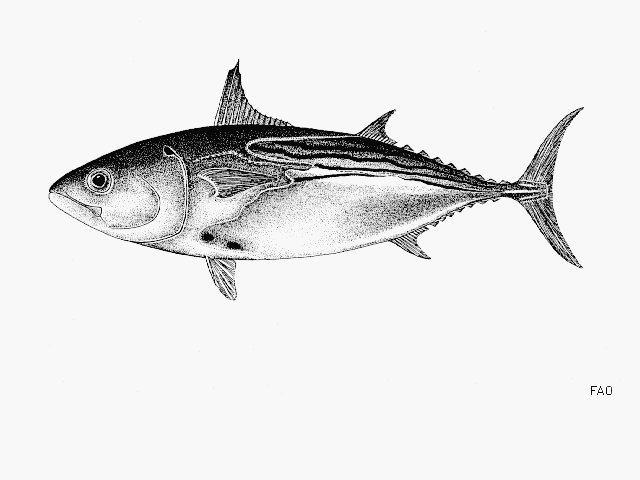
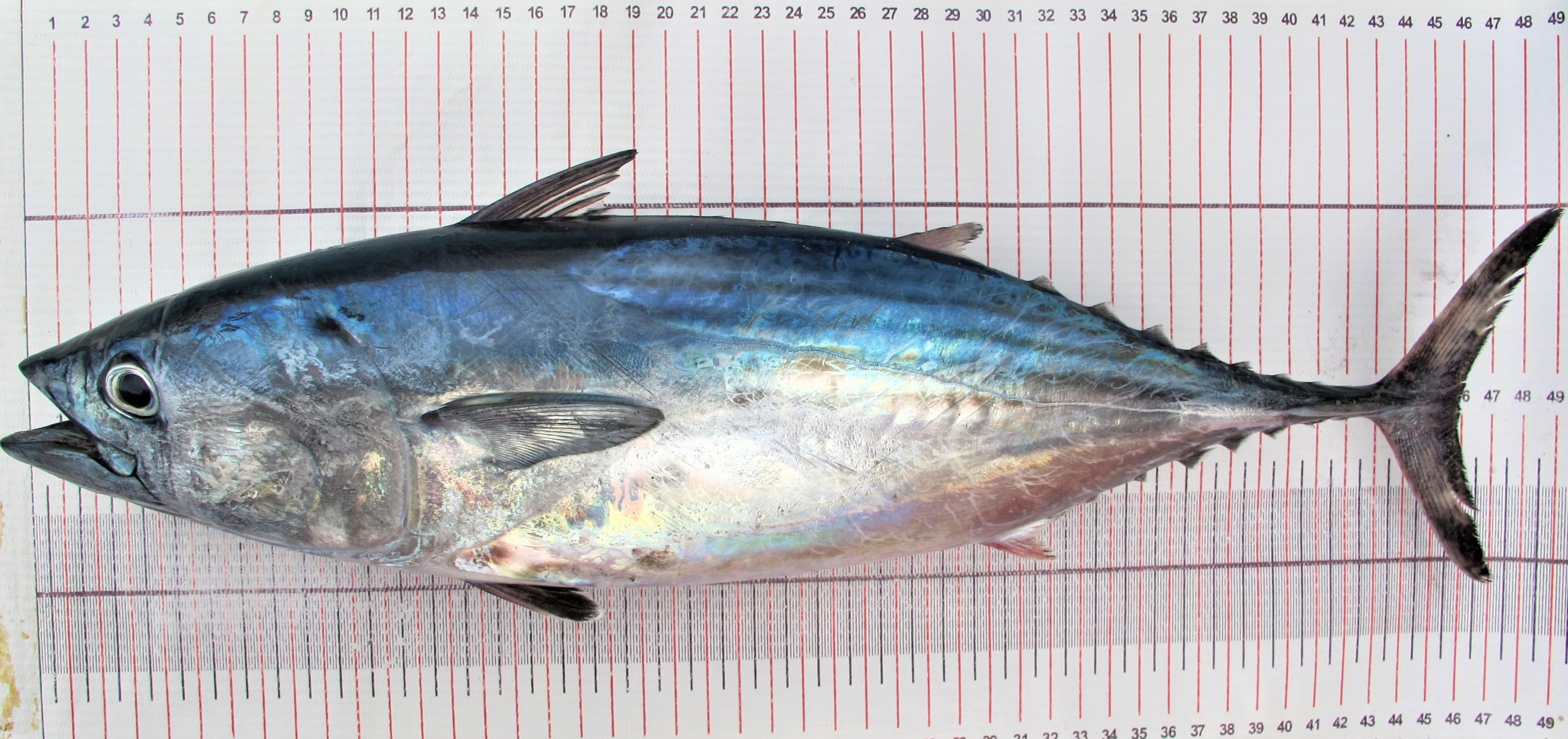
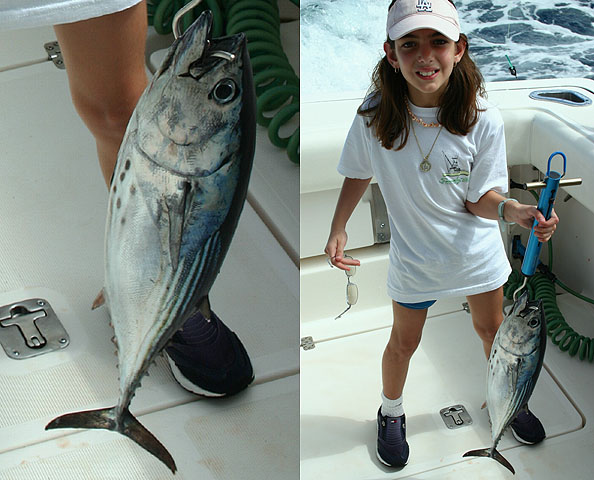
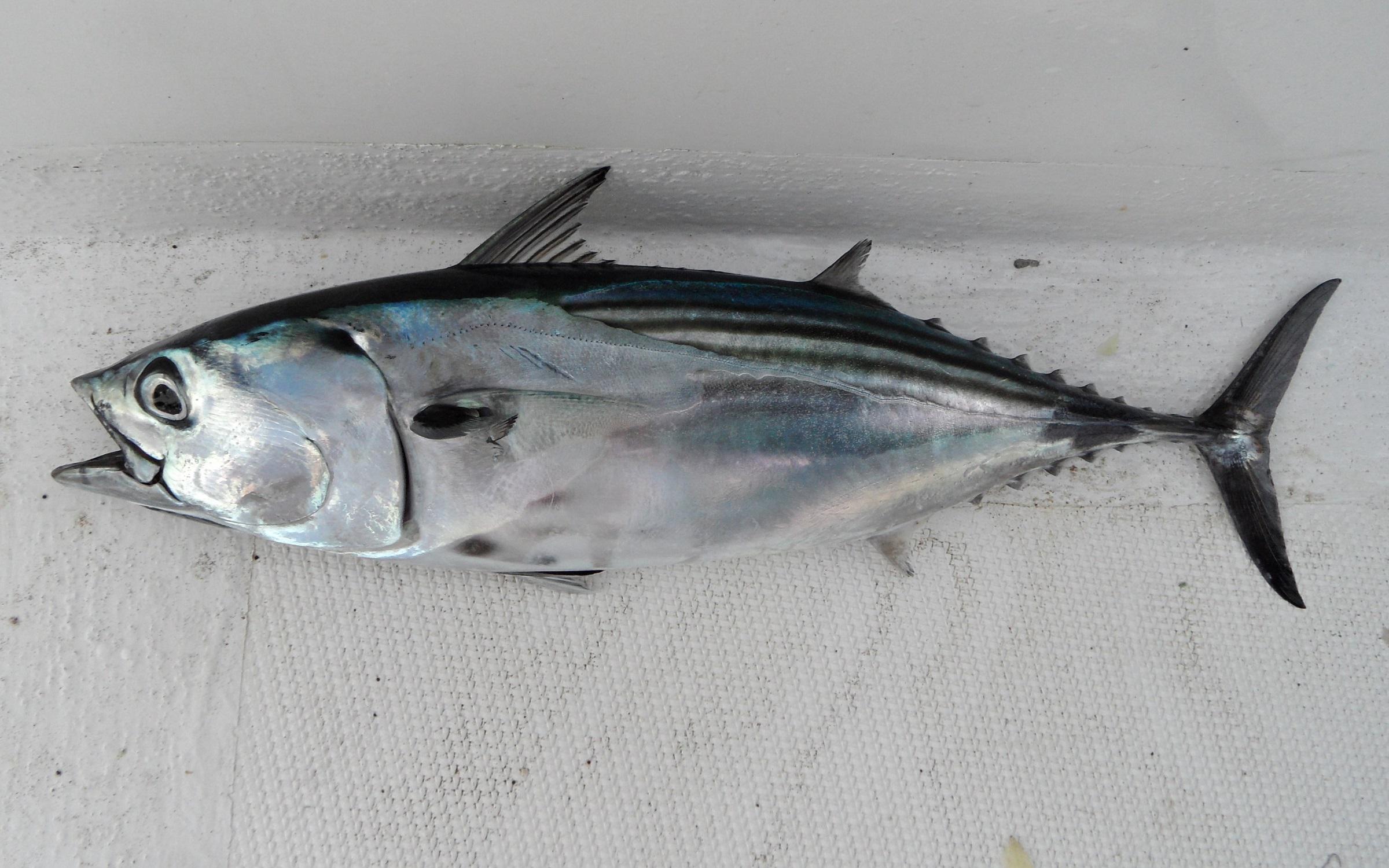
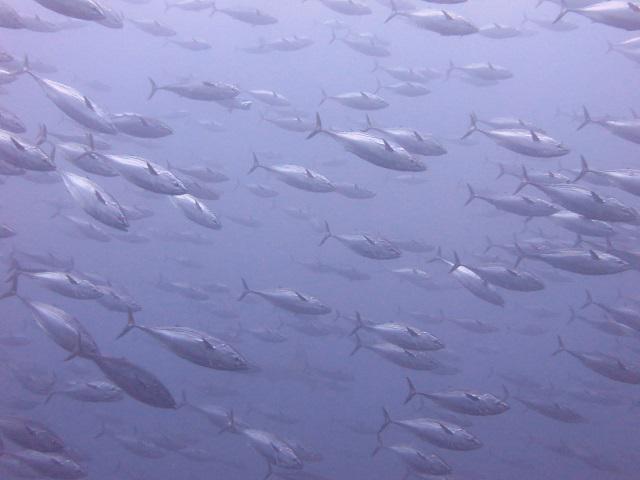
Dorsal spines (total): 10 - 15; Anal soft rays: 11 - 12; Vertebrae: 37. Anterior spines of first dorsal fin much higher than those mid-way, giving the fin a strongly concave outline. Interpelvic process small and bifid. Body naked except for corselet and lateral line. Swim bladder absent. A large rounded protuberances on 31st and 32nd vertebrae. Color is generally iridescent blue with black dorsal markings composed of 3 to 5 horizontal stripes. Also with variable black or dark gray spots above the pelvic fins. Occasionally with extensive longitudinal stripes of light gray on belly; some individuals have few or no belly markings.
Common Names
Taxonomic Hierarchy
Kingdom: Animalia
Phylum: Chordata
Class: Teleostei
Order: Scombriformes
Family: Scombridae
Genus: Euthynnus
Species: Euthynnus lineatus Kishinouye, 1920
Climate Zone
Location
- Eastern Pacific: off San Simeon, California, USA southward to the Galapagos Islands and northern Peru. Two stray specimens collected in the Hawaiian Islands.
Biology
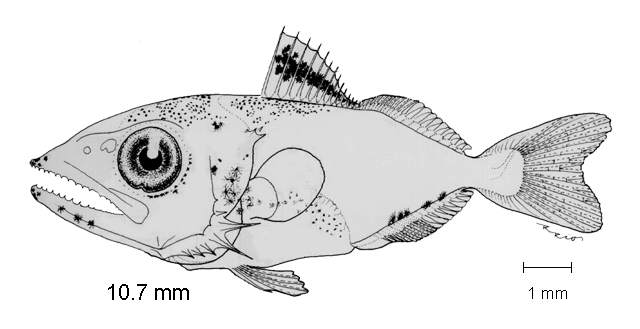
Occurs rarely where surface temperatures fall below 23°C. Its larvae are more frequently encountered at temperatures above 26°C and are practically confined to waters within about 240 miles off the mainland. Inhabits near the surface of coastal waters and offshore waters (Ref. 11035). Form multi-species schools with Thunnus albacares and Katsuwonus pelamis. An opportunistic predator which shares feeding pattern with other tunas and probably compete for food with other species such as yellowfin tuna, common dolphin, oriental bonito, among others.
Habitat
oceanic
Conservation Status
Least Concern
Threat to Humans
Harmless
Euthynnus lineatus Kishinouye, 1920