Euthynnus alletteratus (Rafinesque, 1810)
Description


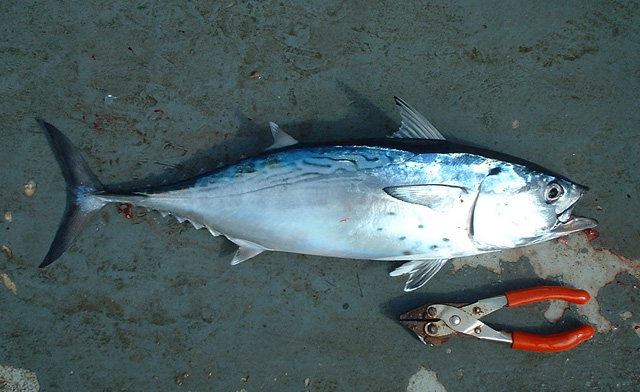
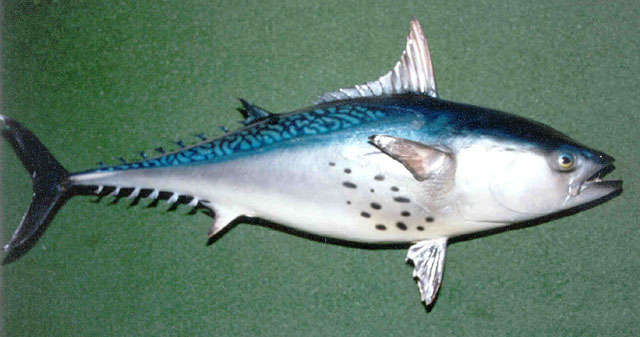
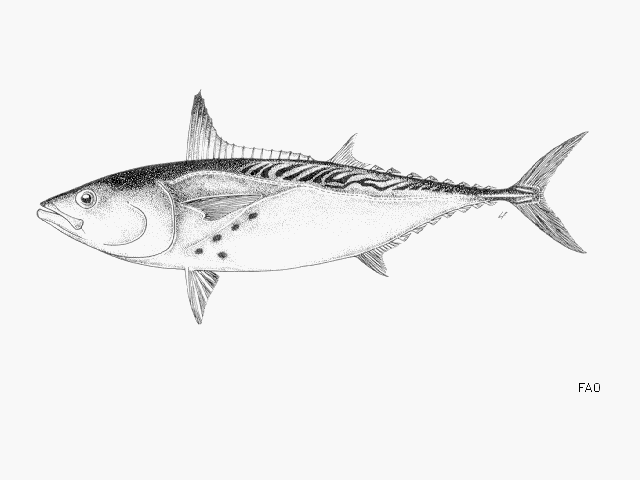
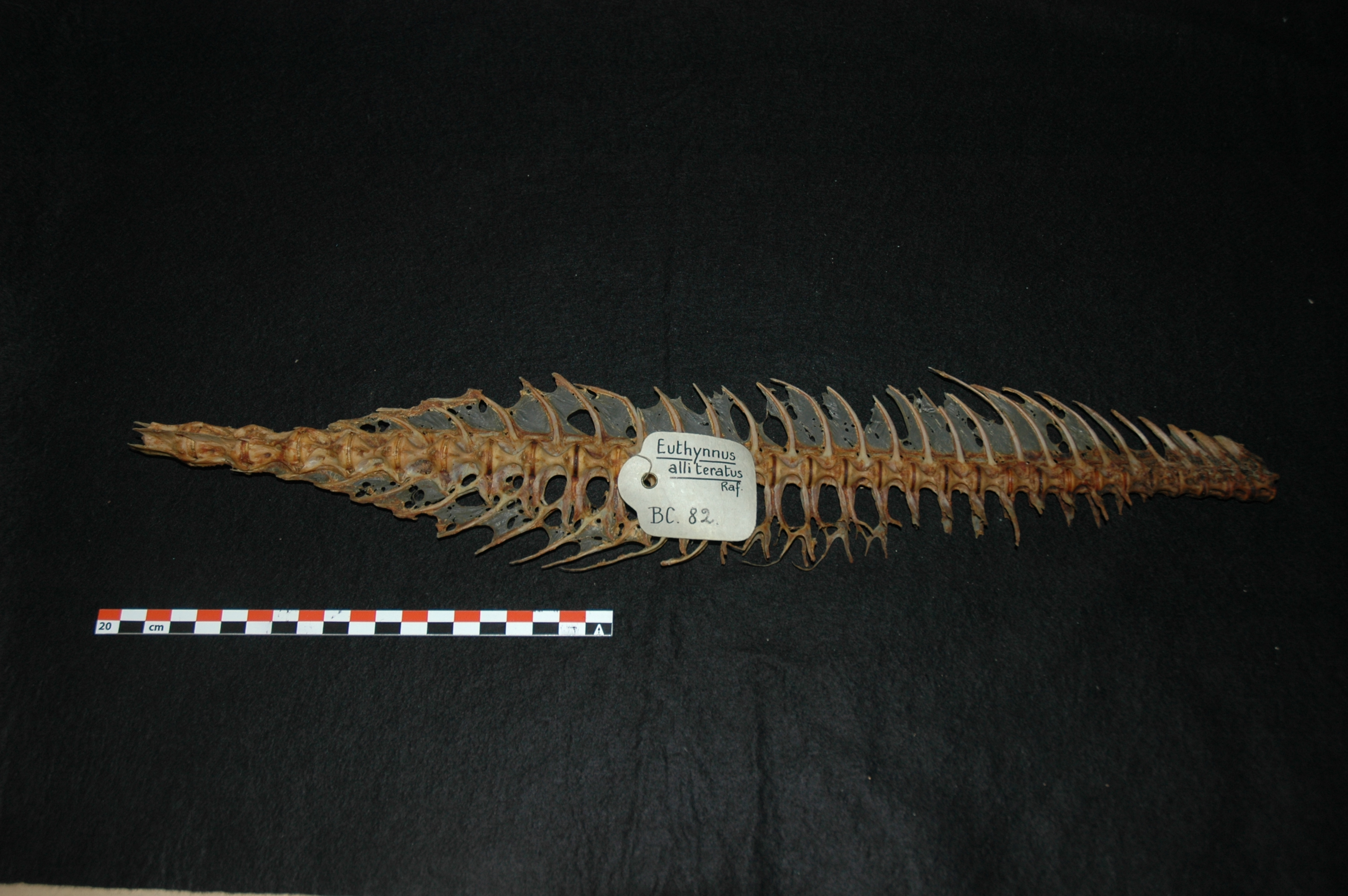
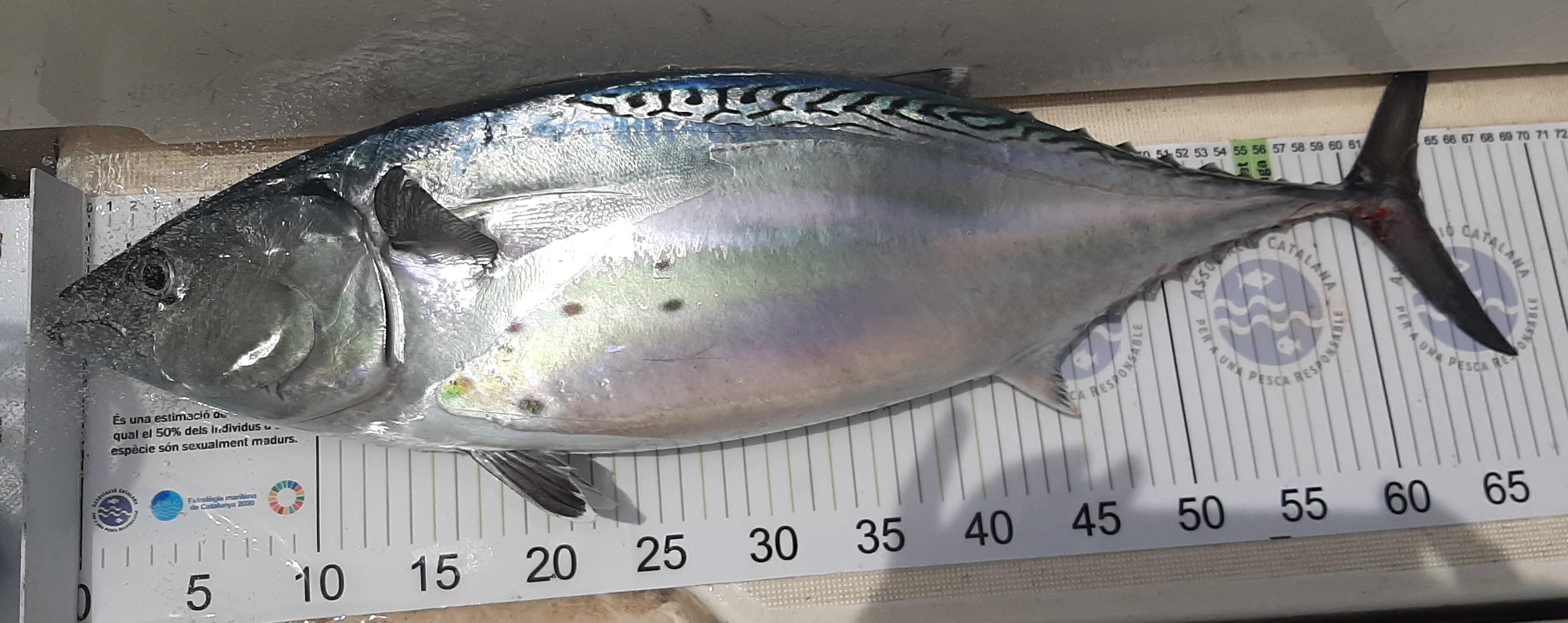
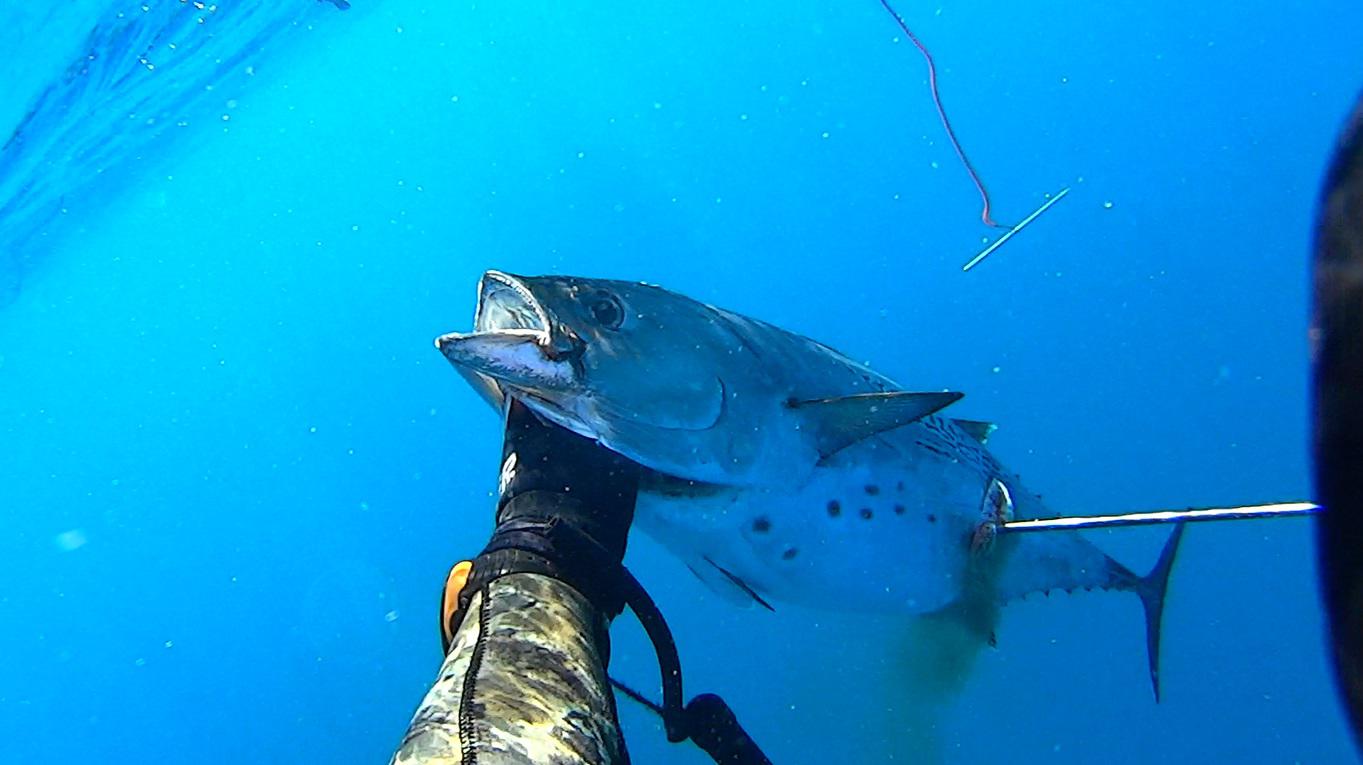
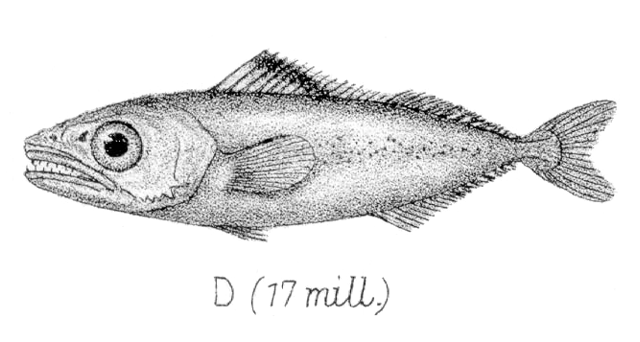
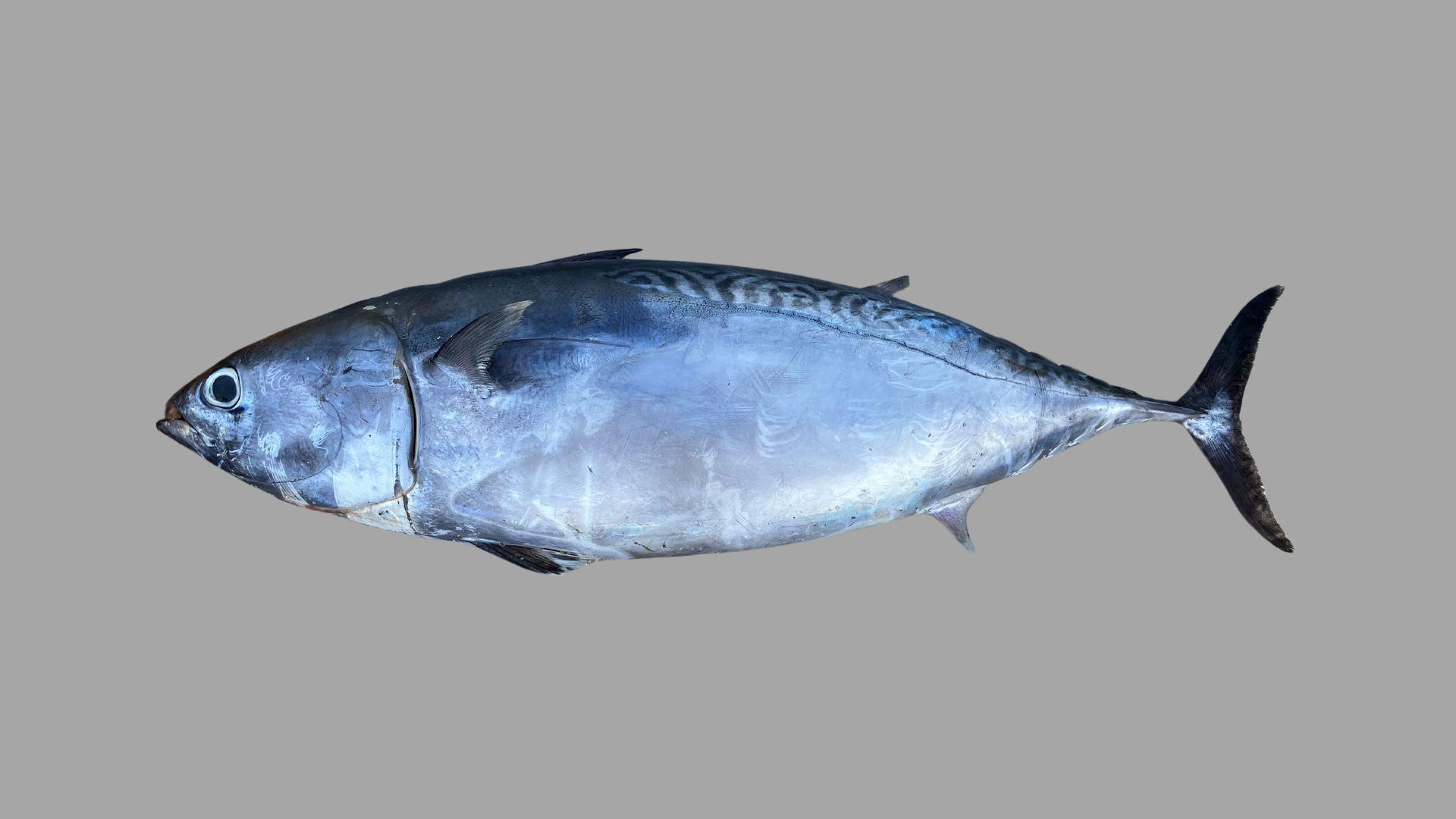
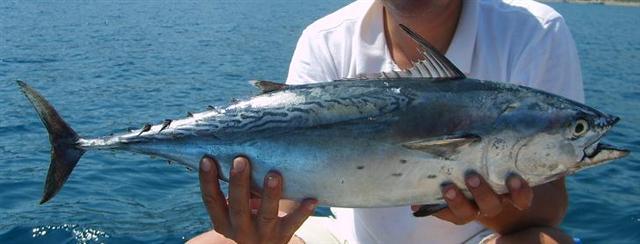
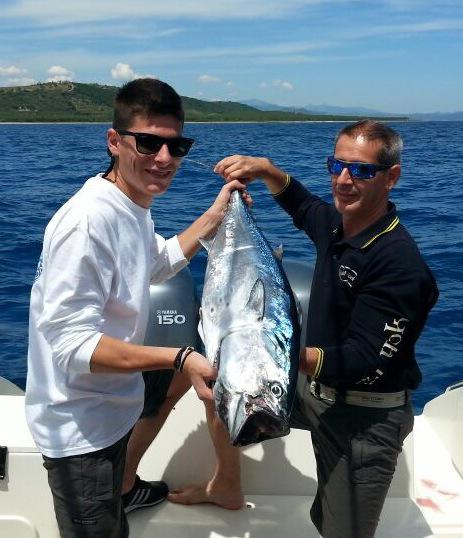
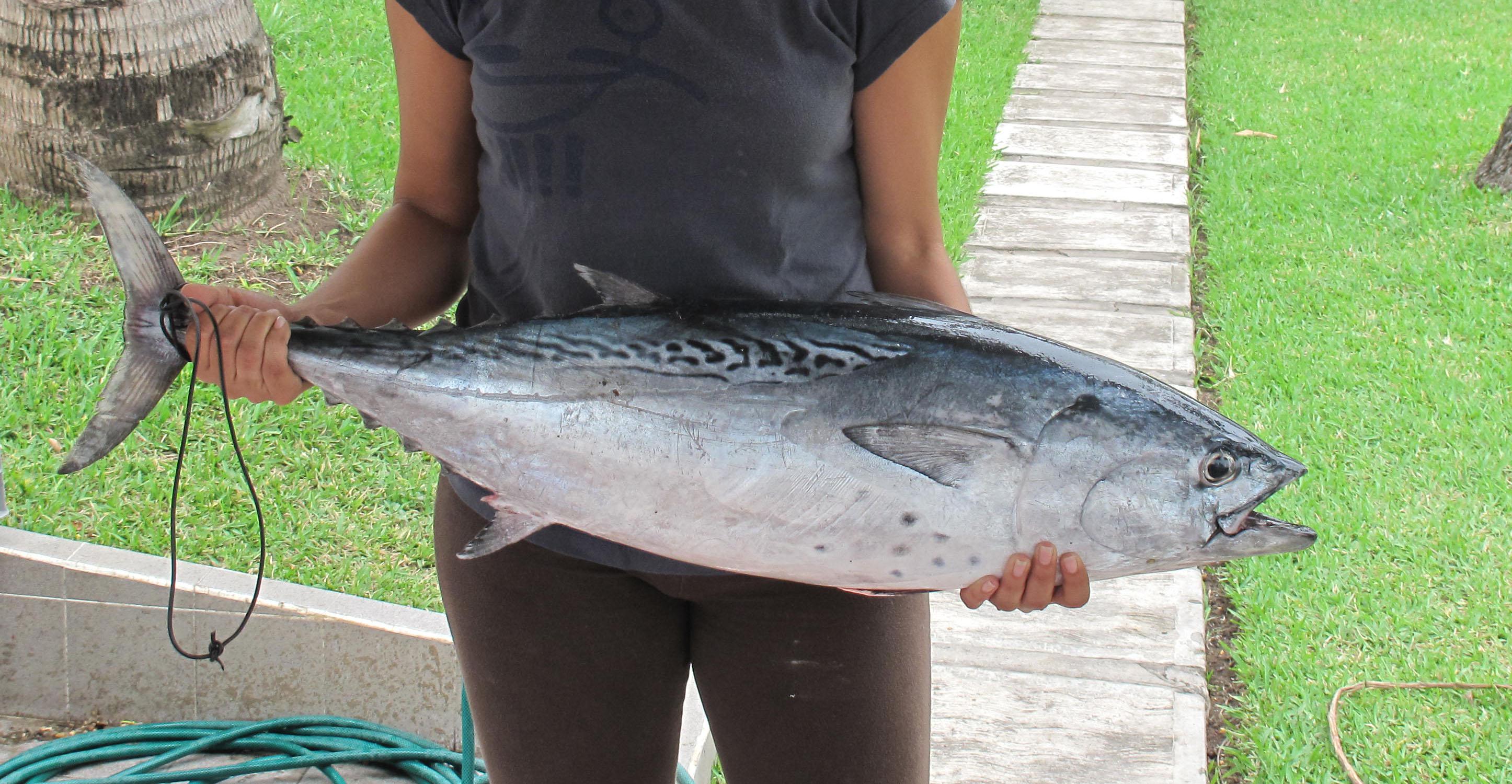
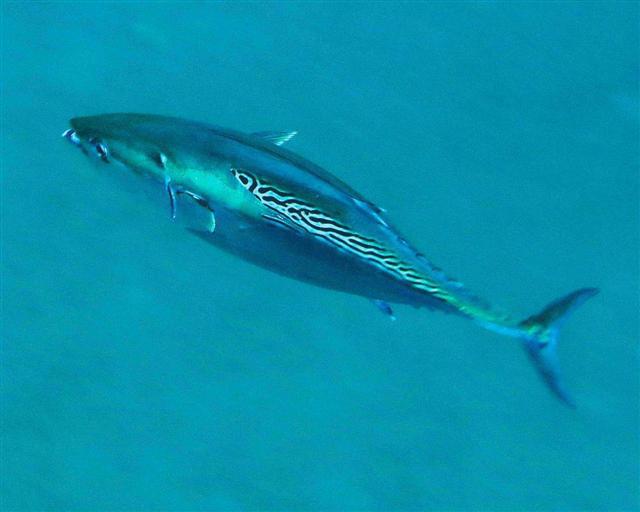
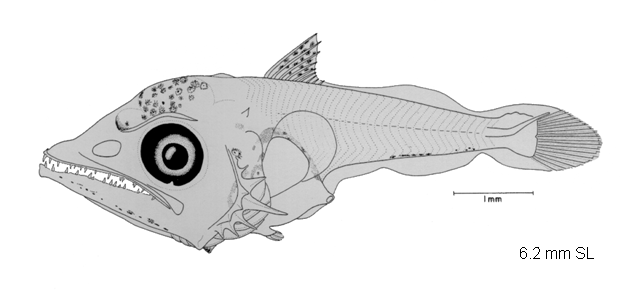
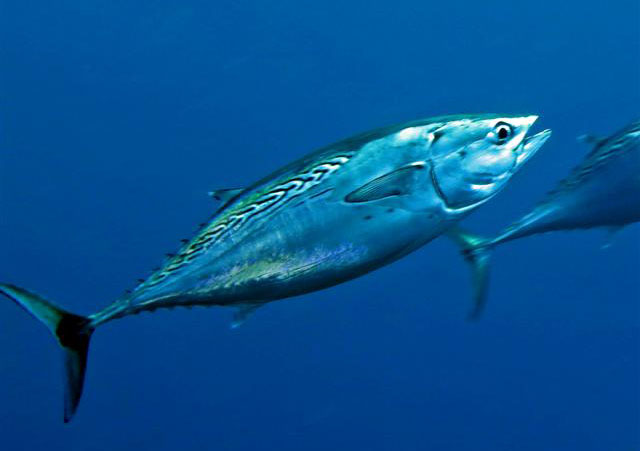
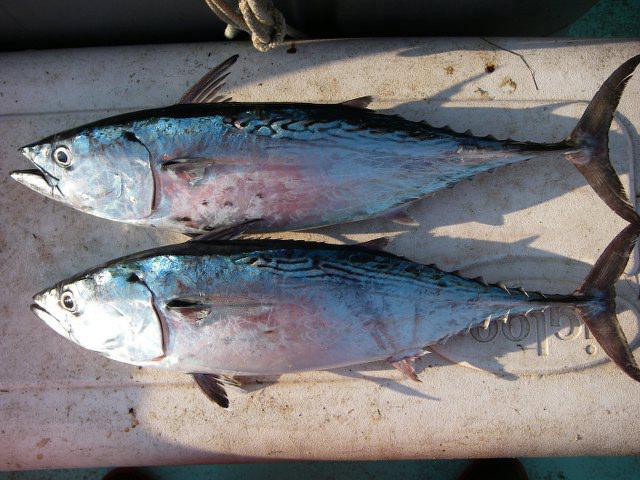
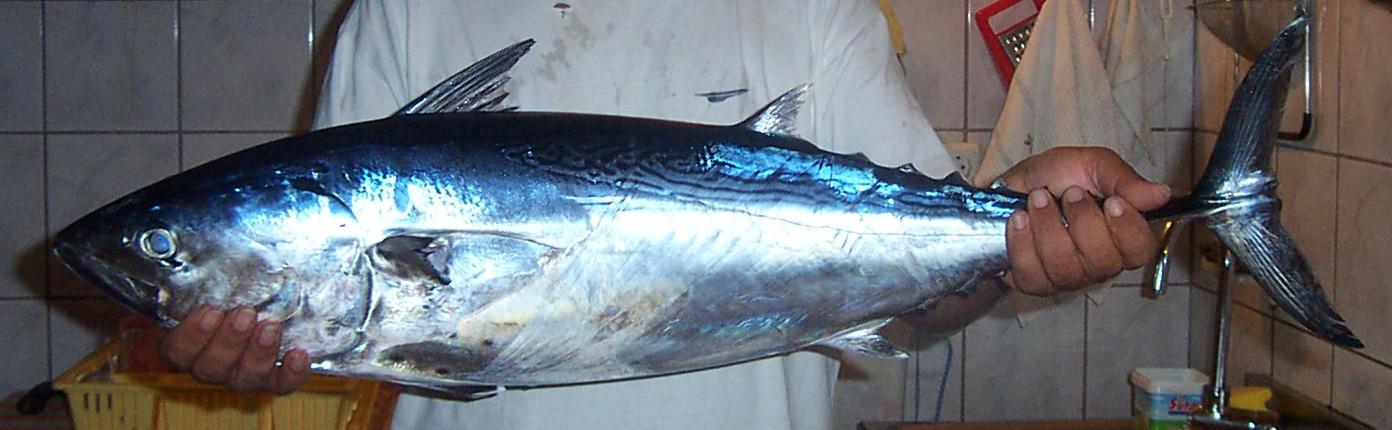
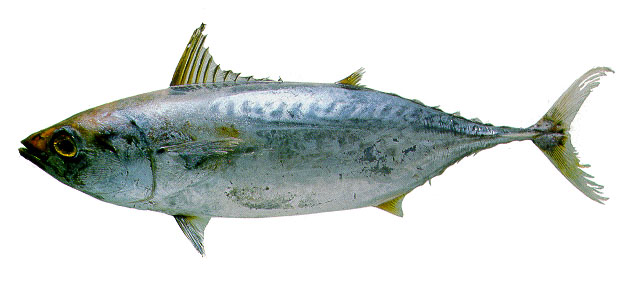
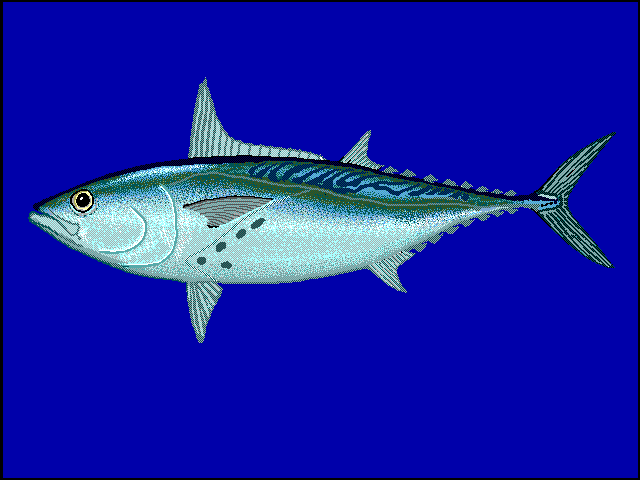
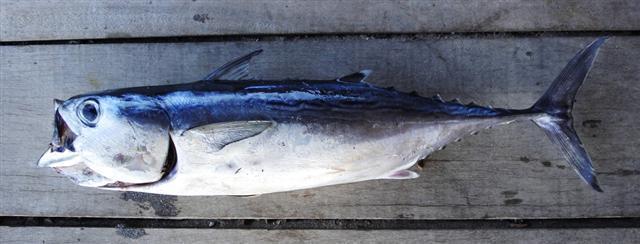
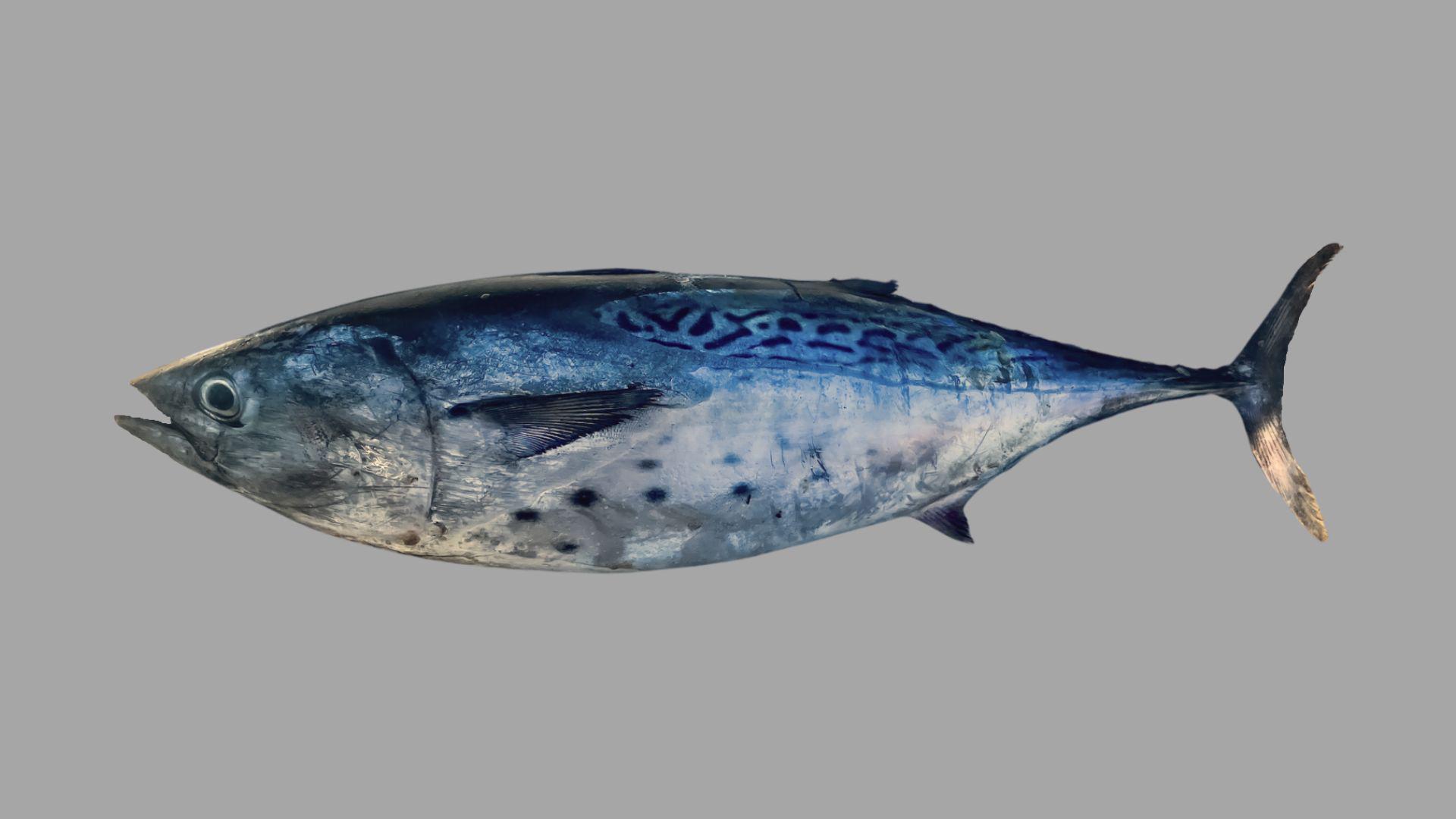
Dorsal spines (total): 15 - 16; Dorsal soft rays (total): 11 - 13; Anal spines: 0; Anal soft rays: 11 - 15; Vertebrae: 39. Anterior spines of first dorsal fin much higher than the those mid-way, giving the fin a strongly concave outline. Interpelvic process small and bifid. Body naked except for corselet and lateral line. Swim bladder absent. Incipient protuberances on 33rd and 34th vertebrae. Back with broken oblique stripes (Ref. 168). Caudal peduncle with 7-8 finlets. Dark stripes on the back and with 3-7 dark spots between pelvic and pectoral fins (Ref. 35388).

Common Names


  • Atlantiese kleintuna
  • Bokou-bokou
  • Toni i vogël
  • Trup
  • Albaguore
  • Bacorère
  • Balamida Aarida
  • Balamydah
  • Balmida arida
  • Lbakoura
  • R'zem
  • Thonine
  • Toun sghir
  • Tunna
  • تونة صغيرة شائعة أو تونين شائعة
  • Labeidna
  • Bacoreta
  • Tonettu
  • Gueule molle
  • Cachorra
  • Cachorreta
  • Cachorrinha
  • Fulu fulu
  • Judeu
  • Merma
  • Lic
  • Luc
  • Mulac
  • Rudan
  • Trup crnopjeg
  • Tumburel
  • Zlatoperac
  • Almindelig Thunnin
  • Thunnin
  • Atlantic black skipjack
  • Atlantic black skipjack
  • Atlantic little tuna
  • Atlantic little tuna
  • Atlantic little tunny
  • Bonito
  • Bonito
  • False albacore
  • False albacore
  • Little tuna
  • Little tuna
  • Little tuna
  • Little tuna
  • Little tuna
  • Little tuna
  • Little Tunny
  • Little tunny
  • Little tunny
  • Little tunny
  • Little tunny
  • Little tunny
  • Little tunny
  • Little tunny
  • Atlandi väiketuun
  • Kpoku
  • Tunniina
  • Bonite
  • Bonite queue raide
  • Ravil
  • Thonine
  • Thonine
  • Thonine
  • Thonine
  • Thonine
  • Thonine commune
  • Thonine commune
  • Thonine commune
  • Tunina
  • Falscher Bonito
  • Kleiner Thun
  • Thonine
  • Karvouni
  • Καρβούνα
  • Καρβούνι
  • Λεκατίκι
  • Τάσκα
  • Τονίνα
  • Τοννάκι
  • Τουνίνα
  • Tunnit atlantit
  • Alacurza
  • Aleterato
  • Alletterato
  • Allittirato
  • Allittiratu
  • Carcana
  • Cuvarito
  • Cuvaritu
  • Leterato
  • Letterato
  • Lettirado
  • Litterato
  • Littiratu
  • Nzirru
  • Palametidd
  • Pizziteddu
  • Sanguinaccio
  • Scampírru
  • Tonnella
  • Tonnetto
  • Tonnetto alletterato
  • Tonnina
  • Tunna
  • Tunnina
  • Taiseiyou-yaito
  • Taiwan yaito
  • Klewe
  • Kubrit
  • Kubrita
  • Tonina
  • 小鮪
  • 小鮪
  • 小鲔
  • Tunnin
  • Poponkou
  • Corrinelo
  • El'la
  • Tunek atlantycki
  • Apluro
  • Atum
  • Atún
  • Bacoreta
  • Barrilete
  • Bonito
  • Bonito-pintado
  • Fule-fule
  • Melena
  • Melva
  • Melva
  • Merma
  • Merma
  • Merma
  • Albacora
  • Bonito-cachorro
  • Bonito-rajado
  • Merma
  • Curuatá-pinima
  • Ton mic
  • Atlanticheskyj malyj tunets
  • Pyatnistyi tunets
  • Tsyatnystyj atlanticheskyj tunets
  • Тунец малый атлантический
  • Karvoúni
  • Luc
  • Luc
  • Pegasti tun
  • Atuncito
  • Atunes
  • Bacoreta
  • Bacoreta
  • Bacoreta
  • Bacoreta
  • Bacorète
  • Bonito
  • Bonito
  • Bonito
  • Bonito
  • Bonito
  • Bonito
  • Bonito
  • Cabaña pintada
  • Carachana
  • Carachana pintada
  • Comevíveres
  • Vaca
  • Tunnina
  • Yaziliorkinos
  • Yazılı orkinoz
  • Yiaziliorkinos
  • Malyi zapadnyi tunets
  • Боніто
  • Тунець малий
  • Тунець плямистий
  • Tiwna bach
  • Deleu deleu
  • Kiri kiri
  • Oualass
  • Ouolass
  • Walas
  • Taxonomic Hierarchy


    Kingdom: Animalia

    Phylum: Chordata

    Class: Teleostei

    Order: Scombriformes

    Family: Scombridae

    Genus: Euthynnus

    Species: Euthynnus alletteratus (Rafinesque, 1810)
    Climate Zone


  • Tropical
  • Location


    • Atlantic Ocean: in tropical and subtropical waters, including the Mediterranean, Black Sea, Caribbean Sea and Gulf of Mexico. Highly migratory species

    Biology


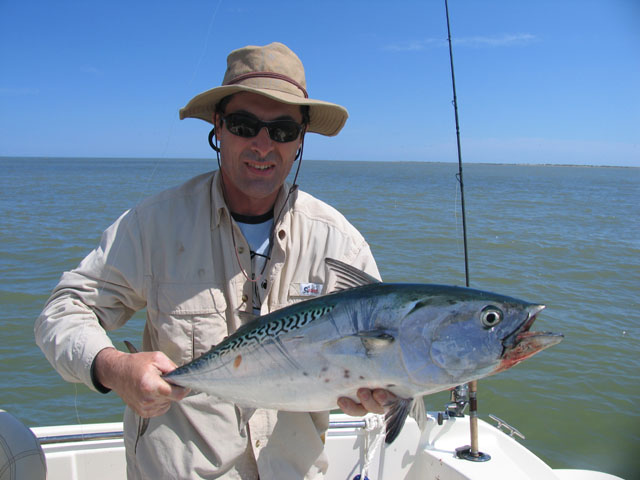
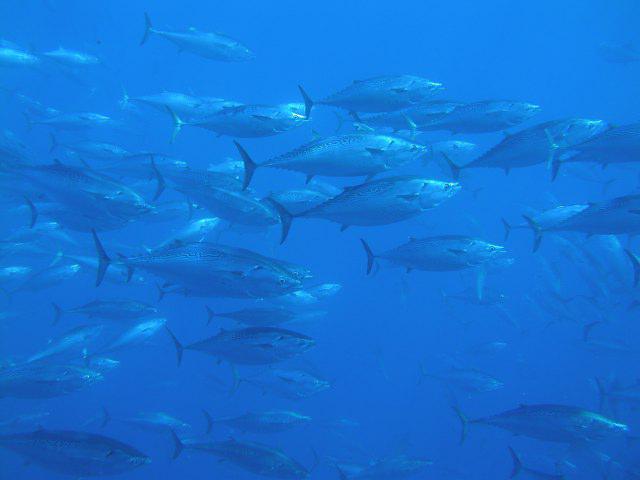
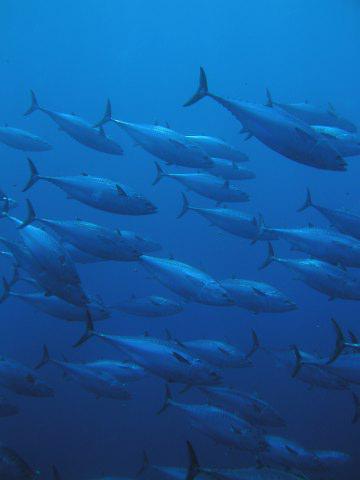
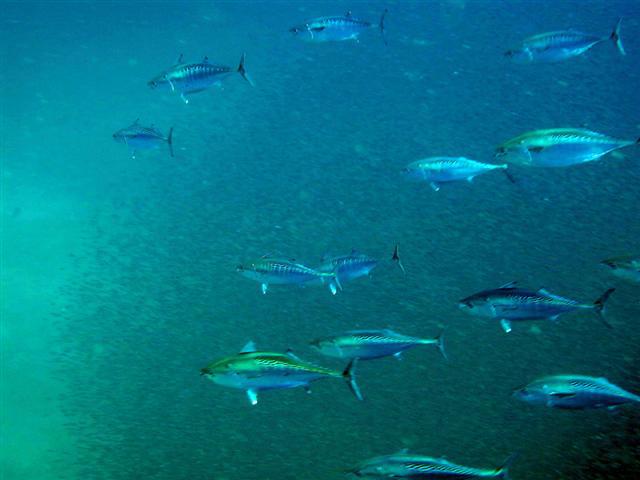
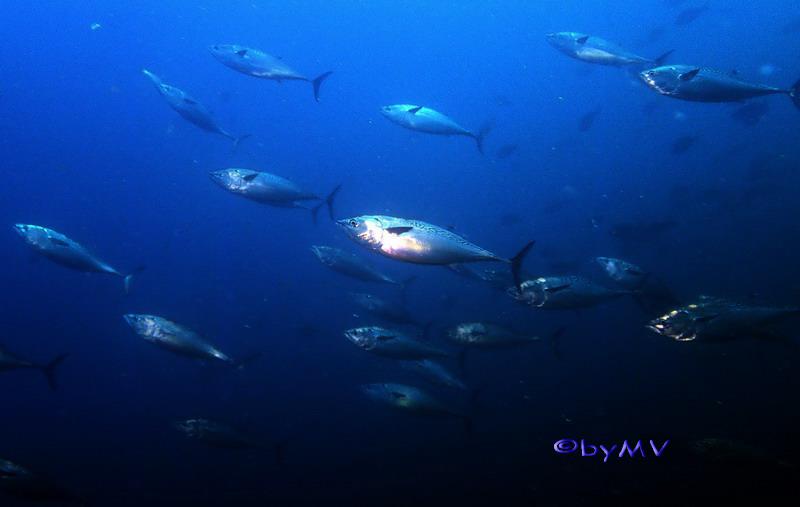
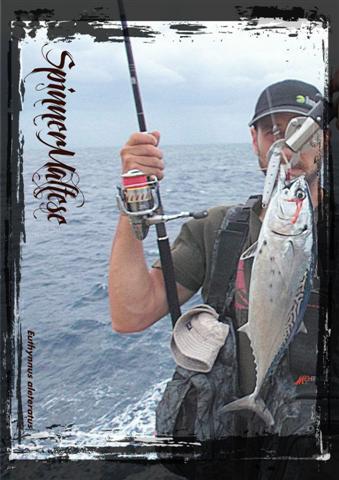
    Found in neritic waters close inshore (Ref. 13628). This schooling species is an opportunistic predator which feeds on virtually everything within its range, i.e. crustaceans, fishes (mainly clupeoid), squids, heteropods and tunicates. Eggs and larvae are pelagic (Ref. 6769). Specialized traps (madragues) are used in Tunisia and Morocco. Diving bird flocks may indicate large schools (Ref. 9710). Utilized fresh, dried-salted, smoked, canned and frozen (Ref. 9987). A popular game fish (Ref. 9710).

    Habitat


    brackish

    Conservation Status


    Least Concern

    Threat to Humans


    Reports of ciguatera poisoning

    Ask me about the species
    Ask about
    Euthynnus alletteratus (Rafinesque, 1810)