Euthynnus affinis (Cantor, 1849)
Description


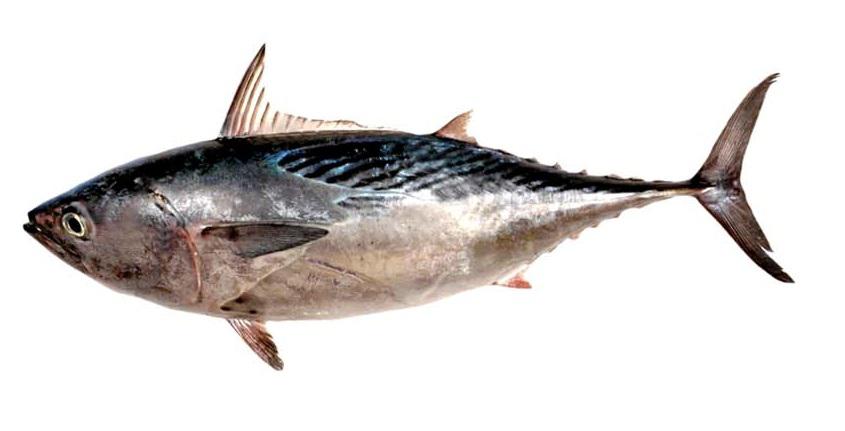
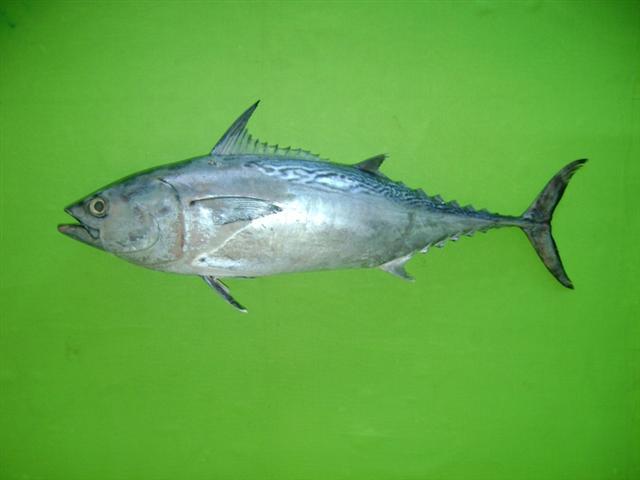
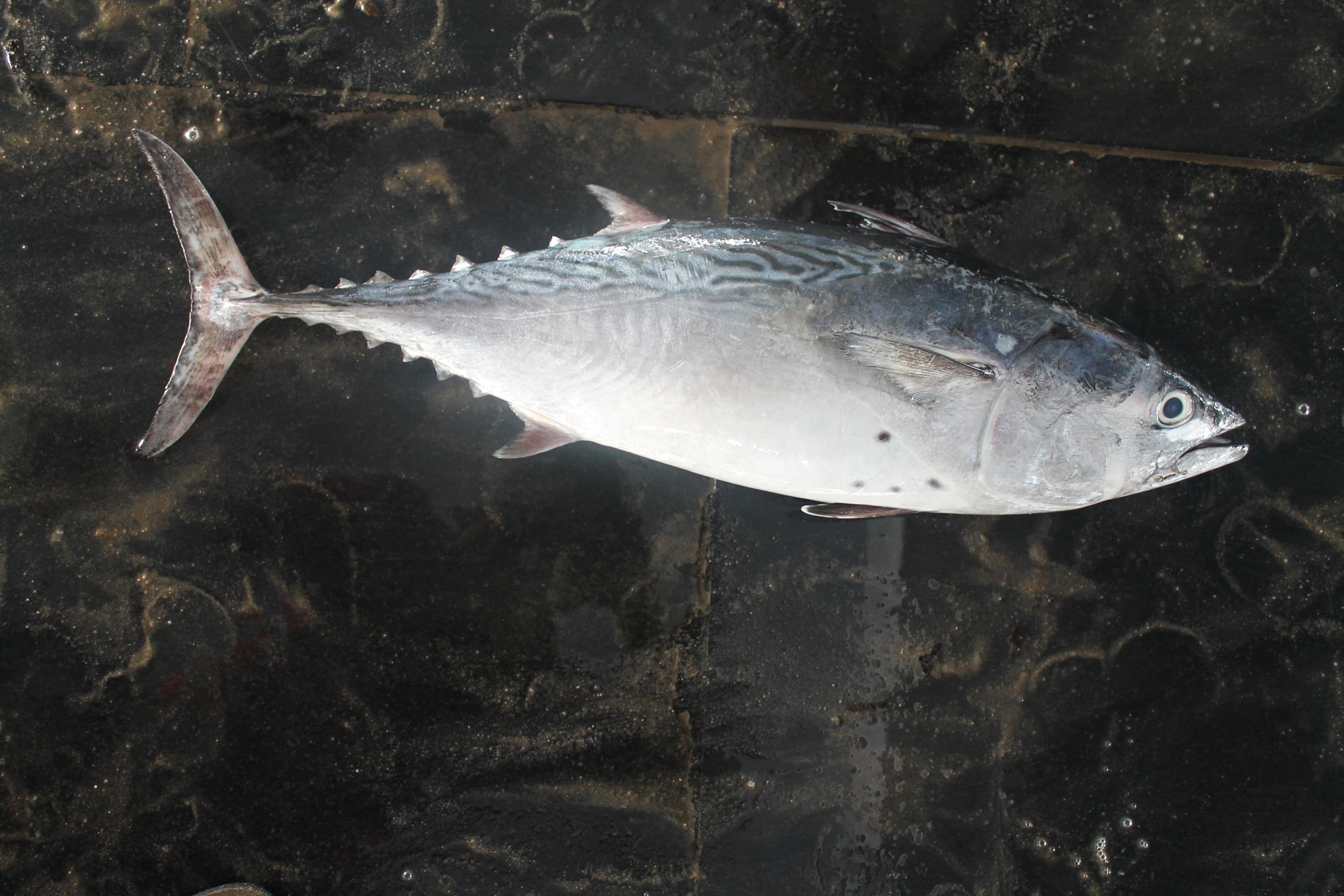
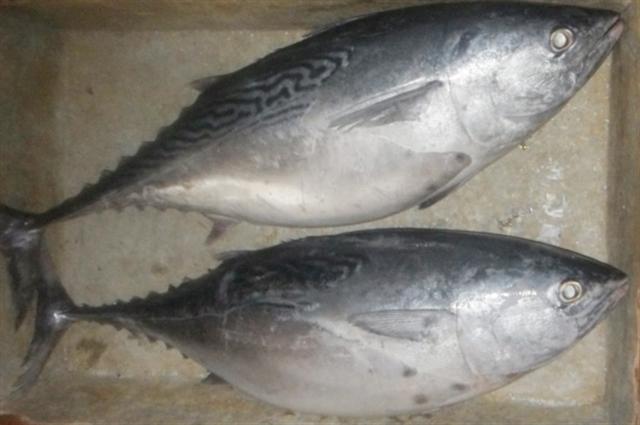
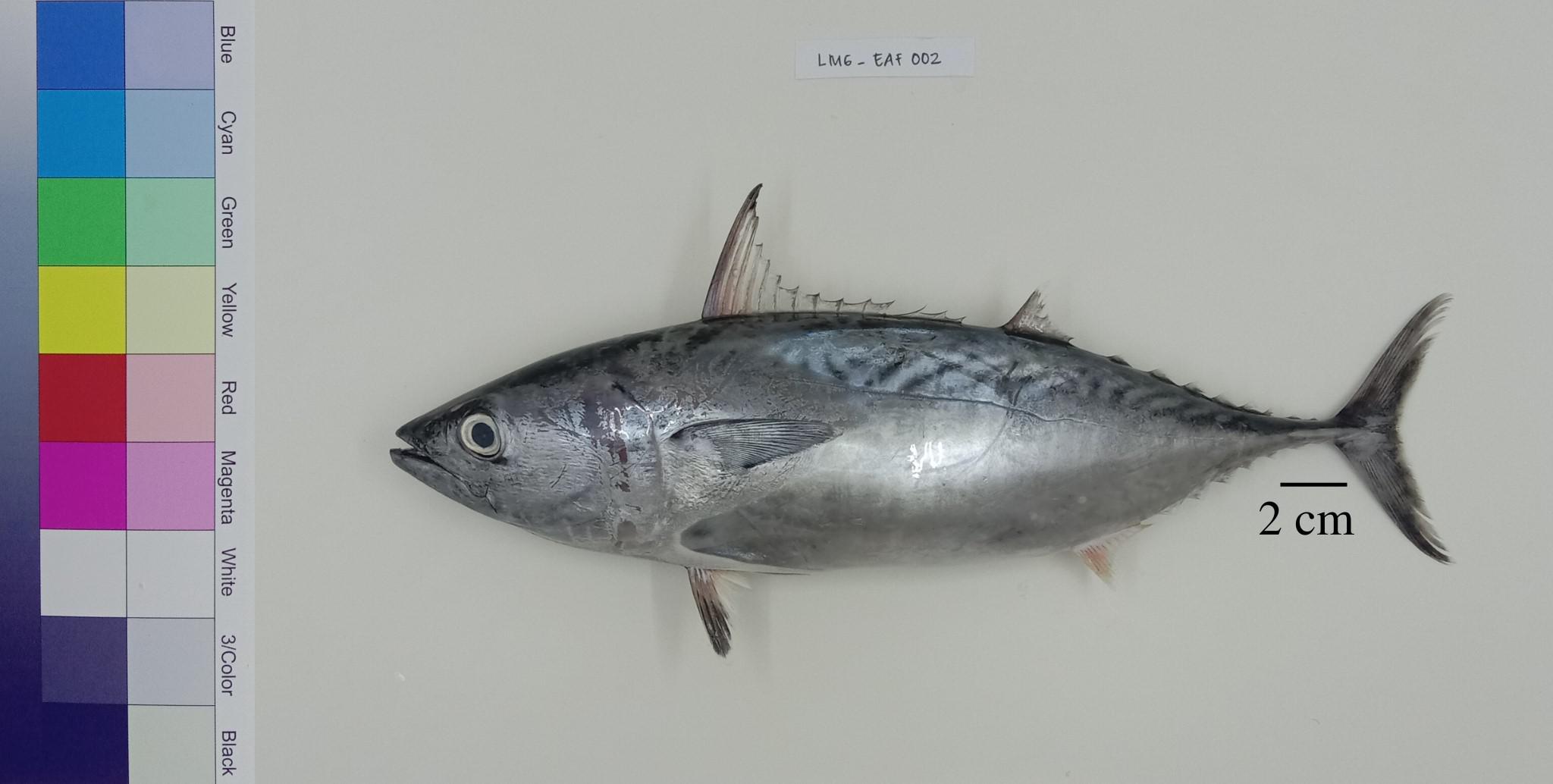
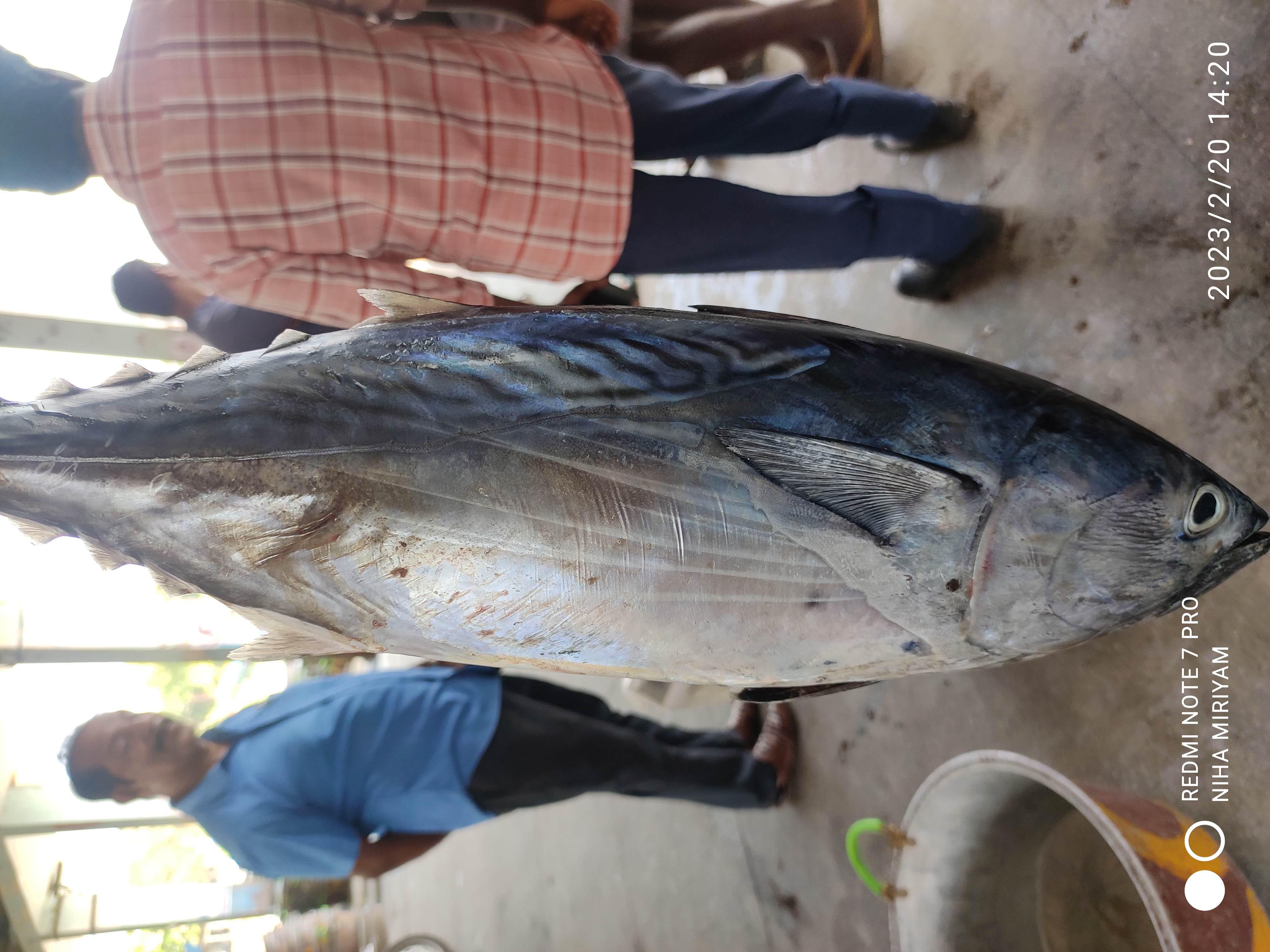
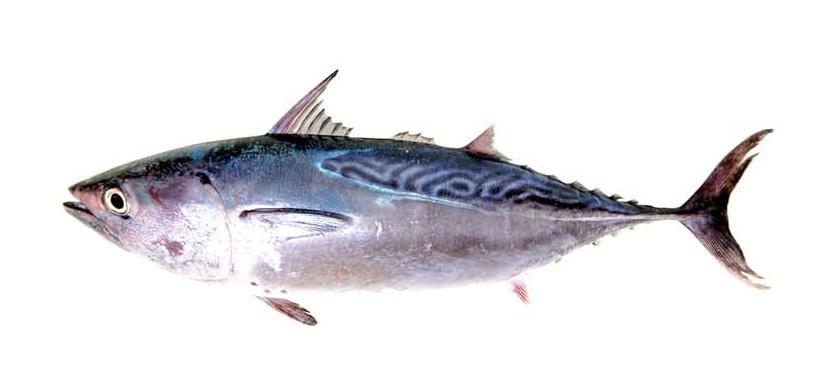
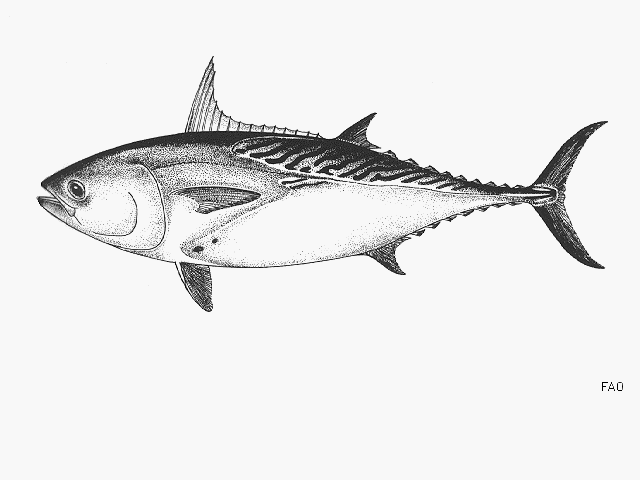
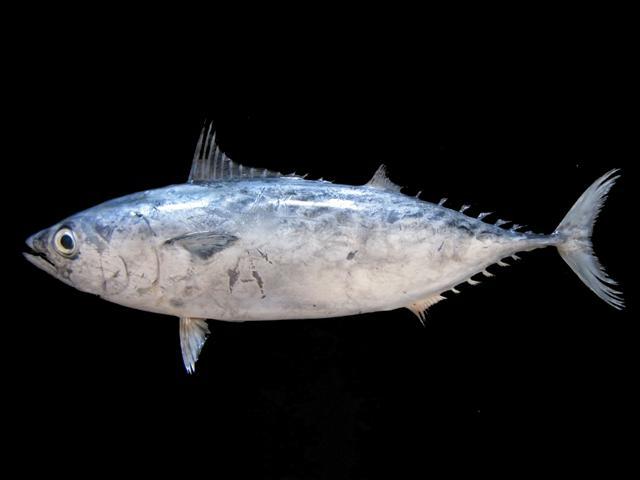
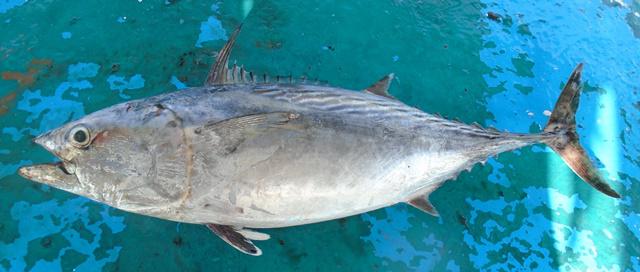
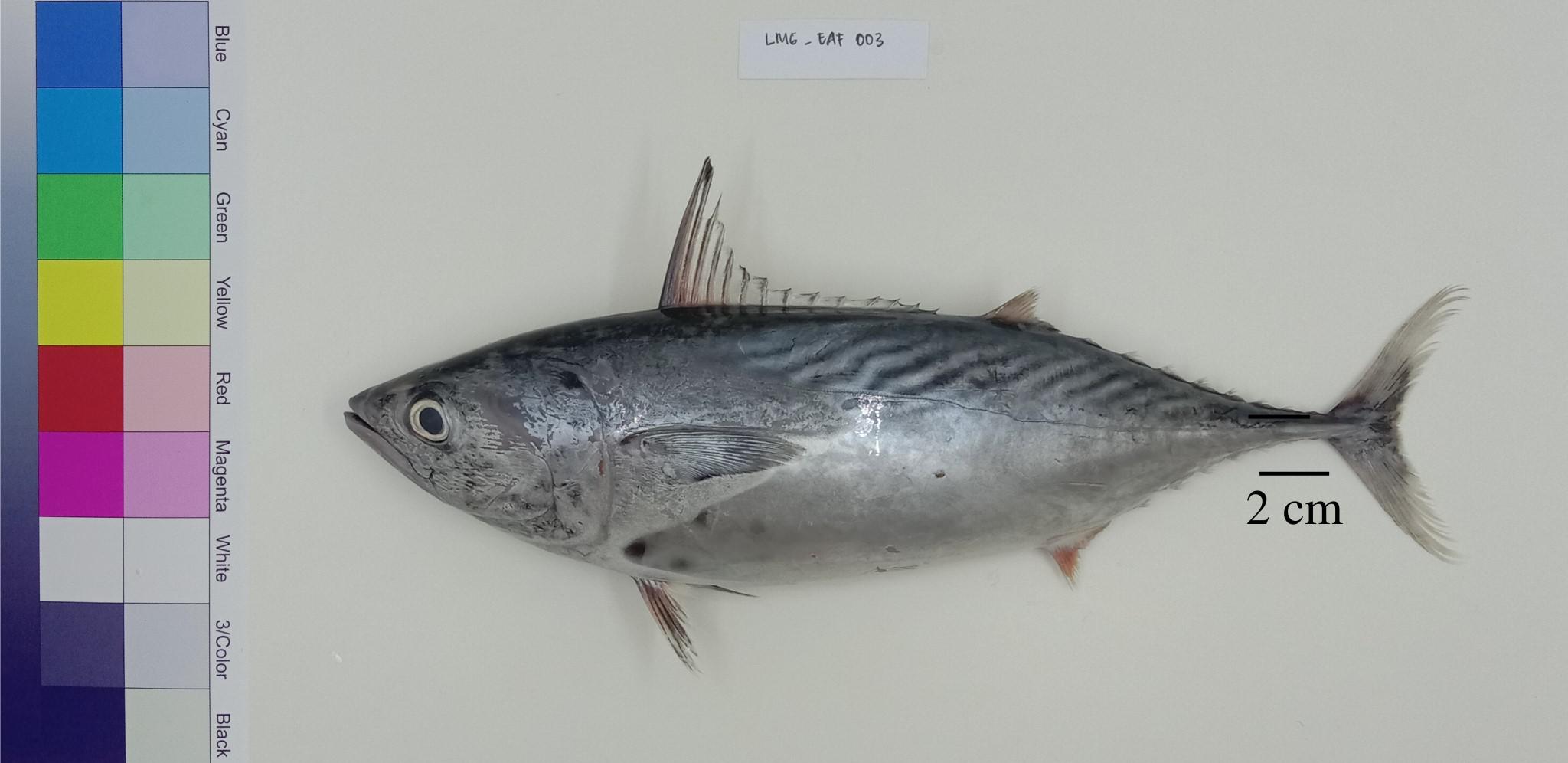
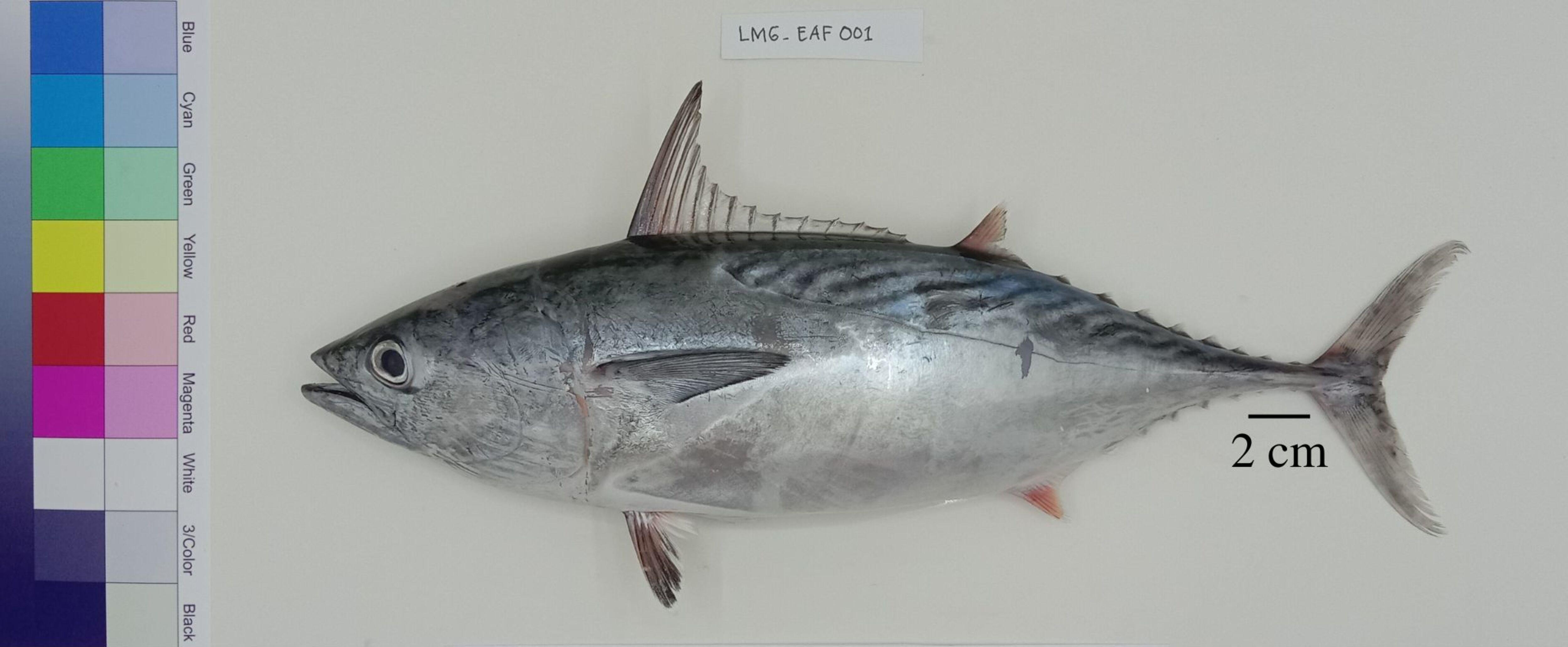
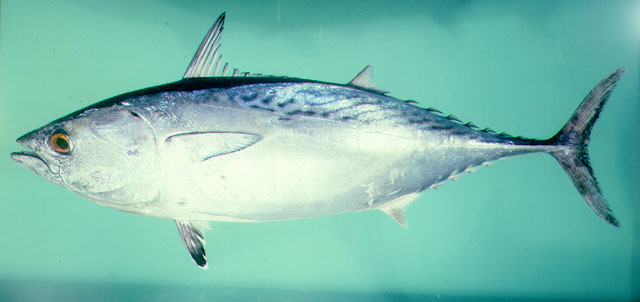
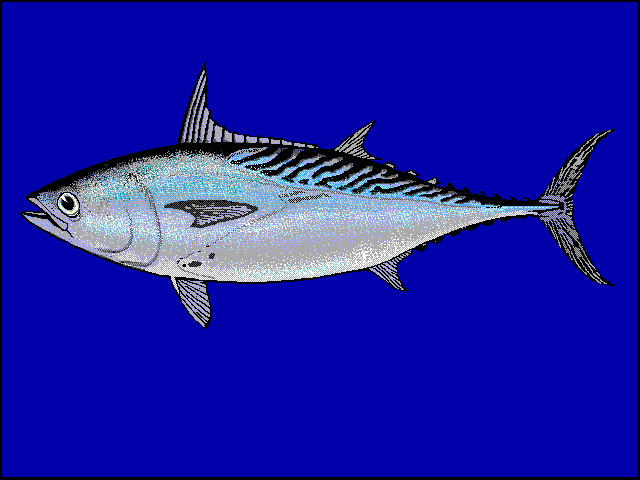
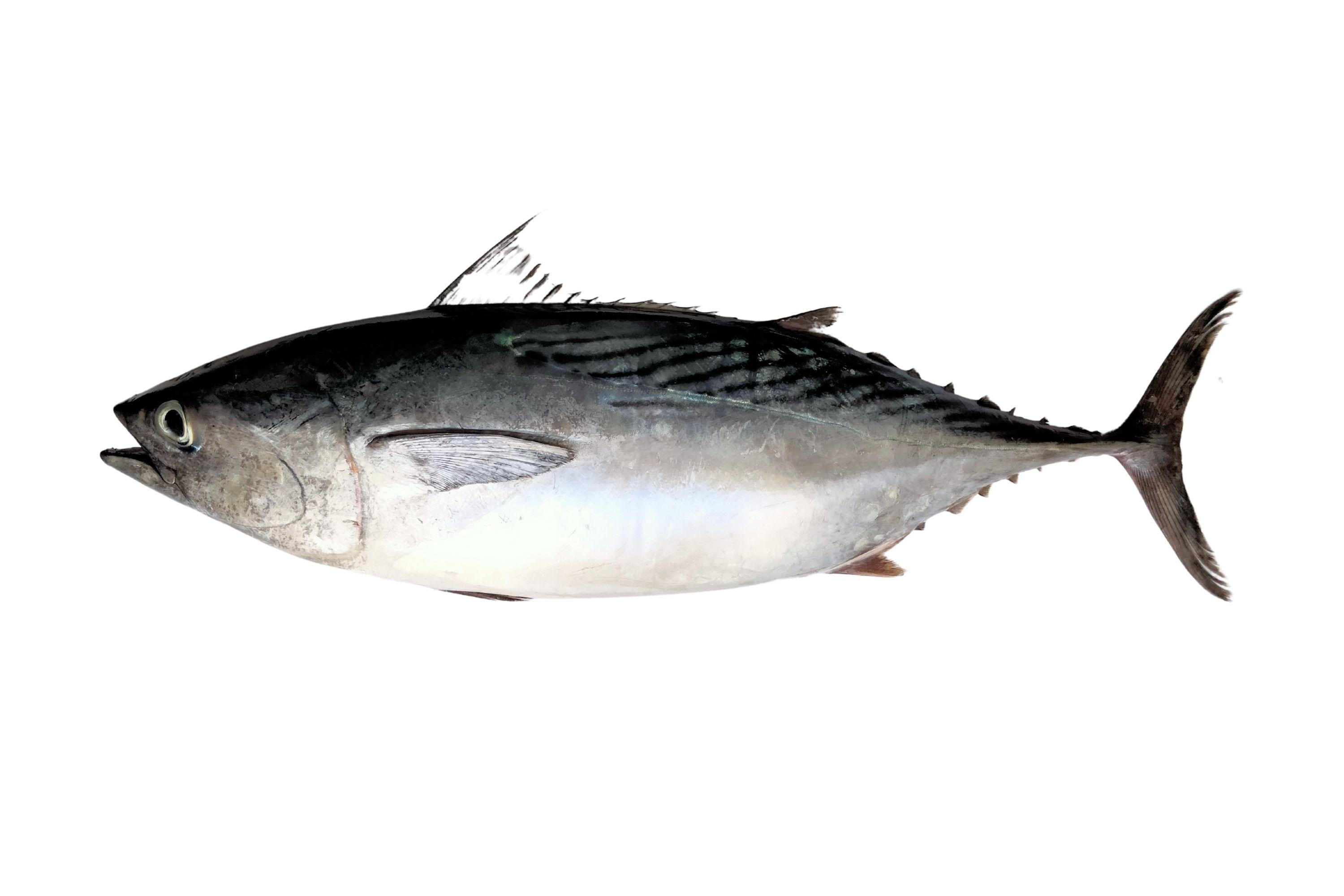
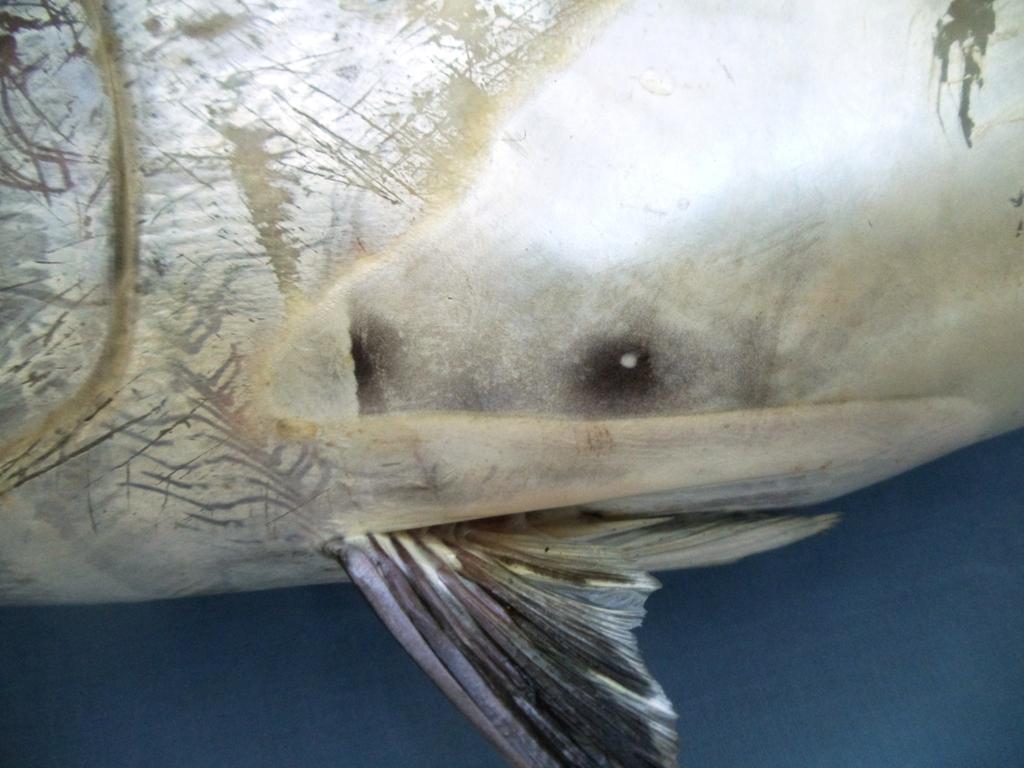
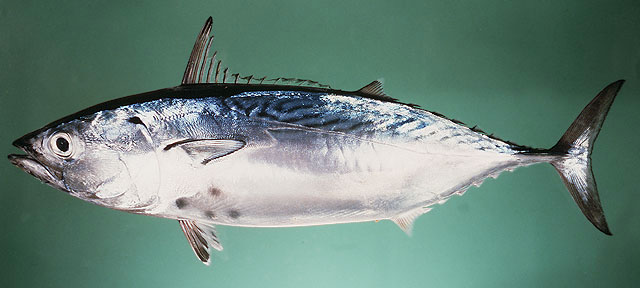
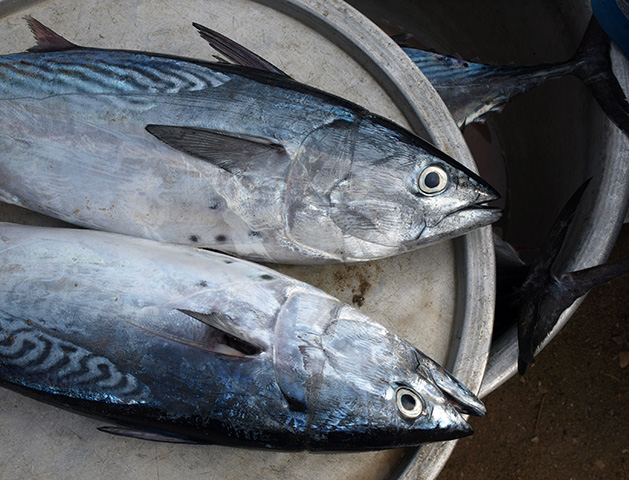
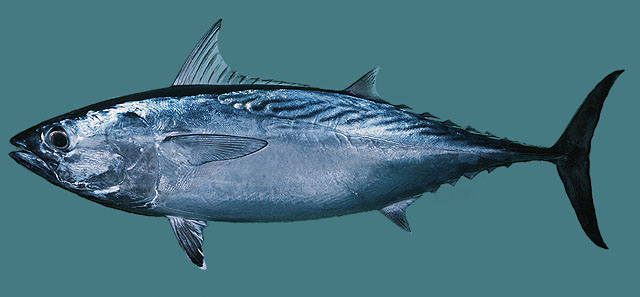
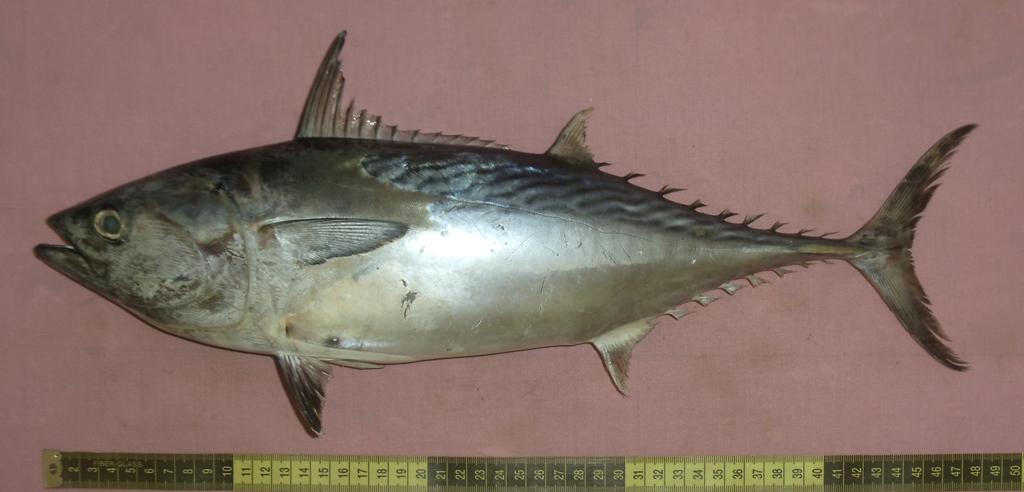
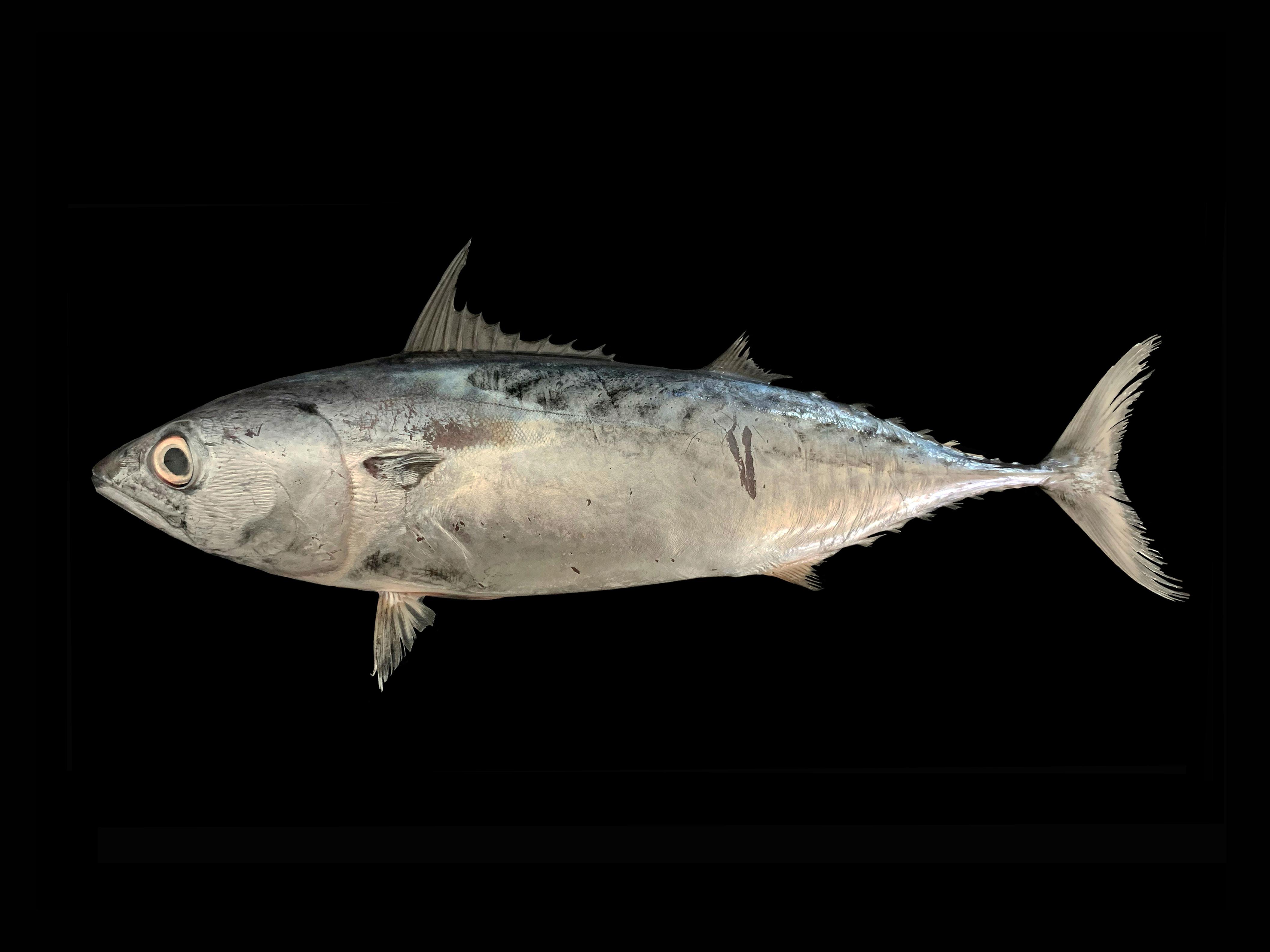
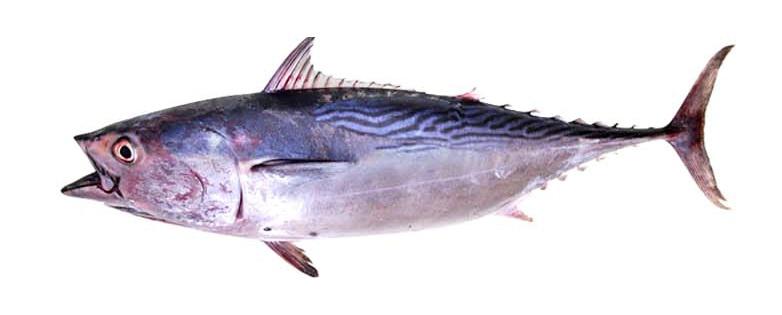
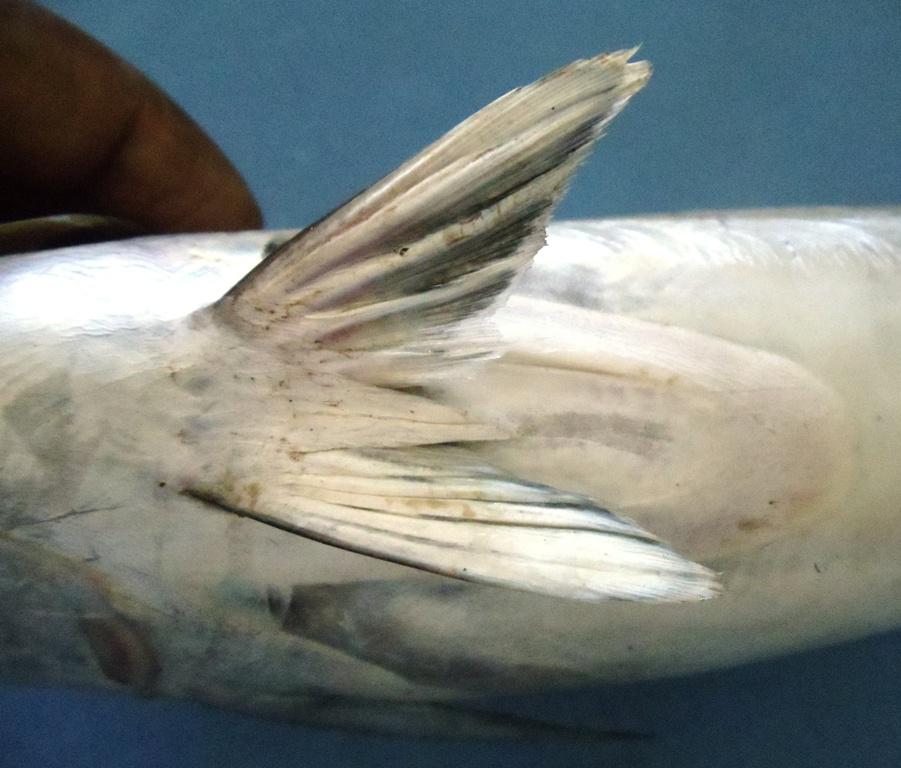
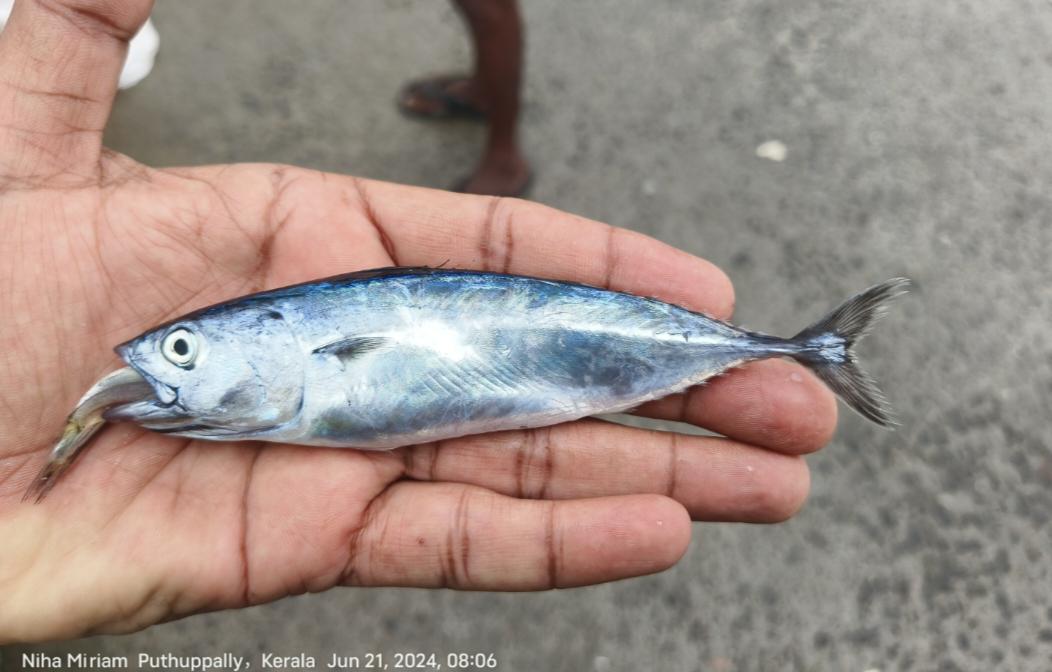
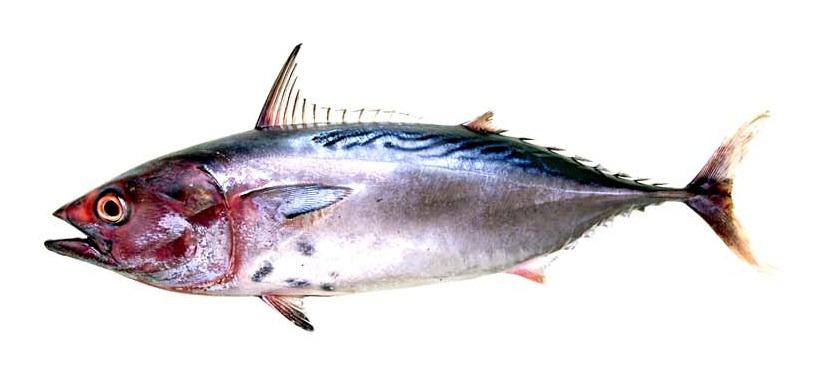
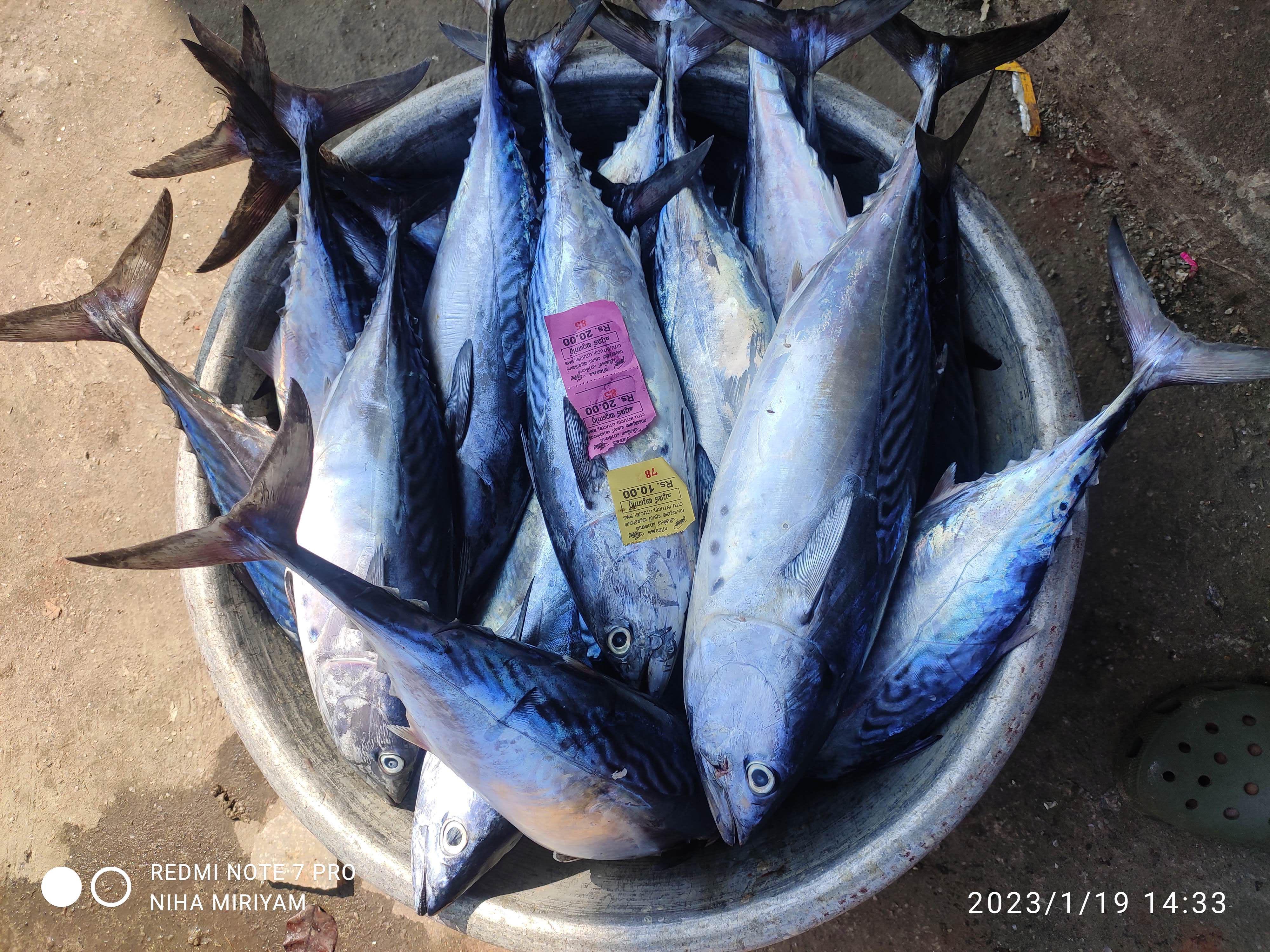
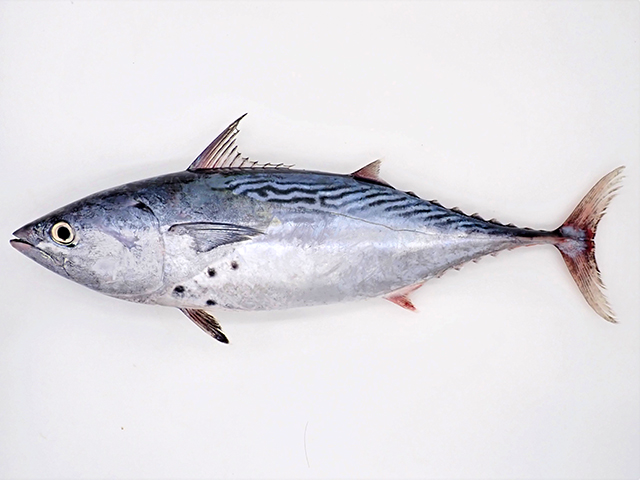
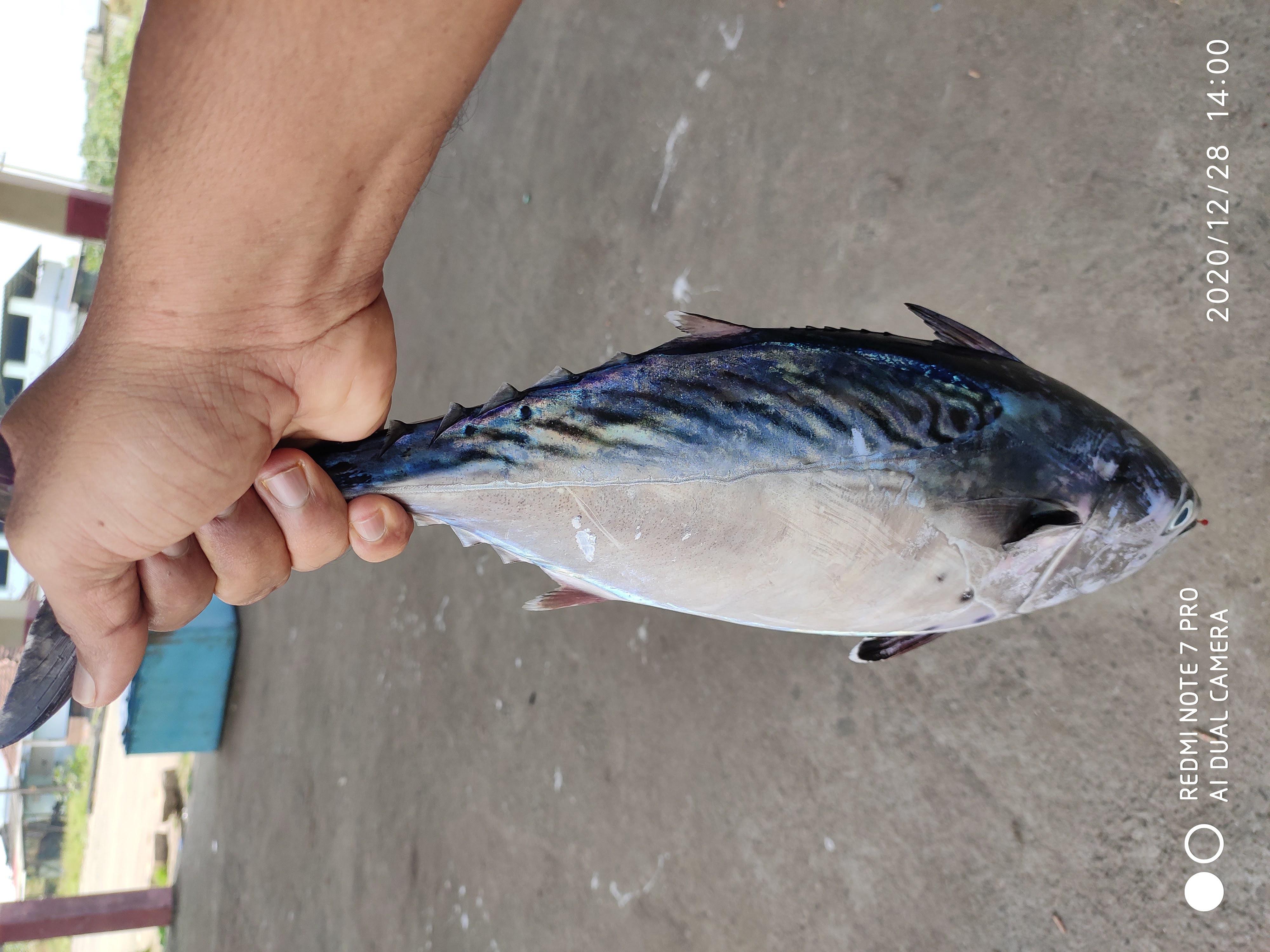
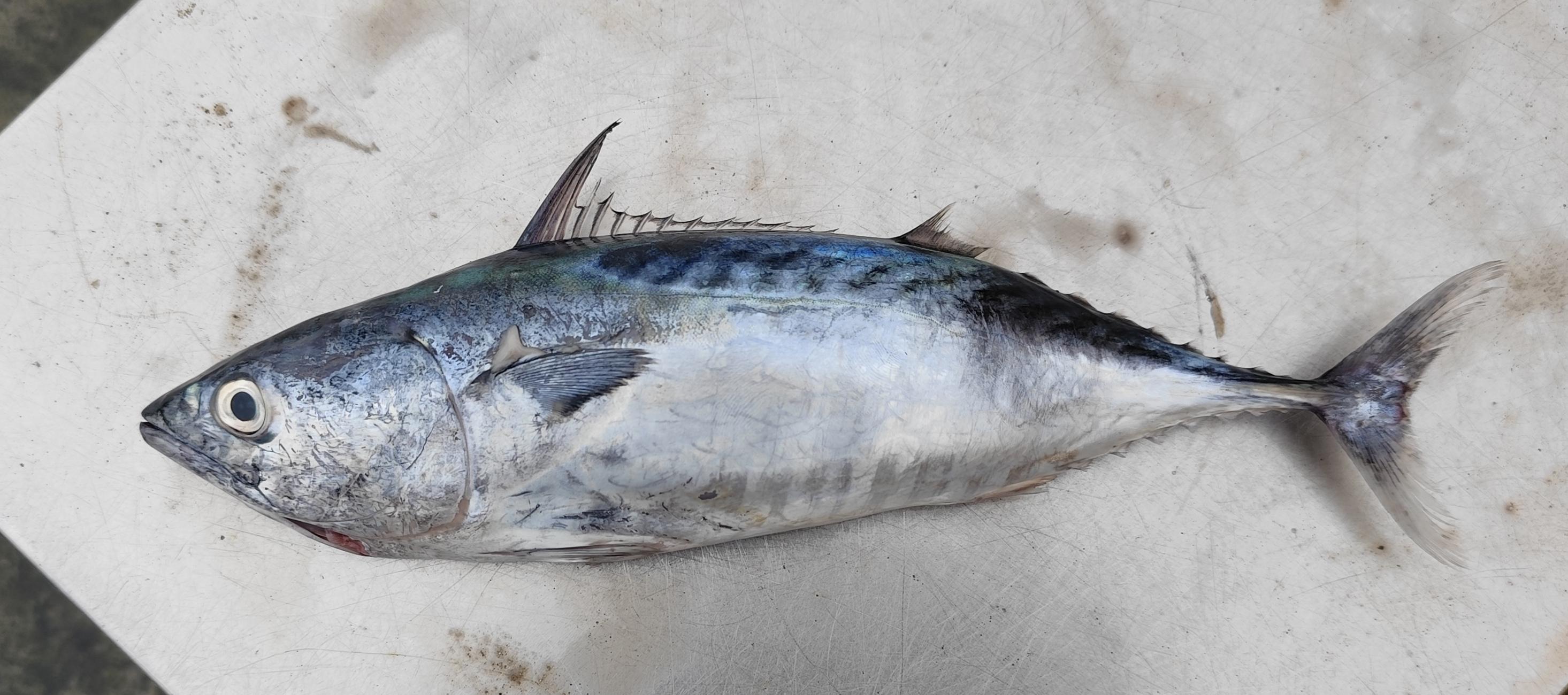
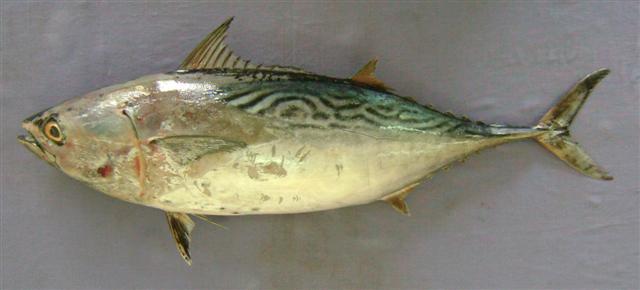
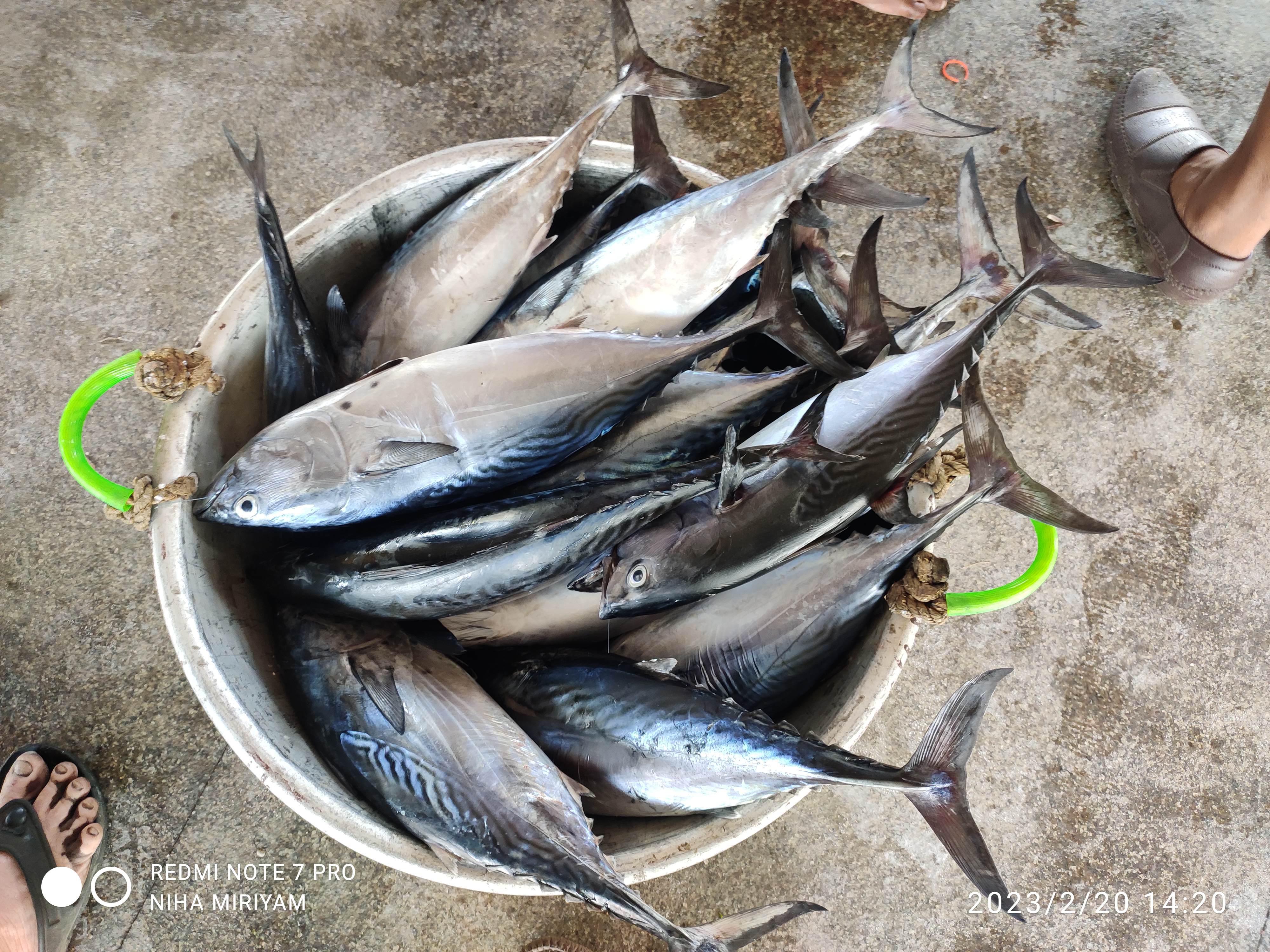
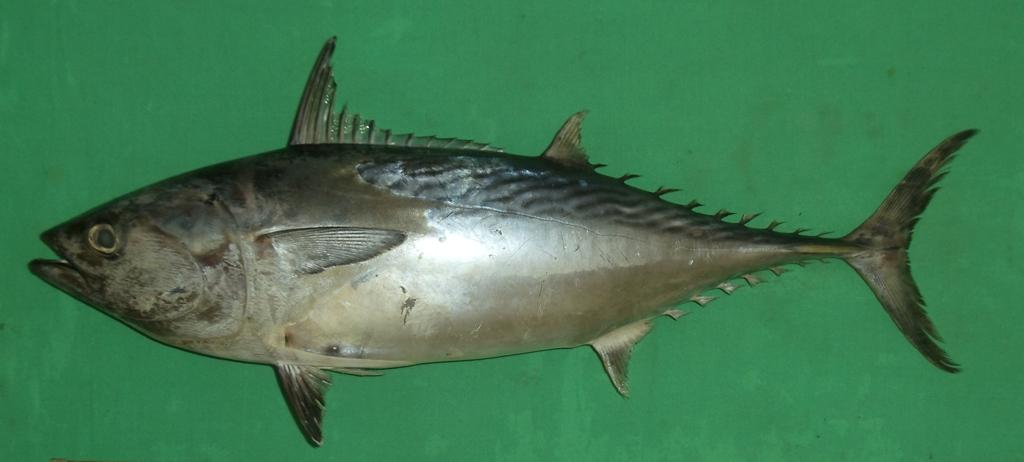
Dorsal spines (total): 10 - 15; Dorsal soft rays (total): 11 - 15; Anal spines: 0; Anal soft rays: 11 - 15; Vertebrae: 39. This species is distinguished by the following characters: medium-sized fish with a robust, elongate and fusiform body; teeth small and conical, in a single series; total gill rakers on first gill arch 29-34; D1 XI-XIV with both dorsal fins separated by only a narrow interspace (not wider than eye), anterior spines of first fin much higher than those midway, giving fin a strongly concave outline; D2 much lower than first and followed by 8-10 finlets; anal fin followed by 6-8 finlets; pectoral fins short, never reaching interspace between dorsal fins; 2 flaps (interpelvic process) between pelvic fins; very slender caudal peduncle with a prominent lateral keel between 2 small keels at base of caudal fin; body naked except for corselet and lateral line. Colour of back dark blue with a complicated striped pattern which does not extend forward beyond middle of first dorsal fin; lower sides and belly silvery white; several characteristic dark spots between pelvic and pectoral fins (but may not always be present) (Ref. 9684, 90102).

Common Names


  • Kawakawa
  • Kayu
  • Timphik
  • Oostelike kleintuna
  • Turingan
  • Fatla
  • Haida
  • Jibab
  • Kababa
  • Ma'agub
  • Sadah
  • Sadah
  • Sharwa
  • Shewa
  • Taban
  • Sembak
  • Tongkol
  • Tongkol gepeng
  • Tongkol komo
  • Turingah
  • Bangkolisan
  • Burawon
  • Purupondahan
  • Tulingang puti
  • To chung
  • 煙仔虎
  • Asil leu
  • Yasiuneiu-yauma
  • Asi-lei
  • Saba
  • Yásinnéy
  • Barilis
  • Boga-ongon
  • Hasa-hasa
  • Timbongan
  • Tulingan
  • Tulingan puti
  • Kachug apaka
  • Pirit
  • Subad
  • Tulingan puti
  • Mbasi mitinbu
  • Nyatsibwe
  • Pouere panga
  • Kababida
  • Bonit
  • Bonit fol
  • Bonite la côte
  • Bonite mackerel
  • Lille thunnin
  • Lille tun
  • Bugaongon
  • Pirit
  • Dwergtonijn
  • Black skipjack
  • Black skipjack
  • Black skipjack
  • Black skipjack tuna
  • Bonito
  • Bonito
  • Bonito
  • Bonito
  • Bonito
  • Bonito
  • Bonito
  • Bonito
  • Diverg-bonito
  • Dwarf bonito
  • Eastern little tuna
  • Eastern little tuna
  • Eastern little tuna
  • Eastern little tuna
  • Eastern little tuna
  • Eastern little tuna
  • False albacore
  • Island bonito
  • Island skipjack
  • Jack mackerel
  • Kawa kawa
  • Kawa kawa
  • Kawakawa
  • Kawakawa
  • Kawakawa
  • Kawakawa
  • Kawakawa
  • Kawakawa
  • Kawakawa
  • Lesser bonito
  • Little tuna
  • Little tuna
  • Little tuna
  • Little tuna
  • Little tuna
  • Little tuna
  • Little tuna
  • Little tuna
  • Little tunny
  • Little tunny
  • Little tunny
  • Little tunny
  • Mackerel tuna
  • Mackerel tuna
  • Mackerel tuna
  • Mackerel tuna
  • Mackerel tuna
  • Mackerel tuna
  • Mackerel tuna
  • Mackerel tuna
  • Mackerel tuna
  • Mackerel tuna
  • Mackerel tuna
  • Mackerel tuna
  • Mackerel tuna
  • Oceanic bonito
  • Tuna
  • Wavy-back skipjack
  • Yaito bonito
  • Tähniline väiketuun
  • Yatu
  • Bonite
  • Bonite
  • Bonite à dos rayé
  • Bonite d'Inde
  • Petit thon
  • Thonine
  • Thonine orientale
  • Thonine orientale
  • Thonine orientale
  • Dawic
  • Atu pari longa
  • Falscher Bonito
  • Gefleckter Thunfisch
  • Gedar
  • ગેદર
  • Kawa kawa kina'u
  • Kawakawa
  • Poho poho
  • Anturayan
  • Bantala-an
  • Tangi
  • Tulingan puti
  • Tonnetto orientale
  • Tulingan
  • Hiragatsuo
  • Obosogatsuo
  • Soda
  • Soda katsuo
  • Suma
  • Tulingan
  • Te atiuaro
  • Bokado
  • 점다랑어
  • Makurul
  • Pirit
  • Tulingan
  • Turingan
  • Tulingan
  • Bonite
  • Angoho
  • Angoz
  • Lamatra
  • Vohy
  • Angoa
  • Angoho
  • Belonary
  • Diodary
  • Dodrary
  • Ambu-ambu
  • Aya
  • Aya kurik
  • Bakulan
  • Bangalak
  • Choreng
  • Coreng
  • Ikan ayer
  • Kayu
  • Kebal mas
  • Kembel mas
  • Kembel-mas
  • Mangkok
  • Mangkok-mangkok
  • Panit (Sabah)
  • Semambu
  • Sembak
  • Tombal-mas
  • Tombol mas
  • Tongkok kurik
  • Tongkol
  • Tongkol
  • Tongkol komo
  • Tongkol kurik
  • Choora
  • ചൂര
  • ചൂര
  • ചൂവ
  • ചൂവ
  • Latti
  • Lattichoora
  • 三点仔
  • 倒串
  • 巴鰹
  • 巴鲣
  • 烟仔
  • 白卜鮪
  • 白卜鲔
  • 鲲
  • Sobad
  • Tulingan
  • Subad
  • Bugudi
  • Chuki
  • Gedar
  • Kuppa
  • Ohaman
  • कुपा
  • गिदाई
  • गिदार
  • बुगुदी
  • Loj
  • Saliana babalona
  • Kwamêrîîjii
  • Kwamêrûjü
  • Tongkol
  • Kasareta fatuk
  • Chesodm
  • Kavalau
  • Soda
  • Cakala biru
  • Tulingan puti
  • Zardeh
  • Tunek wschodni
  • Atum
  • Merma
  • Merma-oriental
  • Malyj tunets
  • Pyatinstyj indo-tikhookeanskyj tunets
  • Atualo
  • Kavalau
  • Luc
  • Atavalla
  • Attawalla
  • Ragodura
  • Ragoduva
  • Sureya
  • Vzhodni pegasti tun
  • Jaydar-dhiiglow
  • Jeidha
  • Maba'di
  • Bacoreta
  • Bacoreta oriental
  • Bacoreta oriental
  • Bonito
  • Bulis
  • Pagadparon
  • Panit
  • Jodari
  • Jodari
  • Sehewa
  • Sehewa
  • Kawakawa
  • Ostlig liten bonit
  • Katsarita
  • Katsorita
  • Katsot
  • Reado
  • Tambacol
  • Tulingan
  • Tulingan puti
  • Using
  • Tulingan
  • 'Otava
  • Choori-min
  • Shurai
  • Suraimin
  • Surally
  • Suraly
  • சுரளி
  • சுரளீ
  • சுரளீ
  • சுராமீன்
  • சுராமீன்
  • சோரி மீன்
  • సోరా
  • Kakasi
  • Kavalau
  • Yazil orkinos
  • Yazili
  • Te autualo
  • Боніто
  • Тунець малий східний
  • Cá Ngừ chấm
  • Cá ngùr
  • Dài-loan
  • Aloy
  • Bansikol
  • Barilis
  • Mangko
  • Manko
  • Minanga
  • Pidlayan
  • Subad
  • Talingay
  • Buga-ongon
  • Mangko
  • Tulingan
  • Turingan
  • Taxonomic Hierarchy


    Kingdom: Animalia

    Phylum: Chordata

    Class: Teleostei

    Order: Scombriformes

    Family: Scombridae

    Genus: Euthynnus

    Species: Euthynnus affinis (Cantor, 1849)
    Climate Zone


  • Tropical
  • Location


    • Indo-West Pacific: in warm waters including oceanic islands and archipelagos. A few stray specimens have been collected in the Eastern Central Pacific. Highly migratory.

    Biology


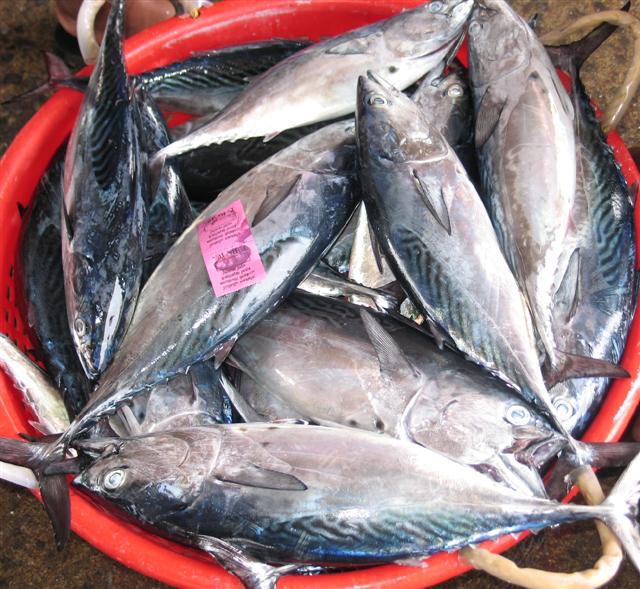
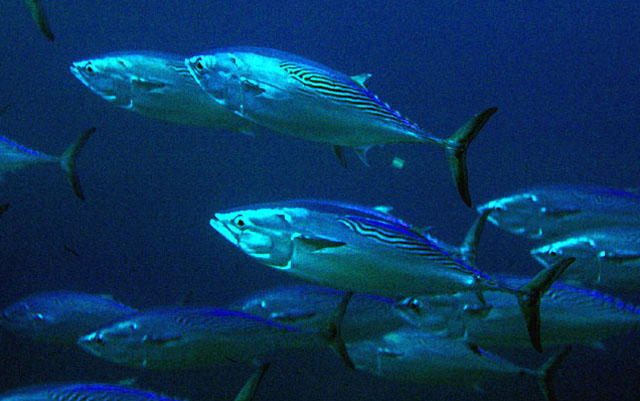
    Occurs in open waters but always remains close to the shoreline. The young may enter bays and harbors. Forms multi-species schools by size with other scombrid species comprising from 100 to over 5,000 individuals. A highly opportunistic predator feeding indiscriminately on small fishes, especially on clupeoids and atherinids; also on squids, crustaceans and zooplankton. Caught in multispecies fisheries, mainly by surface trolling; also with gill nets. Generally marketed canned and frozen; also utilized dried, salted, smoked and fresh (Ref. 9684).

    Habitat


    neritic

    Conservation Status


    Least Concern

    Threat to Humans


    Reports of ciguatera poisoning

    Ask me about the species
    Ask about
    Euthynnus affinis (Cantor, 1849)