Aplysina fulva (Pallas, 1766)
Description
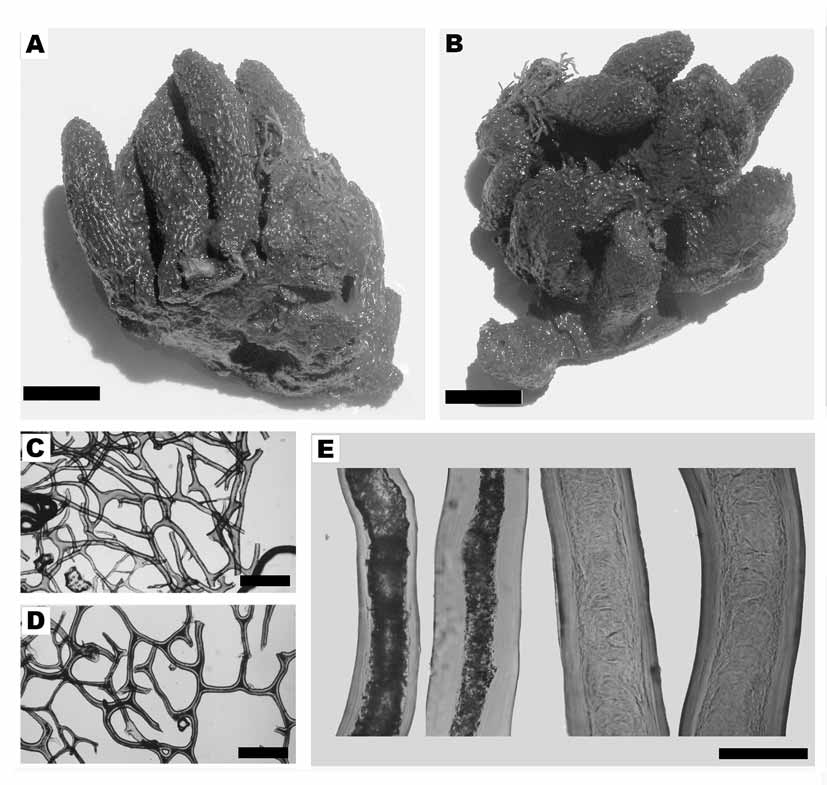
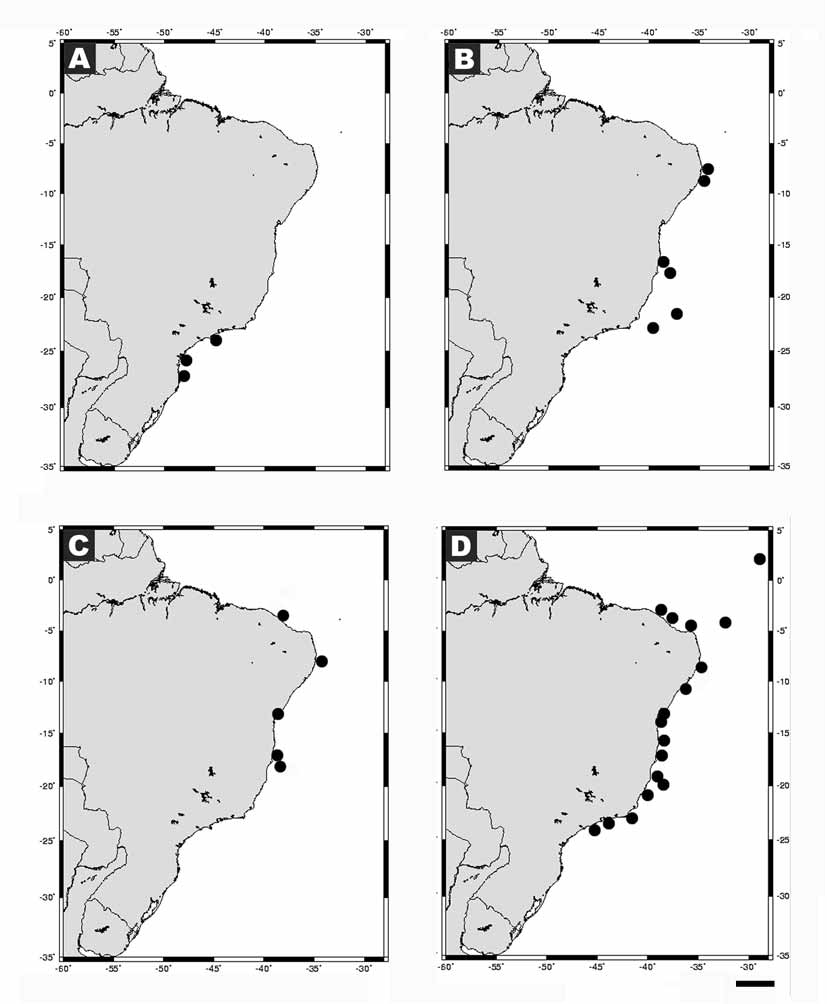
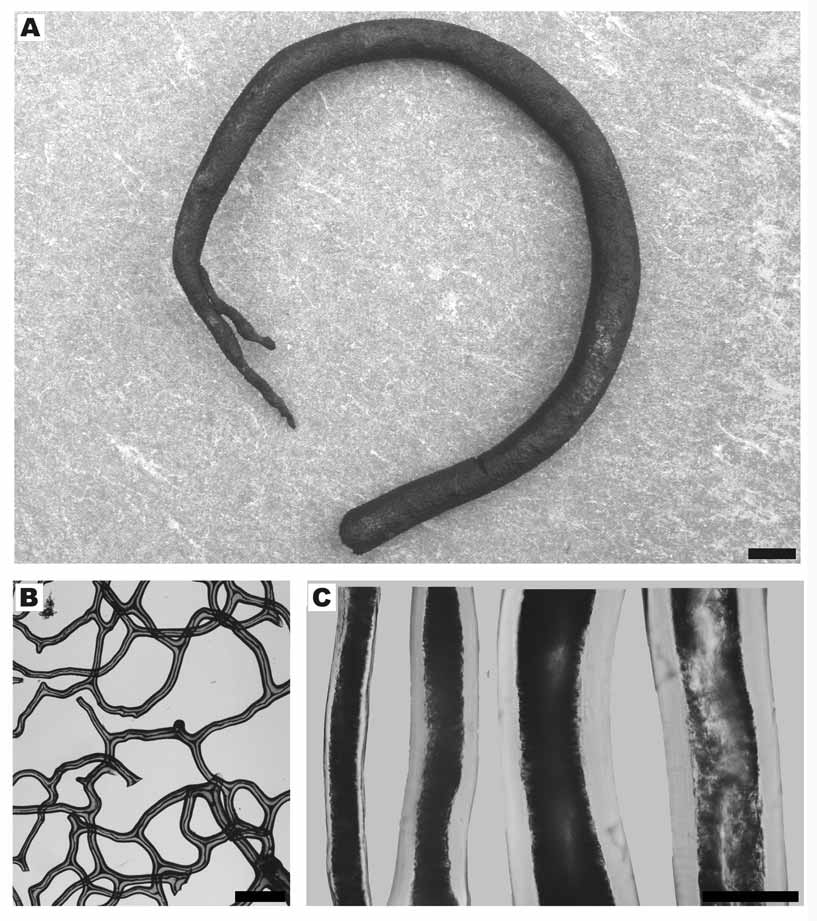
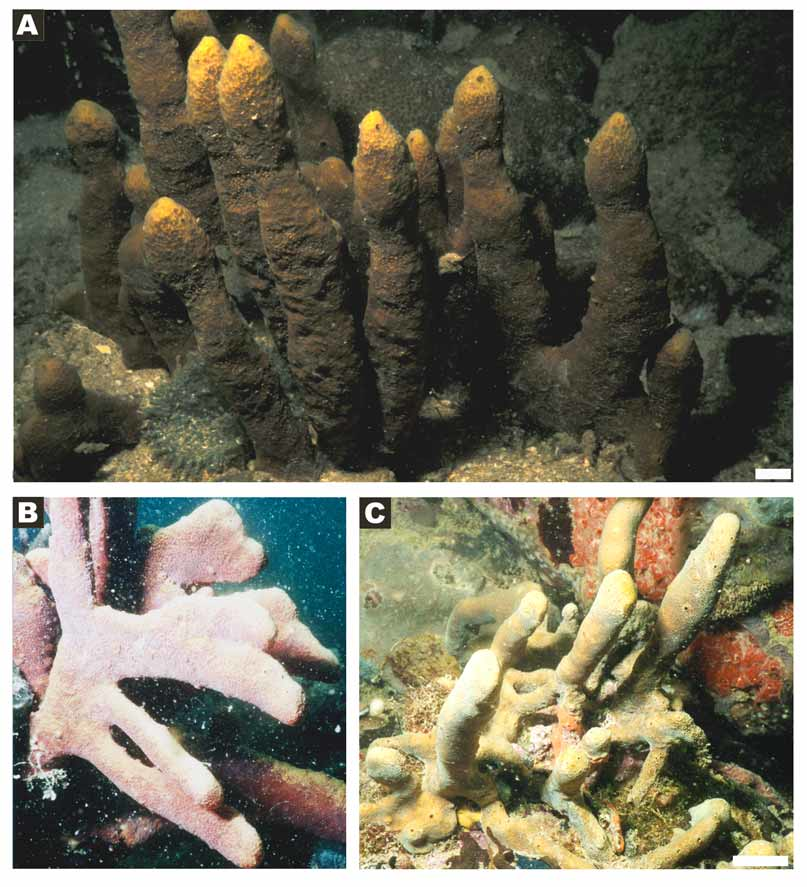
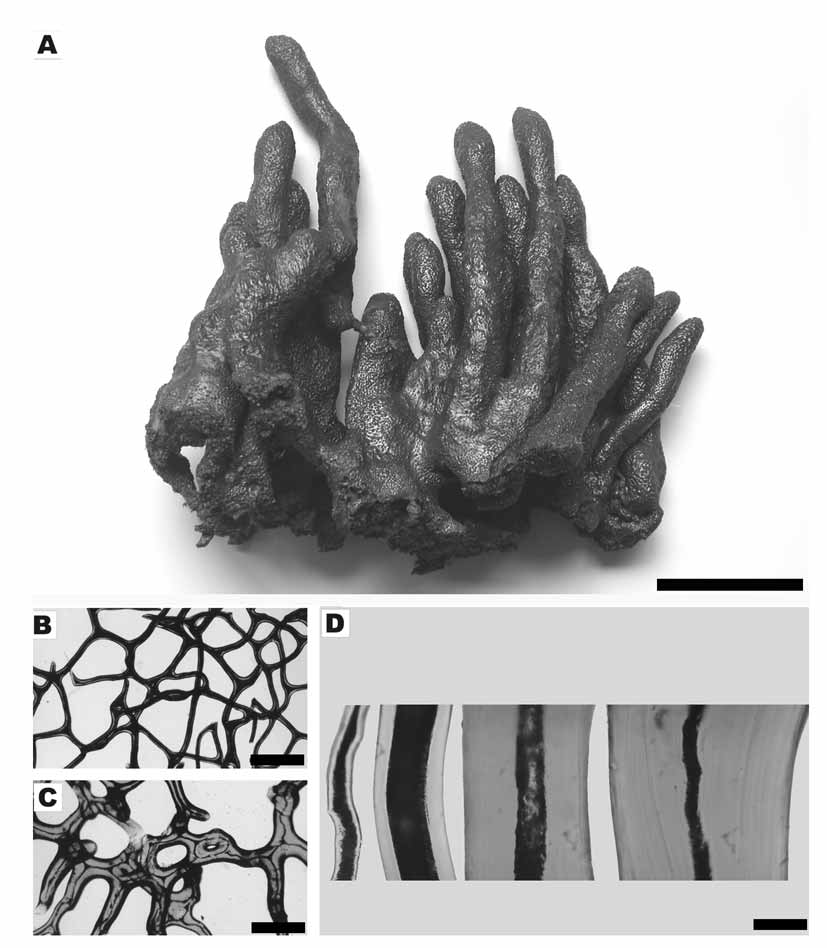
Description The majority of specimens are composed of clusters of digitiform branches (cylindrical or fusiform), always with irregular diameter (Fig. 7 C). However, other morphologies are found, such as cushion-shaped, reptant (e. g. MNRJ 4177, 4178), lamellate (e. g. MNRJ 3056), palmate / pinnate (e. g. MNRJ 3963; Fig. 7 B), ficiform / flabellate (e. g. MNRJ 2298) and volcaniform (e. g. MNRJ 4178). The size of specimens also varies considerably, with fused processes over 2 m high observed at Parque Nacional Marinho dos Abrolhos, while others are smaller than 3 cm in height, at the species known southern distribution limit (24 º S). The processes can be found single or in groups of 2 to 80. The small oscula (0.5 – 2 mm) appear randomly spread all over the surface, most frequently, but some alignment is also visible. The surface can be smooth, finely conulose, rugose or marked by short irregular ridges and grooves. The colour in vivo is most often a brownish-yellow, but varies in diverse hues of yellow, green, lilac or brown, becoming purple, pink or dark brown after preservation in alcohol. Specimens in semi-obscure environments are often bright lemon-yellow, as well as small. The consistency is variable from extremely soft to considerably hard. Skeleton: Choanosome formed by an irregular polygonal reticulation of spongin fibers, with a diameter of 21 – 275 Μm (average 75 Μm; Fig. 8 B – C). The bark is amber in colour, with the exception of specimens with stouter fibers, which have a reddish bark. The pith is black, with diameter of 10 – 72 Μm (average 27 Μm; Fig. 8 D). TABLE IV: Spongin fibres’ measurement data for Aplysina fulva (Pallas, 1766) (in micrometers; S. D. = Standard Deviation and N = 30). Specimens Locality * Fibers Piths Thinnest Mean Thickest S. D. Thinnest Mean Thickest S. D. ...... continued (next page) * AL, Algoas State; BA, Bahia State; CE, Ceará State; ES, Espirito Santo State; PE, Pernambuco State; RJ, Rio de Janeiro State; RN, Rio Grande do Norte State; SP, São Paulo State.
Common Names
No common names available.
Taxonomic Hierarchy
Kingdom: Animalia
Phylum: Porifera
Class: Demospongiae
Order: Verongiida
Family: Aplysinidae
Genus: Aplysina
Species: Aplysina fulva (Pallas, 1766)
Aplysina fulva (Pallas, 1766)