Eurypegasus draconis (Linnaeus, 1766)

Description
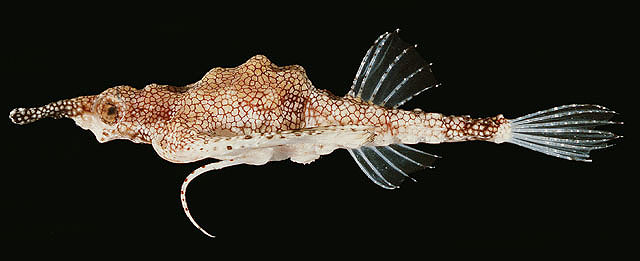
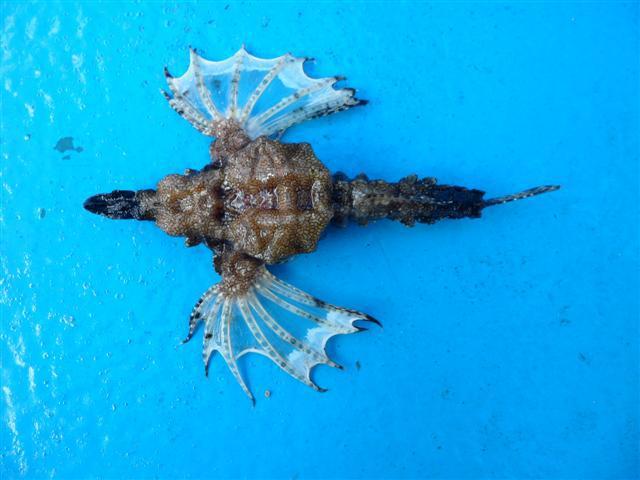
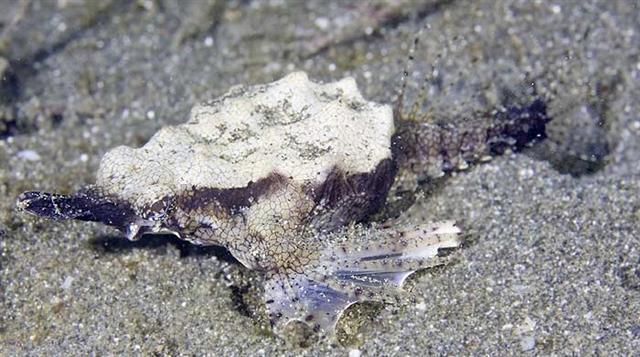
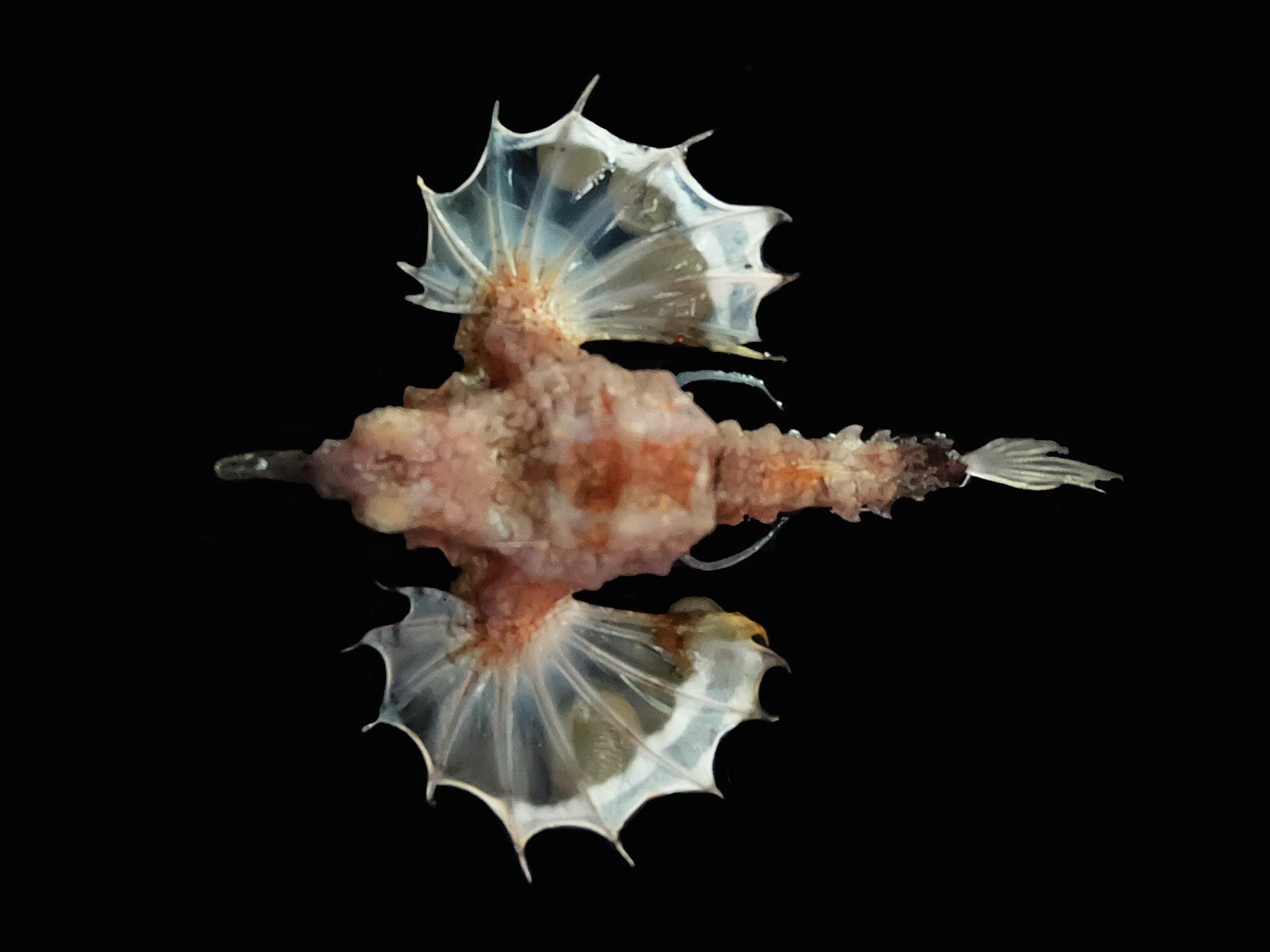
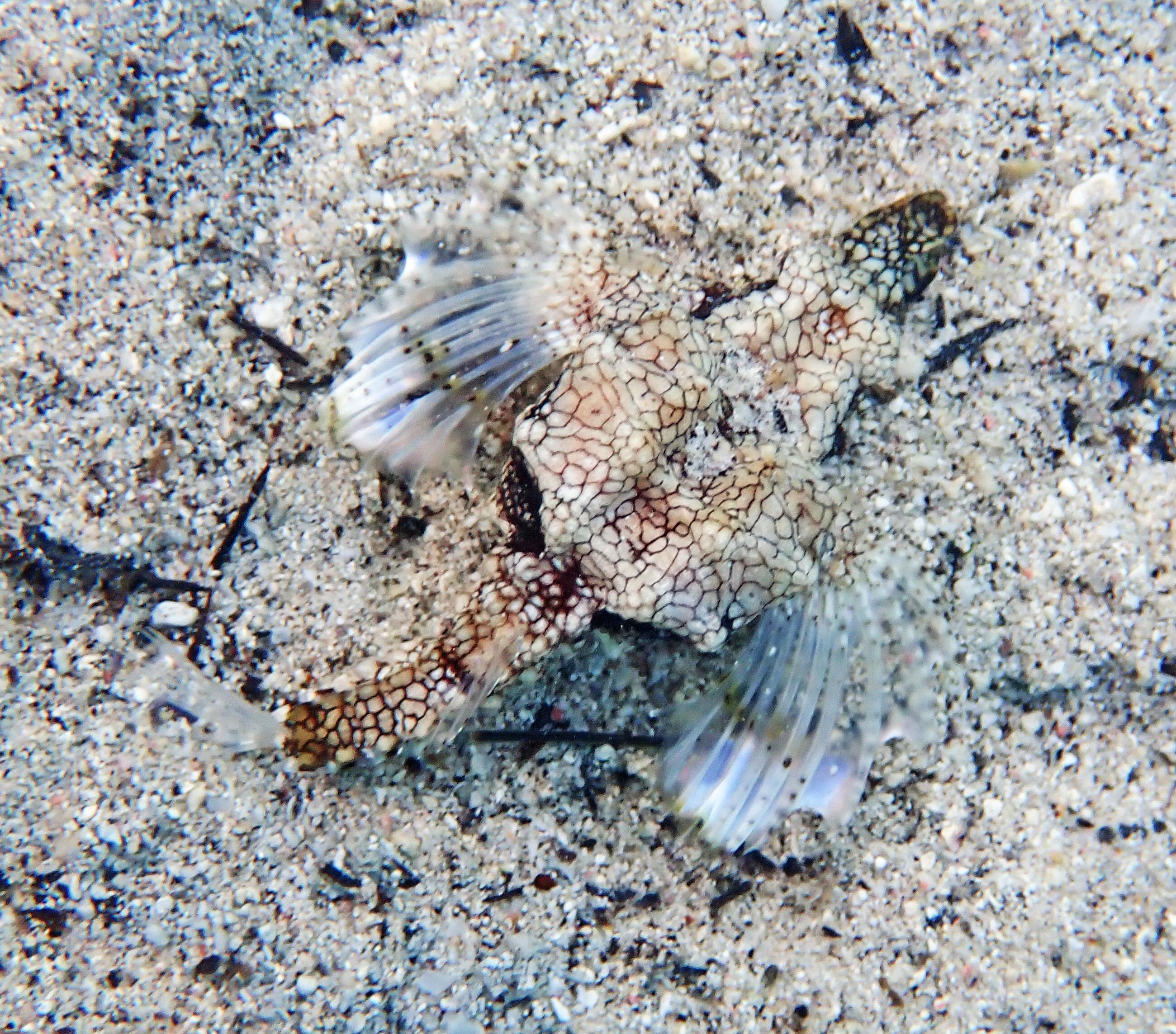
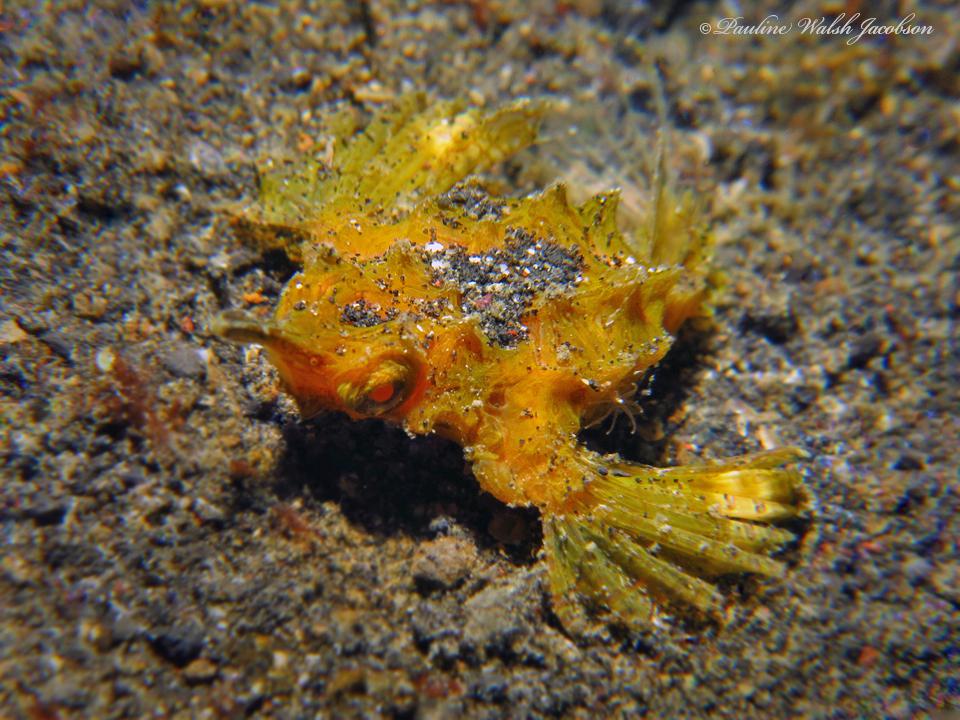
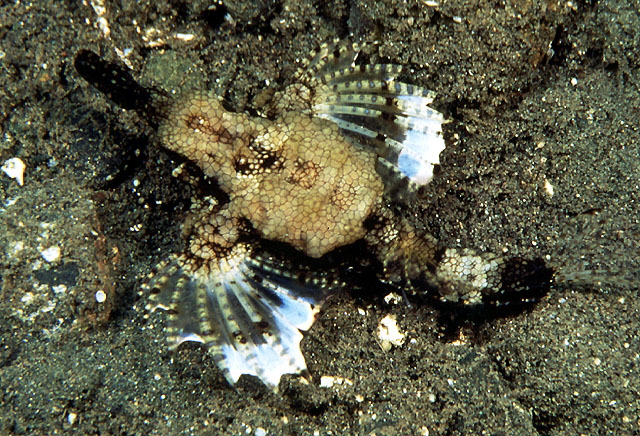
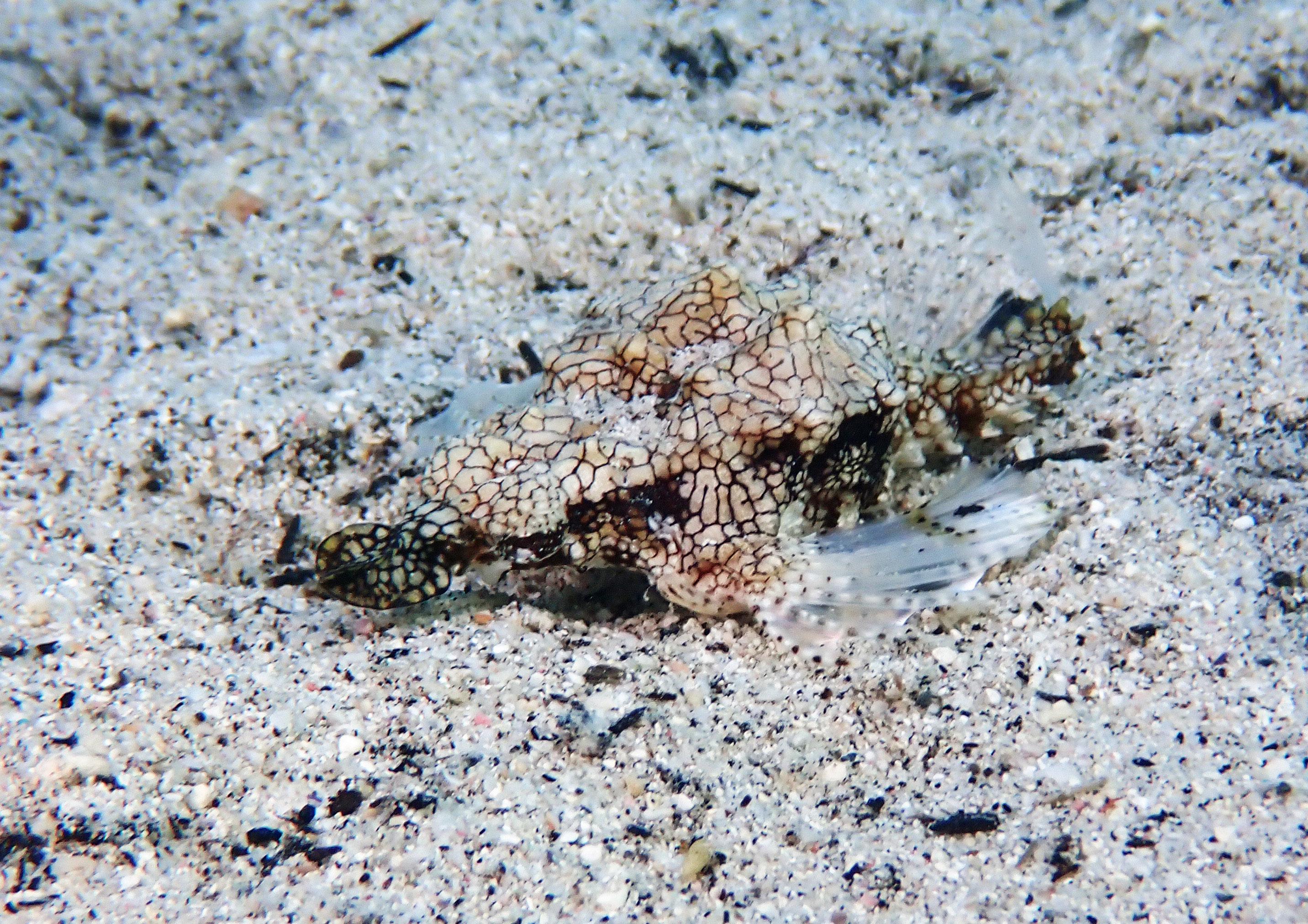
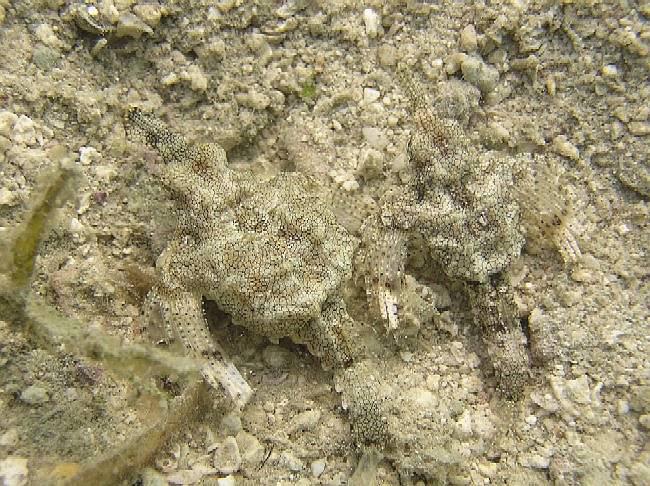
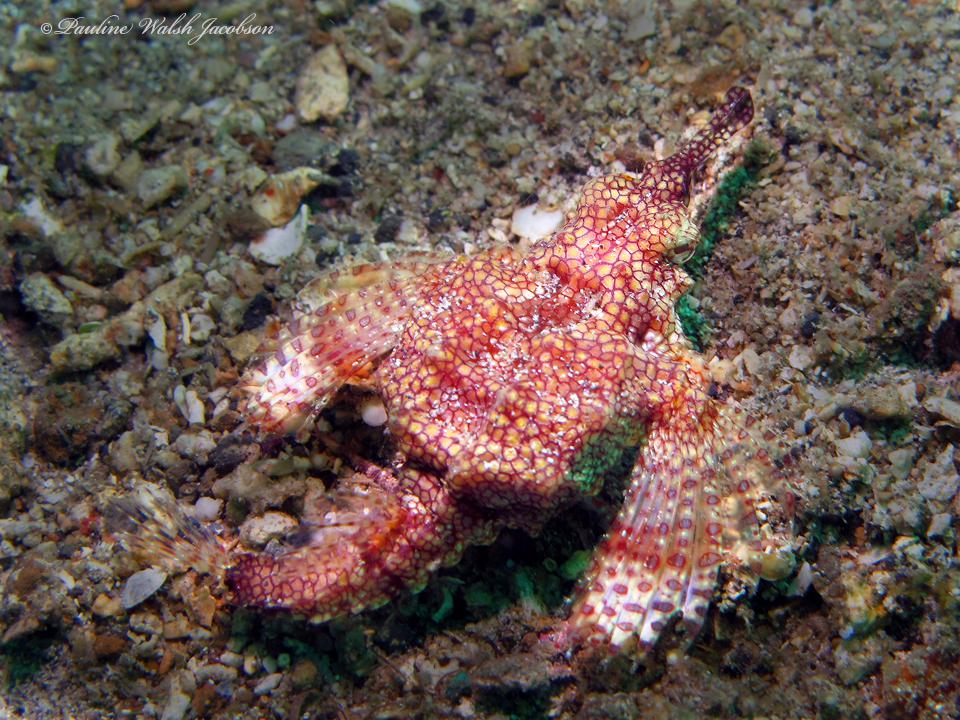
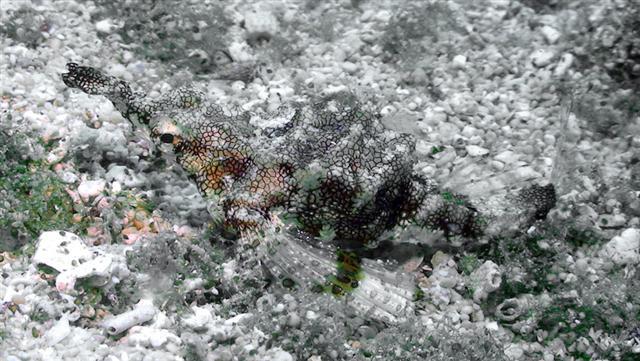
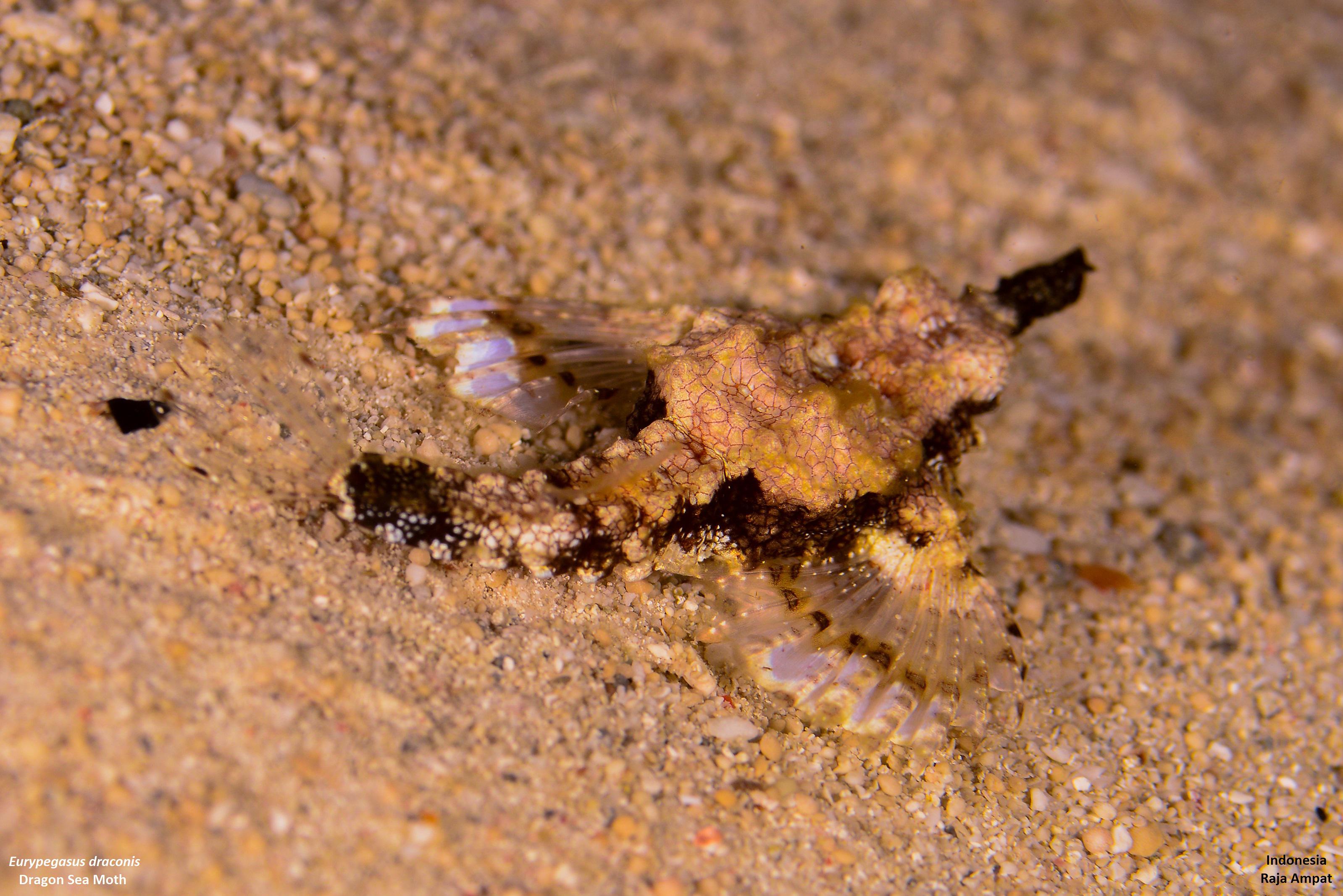
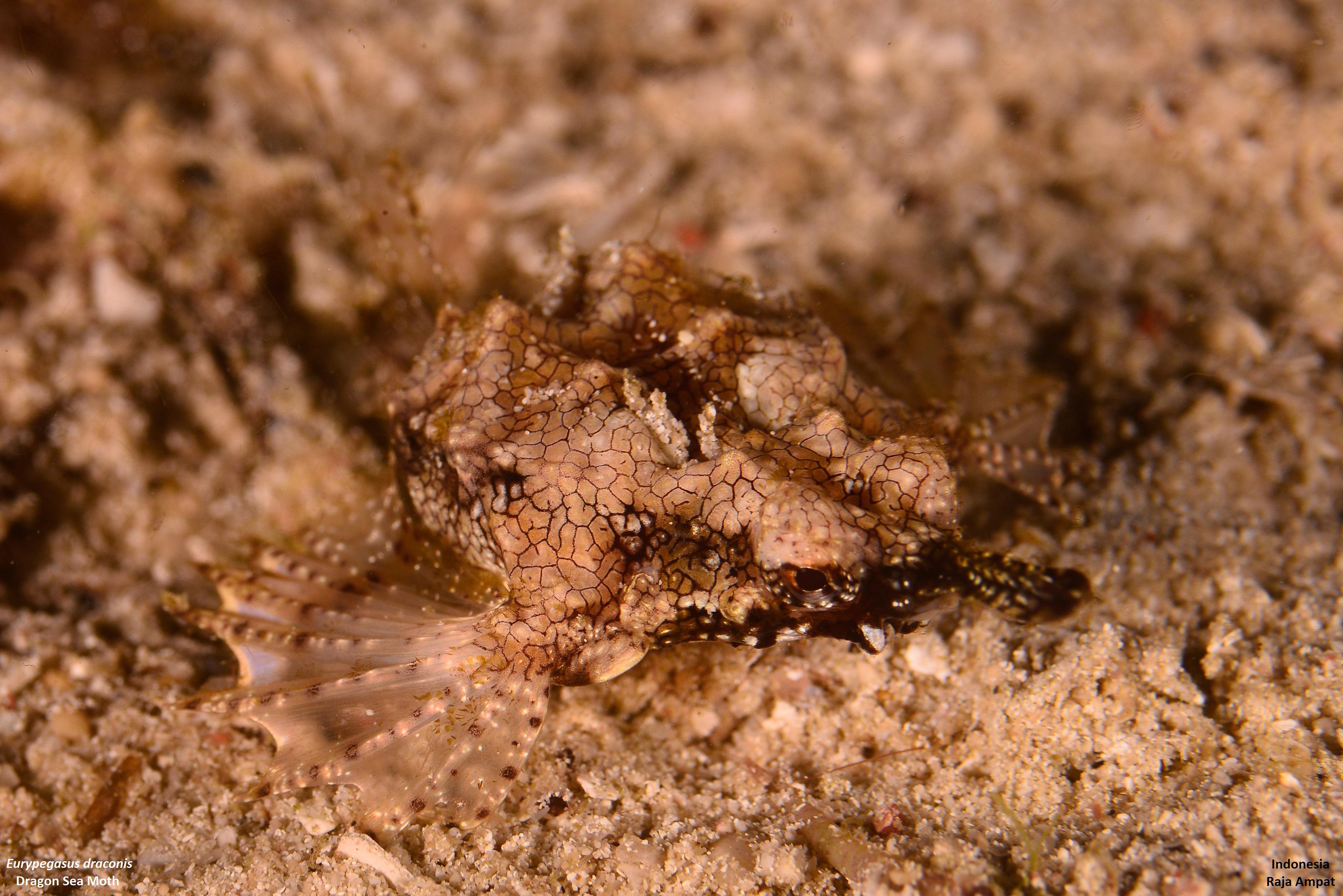
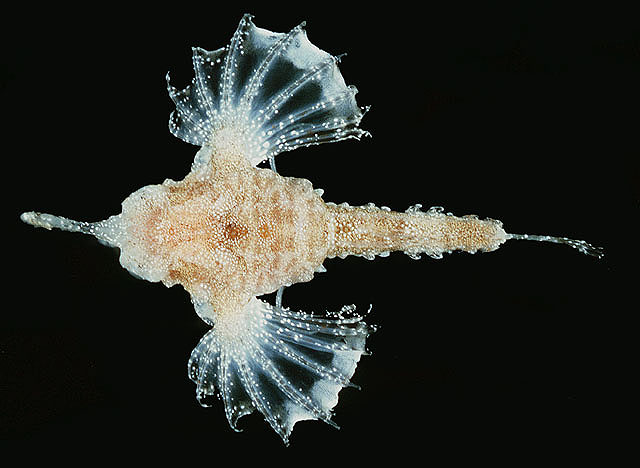
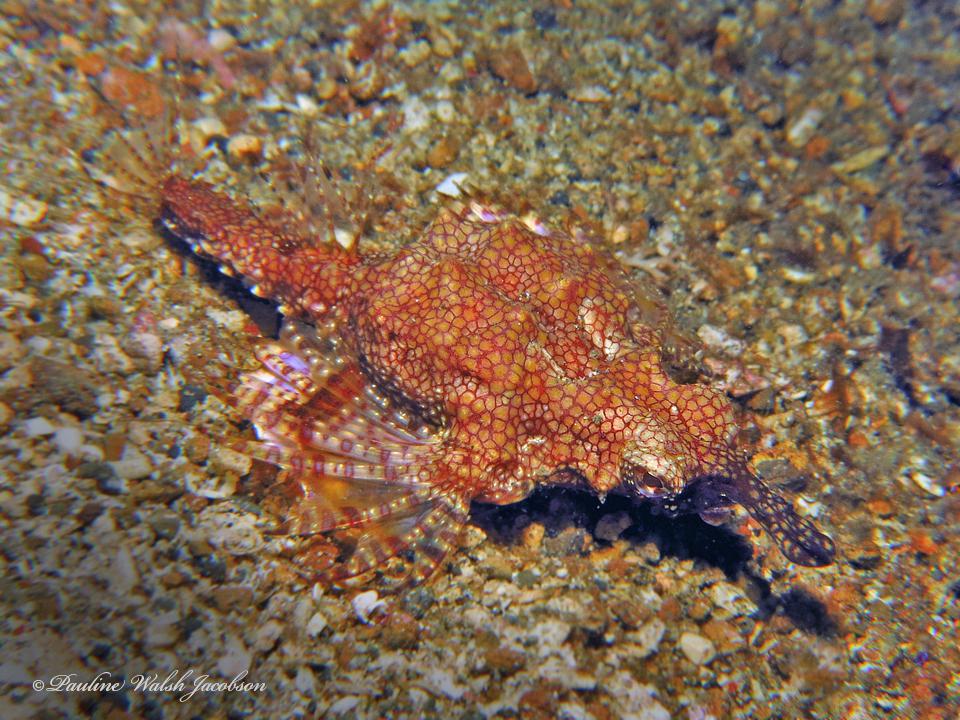
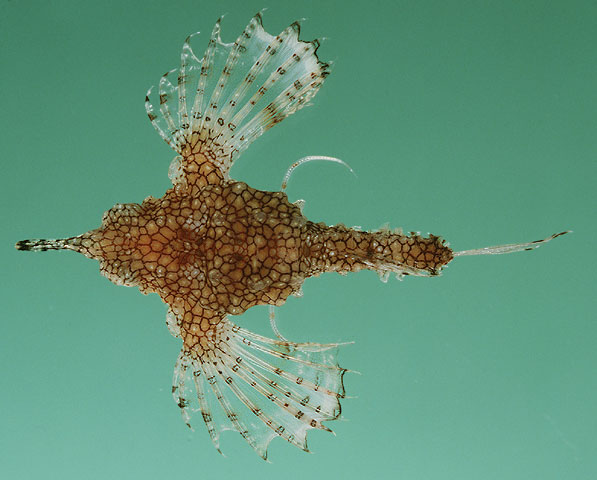
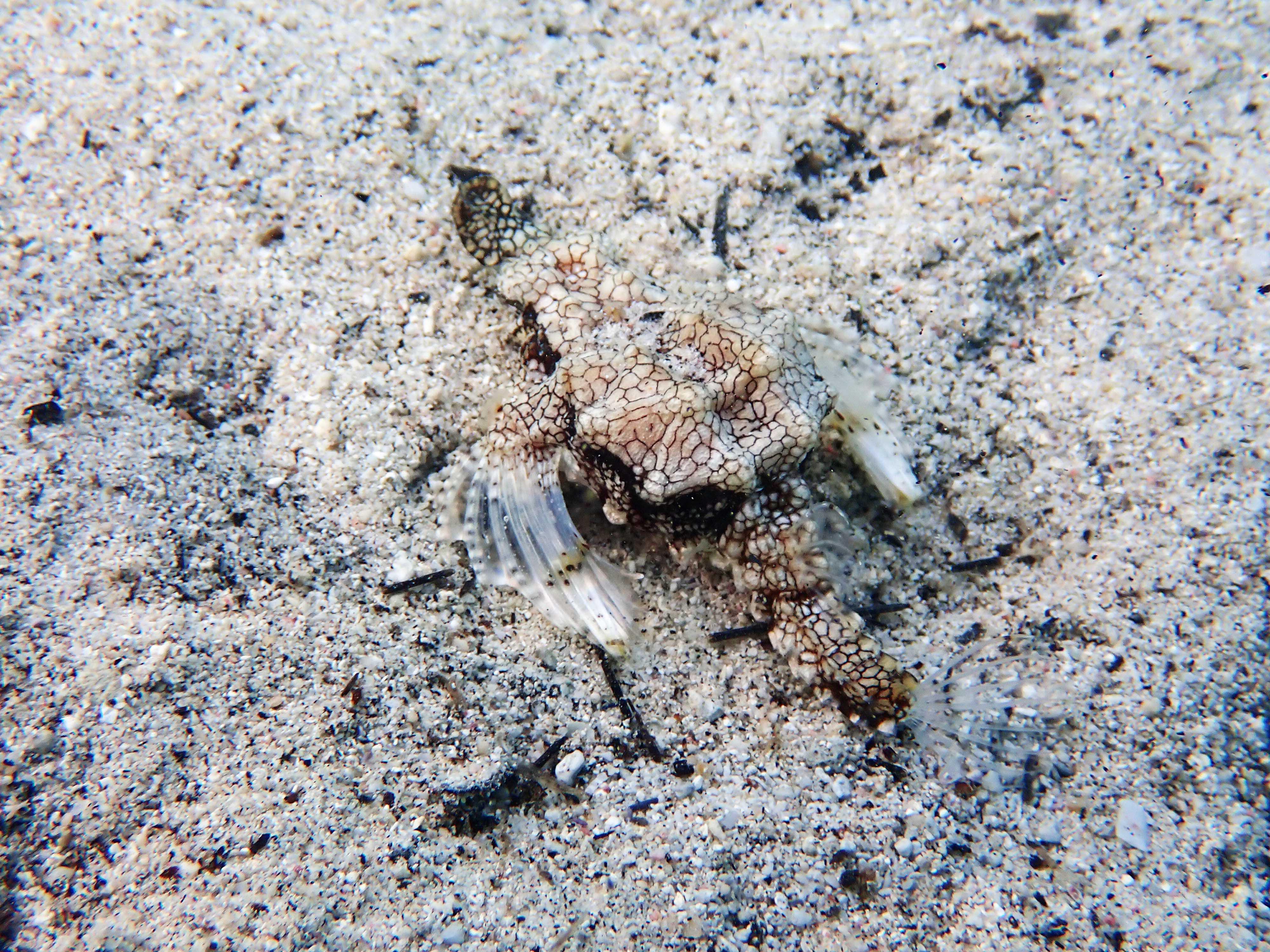
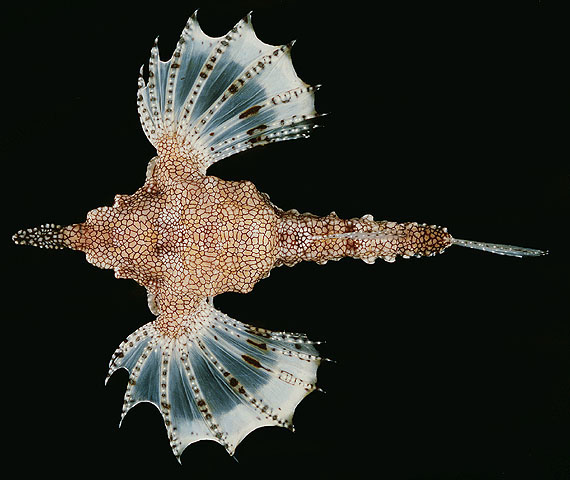
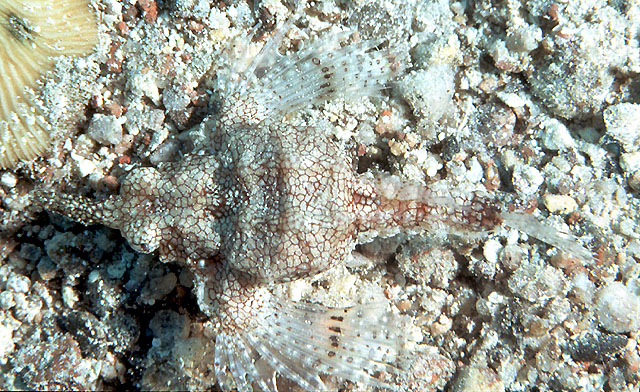
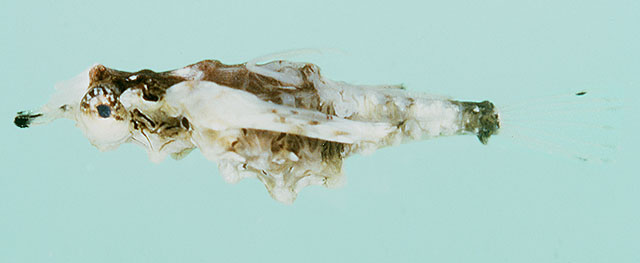
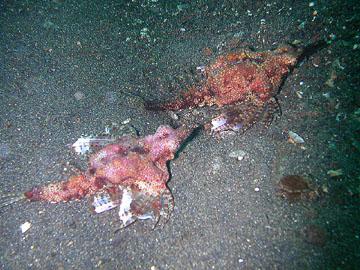
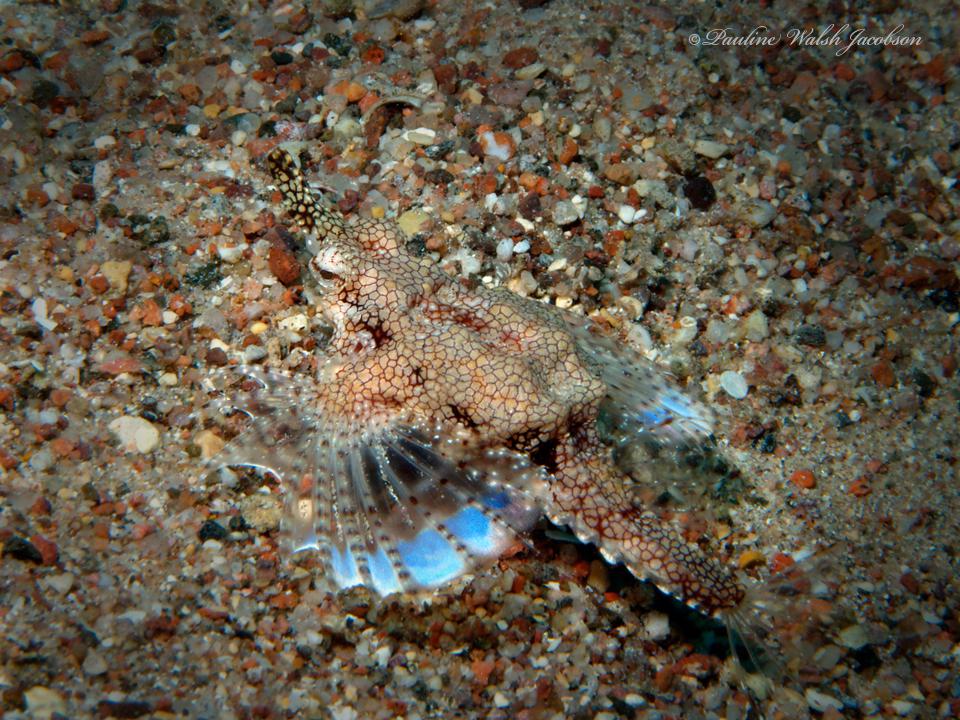
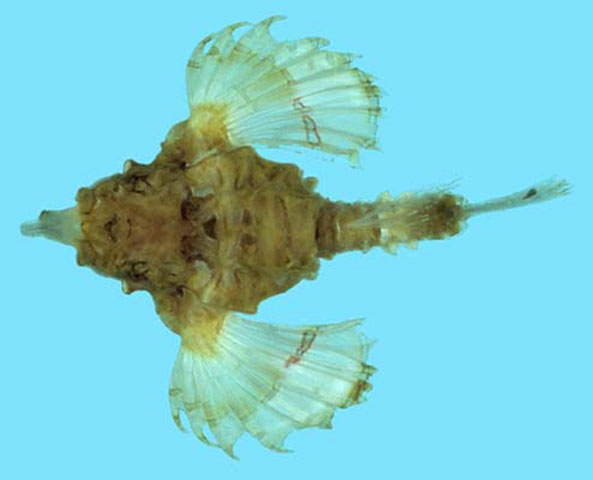
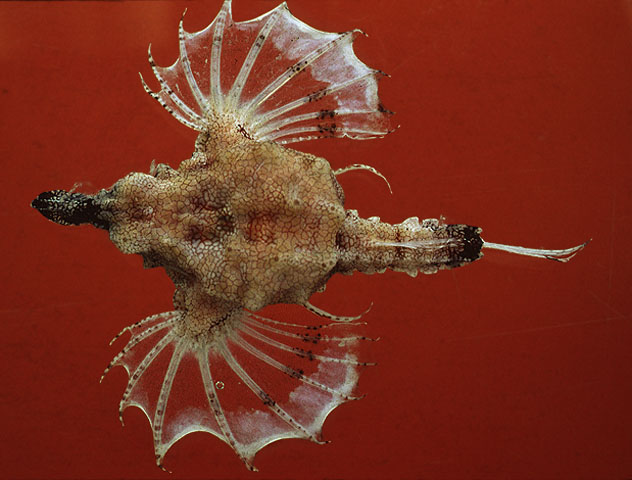
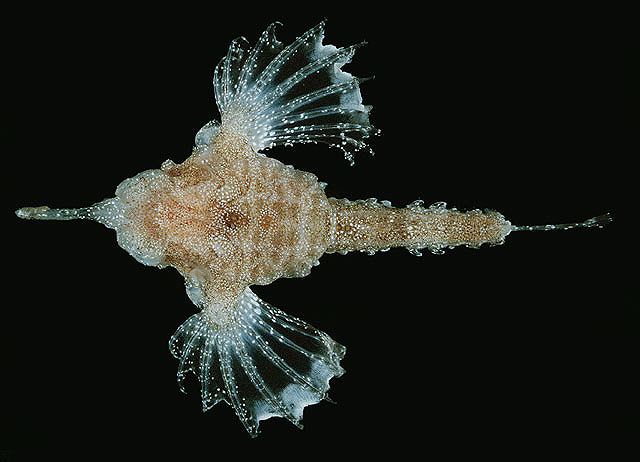
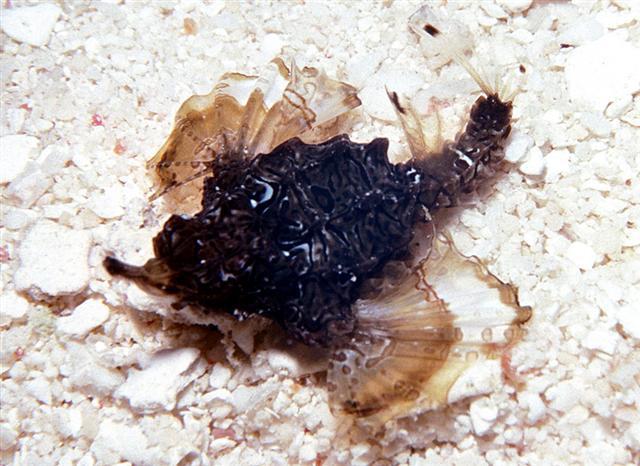
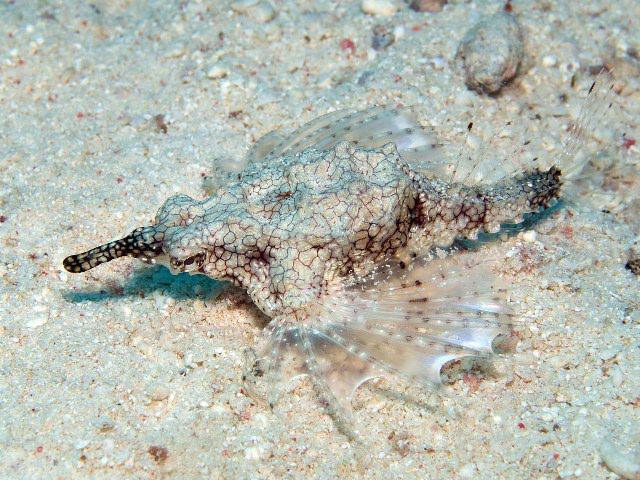
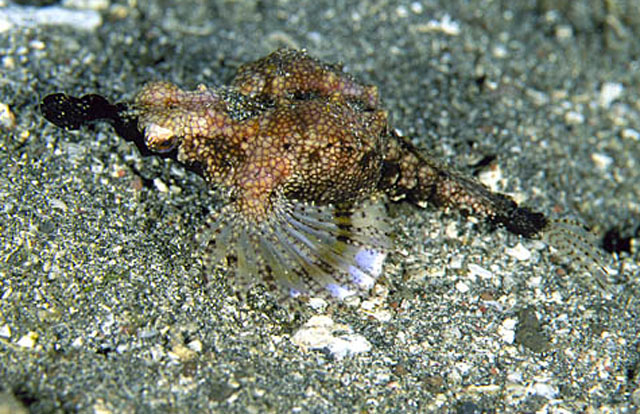
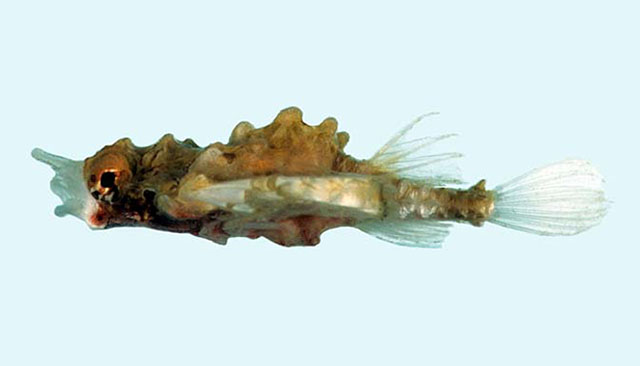
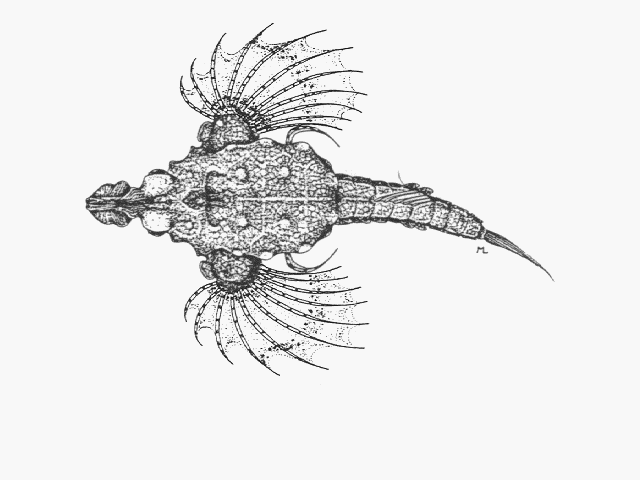
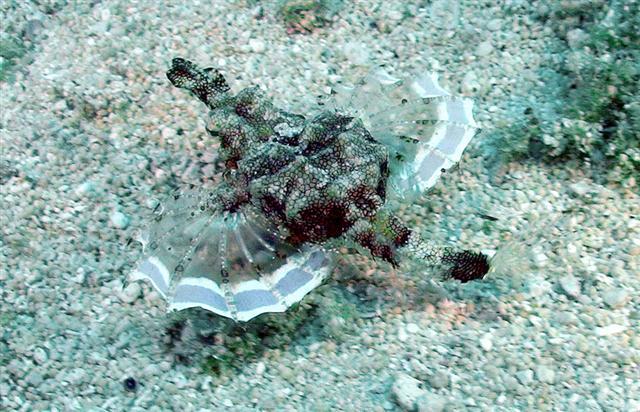
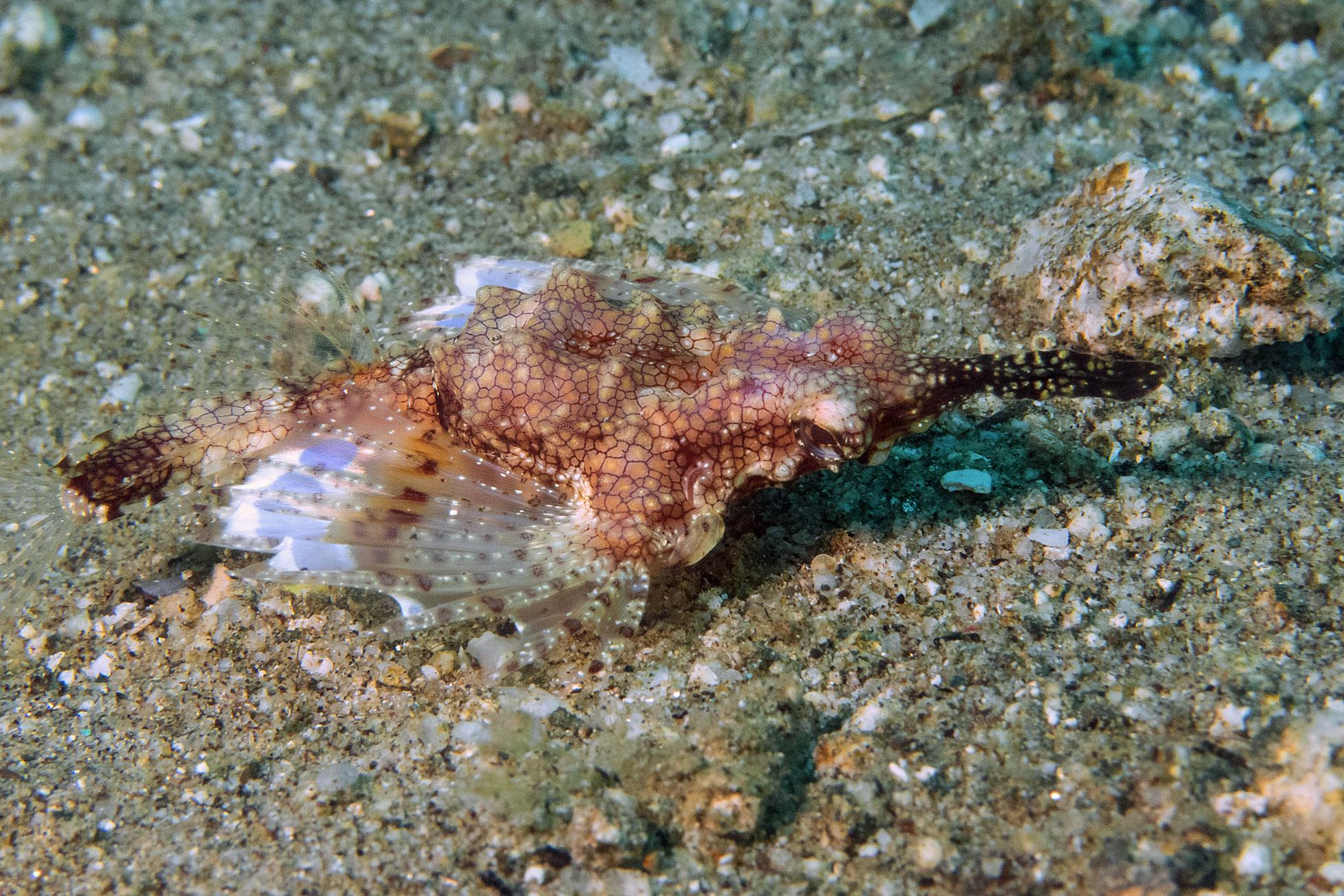
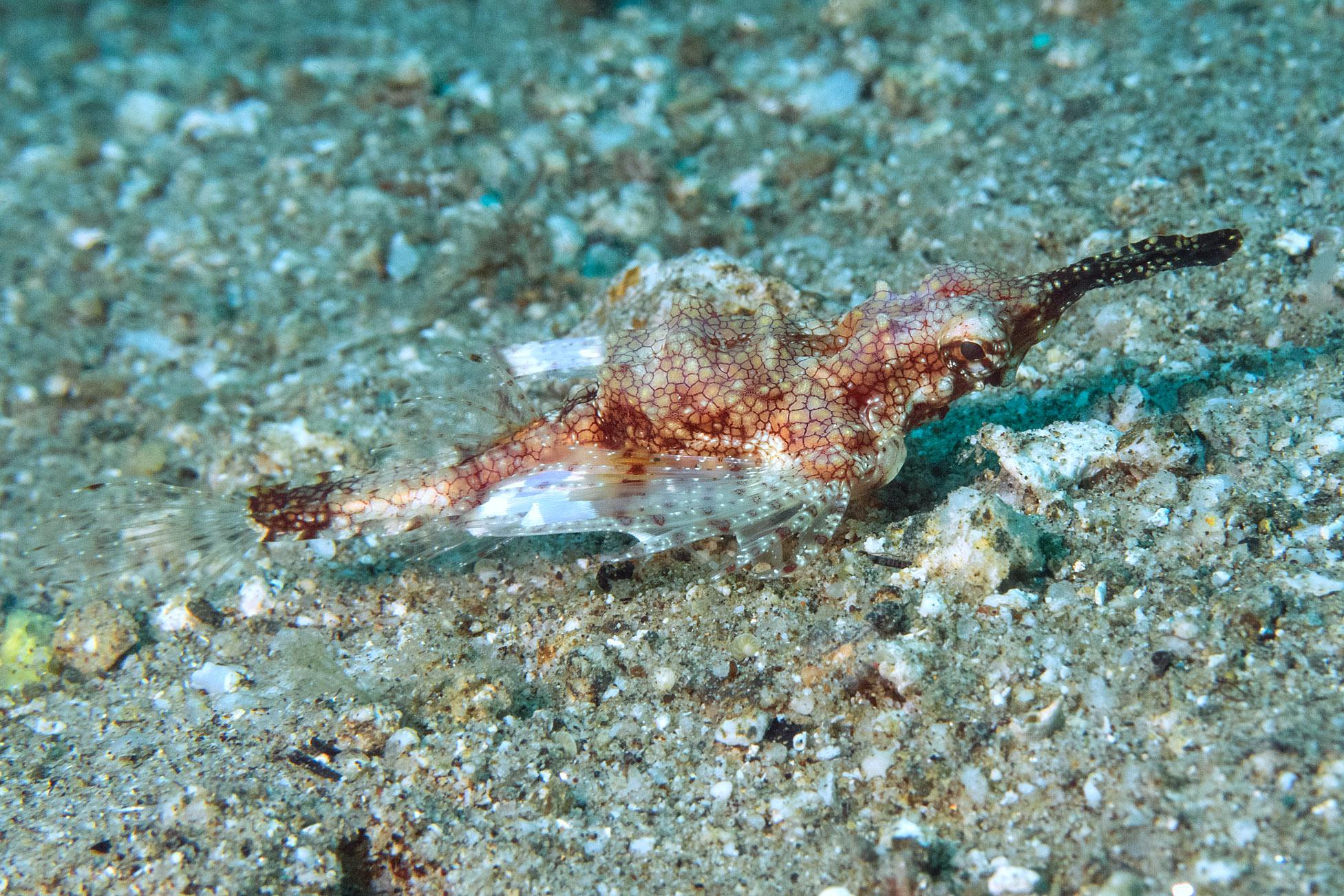
Dorsal spines (total): 0; Dorsal soft rays (total): 5; Anal spines: 0; Anal soft rays: 5; Vertebrae: 19 - 22. Color in life variable; body usually light to dark brown, with dorsal and lateral area darker than ventral surface. Pectoral fins hyaline, distal margin white and spotted. Pelvic fin spine and 1st ray forming an elongate, tentacular structure. 3 pairs of dorsolateral body plates; 4 pairs of ventrolateral body plates; tail rings 8 (rarely 9), mobile. A pair of deep pits posterior to orbit. Suborbital shelf concave, eye visible in ventral view. Ventral ridges of rostrum greatly expanded than dorsal ridges, each with laterally directed denticles. Anal papilla absent.
Common Names
Taxonomic Hierarchy
Kingdom: Animalia
Phylum: Chordata
Class: Teleostei
Order: Dactylopteriformes
Family: Pegasidae
Genus: Eurypegasus
Species: Eurypegasus draconis (Linnaeus, 1766)
Climate Zone
Location
- Indo-Pacific: Red Sea and South Africa (Ref. 4264) to Marquesan and Society Islands, north to southern Japan, south to Australia and Lord Howe Island; throughout Micronesia.
Biology
Inhabit lagoons often among algal or seagrass beds (Ref. 5503). Found on sand or silt bottoms, frequently in bays or estuaries (Ref. 3132). They are opportunistic feeders that collect mainly epifaunal and interstitial invertebrate prey, e.g., crustaceans and worms from the sediment-water interface (Ref. 31134). Shed their skin in one piece with a rapid jump periodically to rid themselves of accumulated ballast (Ref. 31134). Adults usually in pairs on muddy substrates (Ref. 48635). Has a monogamous mating system with close-pair bonding (Ref. 90102).
Habitat
brackish
Conservation Status
Least Concern
Threat to Humans
Harmless
Eurypegasus draconis (Linnaeus, 1766)