Euleptorhamphus viridis (van Hasselt, 1823)

Description
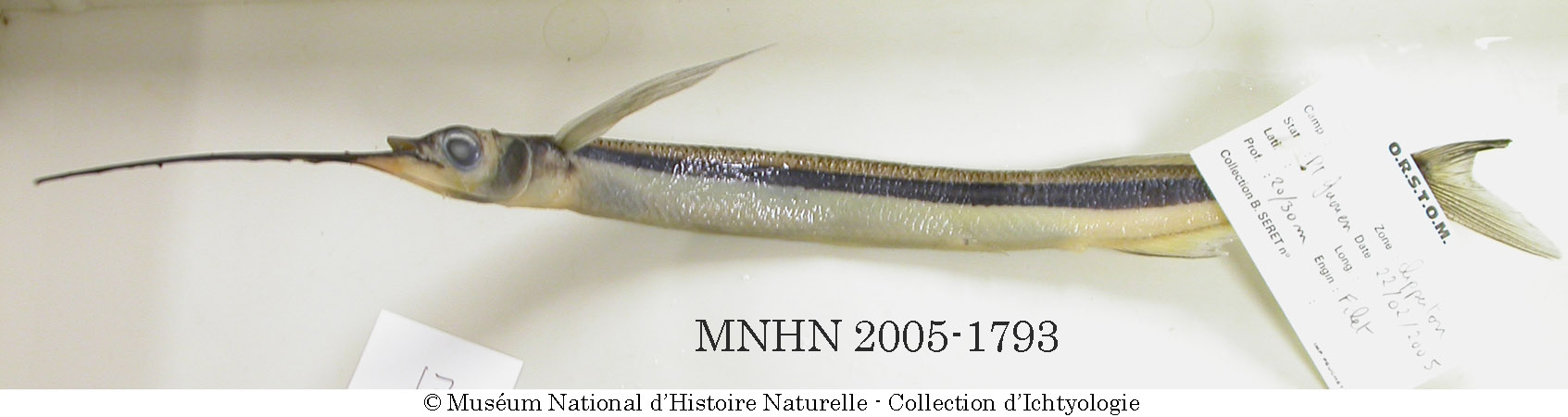
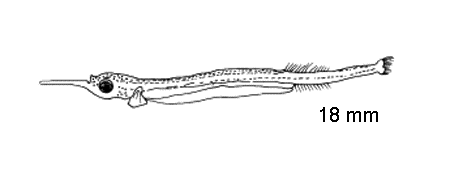
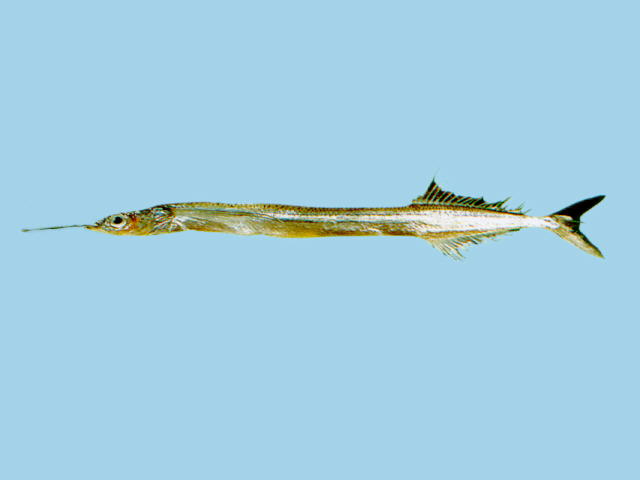
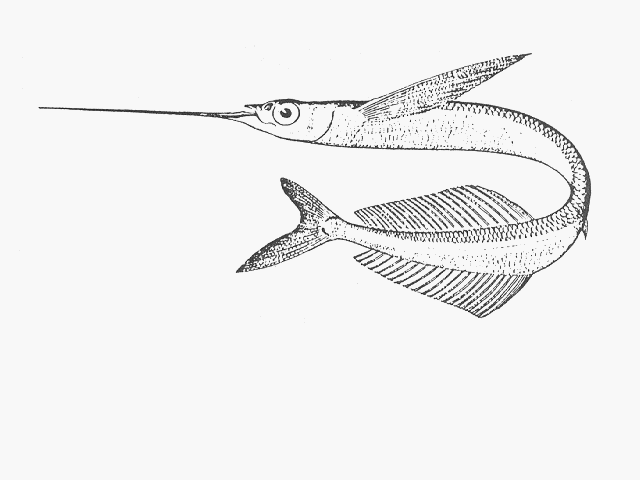
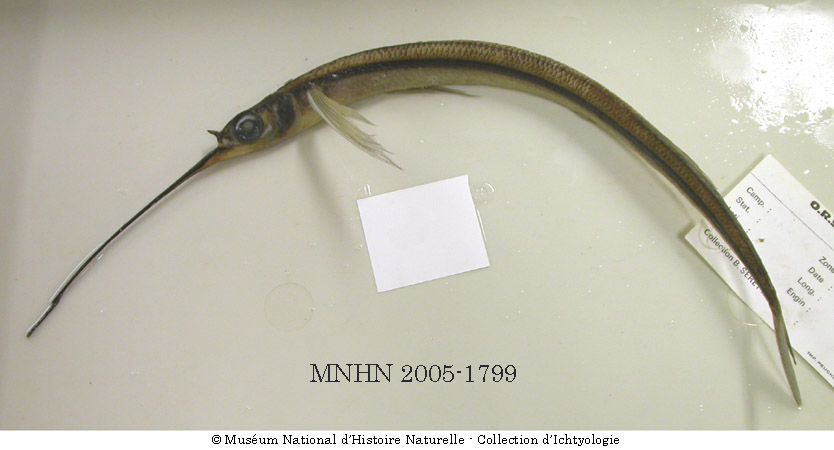
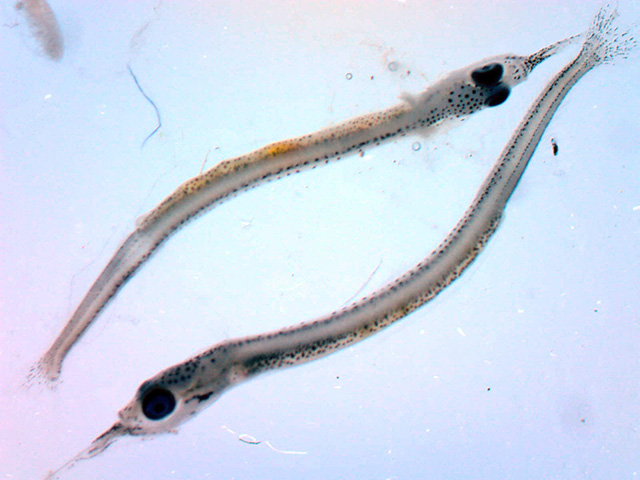
Dorsal spines (total): 0; Dorsal soft rays (total): 21 - 25; Anal spines: 0; Anal soft rays: 20 - 25; Vertebrae: 70 - 75. Body very elongate; lower jaw very prolonged; upper jaw short, triangular, and scaly; teeth present on vomer and tongue; dorsal fin with 22 to 25 rays; anal fin with 22 to 24 rays; pectoral fins long, with 8 or 9 rays; back iridescent blue green; belly silvery (Ref. 55763). Fins unpigmented (Ref. 4164).
Common Names
Taxonomic Hierarchy
Kingdom: Animalia
Phylum: Chordata
Class: Teleostei
Order: Beloniformes
Family: Hemiramphidae
Genus: Euleptorhamphus
Species: Euleptorhamphus viridis (van Hasselt, 1823)
Climate Zone
Location
- Indo-Pacific: Red Sea and East Africa to Hawaii (Ref. 583) and Tonga, north to southern Japan, south to Australia, New Zealand and Kermadec Islands (Ref. 8879). Eastern Pacific: southern California, USA to Ecuador, including the Galapagos Islands (Ref. 2850).
Biology
Usually oceanic but enters large open bays (Ref. 2850). Found around islands (Ref. 9306). Capable of jumping out of the water and gliding above the surface (Ref. 9306).
Habitat
oceanic
Conservation Status
Not Evaluated
Threat to Humans
Harmless
Euleptorhamphus viridis (van Hasselt, 1823)