Ctenopoma kingsleyae Günther, 1896
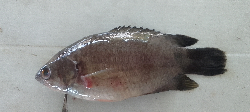
Description
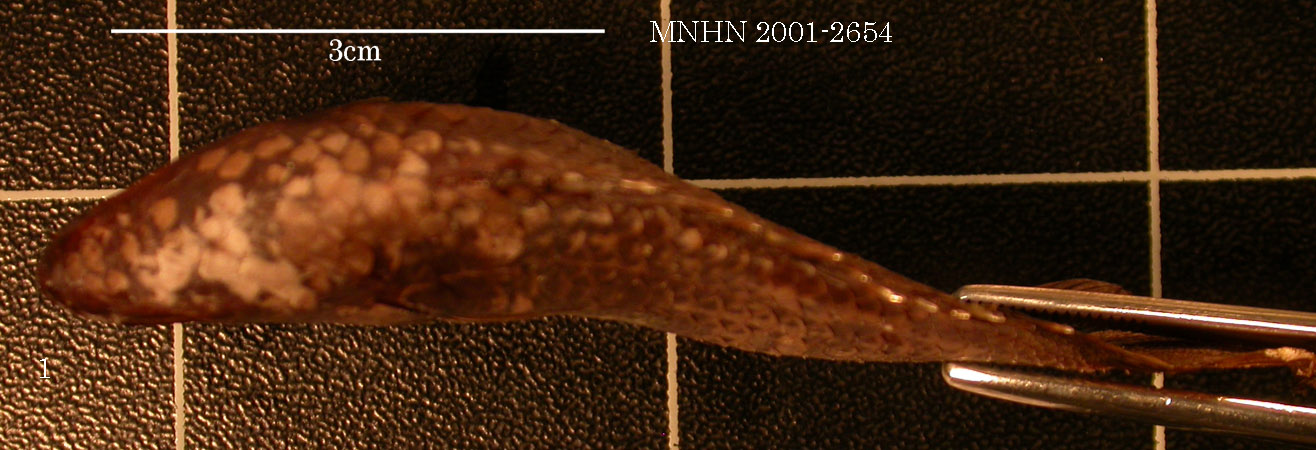
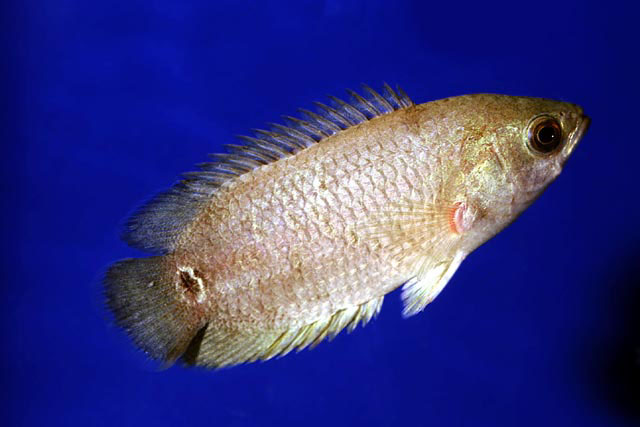
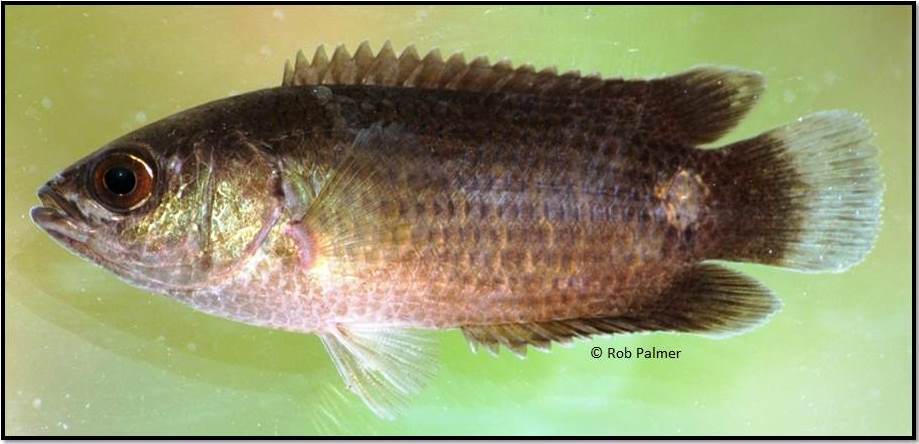
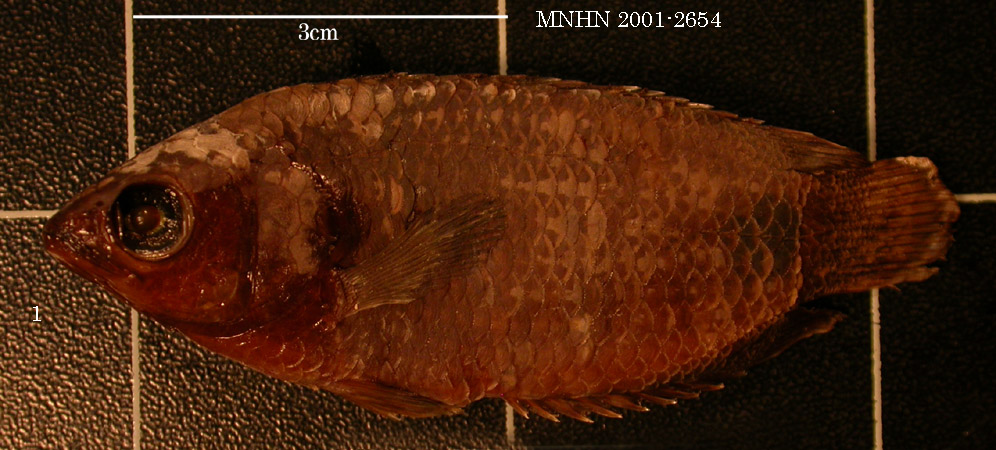
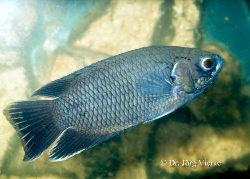
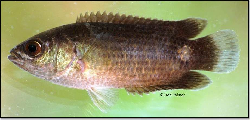
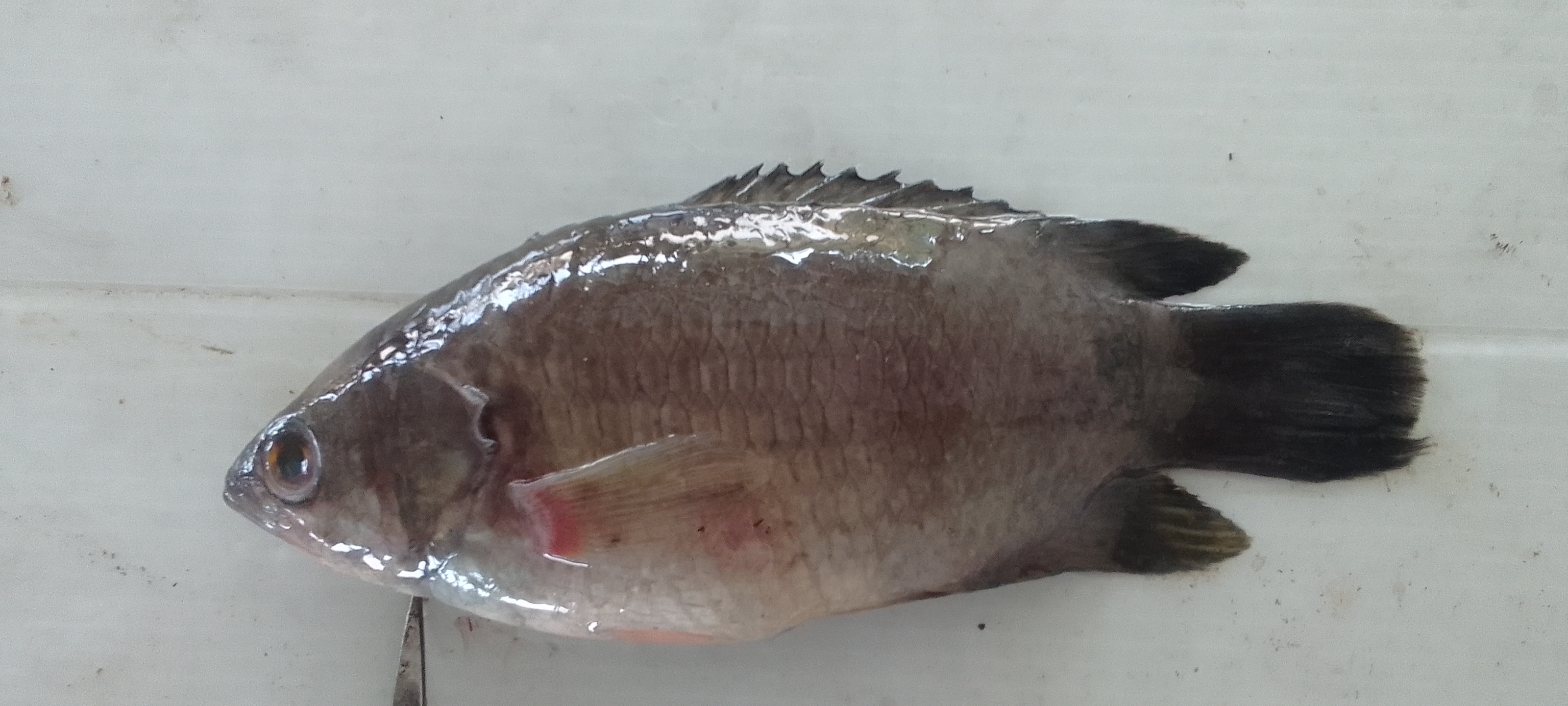
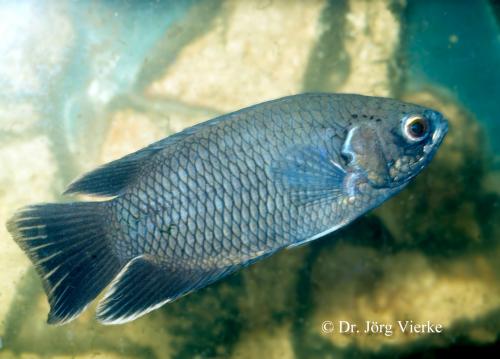
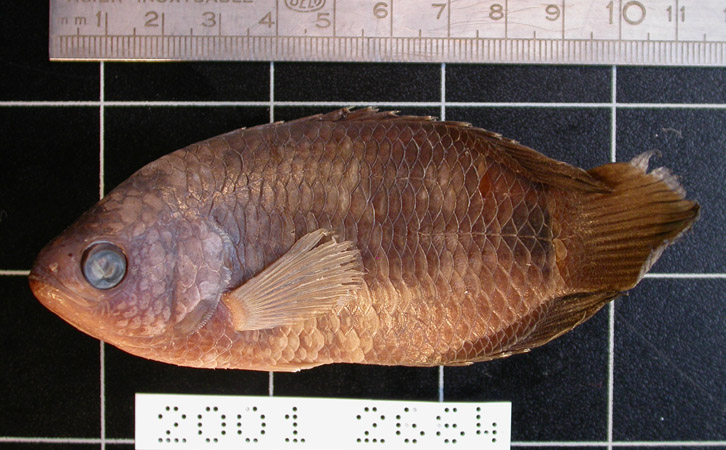
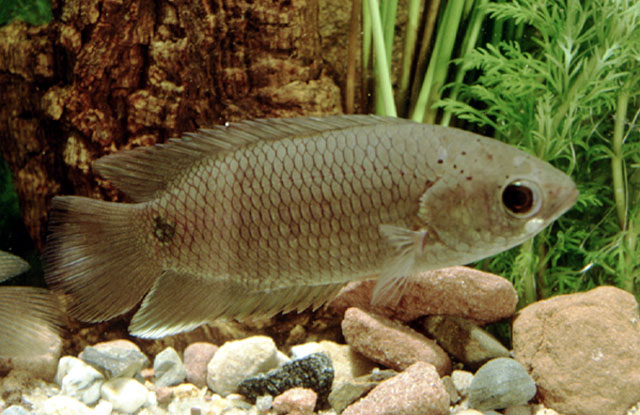
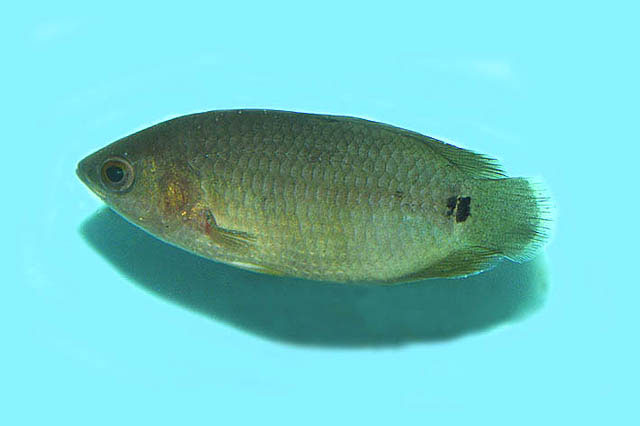
Dorsal spines (total): 16 - 18; Dorsal soft rays (total): 10 - 13; Anal spines: 8 - 10; Anal soft rays: 10 - 13; Vertebrae: 25 - 26. Diagnosis: snout blunt; jaws weakly protrusible (ascending process of premaxilla short, not reaching anterior border of orbit) (Ref. 57414). Pelvic fins very lightly pigmented (Ref. 57414, 81650, 93191) or unpigmented (Ref. 81650). Labyrinth composed of a complex, multiple folded plate (Ref. 57414, 81650, 93191). Adults larger than 75 mm SL; body depth into SL usually fewer than 3 times; spot at base of caudal fin without pale ring in adults; lachrymal never serrated (Ref. 57414). Body and head grey or tan (Ref. 81650), flanks without faint mottling (Ref. 57414, 81650, 93191). 3-3.5 scales in upper and 8-8.5 in lower vertical series (Ref. 93191). 4 scales from last pored scale in upper lateral line to dorsal-fin base (counting pored scale) (Ref. 57414). 10-18 pored scales in upper lateral line (Ref. 81650), 9-14 in lower (Ref. 93191). 11-16 scales on right operculum; interorbit into head length 2.3-3.0 (Ref. 93191).
Common Names
Taxonomic Hierarchy
Kingdom: Animalia
Phylum: Chordata
Class: Teleostei
Order: Anabantiformes
Family: Anabantidae
Genus: Ctenopoma
Species: Ctenopoma kingsleyae Günther, 1896
Climate Zone
Location
- Africa: Senegal (Ref. 57414) to Democratic Republic of the Congo (Ref. 93897), including the basins of the Senegal, Volta, Niger (Ref. 57414) and Congo (Ref. 81650). Also reported from Mauritania (Ref. 55783). Widespread in Lower Guinea but known from relatively few localities (Ref. 81650).
Biology
Obligate air-breathing (Ref. 126274); Prefers forest regions (Ref. 7393, 57414).
Habitat
benthopelagic
Conservation Status
Least Concern
Threat to Humans
Harmless
Ctenopoma kingsleyae Günther, 1896