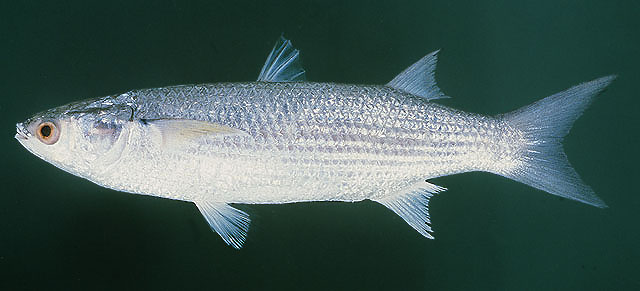
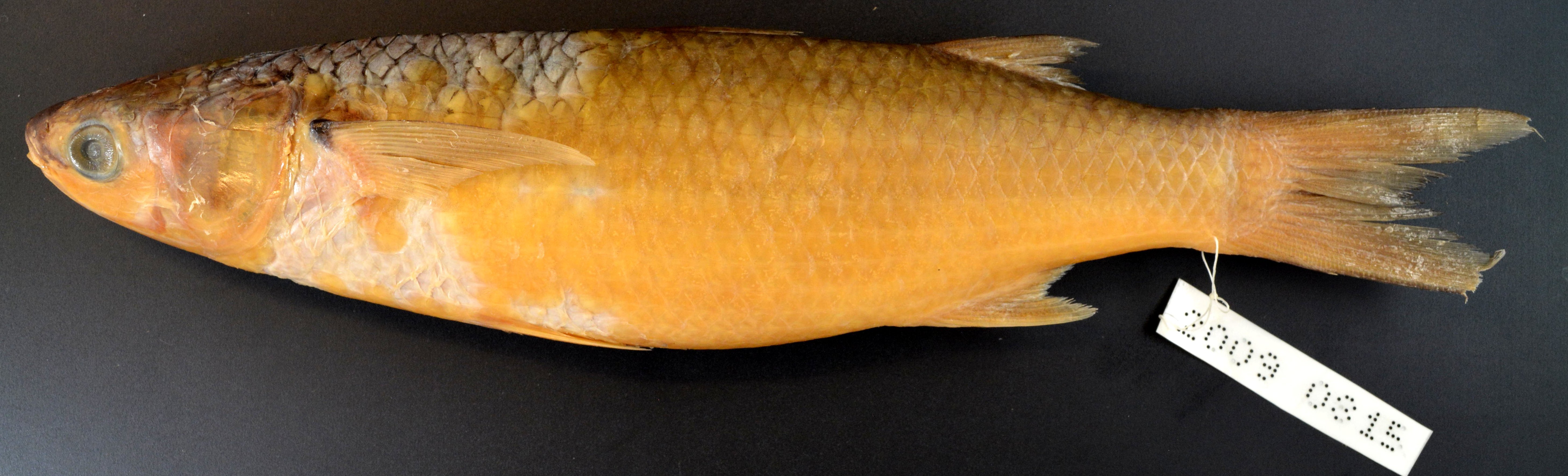
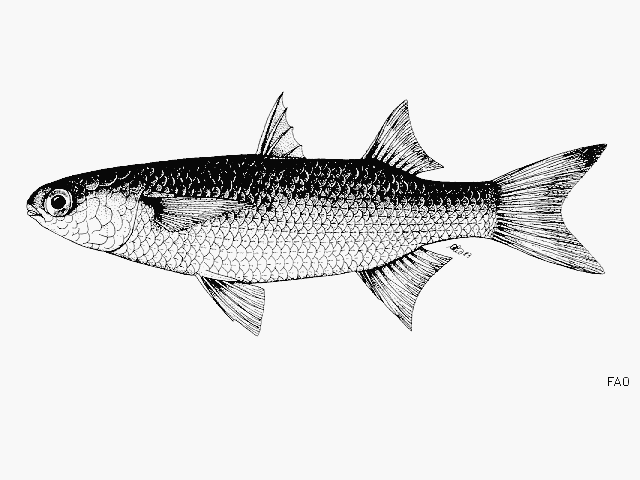
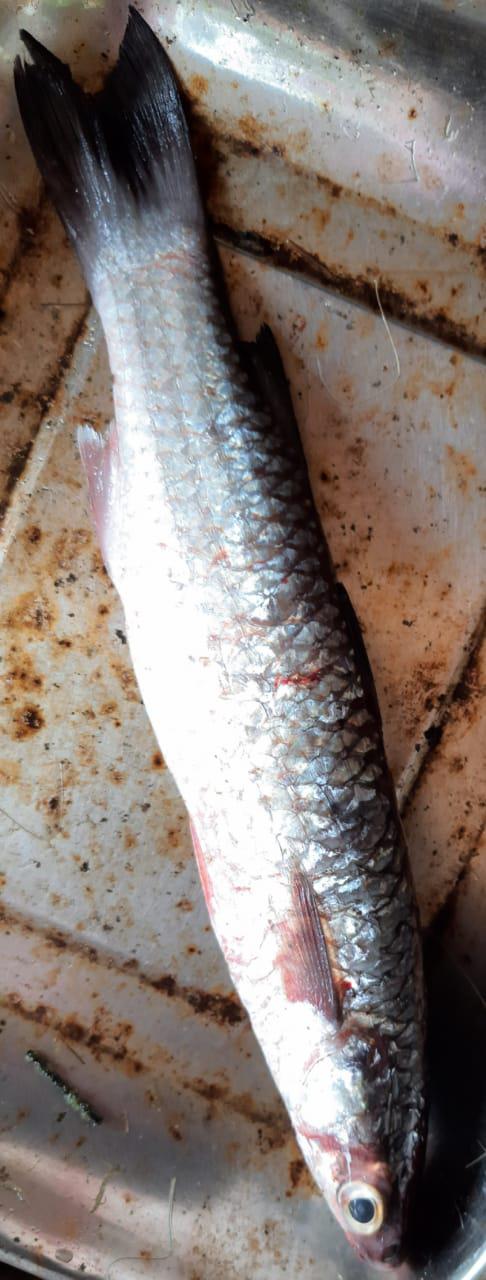
Crenimugil seheli (Fabricius, 1775)
Description


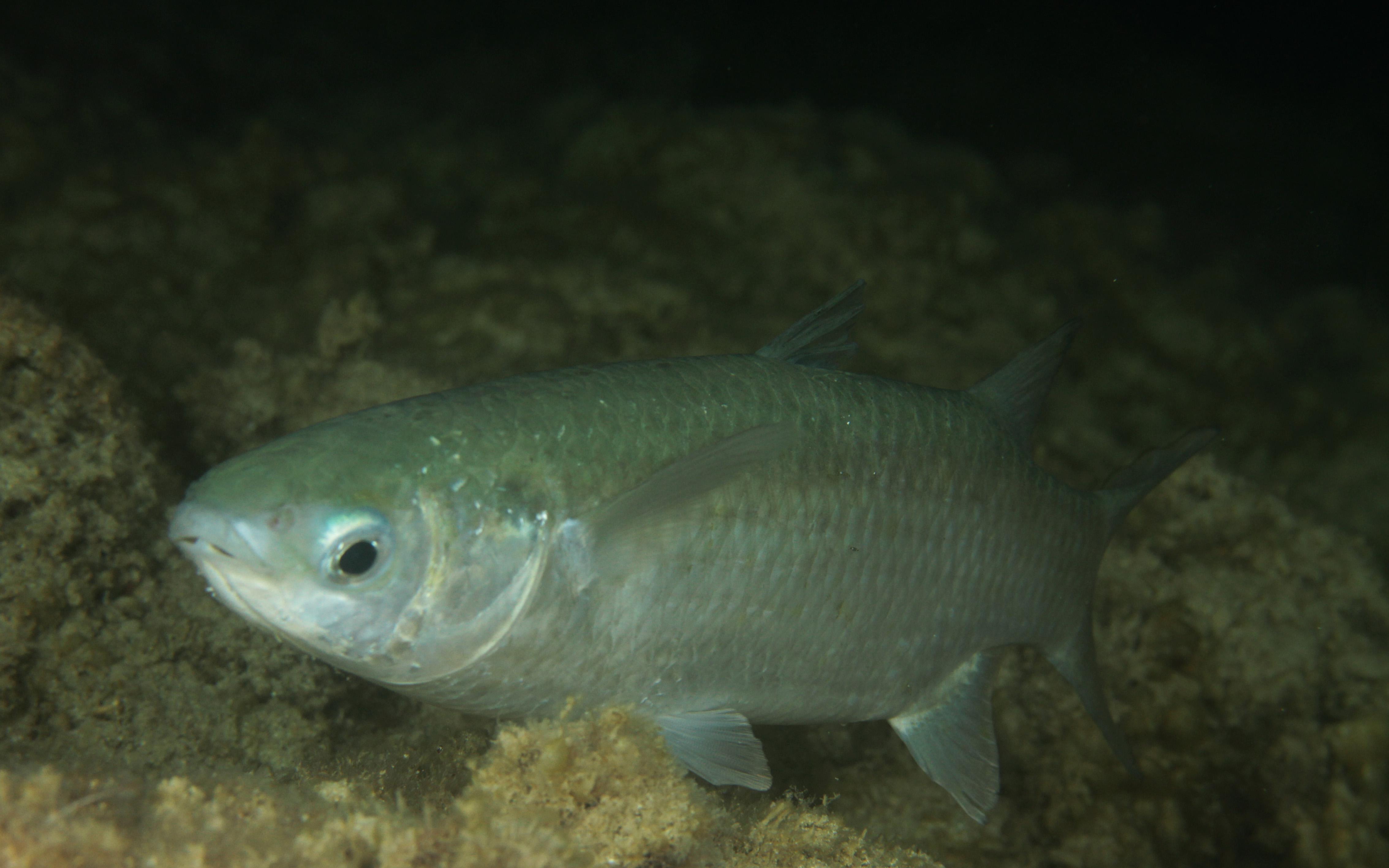
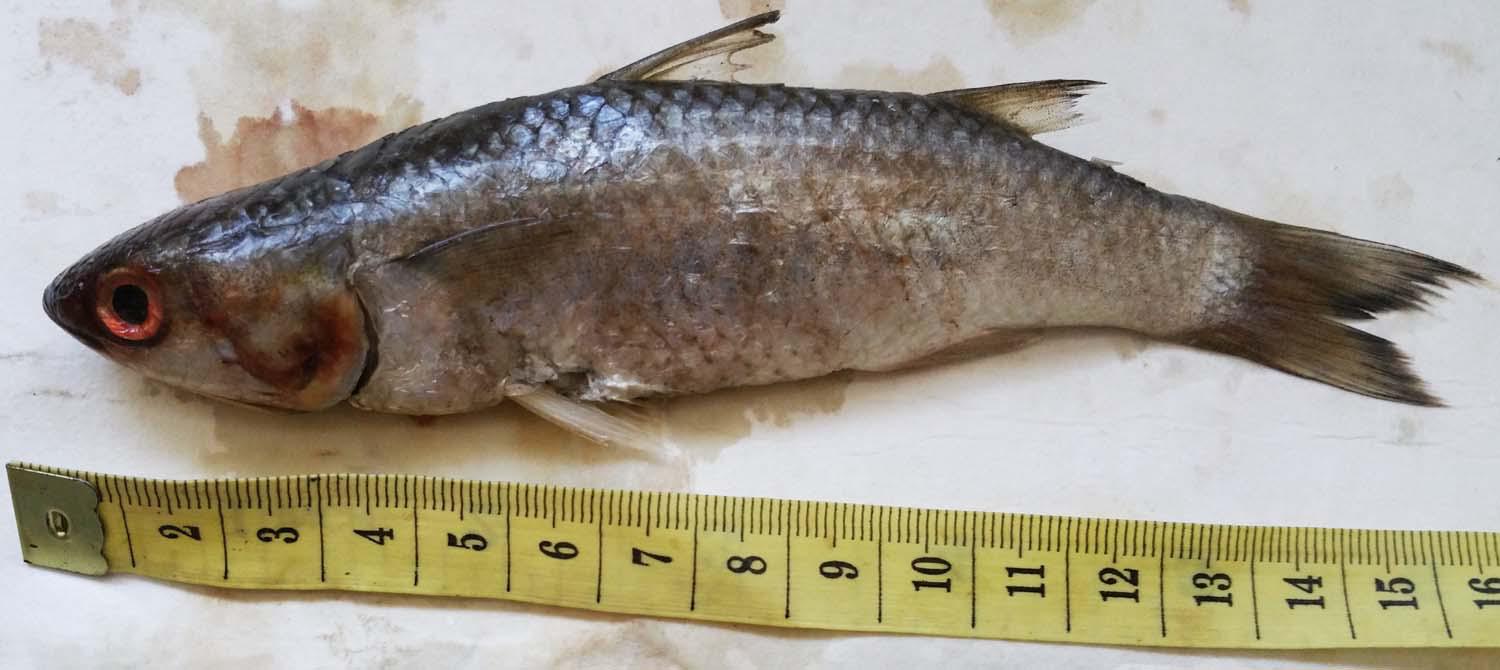
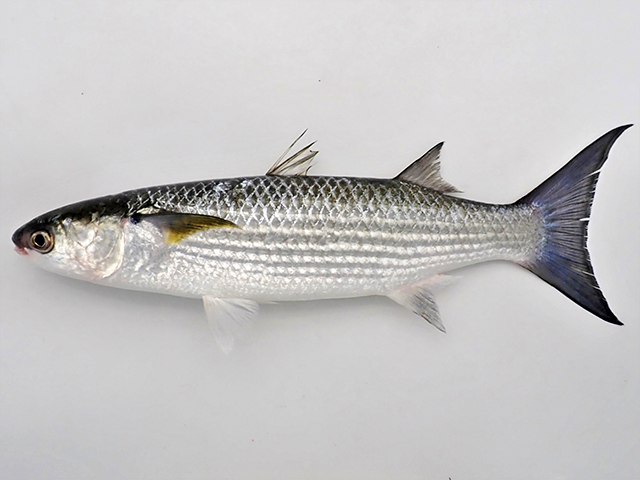
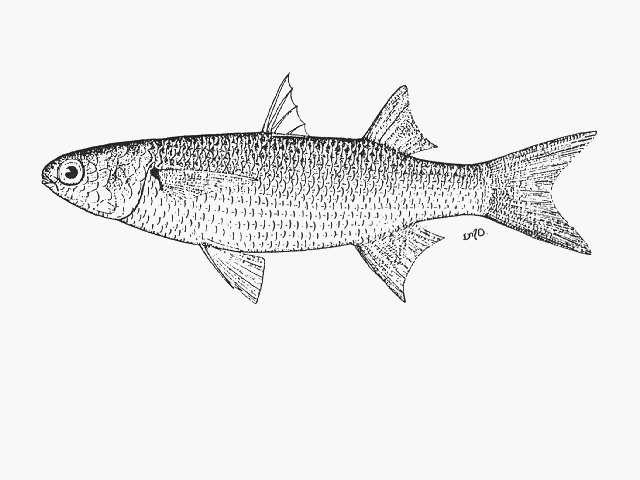
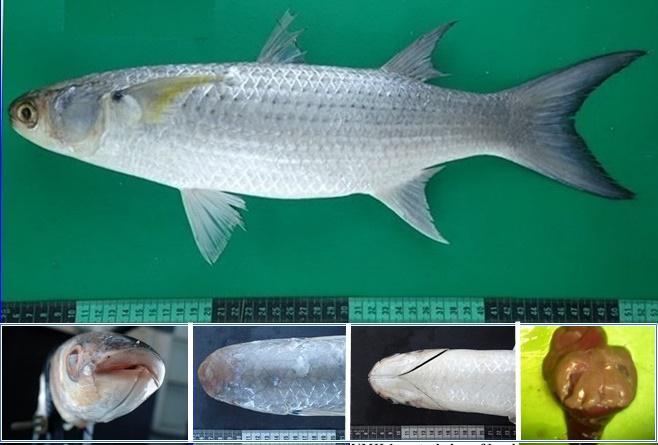
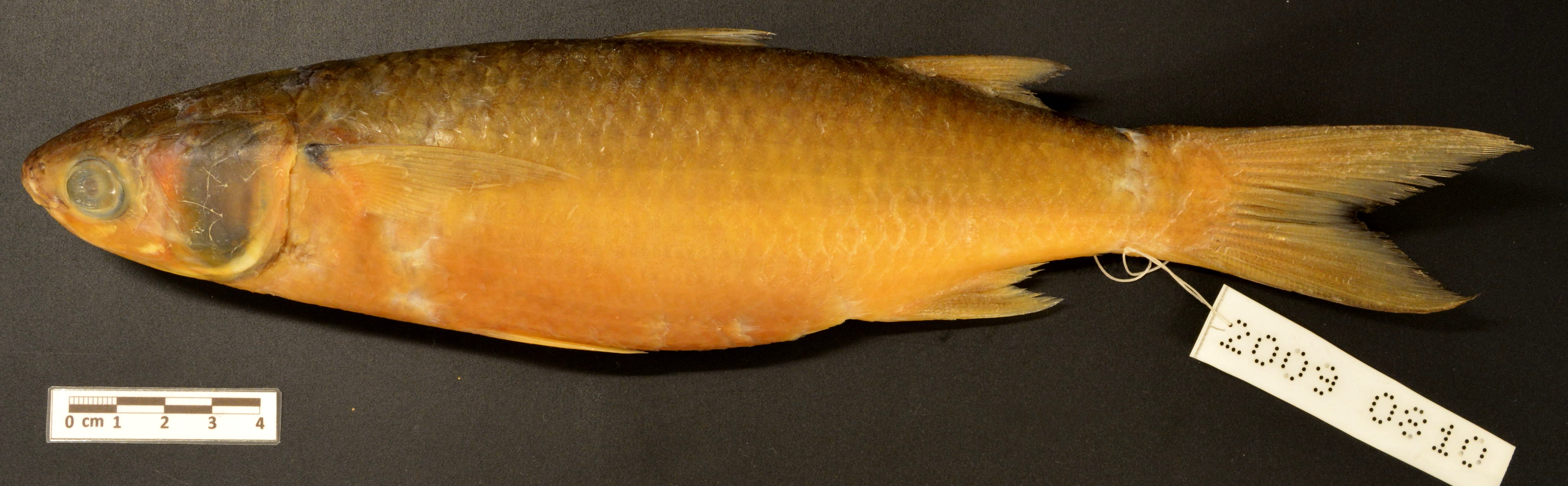
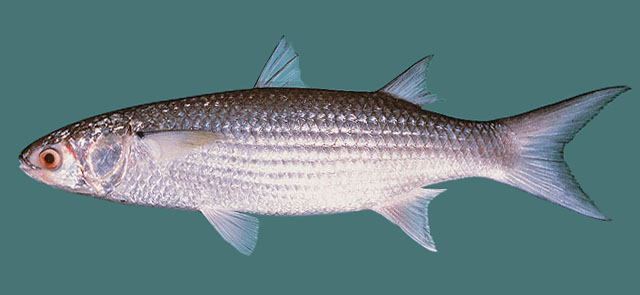
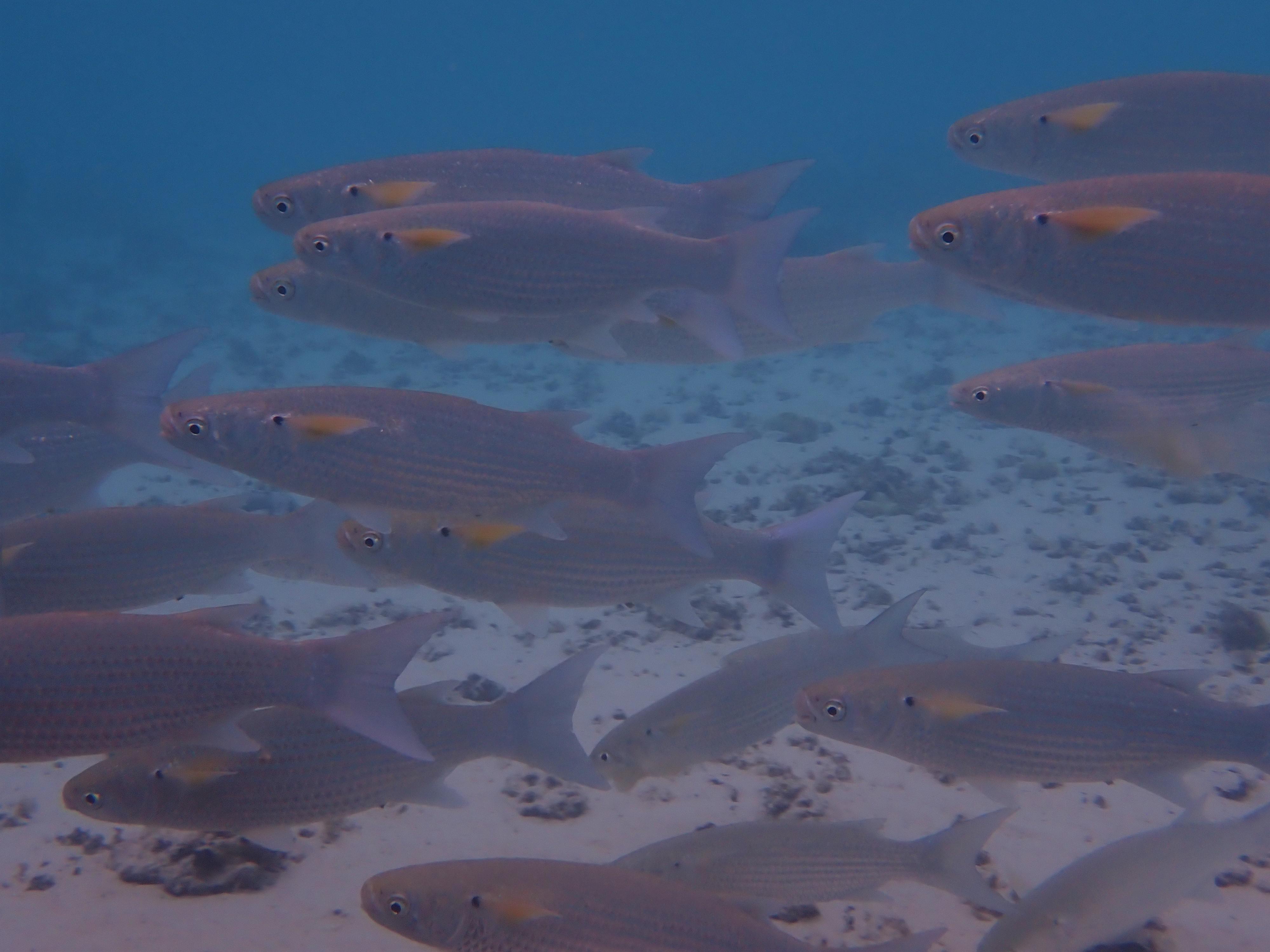
Dorsal spines (total): 5; Dorsal soft rays (total): 8 - 9; Anal spines: 3; Anal soft rays: 9. Diagnosis: Characterized by having membranous, digitate posterior margin on scales; snout shorter than eye diameter; slender maxilla and weakly curved ventrally at posterior tip, partially or completely concealed; poorly developed adipose eyelid as rim around eye; preorbital weakly concave on anteroventral edge (Ref. 90102).

Common Names


  • Bloukol-harder
  • Balanak
  • Anubah
  • Araby
  • Beyah
  • Biah
  • Biah arabi
  • Biyah
  • Gawafa
  • Gutarana
  • \u0628\u0648\u0631\u064a \u0630\u0648 \u0628\u064f\u0642\u0639\u0629 \u0632\u0631\u0642\u0627\u0621
  • Aguas
  • Araran
  • Saranaa
  • Tabudyos
  • \u5713\u543b\u51e1\u9bd4
  • \u859b\u6c0f\u51e1\u9bd4
  • \u85cd\u5c3e\u70cf\u982d
  • \u85cd\u5c3e\u9c6d
  • Aitam
  • Yaiuw
  • Yaiuwach
  • Yaiuwetam
  • Gisaw
  • Banak
  • Lisas
  • Mil\u00e9
  • Bl\u00e5plettet multe
  • Multe
  • Banak
  • Gisaw
  • Black-spot mullet
  • Blue-spot mullet
  • Blue-spotmullet
  • Bluespot grey mullet
  • Bluespot mullet
  • Bluespot mullet
  • Bluespot mullet
  • Bluespot mullet
  • Bluespot mullet
  • Bluespot mullet
  • Bluespot mullet
  • Bluespot mullet
  • Bluetail mullet
  • Bluetail mullet
  • Bluetail mullet
  • Even sand mullet
  • Grey Mullet
  • Long-armed mullet
  • Long-finned mullet
  • Mullet
  • Mullets
  • Sand mullet
  • Kanace
  • Keteleka
  • Sevou
  • Muge
  • Mulet
  • Mulet
  • Mulet
  • Mulet \u00e0 queue bleue
  • Mulet \u00e0 queue bleue
  • Mulet \u00e0 tache bleue
  • Mulet \u00e0 tache bleue
  • Meer\u00e4sche
  • K\u00e9phalos
  • Gisaw
  • Tungkaw
  • R\u00f6ndungur
  • Lapes
  • Ludong
  • Lumitog
  • Lurung
  • Pasga
  • Cefalo
  • Muggine
  • Taiwan-menada
  • Balanak
  • Madathale
  • Majni
  • Pare
  • \u0caa\u0cbe\u0cb0\u0cc6
  • \u0cae\u0c9c\u0ccd\u0ca8\u0cbf
  • \u0cae\u0ca6\u0ca5\u0cbe\u0cb2\u0cc6
  • Banak
  • Balanak
  • Belanak
  • Belanak
  • Belanak angin
  • Belanak angina
  • Gadah
  • Gereh
  • Jangis
  • Jempol
  • Kedera
  • Kedera tanda biru
  • Rapang
  • Kanambu
  • Mallan
  • Thirutha
  • \u0d15\u0d23\u0d28\u0d4d\u0d2a\u0d4d
  • \u0d15\u0d23\u0d28\u0d4d\u0d35\u0d4d
  • \u0d24\u0d3f\u0d30\u0d41\u0d24
  • \u0d2e\u0d32\u0d4d\u0d32\u0d28\u0d4d
  • \u0d2e\u0d3e\u0d32\u0d3e\u0d28\u0d4d
  • \u5706\u543b\u51e1\u9cbb
  • \u5706\u543b\u51e1\u9cbb
  • \u5713\u543b\u51e1\u9bd4
  • \u591a\u9c57\u83ab\u9bd4
  • \u591a\u9cde\u83ab\u9cbb
  • Banak
  • Kanahe
  • Multe
  • Magi
  • Kelat
  • Walamugil
  • Mugem
  • Ta\u00ednha
  • Tainha mancha azul
  • Cipli
  • Caanood
  • Capiton
  • Galupe
  • Lisa
  • Lisa de mancha azul
  • Mujol
  • Mkizi
  • Mkizi
  • Agwas
  • Asubi
  • Balungain
  • Banak
  • Bilungan
  • Gagapang
  • Kapak
  • Lumitog
  • Sumalapau
  • Talilong
  • Tandipil
  • Avulimeen
  • Cheluvakandai
  • Chiryakandai
  • Gejameenakendai
  • Madavai
  • Madavakandai
  • Manalai
  • Sarya
  • Velisa
  • \u0b85\u0bb5\u0bc0\u0bb2\u0bc0 \u0bae\u0bc0\u0ba9\u0bcd
  • \u0b85\u0bb5\u0bc1\u0bb3\u0bbf \u0bae\u0bc0\u0ba9\u0bcd
  • \u0b95\u0bc6\u0b9c\u0bae\u0bc0\u0ba9\u0b95\u0bcd \u0b95\u0bc6\u0ba9\u0bcd\u200d\u0b9f\u0bc8
  • \u0b95\u0bc6\u0b9c\u0bae\u0bc0\u0ba9\u0bcd \u0b95\u0bc6\u0ba3\u0bcd\u0b9f\u0bc8
  • \u0b9a\u0bb0\u0bcd\u0baf\u0bbe
  • \u0b9a\u0bbe\u0bb0\u0bbf\u0baf\u0bbe
  • \u0b9a\u0bbf\u0bb0\u0bbf\u0baf \u0b95\u0bc6\u0ba9\u0bcd\u206e\u0b9f\u0bc8
  • \u0b9a\u0bc0\u0bb1\u0bc0\u0baf \u0b95\u0bc6\u0ba3\u0bcd\u0b9f\u0bc8
  • \u0b9a\u0bc6\u0bb2\u0bc1\u0bb5 \u0b95\u0bc6\u0ba9\u0bcd\u206e\u0b9f\u0bc8
  • \u0b9a\u0bc6\u0bb2\u0bc1\u0bb5\u0b95\u0bc6\u0ba3\u0bcd\u0b9f\u0bc8
  • \u0bae\u0b9f\u0bb5\u0bc8
  • \u0bae\u0b9f\u0bb5\u0bc8\u0b95\u0bcd \u0b95\u0bc6\u0ba9\u0bcd\u200d\u0b9f\u0bc8
  • \u0bae\u0ba9\u0bb2\u0bc8
  • \u0bae\u0bbe\u0ba4\u0bb5\u0bc0
  • \u0bae\u0bbe\u0bb5\u0bbe \u0b95\u0bc6\u0ba3\u0bcd\u0b9f\u0bc8
  • \u0bb5\u0bc6\u0bb3\u0bbf\u0b9a\u0bbe
  • \u0bb5\u0bc6\u0bb3\u0bc0\u0b9a\u0bbe
  • Bonthaparigi
  • Dingliah
  • Koniga
  • Surada
  • \u0c15\u0c4a\u0c28\u0c3f\u0c17
  • \u0c26\u0c3f\u0c02\u0c17\u0c4d\u0c32\u0c3f\u0c2f
  • \u0c2c\u0c4a\u0c02\u0c24\u0c2a\u0c30\u0c3f\u0c17\u0c3f
  • \u0c38\u0c41\u0c30\u0c3e\u0c21
  • Krabokhangfa
  • \u0e01\u0e23\u0e30\u0e1a\u0e2d\u0e01\u0e2b\u0e32\u0e07\u0e1f\u0e49\u0e32
  • Gaalnggaan
  • Kefal
  • Lampuhan
  • Pili
  • Balanak
  • Banak
  • Taxonomic Hierarchy


    Kingdom: Animalia

    Phylum: Chordata

    Class: Teleostei

    Order: Mugiliformes

    Family: Mugilidae

    Genus: Crenimugil

    Species: Crenimugil seheli (Fabricius, 1775)
    Climate Zone


  • Tropical
  • Location


    • Indo-Pacific: Red Sea, south to Transkei, South Africa (Ref. 4393) and east to the Hawaiian and Marquesan islands, north to southern Japan, south to New Caledonia and Norfolk Island (Ref. 8879) and Tuamotu Islands (Ref. 90102).

    Biology


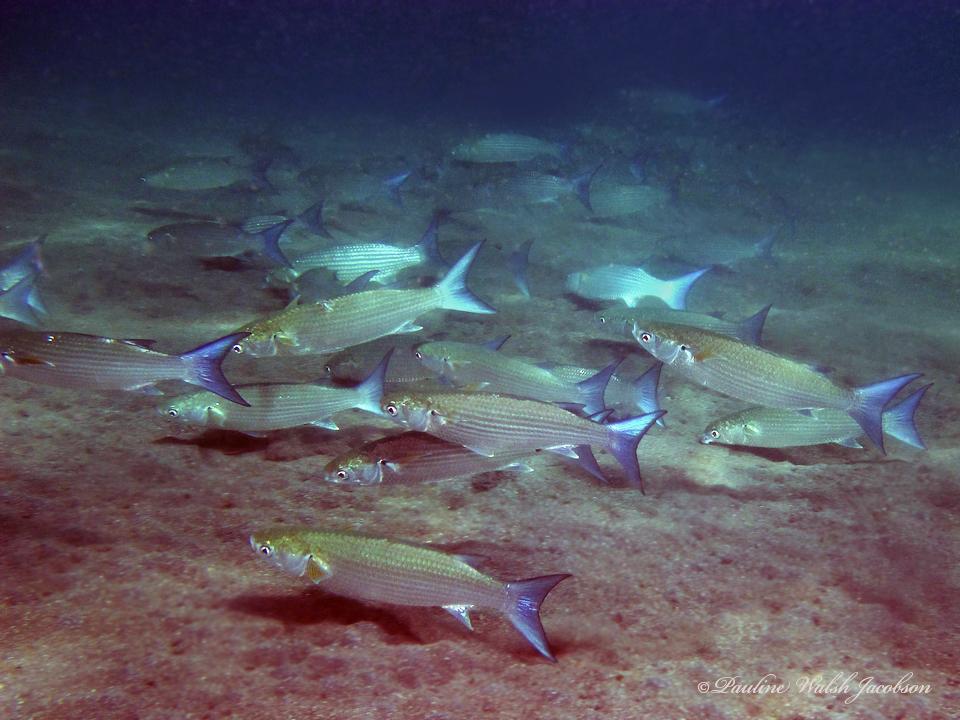
    Found in coastal waters but enters estuaries and rivers where they feed on microalgae, filamentous algae, forams, diatoms, and detritus associated with sand and mud (Ref. 9812). Form schools. Oviparous, eggs are pelagic and non-adhesive (Ref. 205). Also caught using stakenets, barrier nets, and pouch nets during spawning; also taken as bycatch (Ref. 9812). Marketed fresh and perhaps salted, boiled (Thailand), canned or frozen (Australia); roe salted (Ref. 9812).

    Habitat


    freshwater

    Conservation Status


    Least Concern

    Threat to Humans


    Harmless

    Ask me about the species
    Ask about
    Crenimugil seheli (Fabricius, 1775)