Coregonus pidschian (Gmelin, 1789)
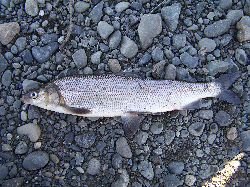
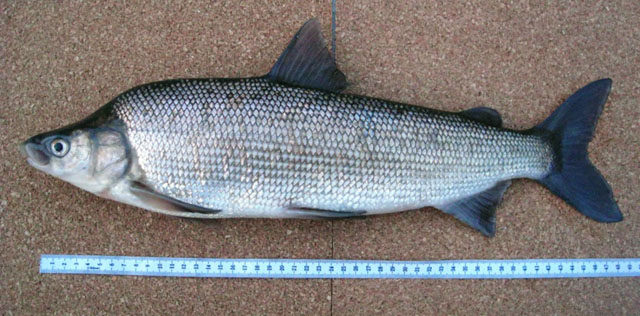
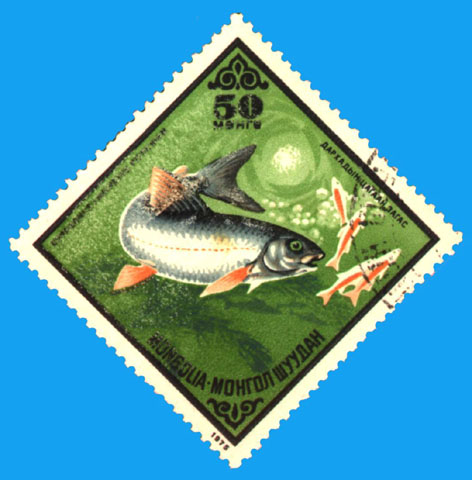
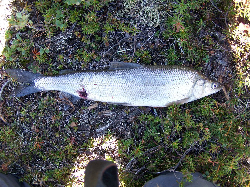
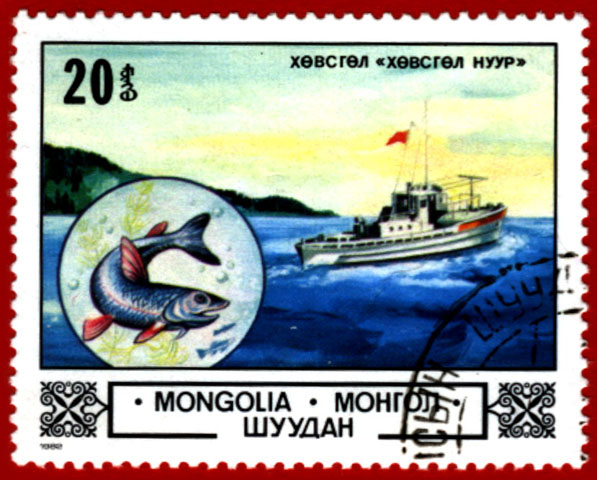
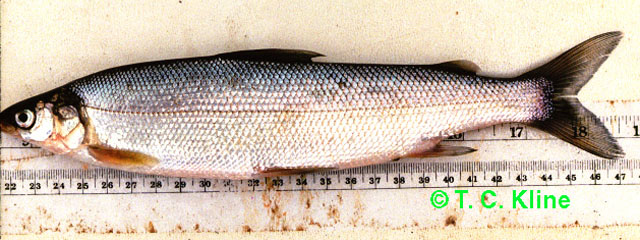
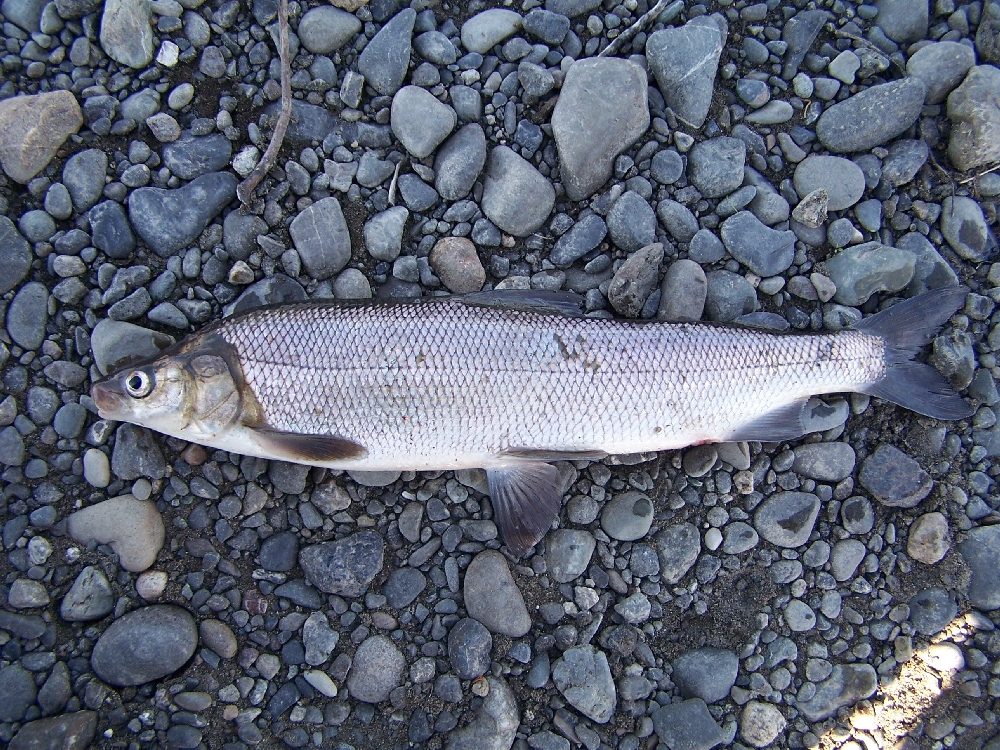
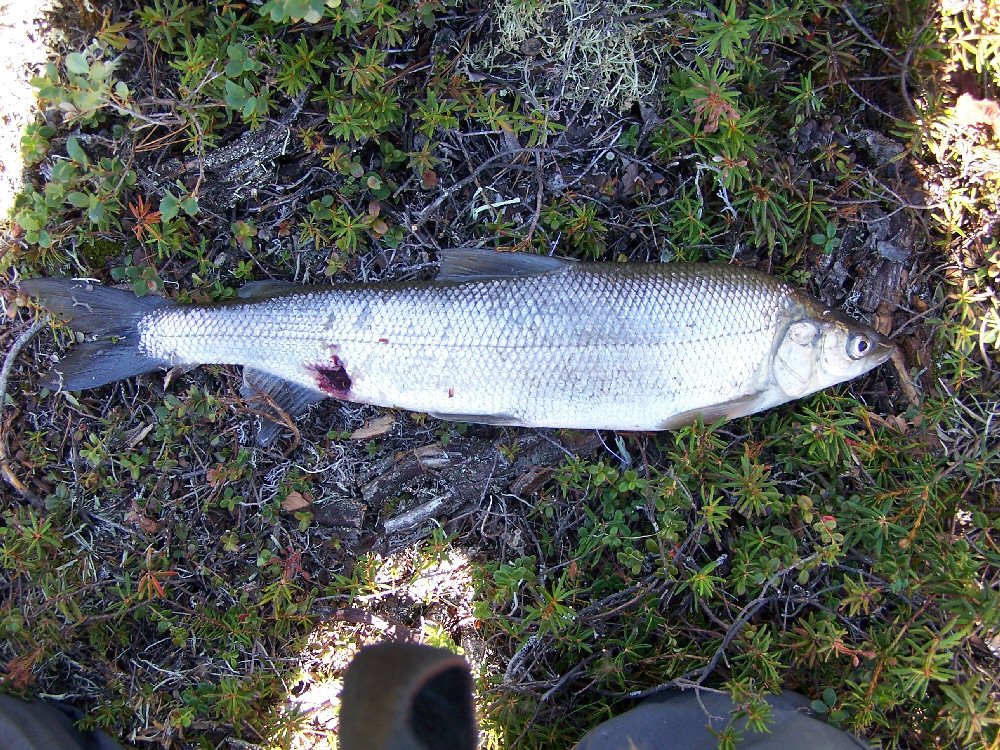
Description
Dorsal spines (total): 0; Dorsal soft rays (total): 11 - 13; Anal spines: 0; Anal soft rays: 10 - 14; Vertebrae: 58 - 63. Distinguished by the gill rakers that are longer than 20% of the interorbital width, 19 to 25 gill rakers (with modal counts of 22 or 23), and a pronounced hump behind the head in adults (Ref. 27547). Adipose fin well developed, often larger in males; axillary process present in pelvic fins (Ref. 27547). Dark brown to midnight blue above fading to silver on sides and wide beneath; no parr marks in young (Ref. 27547).
Common Names
Taxonomic Hierarchy
Kingdom: Animalia
Phylum: Chordata
Class: Teleostei
Order: Salmoniformes
Family: Salmonidae
Genus: Coregonus
Species: Coregonus pidschian (Gmelin, 1789)
Climate Zone
Location
- Arctic Ocean basin, from Finland (lapland) to eastern Siberia, Alaska, and Canada eastward to Mackenzie drainage. Belongs to Coregonus clupeaformis complex (Ref. 27547).
Biology
Inhabits coastal waters near shore (Ref. 5723), lower reaches of rivers with slow current, large lakes with tributaries, floodplain lakes, deltas and estuaries, brackish waters (Ref. 59043). Migrates up to more than 1,200 km inland for spawning (Ref. 5723). Overwinters near river mouths (Ref. 5723). There are non-migratory freshwater populations. Adults feed mostly on mollusks, crustaceans and chironomid larvae (Ref. 28219).
Habitat
freshwater
Conservation Status
Least Concern
Threat to Humans
Harmless
Coregonus pidschian (Gmelin, 1789)