Coregonus nasus (Pallas, 1776)
Description
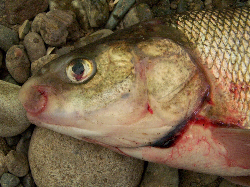
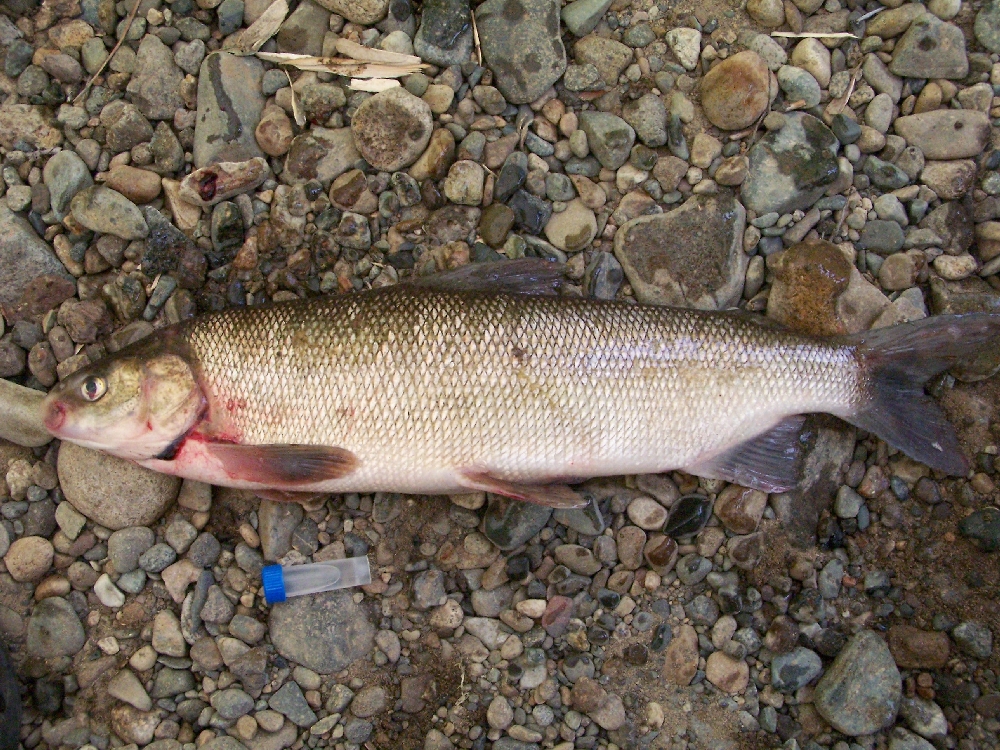
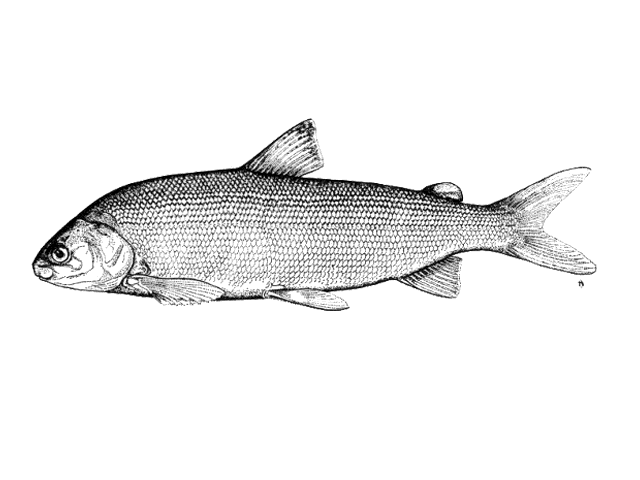
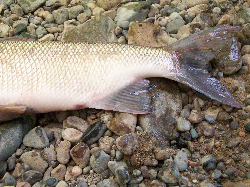
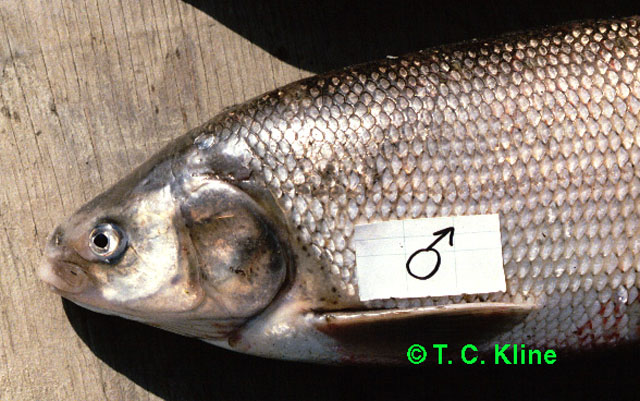
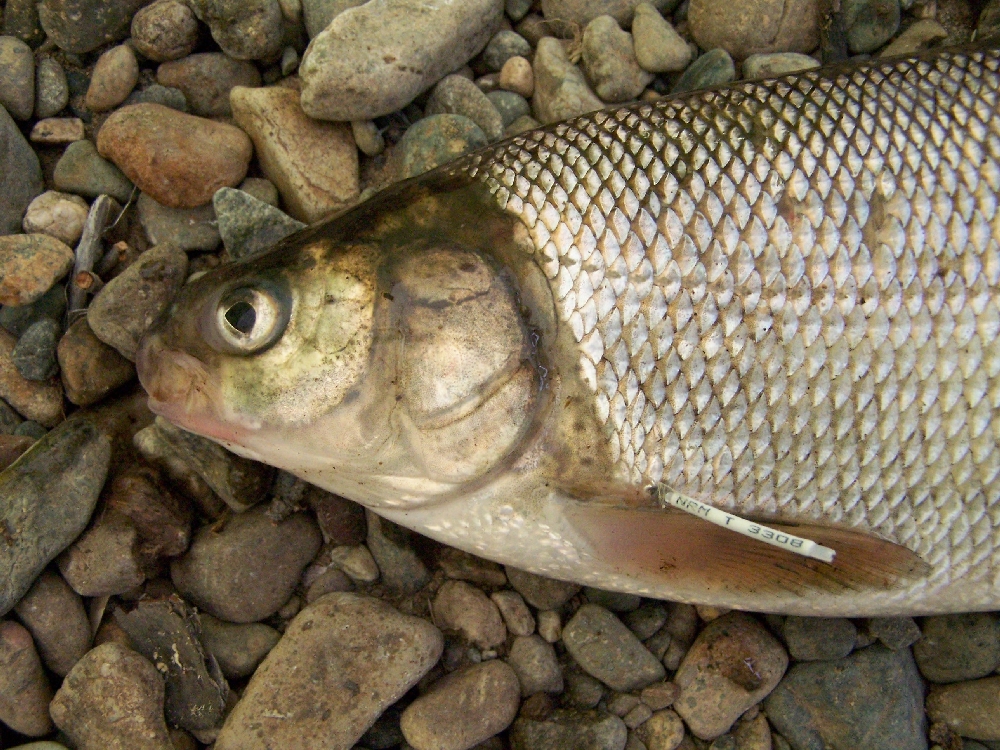
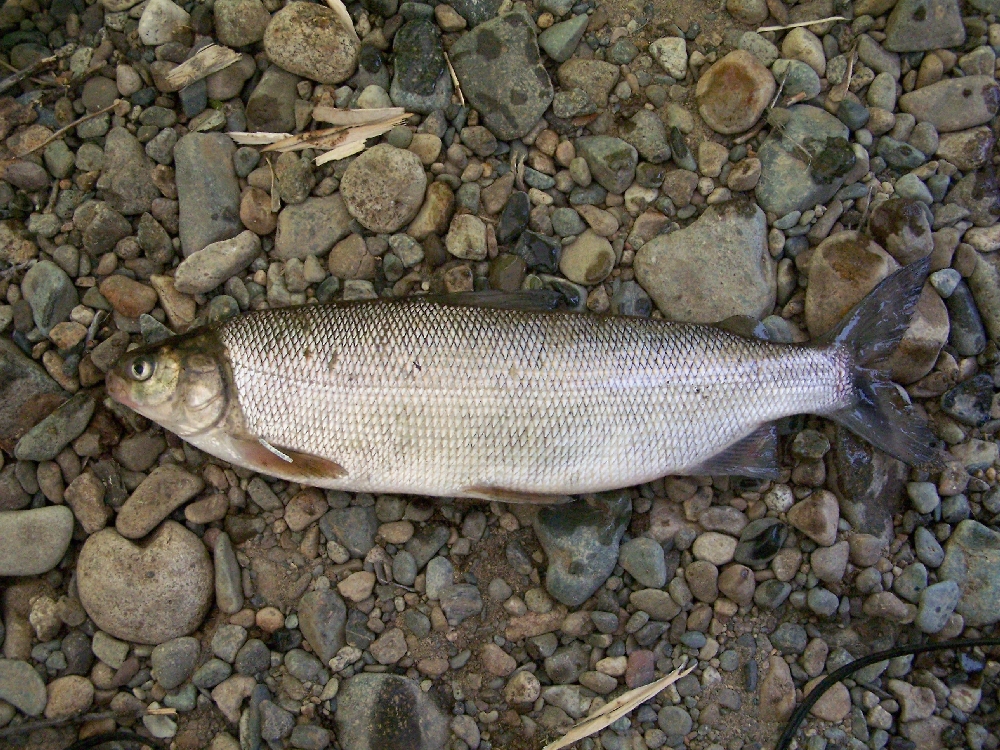
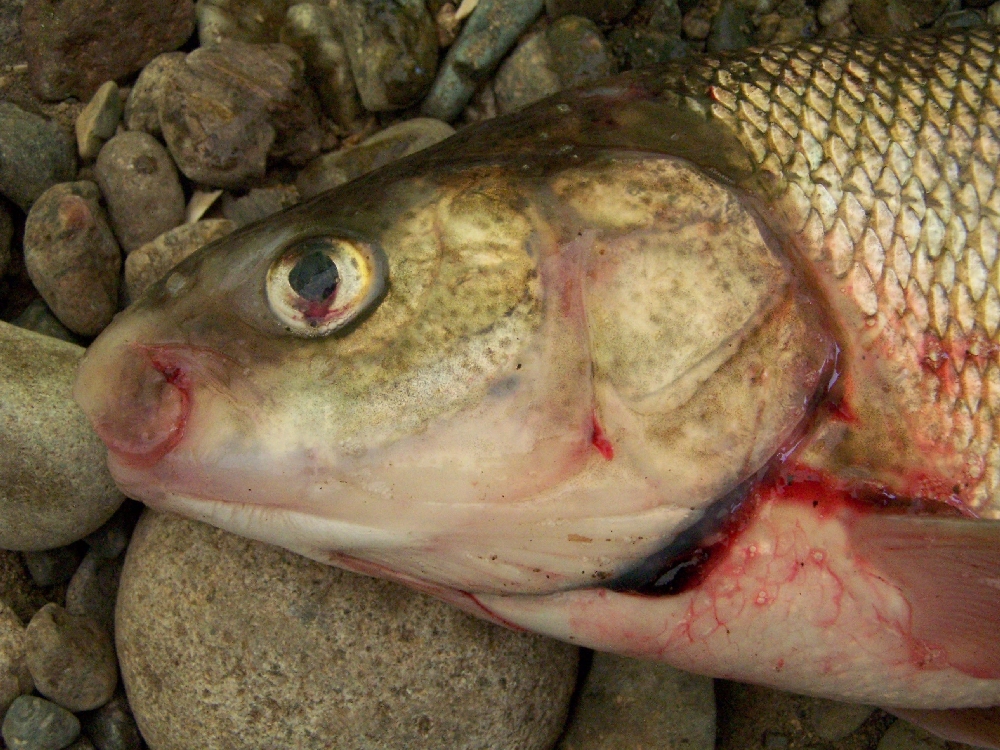
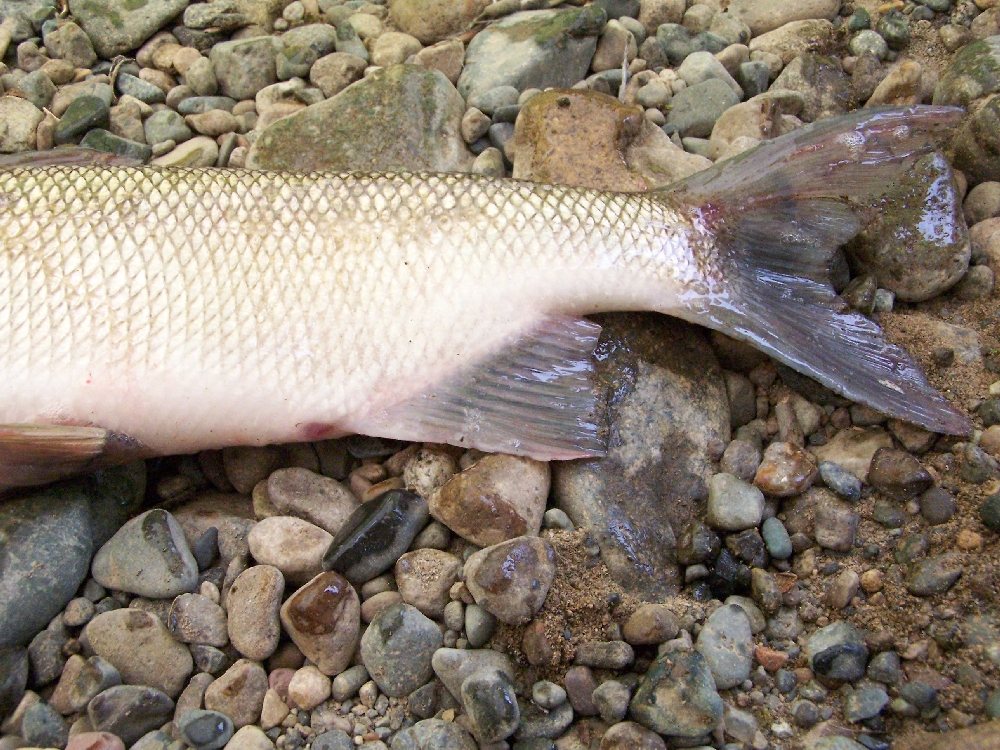
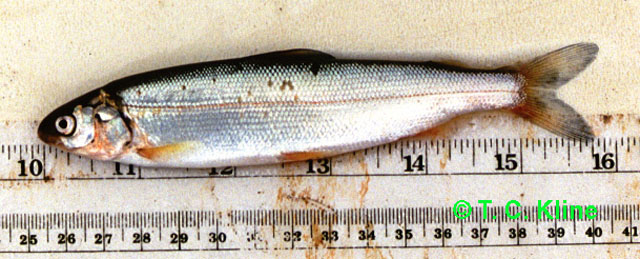
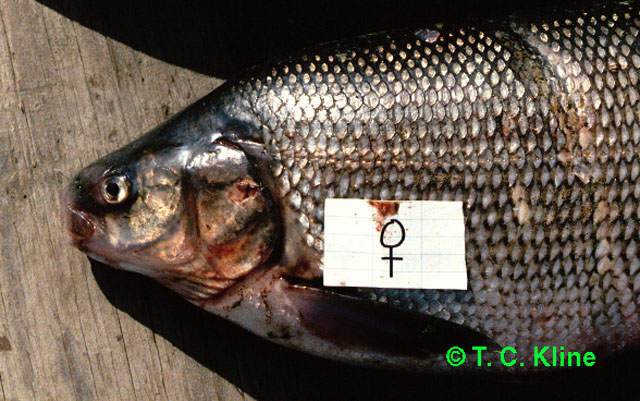
Dorsal spines (total): 0; Dorsal soft rays (total): 10 - 13; Anal spines: 0; Anal soft rays: 11 - 14; Vertebrae: 60 - 65. Distinguished by its short gill rakers, which are less than one-fifth as long as the interorbital width, and the rounded to flat profile of the head (Ref. 27547). Adipose fin fairly large; axillary process present in the pelvic fins (Ref. 27547). Olive-brown to nearly black on back; sides silvery, often with a gray cast; belly white to yellowish; fins usually rather gray in adults, pale in young (Ref. 27547).
Common Names
Taxonomic Hierarchy
Kingdom: Animalia
Phylum: Chordata
Class: Teleostei
Order: Salmoniformes
Family: Salmonidae
Genus: Coregonus
Species: Coregonus nasus (Pallas, 1776)
Climate Zone
Location
- Eurasia and North America: all drainages of Arctic Ocean from Volonga and Pechora to Alaska.
Biology
Nerito-pelagic (Ref. 58426). Lowland river and lakes (Ref. 59043) but most frequently in streams (Ref. 5723). Lacustrine and estuarine anadromous forms exist (Ref. 593). Alevins and juveniles feed on zooplankton, adults on benthos, mainly chironomid larvae and molluscs (Ref. 1998, 59043). Males reproduce for the first time in 4-8 years, females at 5-9. Adults start upstream migration in late July - August and reach spawning sites by October - November and spawn in stretches with swift current and sand-pebble bottom, often under ice. Spawning lasts 5-7 days and fish leave spawning site soon after, migrating downstream to overwinter in deeper places of lower stretches of rivers together with older juveniles. In spring, alevins drift from spawning sites downstream with flood-water and forage in floodplain lakes and oxbows where they remain until end of summer before moving to river or reaching maturity (if lakes are large enough and do not dry out). Widely used for aquaculture in eastern Europe (Ref. 59043). Flesh is highly esteemed (Ref. 1998). Sold fresh, dried, or smoked (Ref. 1998).
Habitat
brackish
Conservation Status
Least Concern
Threat to Humans
Harmless
Coregonus nasus (Pallas, 1776)