Cololabis saira (Brevoort, 1856)

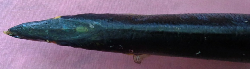
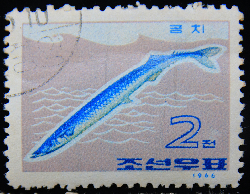
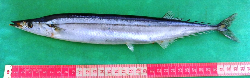
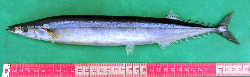
Description
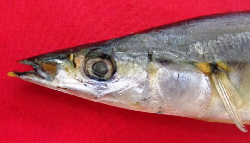
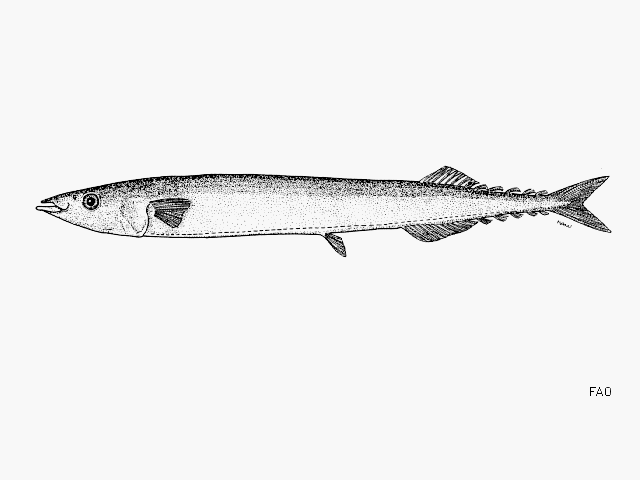
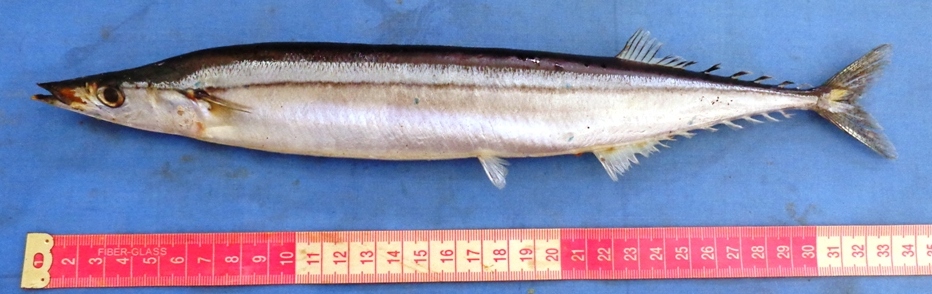
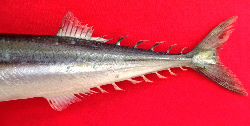
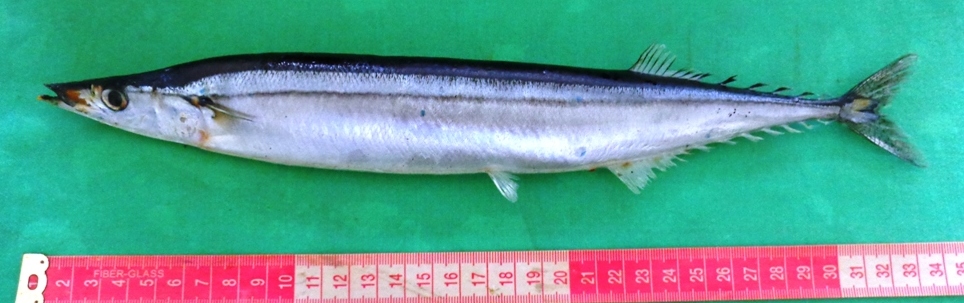
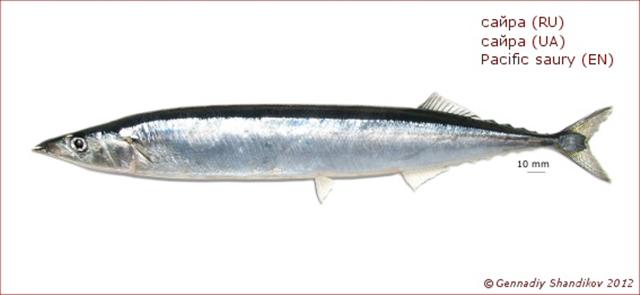
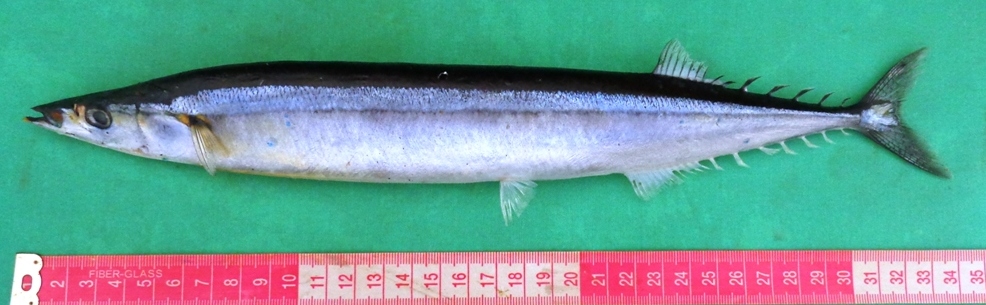
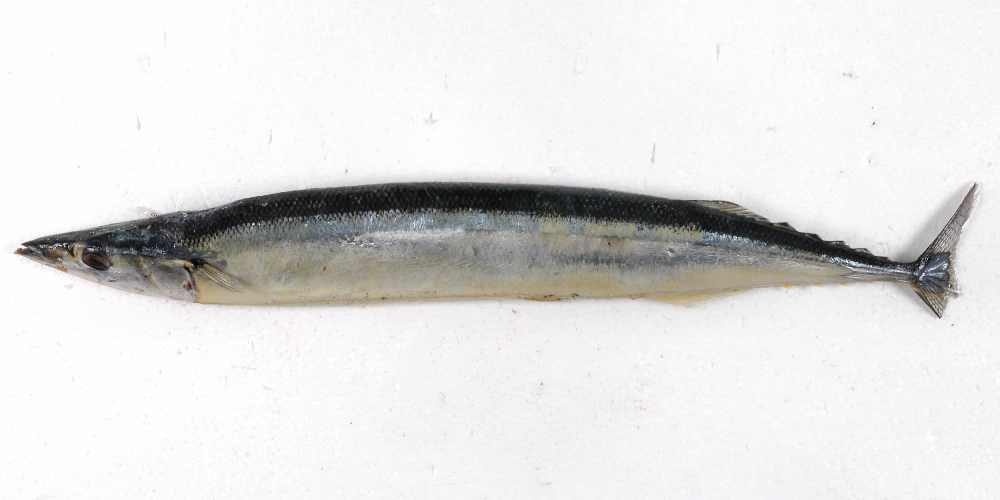
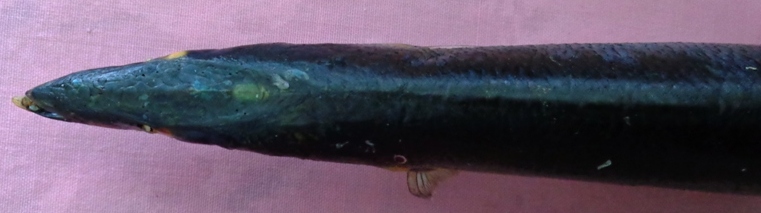
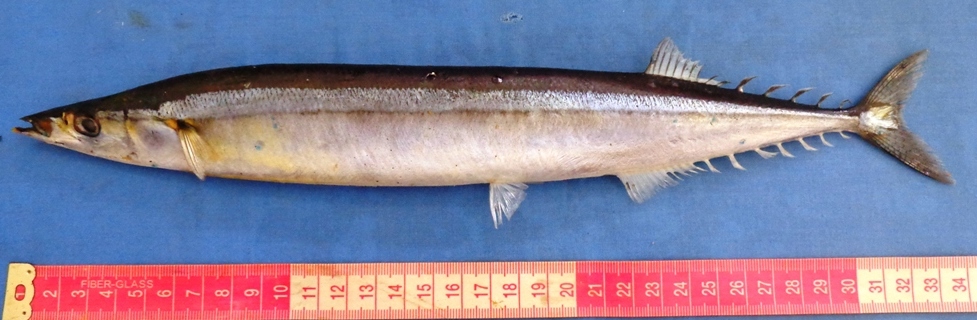
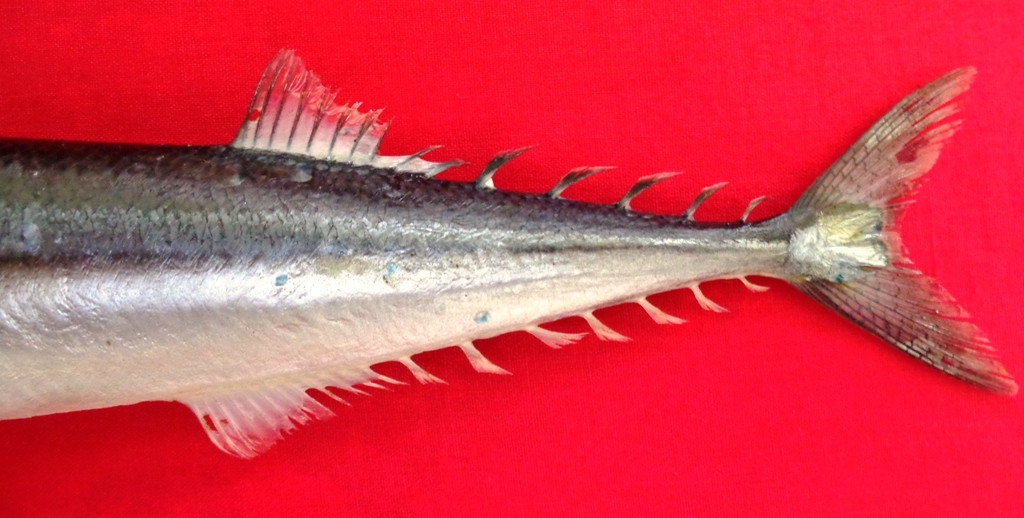
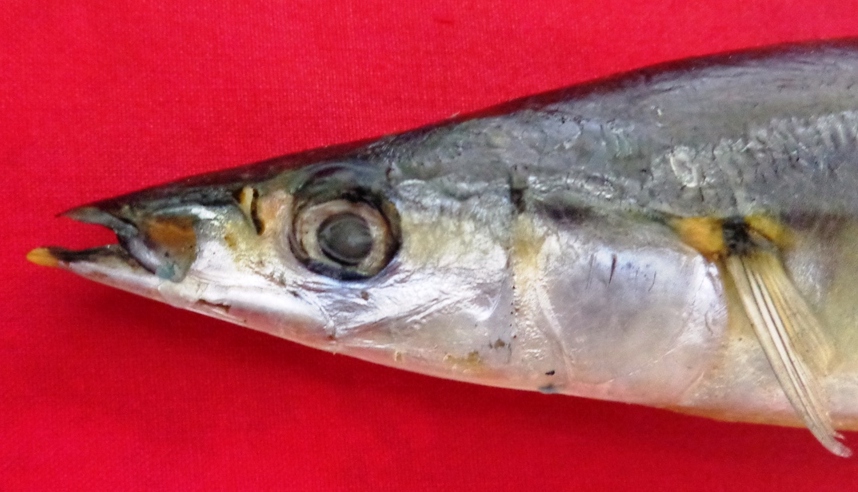
Dorsal spines (total): 0; Dorsal soft rays (total): 9 - 12; Anal spines: 0; Anal soft rays: 12 - 15; Vertebrae: 62 - 69. Caudal fin broadly and finely forked; pectorals small, truncate, first ray notably flattened (Ref. 6885). Dark green to blue on dorsal surface, silvery below, small bright blue blotches distributed haphazardly on sides; fins on lower part of body pale, others with darkened rays (Ref. 6885). Branchiostegal rays: 12-15 (Ref. 36573).
Common Names
Taxonomic Hierarchy
Kingdom: Animalia
Phylum: Chordata
Class: Teleostei
Order: Beloniformes
Family: Scomberesocidae
Genus: Cololabis
Species: Cololabis saira (Brevoort, 1856)
Climate Zone
Location
- North Pacific: Korea (Ref. 37630) and Japan eastward to Gulf of Alaska and southward to Mexico. Highly migratory species.
Biology
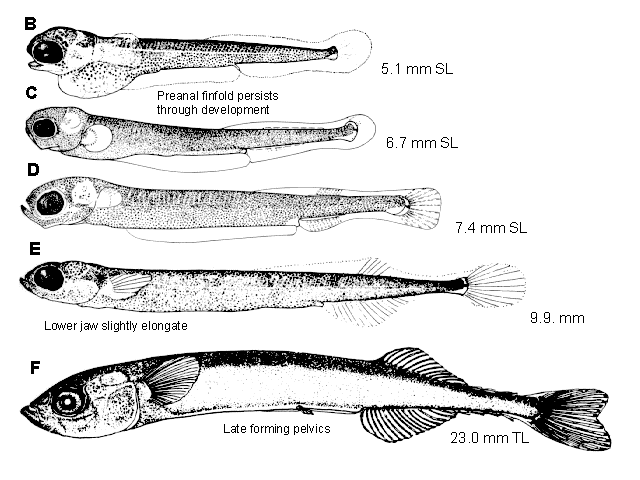
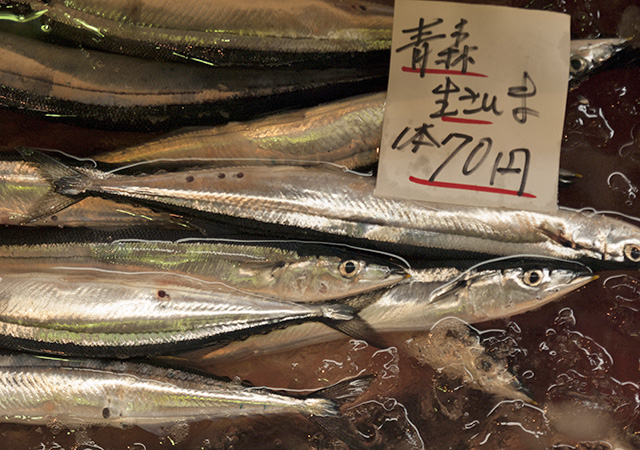
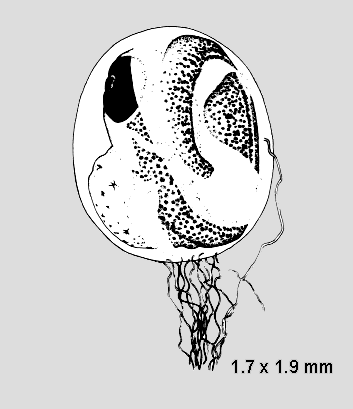
Adults are generally found offshore, usually near surface, in schools (Ref. 2850). Juveniles associate with drifting seaweed (Ref. 12114, 12115). Feed on small crustaceans, and eggs and larvae of fishes. May glide above the surface of the water when moving away from predators. Prey of Thunnus alalunga and other scombrids (Ref. 9339). Oviparous, with larvae neustonic (Ref. 36573). Eggs are attached to one another and to floating objects via filaments on the shell surface (Ref. 36573). Utilized dried or salted, canned and frozen; also used for fishmeal and pet food; can be pan-fried and broiled (Ref. 9988).
Habitat
oceanic
Conservation Status
Not Evaluated
Threat to Humans
Harmless
Cololabis saira (Brevoort, 1856)