Clupeichthys goniognathus Bleeker, 1855
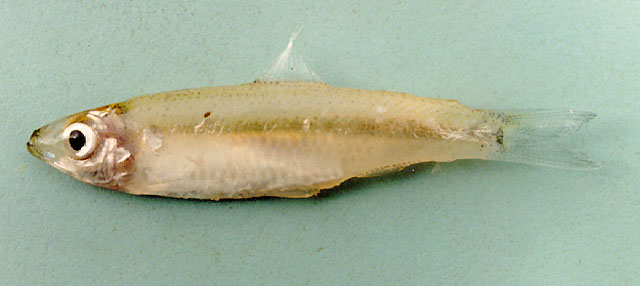
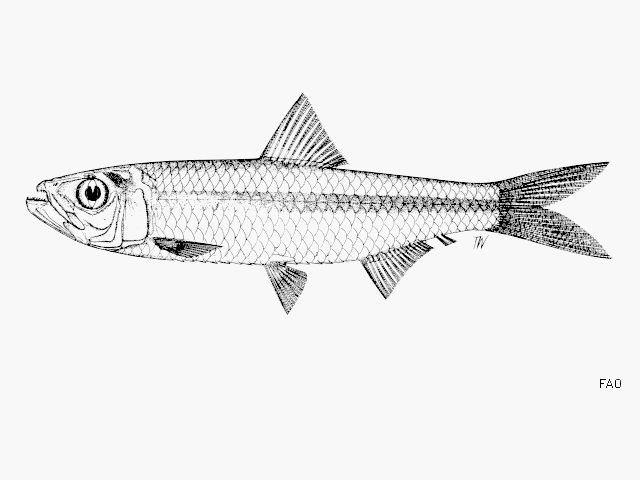
Description
Dorsal spines (total): 0; Dorsal soft rays (total): 12 - 18; Anal spines: 0; Anal soft rays: 16 - 27. Body moderately elongate, belly keeled, with 9 or 10 + 7 or 8 scutes. Snout blunt, pre-maxillae small and toothed, prominent teeth at symphysis and along sides of lower jaw; second supra-maxilla spatulate, about half length of maxilla blade. Pectoral axillary scale less than half length of fin. Last two anal fin rays forming a separate finlet.
Common Names
Taxonomic Hierarchy
Kingdom: Animalia
Phylum: Chordata
Class: Teleostei
Order: Clupeiformes
Family: Ehiravidae
Genus: Clupeichthys
Species: Clupeichthys goniognathus Bleeker, 1855
Climate Zone
Location
Biology
Occurs in large lakes or rivers (Ref. 12693). Found in the basin-wide mainstream of the lower Mekong (Ref. 36667). Feeds on planktonic crustaceans (Ref. 33813). Used to produce prahoc and tuk trey (Ref. 12693).
Habitat
pelagic
Conservation Status
Least Concern
Threat to Humans
Harmless