Chologaster cornuta Agassiz, 1853
Description
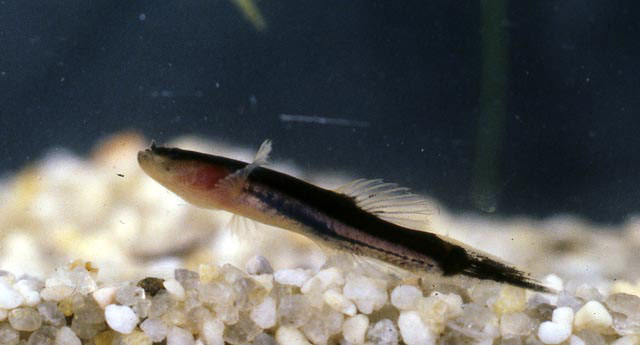
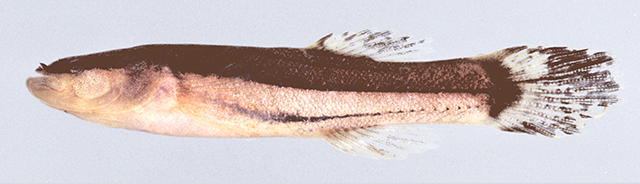
Dorsal soft rays (total): 9 - 12; Anal soft rays: 9 - 10. Strongly bicolored; dark brown above, white to yellow below. Small eyes. No pelvic fins. 3 narrow black stripes on side; one on lower side wide at front, narrow at rear. 2 black streaks along back before dorsal fin separate to encircle dorsal fin; pink gills visible. Caudal fin clear near base, often black in center; dusky black band in dorsal fin. 0-2 rows of papillae on caudal fin. 9-11 branched caudal rays.
Common Names
Taxonomic Hierarchy
Kingdom: Animalia
Phylum: Chordata
Class: Teleostei
Order: Percopsiformes
Family: Amblyopsidae
Genus: Chologaster
Species: Chologaster cornuta Agassiz, 1853
Climate Zone
Location
- North America: Atlantic Coastal drainages from Virginia to Georgia, U.S.A.
Biology
Adults occur on vegetation and debris in swamps, sloughs and quiet pools and backwaters of streams. Found year-round in open streams which are small and well-shaded with temperatures never exceeding 23°C. In such streams, thigmotaxic tendency is shown by the difficulty in seining these individuals from the roots and debris of their preferred habitat along edges of submerged weed banks which border sand-bottomed channels. This habitat is rich in potential food for C. cornuta like amphipods, ostracods and copepods (Ref. 34868). Eggs are carried in gill chambers of females (Ref. 205).
Habitat
demersal
Conservation Status
Least Concern
Threat to Humans
Harmless
Chologaster cornuta Agassiz, 1853