Chirocentrodon bleekerianus (Poey, 1867)
Description
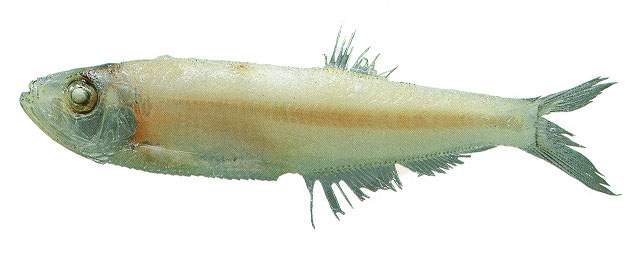
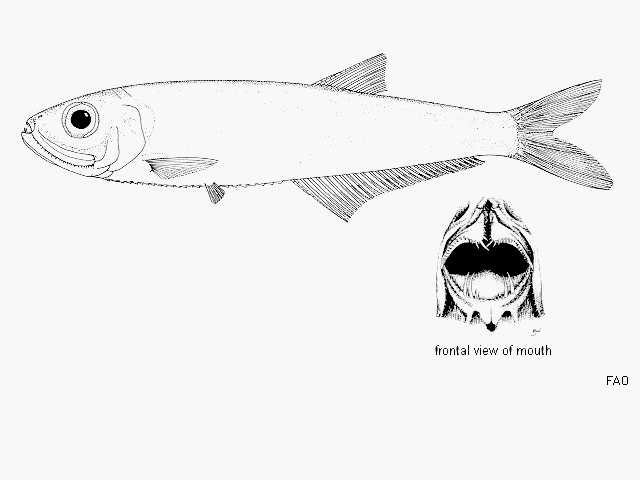
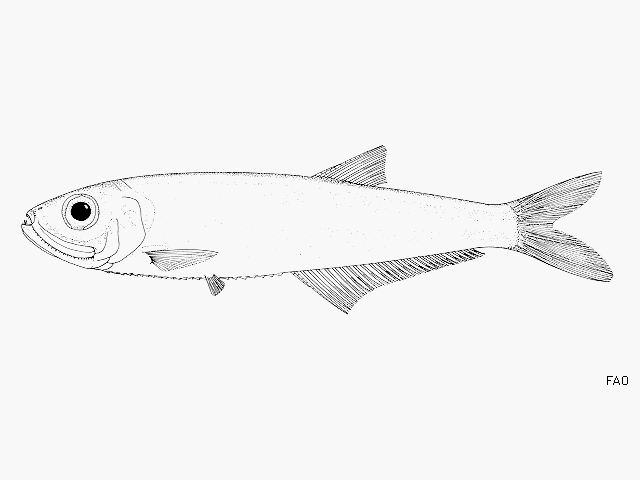
Dorsal spines (total): 0; Anal spines: 0; Anal soft rays: 38 - 44. Belly with 16 or 17 (rarely 19) + 9 to 11, total 26 to 28 (rarely 30) scutes. Lower jaw not strongly projecting; strong conical teeth in both jaws, continued as large and small teeth along maxilla blade. Easily recognized by large, canine-like teeth in both jaws (Ref. 26938). Dorsal fin origin behind midpoint of body; anal fin moderately long, its origin below or in front of dorsal fin origin.
Common Names
Taxonomic Hierarchy
Kingdom: Animalia
Phylum: Chordata
Class: Teleostei
Order: Clupeiformes
Family: Pristigasteridae
Genus: Chirocentrodon
Species: Chirocentrodon bleekerianus (Poey, 1867)
Climate Zone
Location
- Western Atlantic: Cuba, Haiti, Jamaica, Puerto Rico, Trinidad; Panama and coasts of Venezuela, including off Orinoco mouth, Guyana, Suriname south to Ubatuba, near Santos, Brazil. Antilles and southern Caribbean from Yucatan to Santos, Brazil (Ref. 26938).
Biology
Occurs in coastal areas, but also in lagoons and off river mouths, perhaps entering water of lowered salinity (Ref. 12225). In Southwestern Atlantic preys on proportionally large clupeoid fishes and caridean shrimps. Fishes are distinctively folded in the stomachs of this herring, in about 90% of the cases with their heads and tails pointing head-wards the predator. This herring stands out as the only small-sized species among the predaceous fish-eating clupeiforms. The well developed canine-like teeth are likely related to a piscivorous diet and may play a role in the folding and orientation of fish during prey handling and swallowing (Ref. 51383). Spawns during the northern winter (Ref. 37032).
Habitat
brackish
Conservation Status
Least Concern
Threat to Humans
Harmless
Chirocentrodon bleekerianus (Poey, 1867)