Chiasmodon niger Johnson, 1864
Description
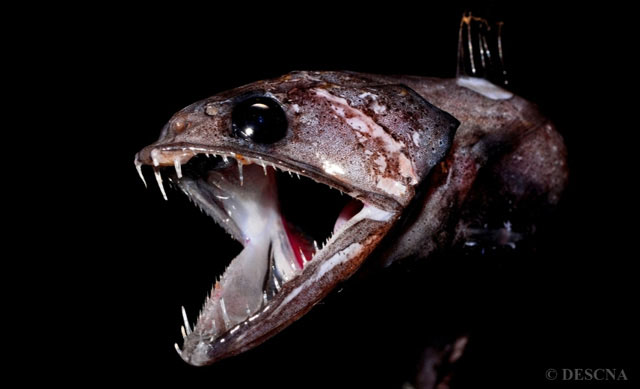
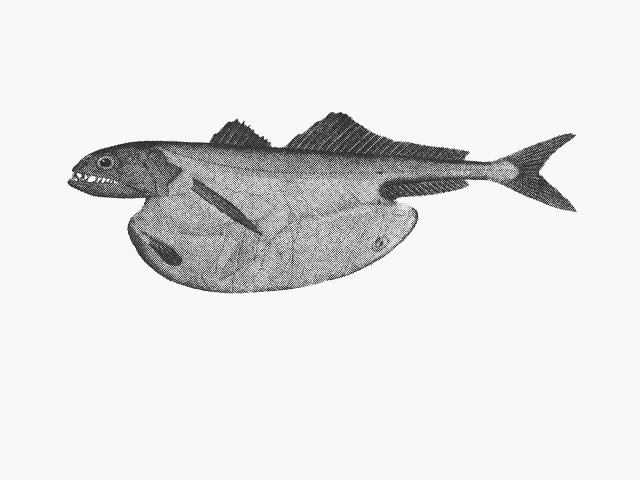
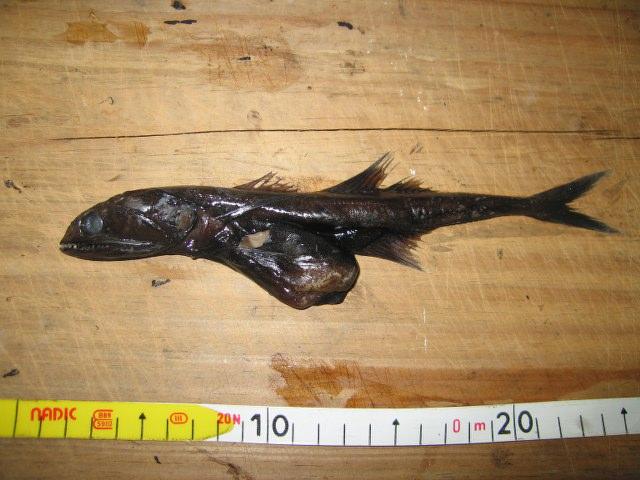
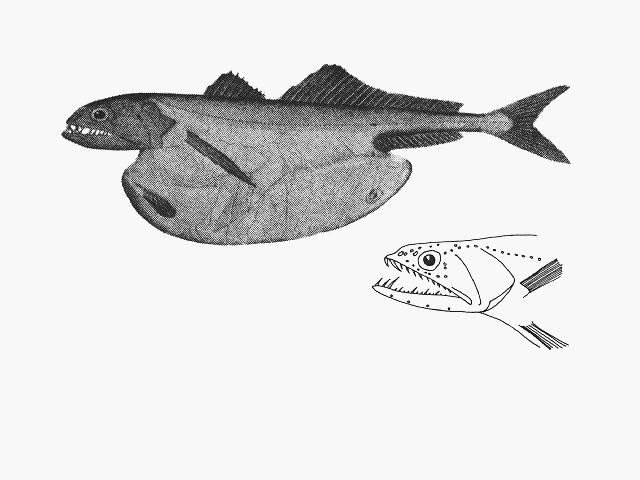
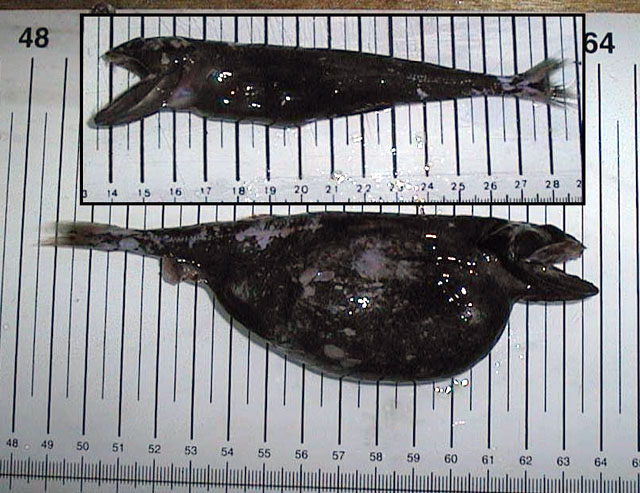
Vertebrae: 43 - 44. This species is distinguished from its congeners by a set of characteristics: from C. braueri by the teeth on second ceratobranchial absent (vs. present) and supraorbital canal pores 7 (vs. 8); from C. harteli by total vertebrae 43-45 (vs. 47-48), supraorbital canal pores 7 (vs. six); from C. microcephalus by teeth on basibranchials well developed, 3-18, always present on second basibranchial and often on third basibranchial and second hypobranchial (vs. usually no teeth on basibranchials, rarely 1-3, small, restricted to second basibranchial); from C. pluriradiatus and C. asper, by pectoral-fin rays 13-14 (vs. 15-16), tiny dermal spinules on body of specimens larger than 45.0 mm absent (vs. with spinules), fang in premaxillary head 1 (vs. 2), and supraorbital pores 7 (vs. 8 and 9, respectively) and from C. pluriradiatus by lateral-line pores 86-93 (vs. 91-94); from C. subniger, by teeth on second basibranchial present (vs. none), infraorbital pores 14 (vs. 12-13, modally 13), snout elongate and pointed, 22.2-26.6% HL (vs. snout short and blunt, 21.4-23.9% HL), upper jaw 72.2-80.0% HL (vs. 63.9-72.7% HL), and lower jaw 80.0-86.7% HL (vs. 69.0-76.7% HL) (Ref. 82429).
Common Names
Taxonomic Hierarchy
Kingdom: Animalia
Phylum: Chordata
Class: Teleostei
Order: Scombriformes
Family: Chiasmodontidae
Genus: Chiasmodon
Species: Chiasmodon niger Johnson, 1864
Climate Zone
Location
- North Atlantic: tropical and temperate; including Gulf of Mexico, from 95°W to 5°E, 46°N to 5°S (Ref. 82429). Southwestern Atlantic: Argentina (Ref. 44852).
Biology
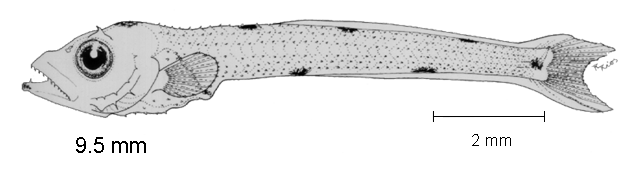
Mesopelagic to bathypelagic species (Ref. 6944, 28429). Specimens larger than 4.5 cm are more frequently collected between 730 and 1900 m with shallowest record being 150 m, the deepest 3900 m (mean 1390 m). Juveniles are found in shallower water, from 0 to 1,050 m (mean 542 m), with the smallest specimens (>10.0 mm) collected nearest to the surface (Ref. 82429). Feed on whole fish, often of individuals longer than themselves (Ref. 9686). Most specimens were taken at depths greater than 750 m (Ref. 6649).
Habitat
oceanic
Conservation Status
Least Concern
Threat to Humans
Harmless
Chiasmodon niger Johnson, 1864