Chaenophryne longiceps Regan, 1925
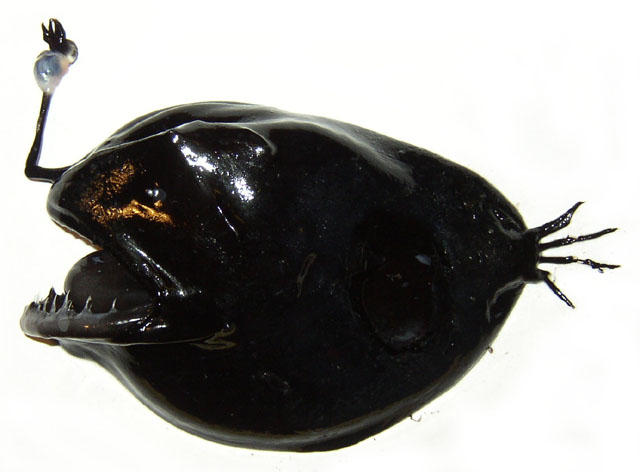
Description
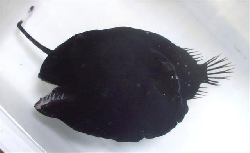
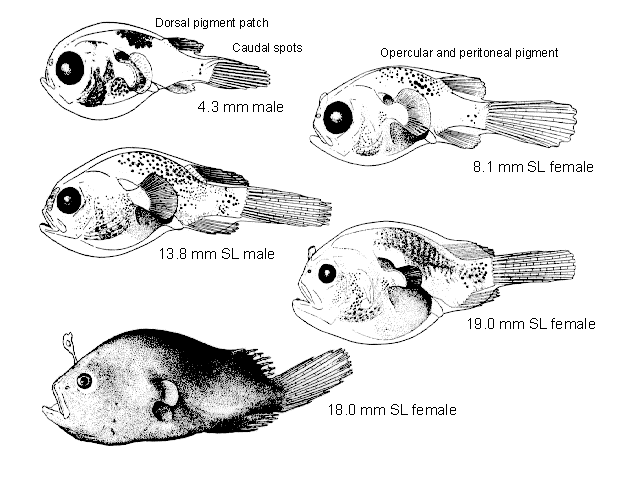
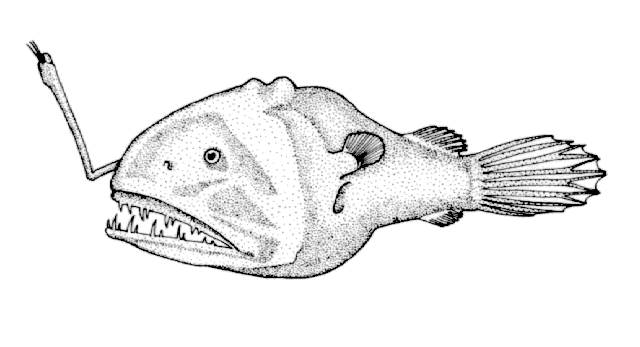
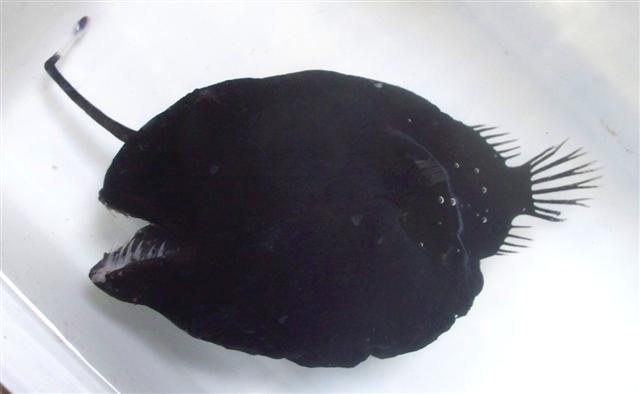
Dorsal soft rays (total): 6 - 8; Anal soft rays: 5 - 6. Distinguishing characteristics of metamorphosed female: esca with a pair of elongate internally pigmented and bilaterally placed anterior appendages, less than one-tenth to greater than length of escal bulb; smaller ratio between number of upper and lower jaw teeth, 0.70-0.94; total number of teeth in upper jaw teeth 28-40, lower jaw 34-57 teeth; vomerine teeth 4-8; length of illicium 22.4-40.3% SL; escal bulb width 5.3-11.4% SL; has fewer dorsal and anal fin rays than C.ramifera, and greater number of pectoral fin rays than all other species of the genus (Ref. 86949).
Common Names
Taxonomic Hierarchy
Kingdom: Animalia
Phylum: Chordata
Class: Teleostei
Order: Lophiiformes
Family: Oneirodidae
Genus: Chaenophryne
Species: Chaenophryne longiceps Regan, 1925
Climate Zone
Location
- Tropical to temperate parts of all oceans. Northeast Pacific: south of southern California to Oregon, USA (Ref. 265).
Biology
Bathypelagic (Ref. 58426). Also mesopelagic. Males dwarfed, non-parasitic (Ref. 10524). Feeds on fishes, cephalopods and crustaceans (Ref. 58426).
Habitat
bathypelagic
Conservation Status
Least Concern
Threat to Humans
Harmless
Chaenophryne longiceps Regan, 1925