Chaenophryne draco Beebe, 1932
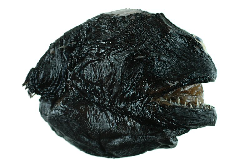
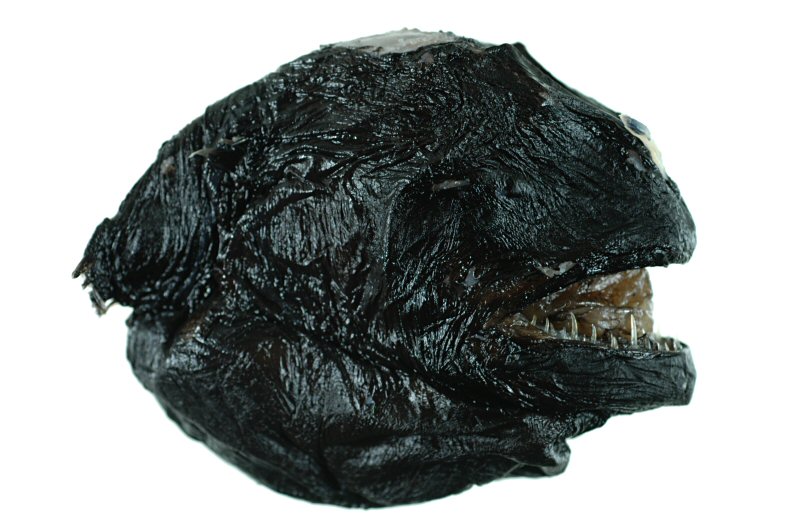
Description
Dorsal spines (total): 0; Dorsal soft rays (total): 6 - 8; Anal spines: 0; Anal soft rays: 5 - 6. Caudal large; pectorals small, pediculate, directed upward (Ref. 6885). Black except for pale on esca at end of illicium (Ref. 6885). Distinguishing characteristics: esca with single conical to elongate, internally pigmented anterior appendage, less than one-seventh to nearly one-third length of escal bulb; absence of medial escal appendages; posterior escal appendages with swollen basal portion and compressed distal crest, posterior filament or filaments and pair of anterior lobes each with numerous filaments; anterolateral escal appendages and basal series of filaments absent; have the highest ratio between the number of upper and lower jaw teeth of any species, 1.08-1.45; total number of teeth in upper jaw 35-47, lower jaw with 31-38 teeth; vomerine teeth 4-8; slightly shorter illicium compared to C.ramifera and slightly longer than that of C.melanorhabdus, length 24-36.4% SL (Ref. 86949).
Common Names
Taxonomic Hierarchy
Kingdom: Animalia
Phylum: Chordata
Class: Teleostei
Order: Lophiiformes
Family: Oneirodidae
Genus: Chaenophryne
Species: Chaenophryne draco Beebe, 1932
Climate Zone
Location
- Tropical and subtropical parts of all oceans. Eastern Atlantic: A single female was recorded north of Madeira. Eastern Pacific: Oregon, USA and British Columbia, Canada (Ref. 6885). Western Pacific: Japan (Ref. 559) and Australia (Ref. 7300).
Biology
Meso- (Ref. 10524) and bathypelagic (Ref. 58302). Males dwarfed, non-parasitic (Ref. 10524). Specimen examined was 9.7 cm SL from Auckland Institute and Museum (AIM 6609) (Ref. 58502).
Habitat
bathypelagic
Conservation Status
Least Concern
Threat to Humans
Harmless
Chaenophryne draco Beebe, 1932