Chaenodraco wilsoni Regan, 1914
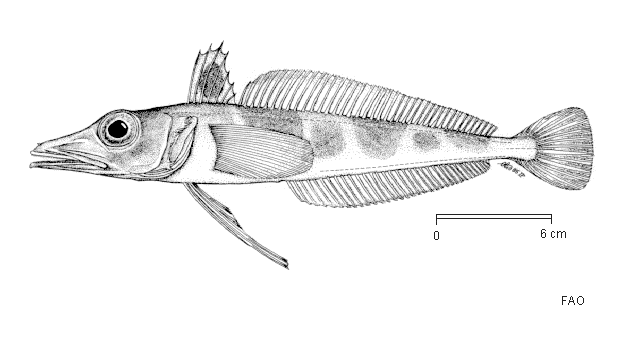
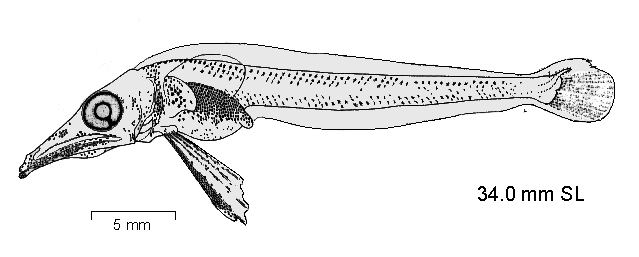
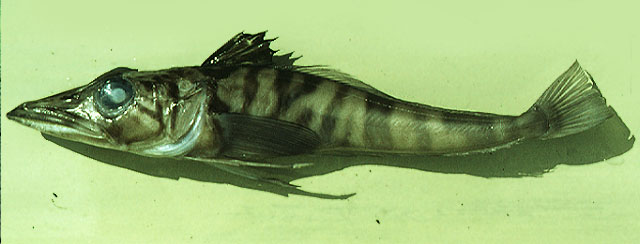
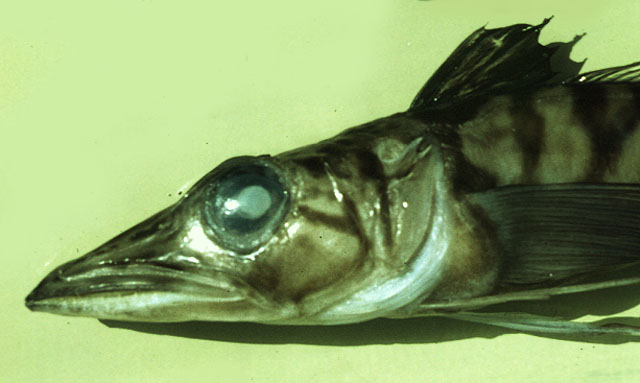
Description
Dorsal spines (total): 5 - 8; Dorsal soft rays (total): 38 - 42; Anal spines: 0; Anal soft rays: 32 - 36. Supraorbital ridge not crenulated. Middle lateral line restricted to caudal peduncle; lower lateral line originating from in front of anal-fin origin to above sixth anal ray. Maxilla extending to below anterior third of eye. Opercular bones with 2 upper and 3 lower spines. Preopercular-mandibular canal not joined to temporal canal. Pelvic fins extending beyond anal-fin origin. In life, pale grey, whitish ventrally. Differentiated by the dorsoventrally oval shape; the prominent distally rounded rostrum, pseudo-rostrum and pseudo-antirostrum; the clearly defined excisura ostii and pseudo-excisura ostii; the acutely constricted collum; and the well developed colliculli. Ontogeny: The excisura ostii and the pseudo-excisura ostii become deeper and the crista inferior becomes less distinct with an increase in the fish size.
Common Names
Taxonomic Hierarchy
Kingdom: Animalia
Phylum: Chordata
Class: Teleostei
Order: Perciformes/Notothenioidei
Family: Channichthyidae
Genus: Chaenodraco
Species: Chaenodraco wilsoni Regan, 1914
Climate Zone
Location
- Southern Ocean: Circum-Antarctic on Antarctic continental shelf. Northernmost records from vicinity of South Orkney Islands and Antarctic Peninsula.
Biology
Common in shallower waters of the continental shelf, especially on banks less than 250 m deep in areas where local upwelling increase food supply (Ref. 6390). Postlarvae and pelagic juveniles are also found in the upper 100 m (Ref. 5200). Food consists of fishes and krill. Spawn in winter (Ref. 6390). Larval pelagic phase is long (Ref. 28915). Prey to penguins and seals (Ref. 6390). Utilized as a food fish (Ref. 5200).
Habitat
benthopelagic
Conservation Status
Not Evaluated
Threat to Humans
Harmless
Chaenodraco wilsoni Regan, 1914