Cetengraulis mysticetus (Günther, 1867)
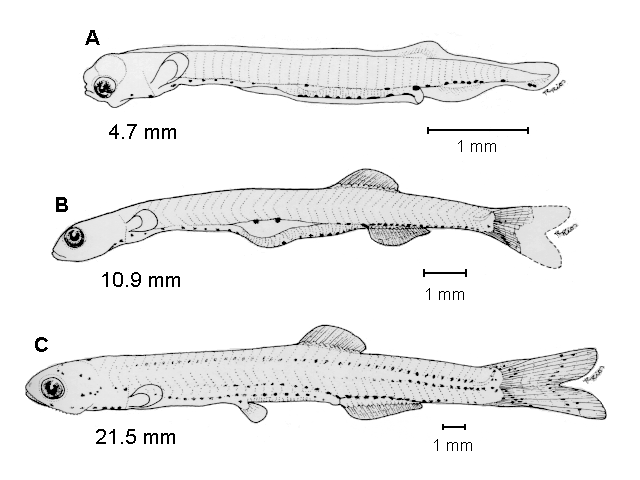
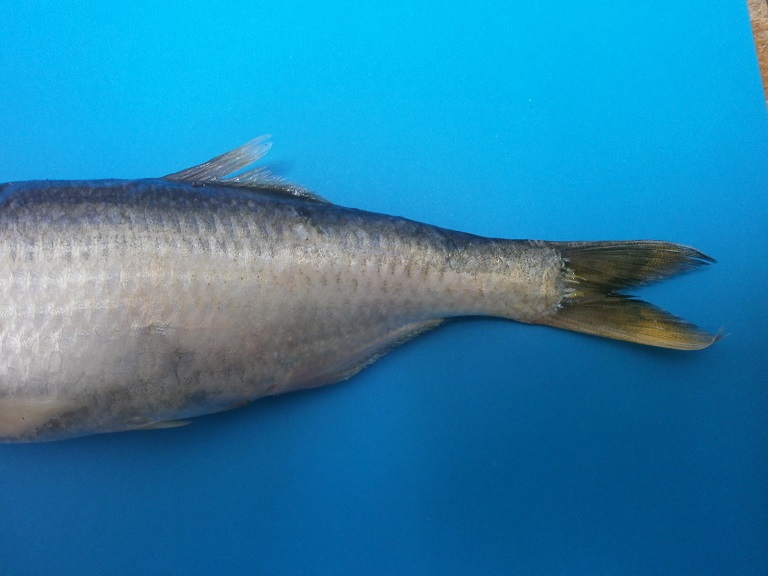
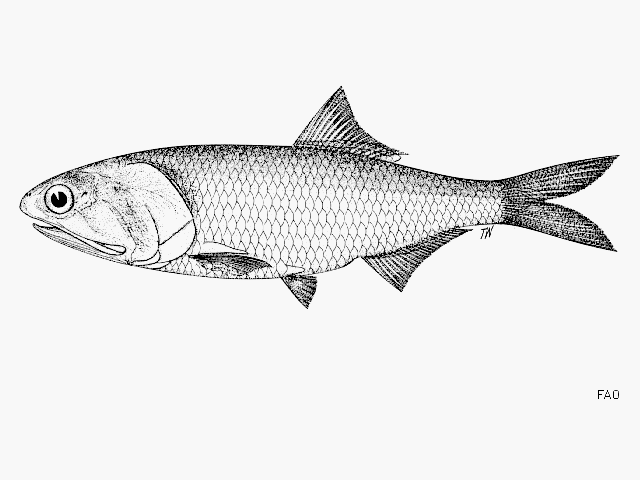
Description
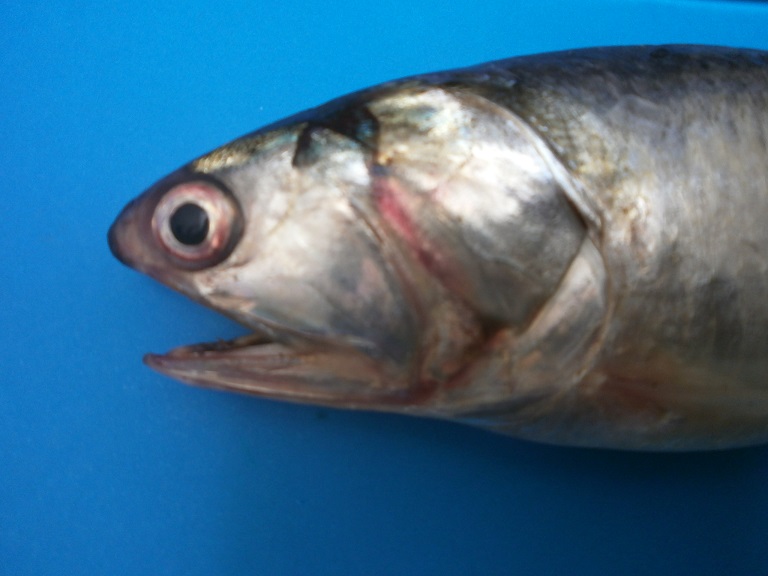
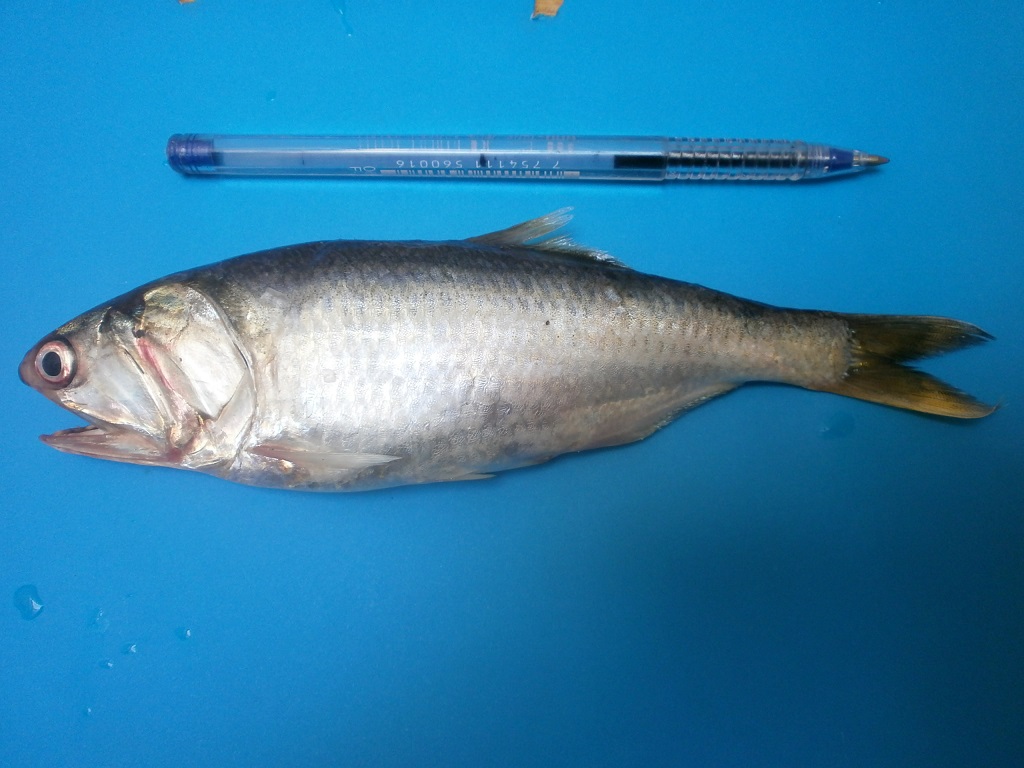
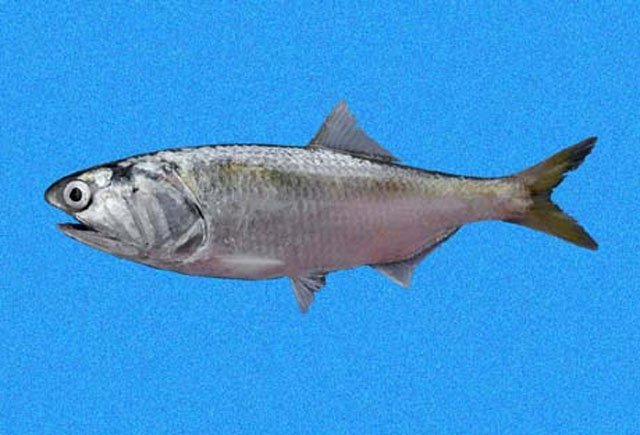
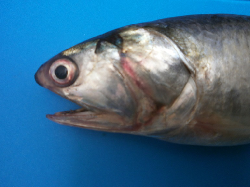
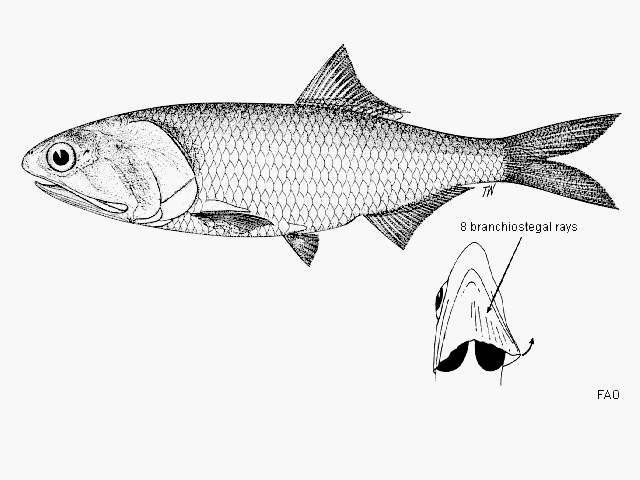
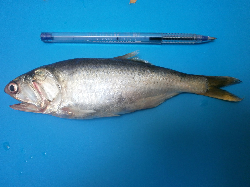
Dorsal spines (total): 0; Anal spines: 0; Anal soft rays: 17 - 24. Head large and deep. Snout short and pointed, about 2/3 eye diameter; maxilla moderate, tip blunt, just failing to reach lower jaw articulation; lower gill rakers fine and numerous, increasing in large fishes; no gill rakers on posterior face of third epibranchial. Branchiostegal rays 8, long and slender; branchiostegal membrane broad. Silver stripe disappearing at about 8-10 cm SL.
Common Names
Taxonomic Hierarchy
Kingdom: Animalia
Phylum: Chordata
Class: Teleostei
Order: Clupeiformes
Family: Engraulidae
Genus: Cetengraulis
Species: Cetengraulis mysticetus (Günther, 1867)
Climate Zone
Location
- Eastern Pacific: southwestern coast of Baja California, Mexico and from the Gulf of California to northern Peru (up to the Bay of Sechura). Apparently reaching Los Angeles, USA, but these are perhaps releases from tuna boats.
Biology
Occurs inshore, principally over mud flats and forming quite large schools. Apparently not making long migrations along sandy or rocky areas. Juveniles feed principally on diatoms, also silico-flagellates, dinoflagellates and small crustaceans; adults also mainly on benthic diatoms. Used as tuna baitfish. Processed into fishmeal and oil.
Habitat
brackish
Conservation Status
Least Concern
Threat to Humans
Harmless
Cetengraulis mysticetus (Günther, 1867)