Cetengraulis edentulus (Cuvier, 1829)


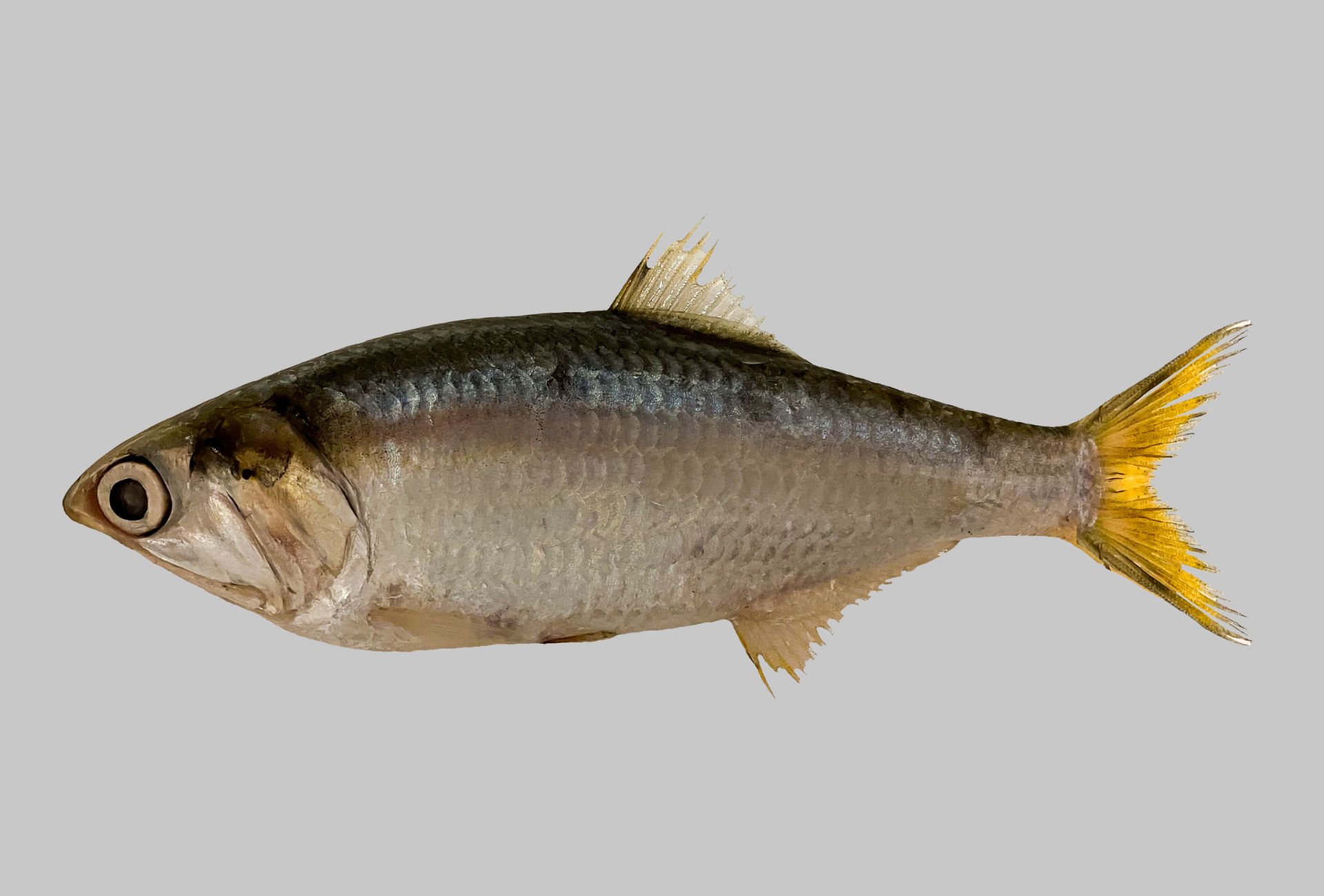


Description
Dorsal spines (total): 0; Anal spines: 0; Anal soft rays: 18 - 24. Head large and deep. Snout short and pointed, about 2/3 eye diameter; maxilla moderate, tip blunt, just failing to reach lower jaw articulation; fine and numerous lower gill rakers, increasing in large fishes; no gill rakers on posterior face of third epibranchial. Branchiostegal rays 8, long and slender; branchiostegal membrane broad. Silver stripe disappearing at about 10 cm SL (Ref. 189). Dusky dots on upper surface of head and snout, series of large black dots along base of anal (Ref. 37032).
Common Names
Taxonomic Hierarchy
Kingdom: Animalia
Phylum: Chordata
Class: Teleostei
Order: Clupeiformes
Family: Engraulidae
Genus: Cetengraulis
Species: Cetengraulis edentulus (Cuvier, 1829)
Climate Zone
Location
Biology
Occurs inshore and forms quite large schools. Enters brackish waters of lagoons and estuaries and can tolerate salinities of 10.32-31 ppt (Santa Cruz Canal, Pernambuco, Brazil). A filter-feeder presumably on both phytoplankton and zooplankton. Spawns off the Araya Peninsula, Venezuela from October to January, with a distinct peak in mid-November. Eggs are oval, spawned at 0230-0500 hours along shoreline out to about 1.5 km and hatching at about 20-24 hours later.
Habitat
brackish
Conservation Status
Least Concern
Threat to Humans
Harmless