Dorosoma petenense (Günther, 1867)
Description
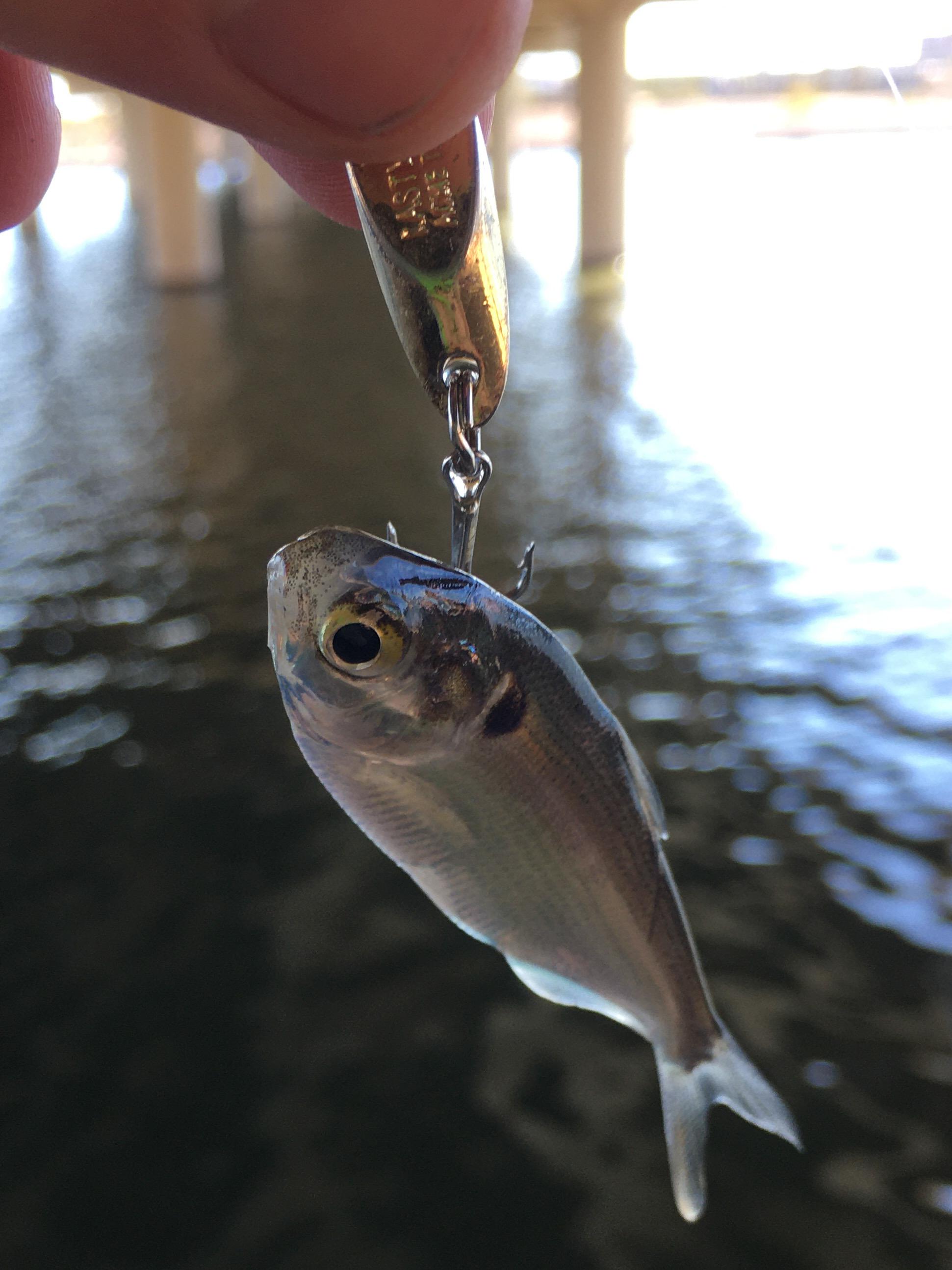
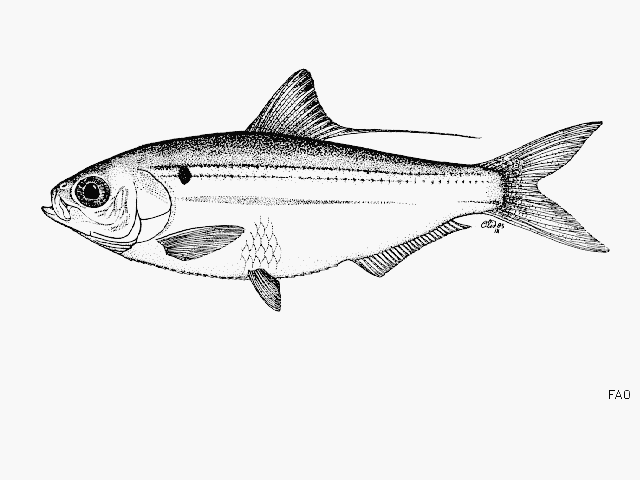
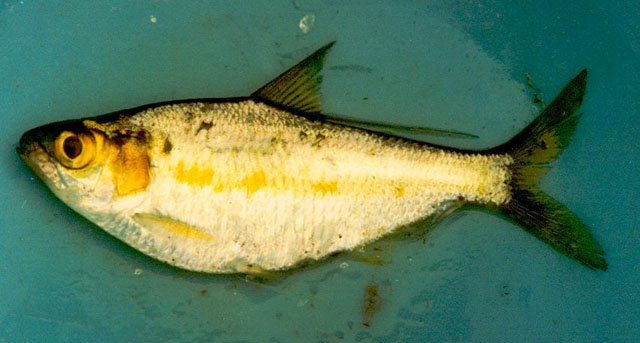
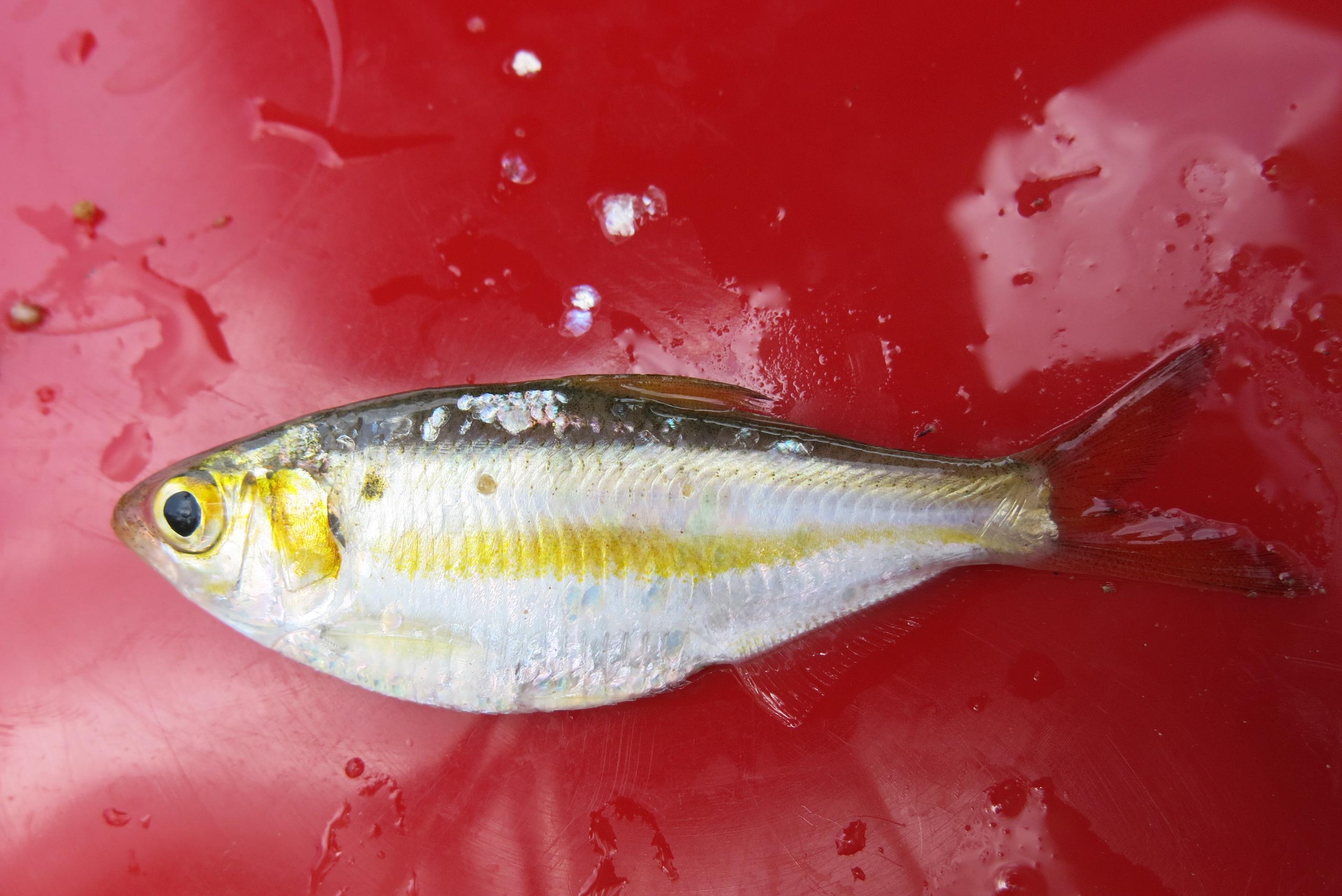
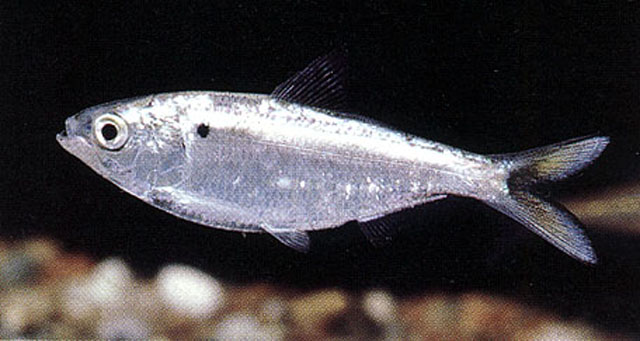
Dorsal spines (total): 0; Dorsal soft rays (total): 11 - 15; Anal spines: 0; Anal soft rays: 17 - 27; Vertebrae: 43 - 44. Body moderately deep; belly with 15 to 18 + 8 to 12 scutes. Mouth small. Last dorsal fin ray long, about equal to distance from snout tip to mid-pectoral fin or beyond; anal fin relatively short. Scales relatively large, regularly arranged. A dark spot behind gill opening. Gill rakers fine and numerous (Ref. 188). Body bright silvery, especially on sides, opercles and underparts. Back and upper sides bluish black or dark olivaceous (Ref. 37032).
Common Names
Taxonomic Hierarchy
Kingdom: Animalia
Phylum: Chordata
Class: Teleostei
Order: Clupeiformes
Family: Dorosomatidae
Genus: Dorosoma
Species: Dorosoma petenense (Günther, 1867)
Climate Zone
Location
Biology
Often schooling, occurring mainly in freshwater (in large rivers, reservoirs, lakes, and swamps). Prefer the presence of smooth, steep-sided surfaces such as dams, cement-lined pools and rip rapped streams (Ref. 39049). But adults are also found in brackish or saline water of estuaries and bays (up to 32.3 ppt salinity (Ref. 39050); juveniles to about 15 ppt). Larvae are pelagic probably found only in freshwater (Ref. 39046). Filter-feeders, but not entirely herbivorous since recorded food items include copepods, cladocerans and fish fry. Also feed on organic material of sand and detritus bottoms (Ref. 9114). Breed in the spring and in autumn, in freshwater, near or over plants or other objects. Eggs adhere to aquatic vegetation (Ref. 4639). Caught exclusively in fresh waters and sometimes in mouths of rivers (Ref. 9291). Also Ref. 58302.
Habitat
freshwater
Conservation Status
Least Concern
Threat to Humans
Harmless