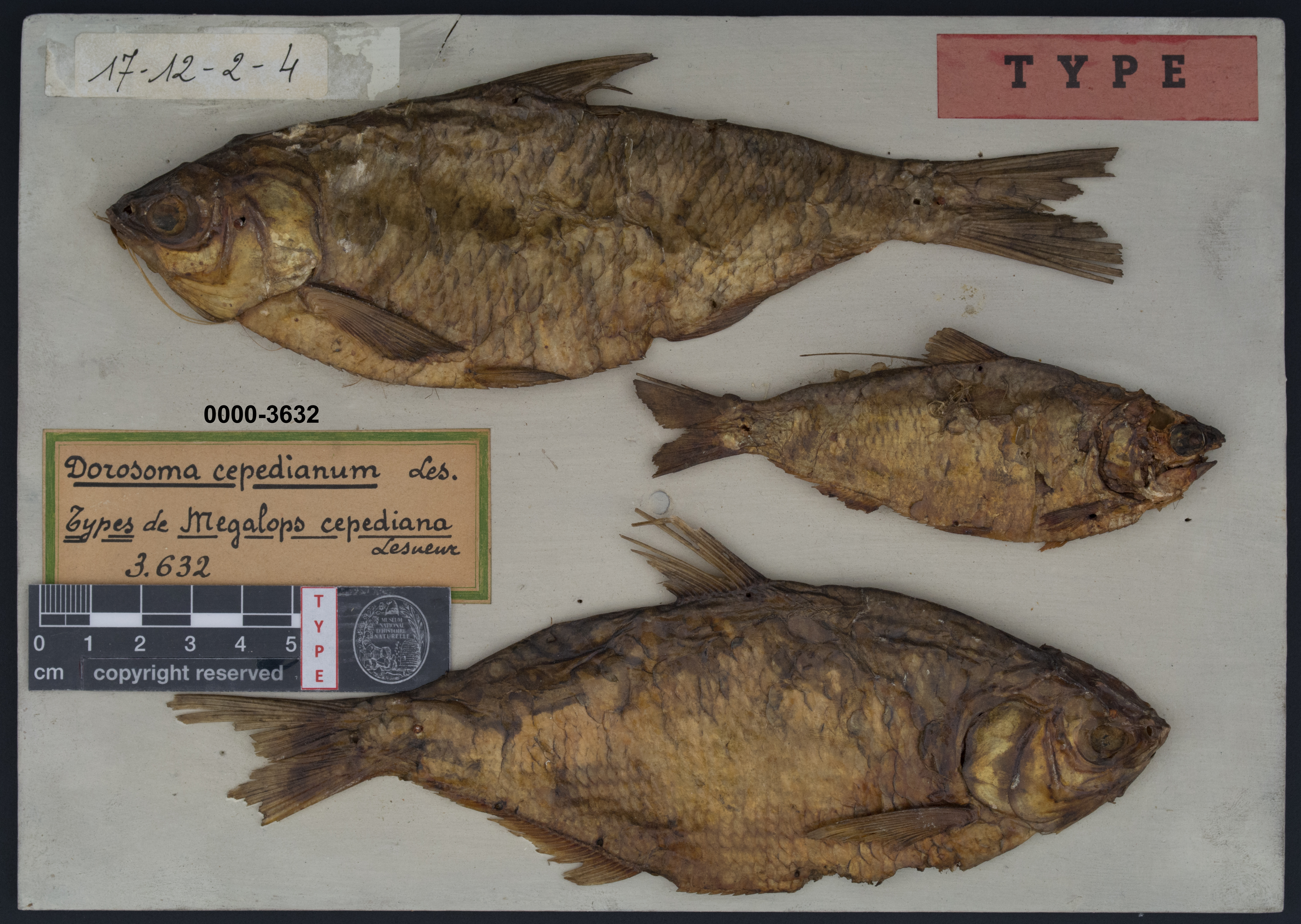
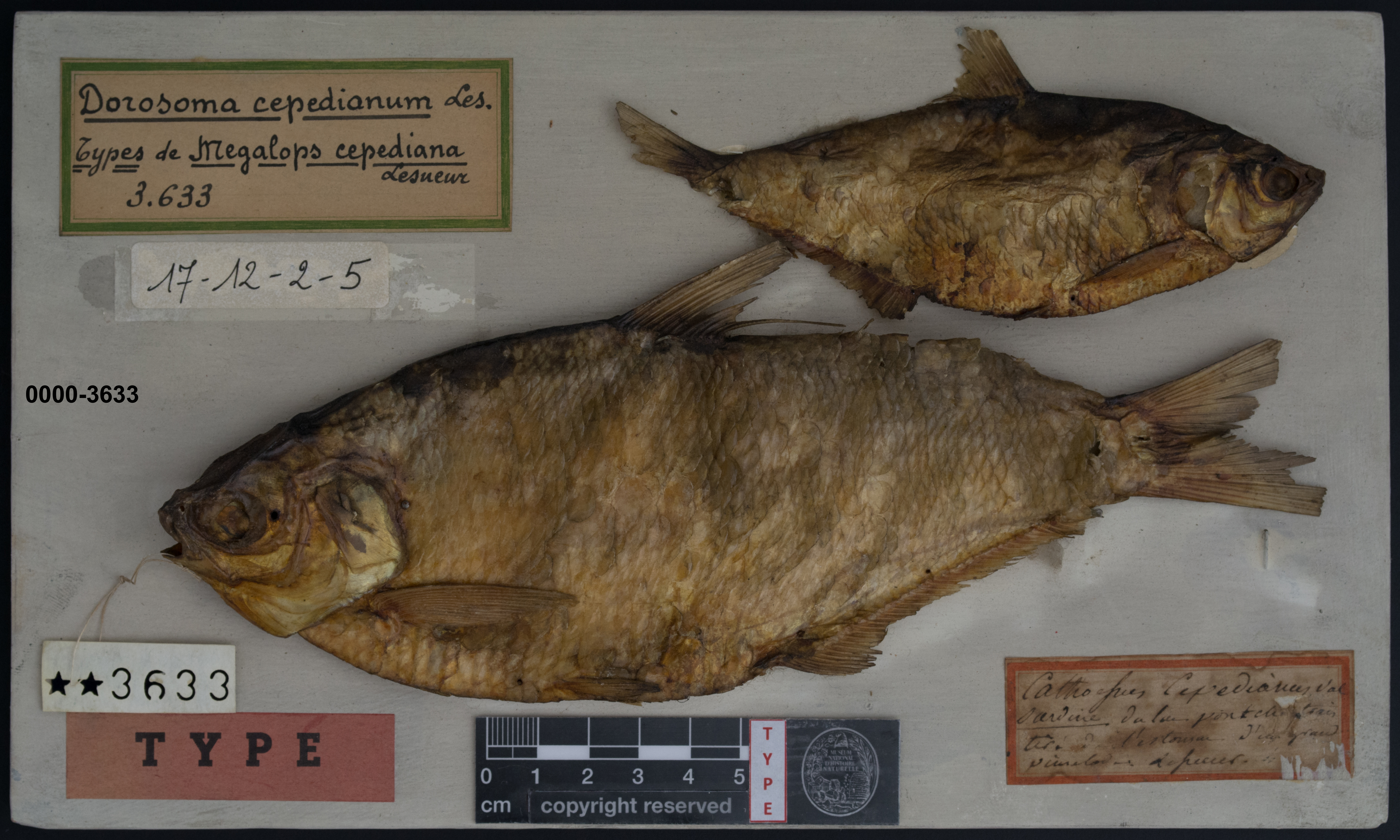
Dorosoma cepedianum (Lesueur, 1818)

Description
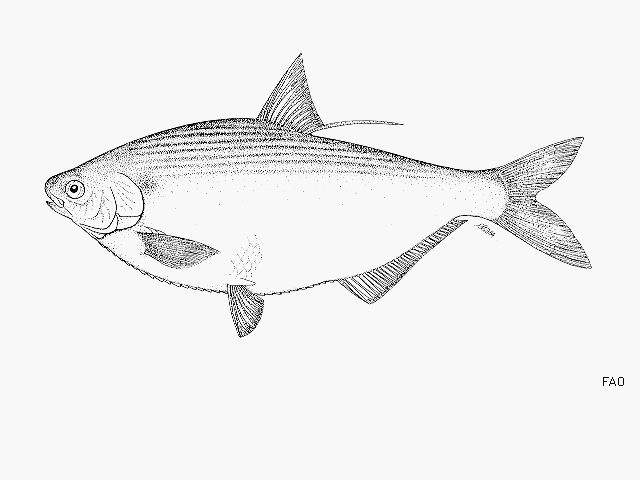
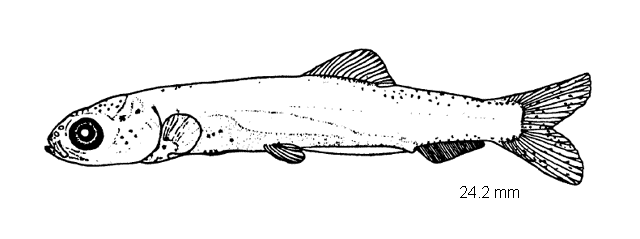
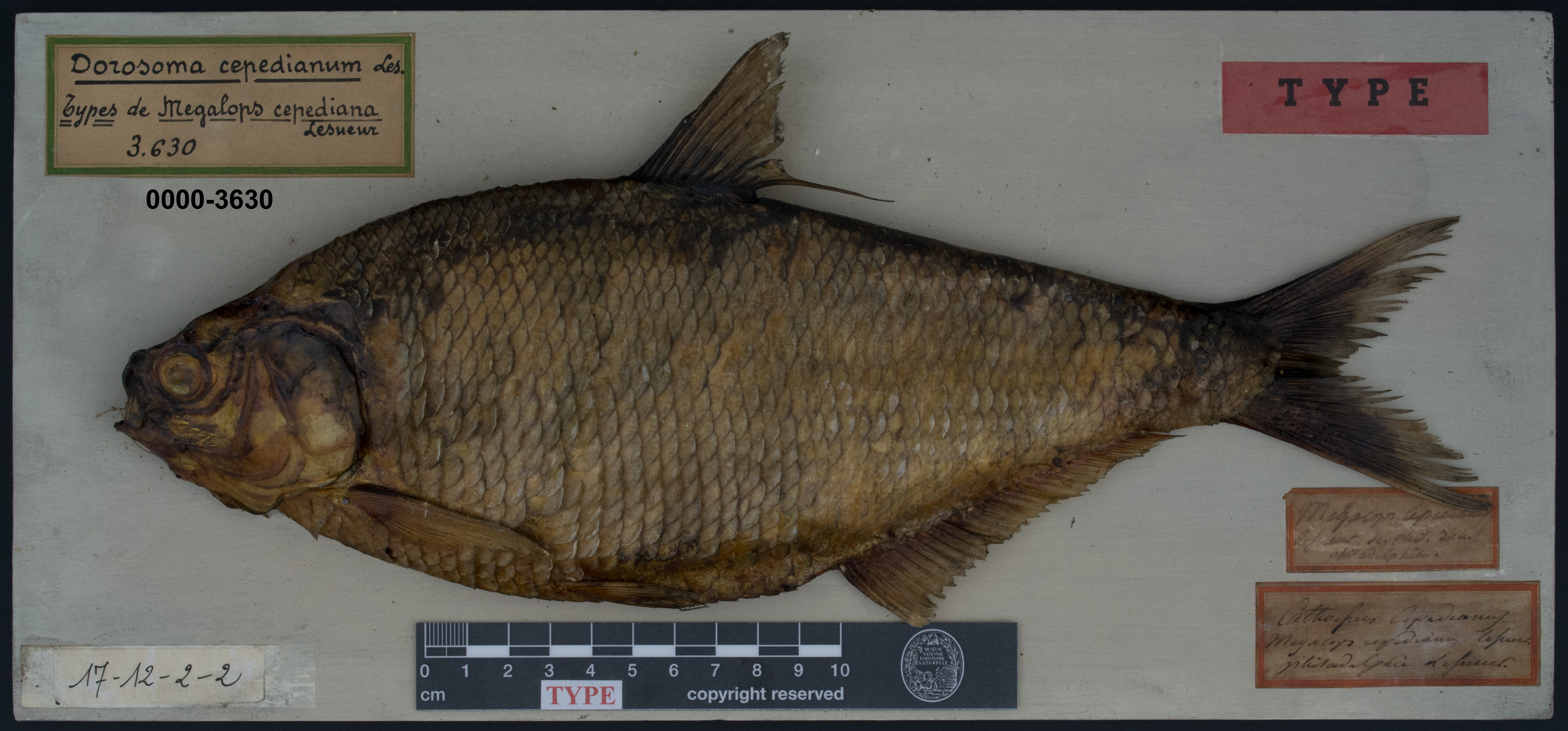
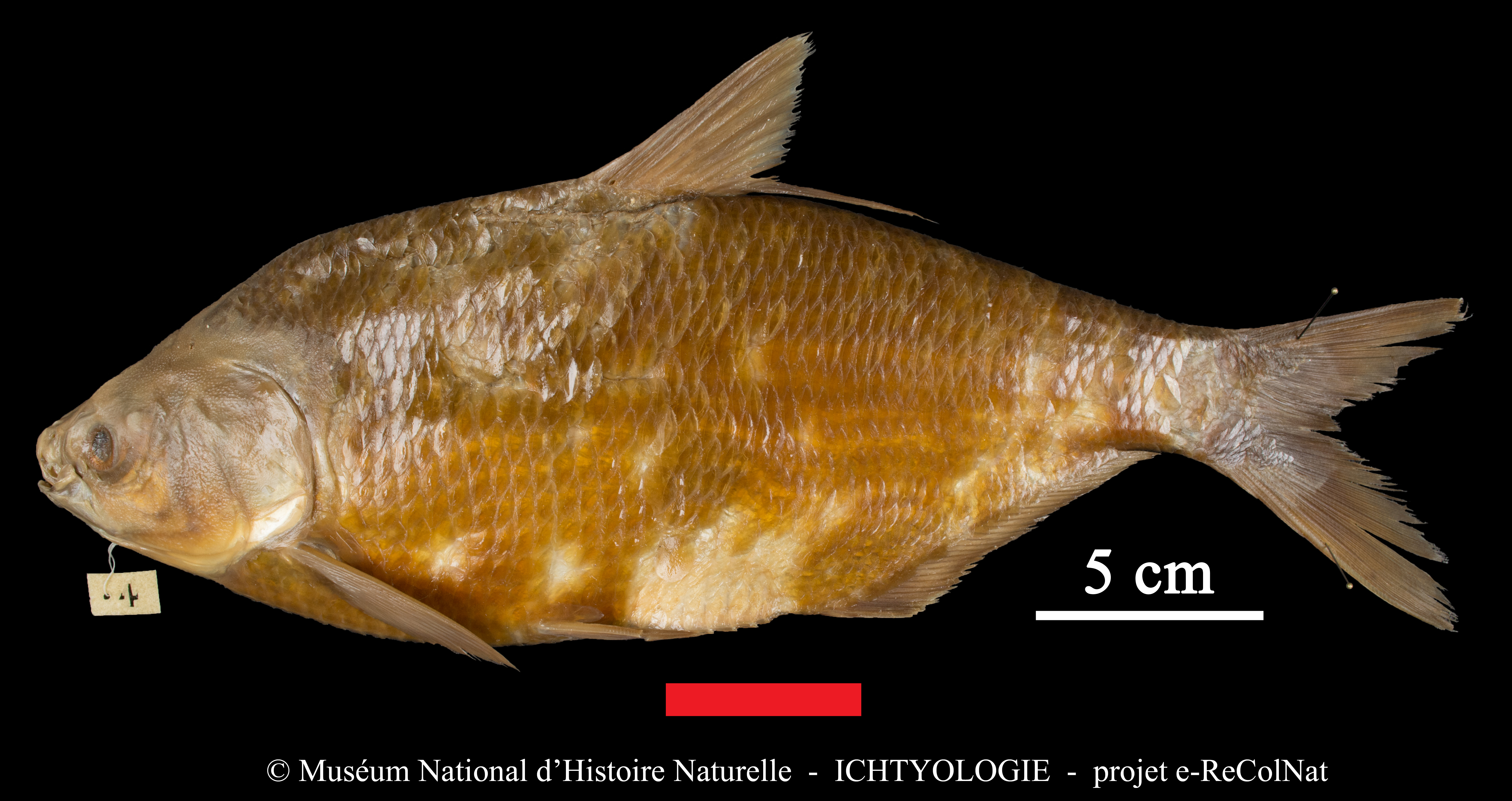
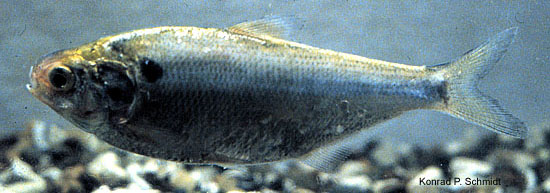
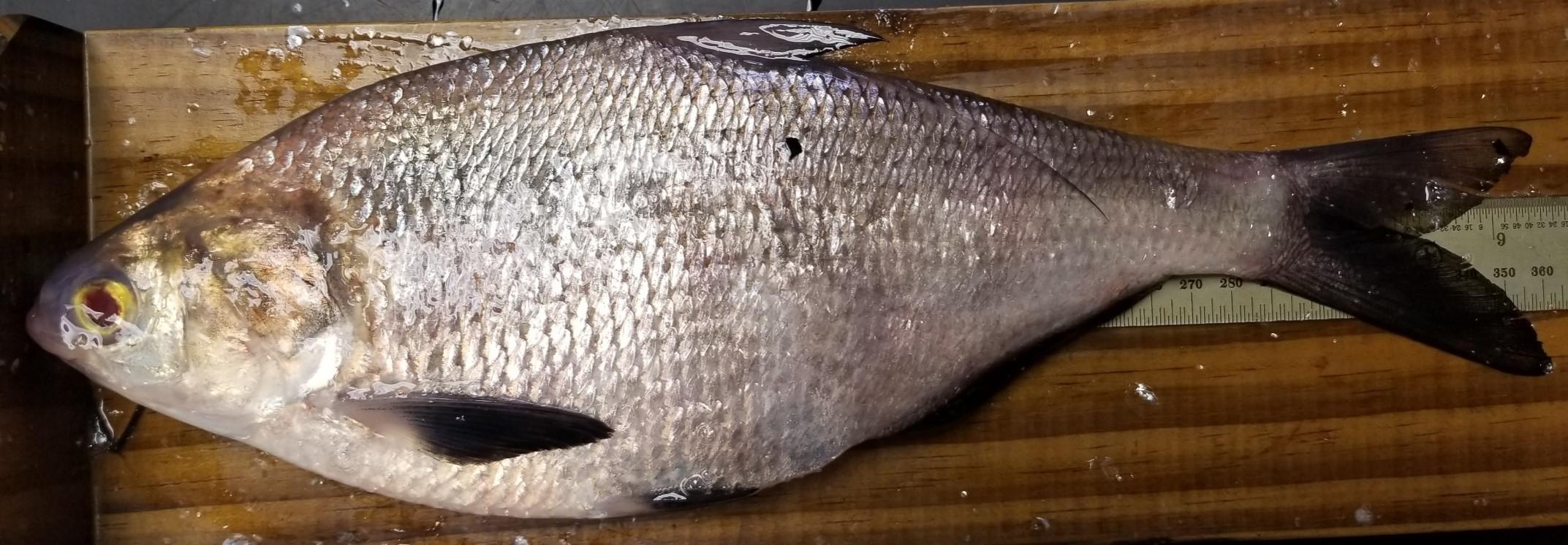
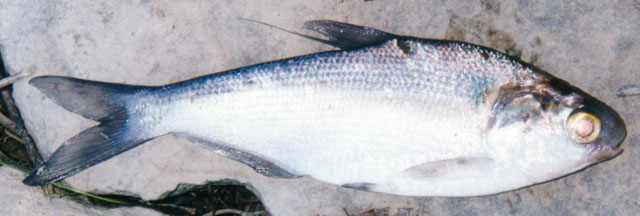
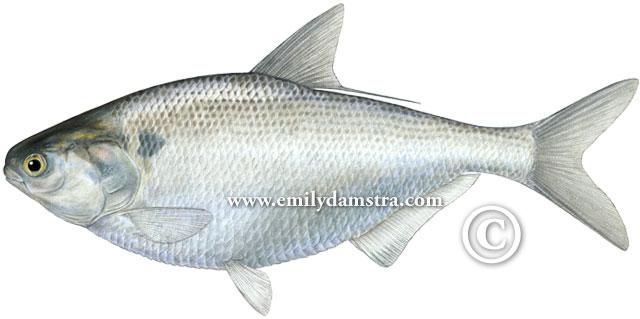
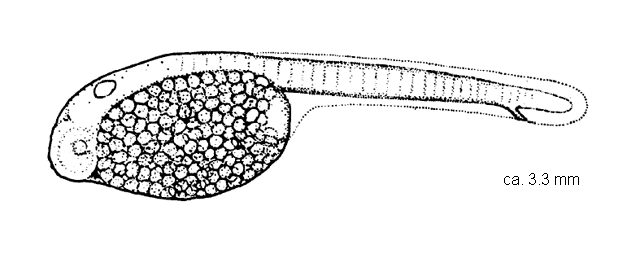
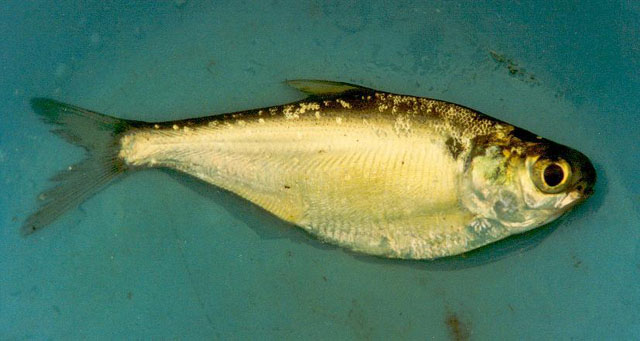
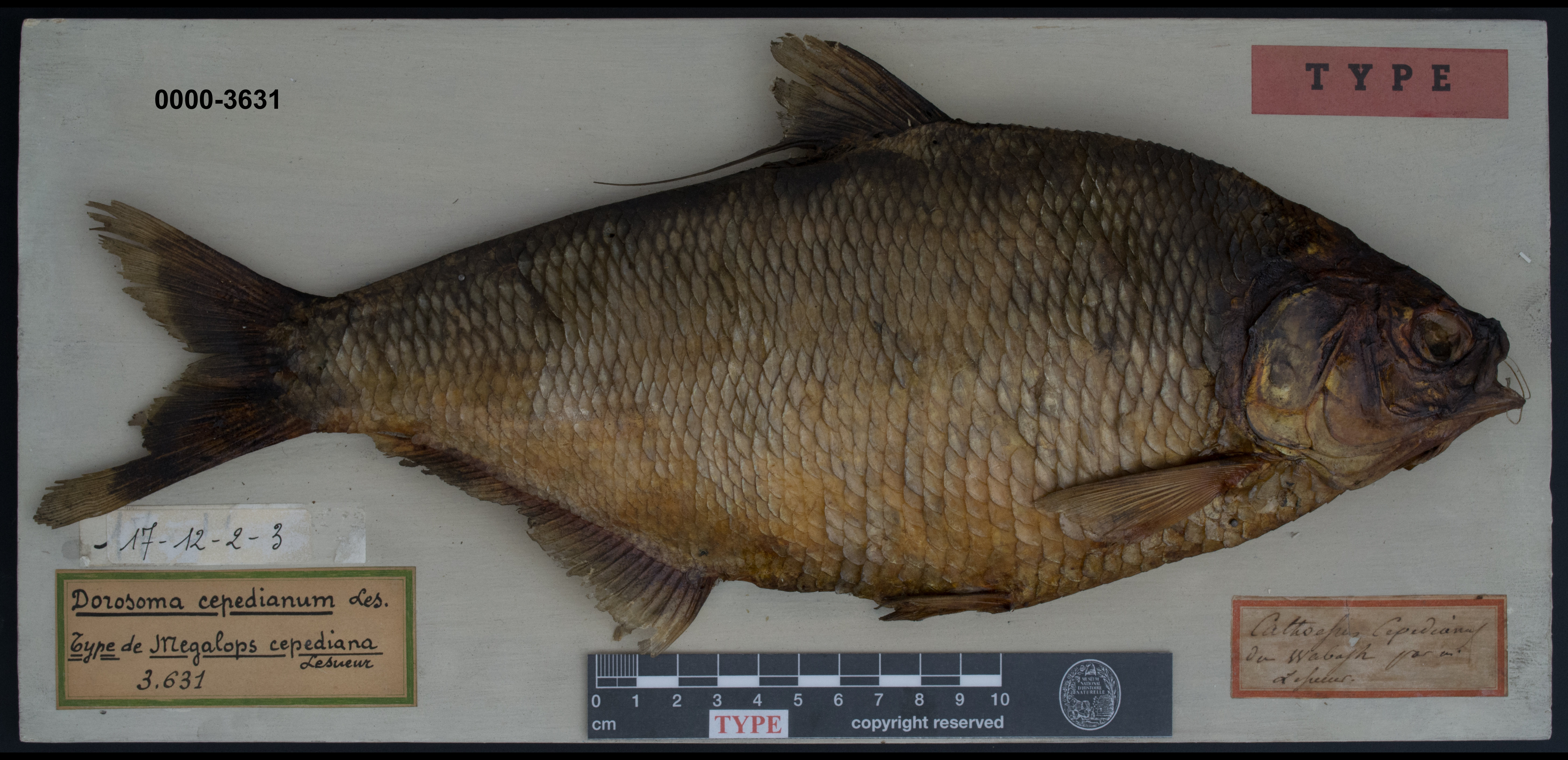
Dorsal spines (total): 0; Dorsal soft rays (total): 10 - 15; Anal spines: 0; Anal soft rays: 25 - 36; Vertebrae: 47 - 51. Body moderately deep; belly with 17 to 20 - 10 to 14 scutes. Mouth small; lower jaw short. Last dorsal fin ray long, about equal to distance from snout tip to mid-pectoral fin or beyond; anal fin long. Scales small, somewhat irregular. A dark spot behind gill opening. Gill rakers fine and numerous (Ref. 188). Branchiostegal rays 6 (Ref. 4639). Silvery to brassy, with a bluish back. Stomach thick-walled, gizzard-like (Ref. 7251).
Common Names
Taxonomic Hierarchy
Kingdom: Animalia
Phylum: Chordata
Class: Teleostei
Order: Clupeiformes
Family: Dorosomatidae
Genus: Dorosoma
Species: Dorosoma cepedianum (Lesueur, 1818)
Climate Zone
Location
- Northwest Atlantic: North America and Gulf of Mexico drainage (southeast South Dakota and central Minnesota, Great Lakes drainage, i.e. in Lake Erie, southern parts of Lakes Huron and Michigan, Lake Ontario basin; not Lake Superior; southernmost New York southward to the Mississippi system and to Gulf southward to Río Pánuco, Mexico.
Biology
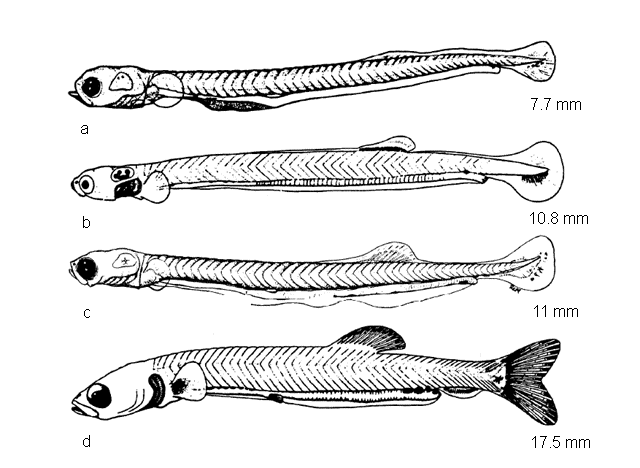
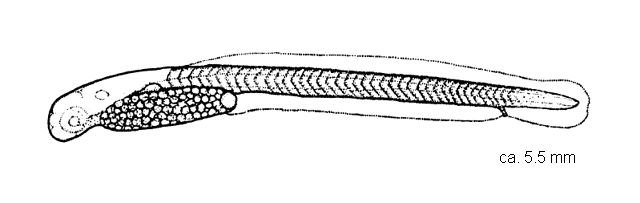
Inhabits open water of medium to large rivers, lakes, and impoundments. Ascends creeks and small rivers with well-developed pools and enters brackish water (Ref. 86798). Occurs mainly in freshwater in large rivers, reservoirs, lakes, swamps, temporary floodwater pools, etc., but adults also found in brackish or saline water of estuaries or bays, preferring quieter open waters. Juveniles are found in great abundance well upstream from brackish water (Ref. 39041). Very young individuals apparently never enter brackish water (Ref. 38947). Larvae are most abundant in surface waters both day and night (Ref. 4639). A herbivorous filter-feeder almost entirely. Breed near the surface in freshwater from late winter (mid-March) through most of the summer (at least to about mid-August). The adhesive eggs sink. Used to some extent as fertilizer and cattle food (Ref. 188).
Habitat
freshwater
Conservation Status
Least Concern
Threat to Humans
Harmless
Dorosoma cepedianum (Lesueur, 1818)