Caristius macropus (Bellotti, 1903)
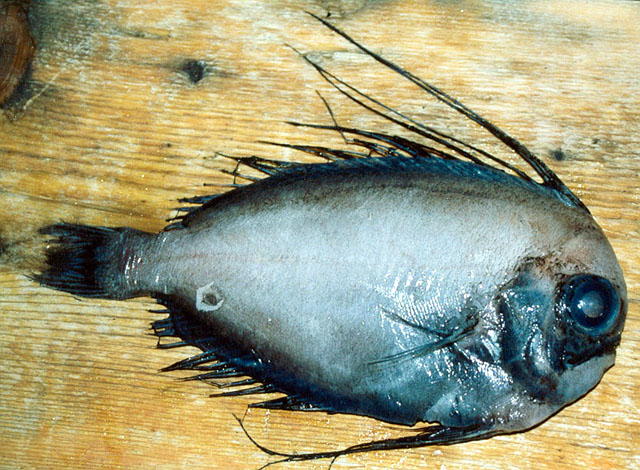
Description
Dorsal spines (total): 0; Dorsal soft rays (total): 32 - 36; Anal spines: 0; Anal soft rays: 21 - 23; Vertebrae: 37 - 40. This species is distinguished from C. meridionalis by having fewer dorsal-fin rays (32-36 vs. 35-39); distal half of gill rakers with several short bristles, occasionally a small bristle at the tip (vs. several long bristles on distal half of raker and 1-2 long bristles extending from the tip of each raker); and morphology of dorsal pharyngeal papillae (low folds vs. fleshy tabs and small papillae); differs from C. fasciatus by having greater number of smaller teeth and vertebral count ajd the absence of a fingerlike papilla inside the opercle (sometimes absent in C. fasciatus); differs from C. digitus by the absence of a series of fingerlike papillae inside the opercle, having a short conical pharyngeal teeth (vs. elongate pharyngeal teeth), and fewer gill rakers (18-22 vs. 22-26) (Ref. 94277).
Common Names
Taxonomic Hierarchy
Kingdom: Animalia
Phylum: Chordata
Class: Teleostei
Order: Scombriformes
Family: Caristiidae
Genus: Caristius
Species: Caristius macropus (Bellotti, 1903)
Climate Zone
Location
- North Pacific: from subtropical waters to the Bering Sea and the coast of Alaska to where it is apparently drifted by warm currents.
Biology
Occurs in midwaters in temperate latitudes. Fish remains have been found in manefish stomachs (Ref. 4525). From fry catches, it apparently reproduces in the subtropical zone (Ref. 95096).
Habitat
bathypelagic
Conservation Status
Not Evaluated
Threat to Humans
Harmless
Caristius macropus (Bellotti, 1903)