Dibranchus atlanticus Peters, 1876

Description
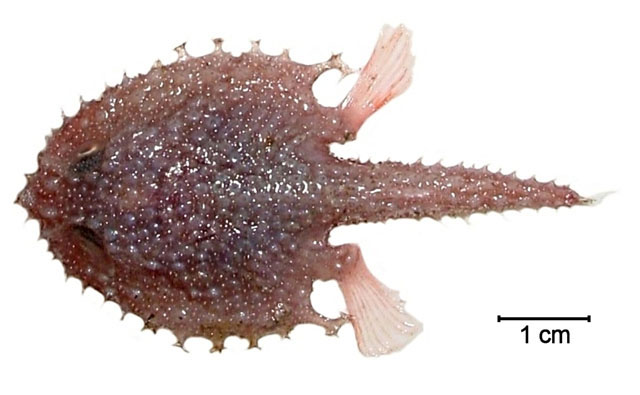
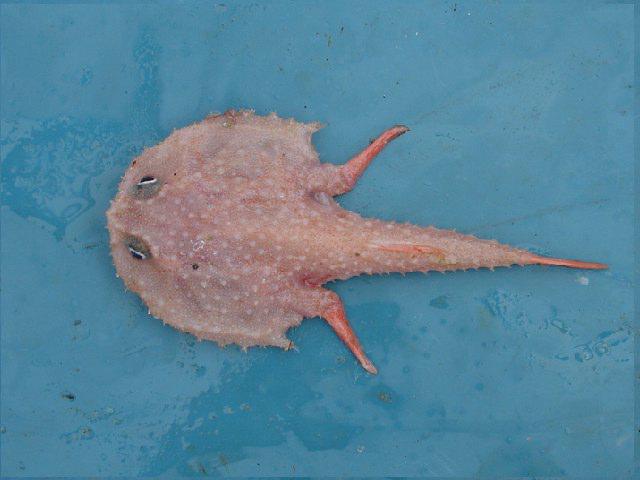
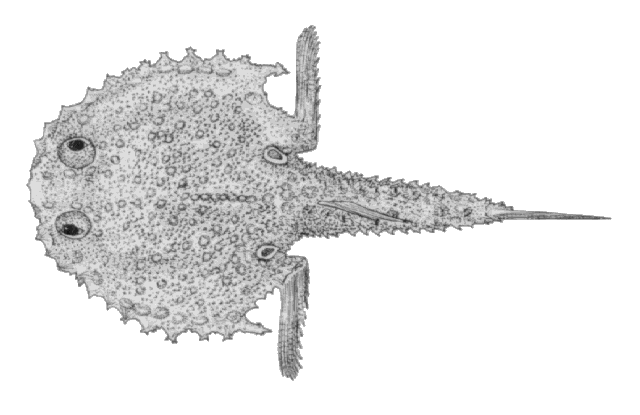
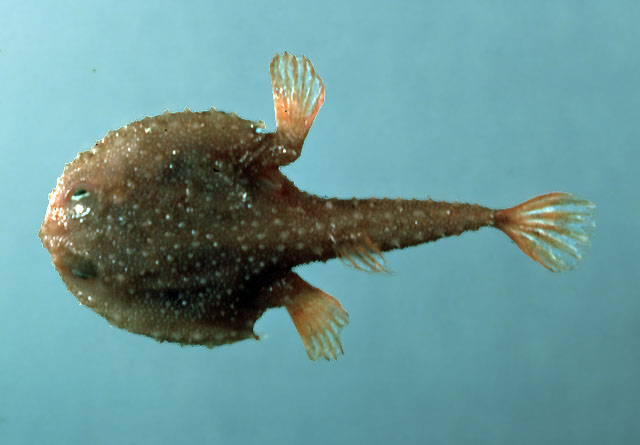
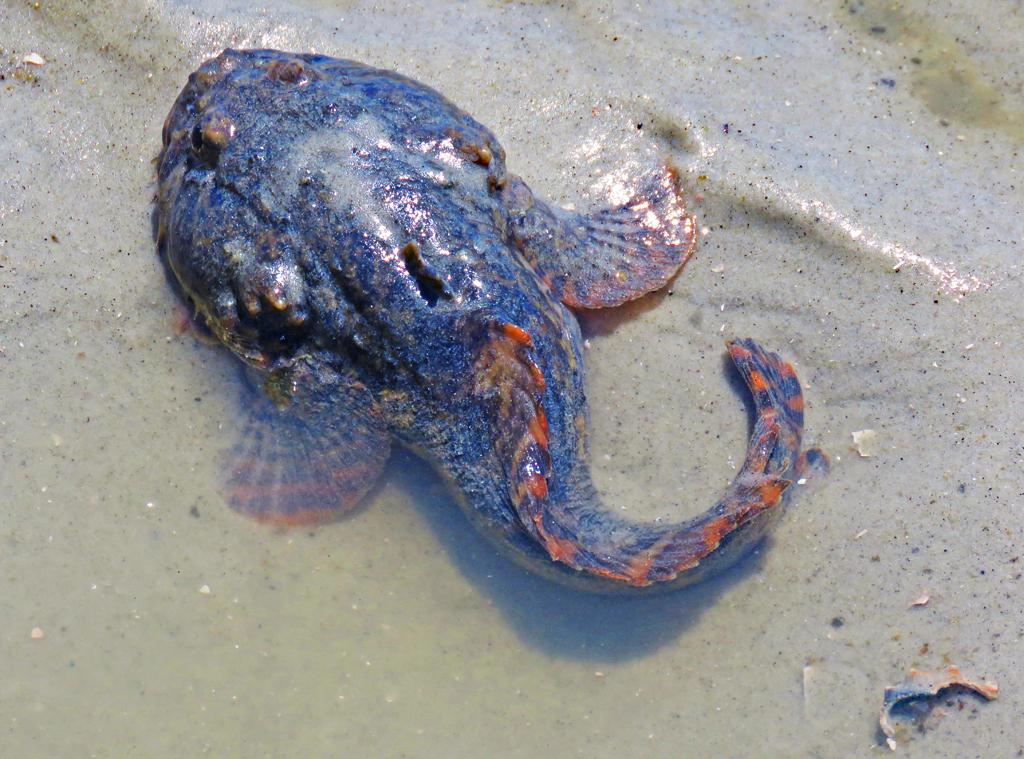
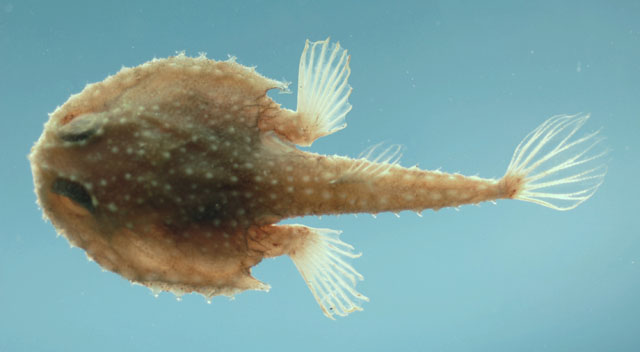
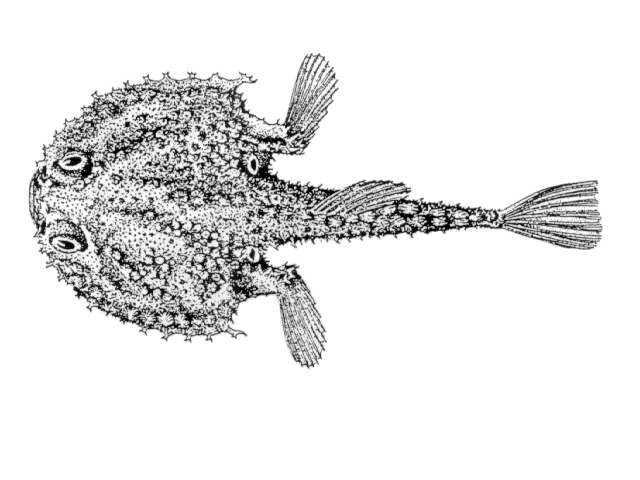
Dorsal spines (total): 0; Dorsal soft rays (total): 5 - 7; Anal spines: 0; Anal soft rays: 4; Vertebrae: 18 - 19. Tubercles (its form of scales) have ridges radiating from the apical spine; these ridges heavily edged with spinules, especially the largest tubercles; thus, tubercles appear to be multi-spined. Vertebral count usually 18. Cephalic lateral-line counts: subopercular 4-6, preopercular, 1-3. Tail lateral-line counts 9-13. Usual number of dorsal fin rays 6, pectoral fin rays 14-15; vertebrae 18. Color differences observed between eastern and western Atlantic populations; specimens from Gulf of Guinea often have reticulate markings on the dorsal surface of the body, usually vague (occasionally strong), which are not seen in western Atlantic material. Fins, except dorsal, usually have tubercles on bases of rays. Pectoral fins slender, sturdy relative to most other species; pelvic fins slender (Ref. 40826).
Common Names
Taxonomic Hierarchy
Kingdom: Animalia
Phylum: Chordata
Class: Teleostei
Order: Lophiiformes
Family: Ogcocephalidae
Genus: Dibranchus
Species: Dibranchus atlanticus Peters, 1876
Climate Zone
Location
- Western Atlantic: coasts of Canada and United States, Gulf of Mexico, Caribbean, and the coast of South America to Rio de Janeiro, Brazil; in the east, from the Gulf of Guinea to Angola.
Biology
Found on mud or sand-mud bottoms (Ref. 26999). Benthic adults are luminous (Ref. 40826). Feeds chiefly on polychaetes; bottom-living amphipods, bivalve molluscs, brittle stars, starfishes and sea spiders (Ref. 5951).
Habitat
bathydemersal
Conservation Status
Least Concern
Threat to Humans
Harmless
Dibranchus atlanticus Peters, 1876