Dascyllus reticulatus (Richardson, 1846)

Description
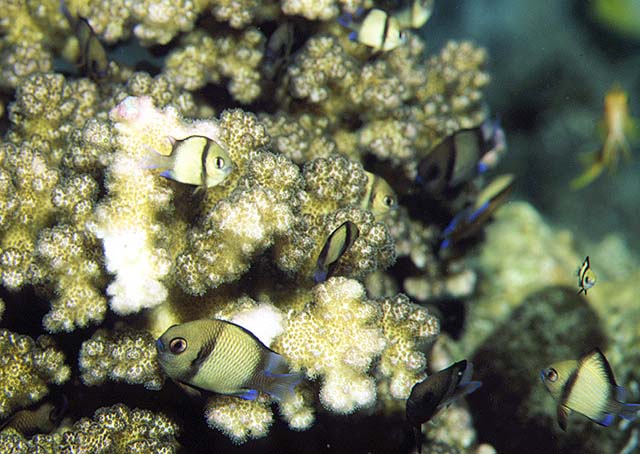
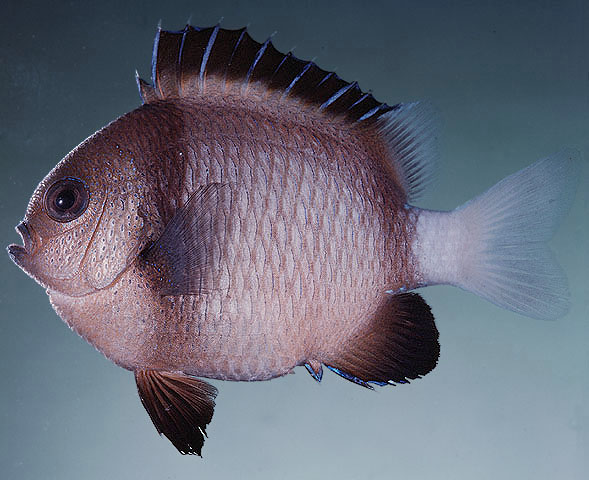
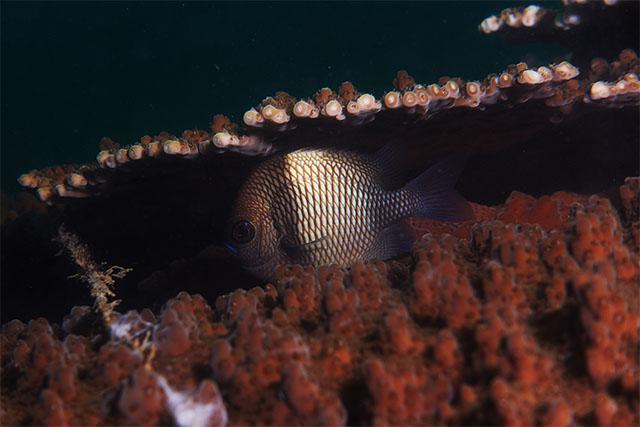
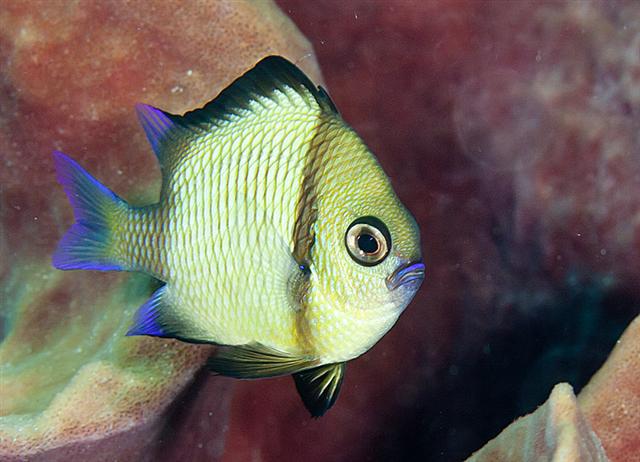
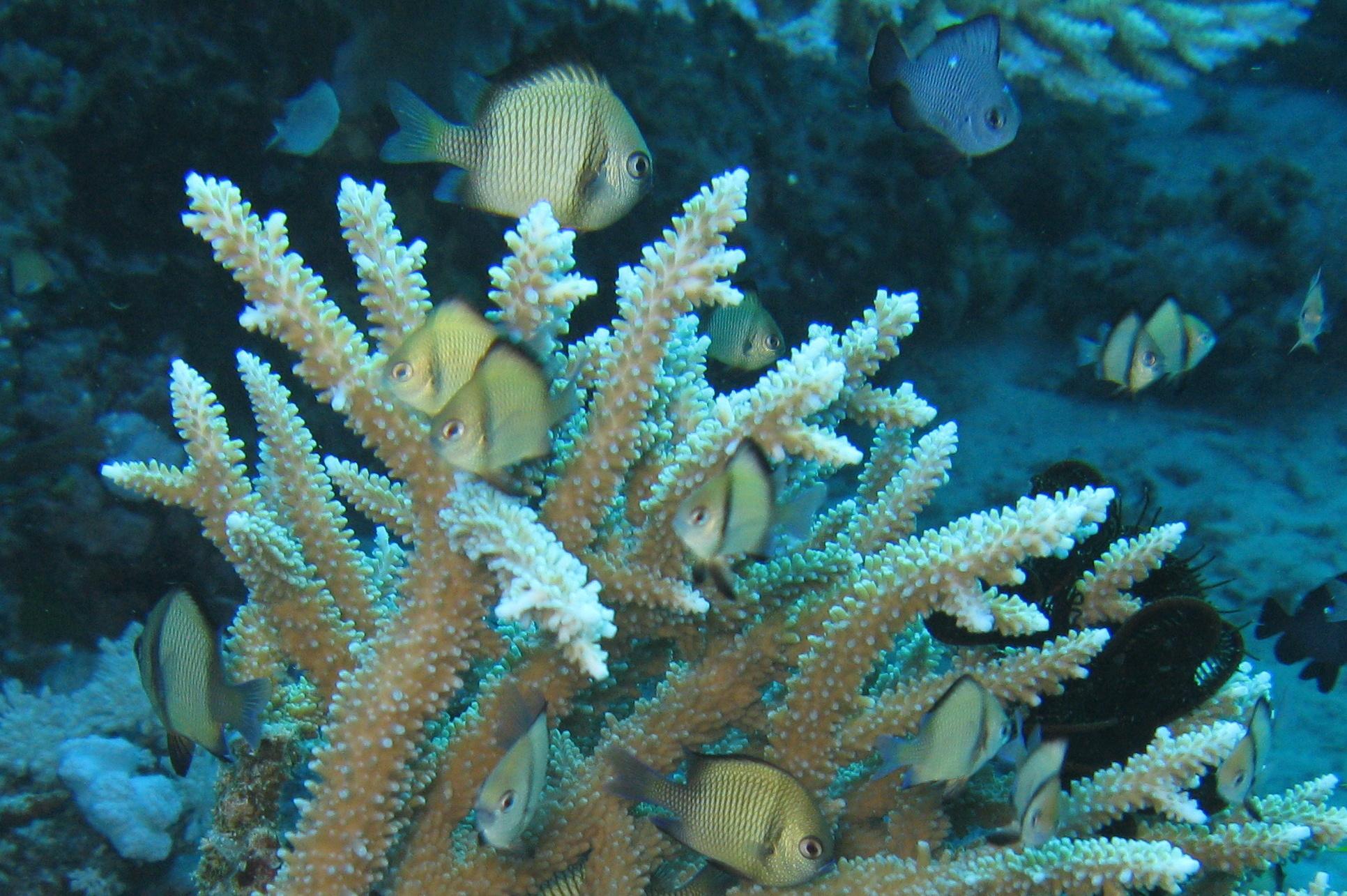
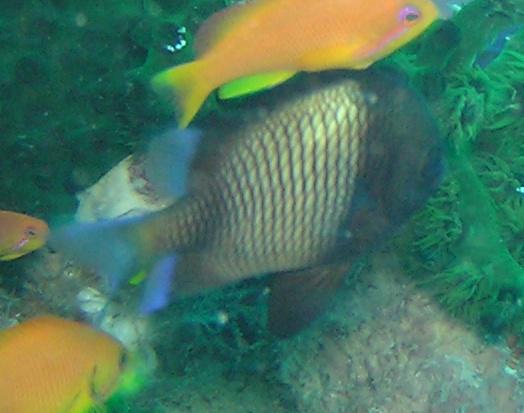
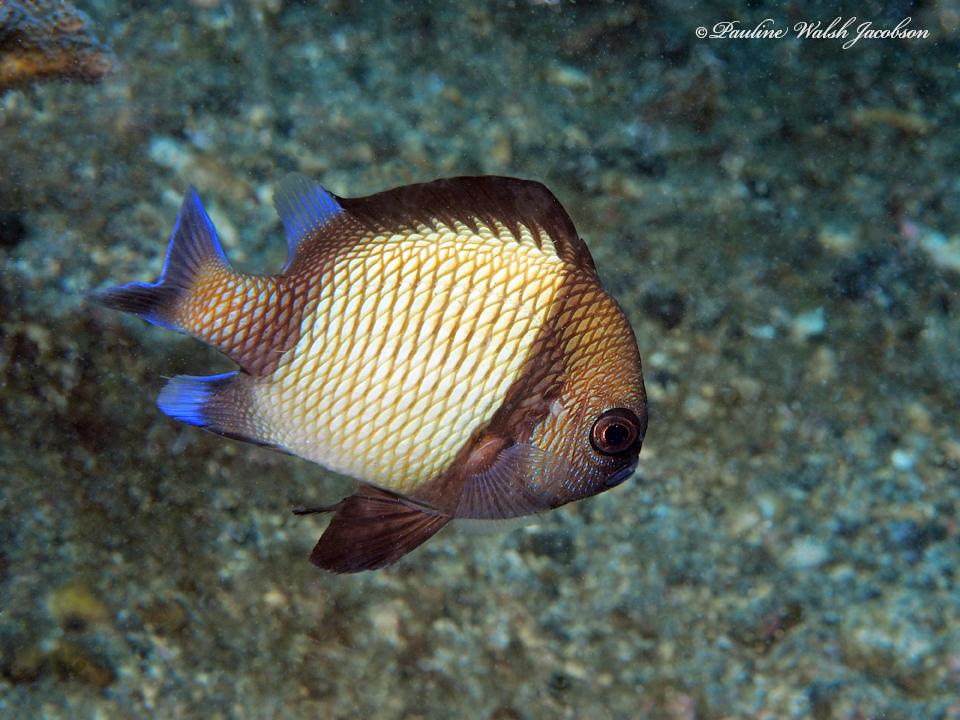
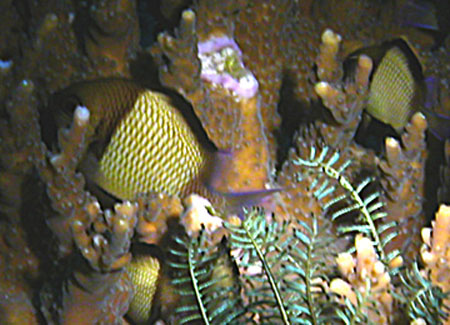
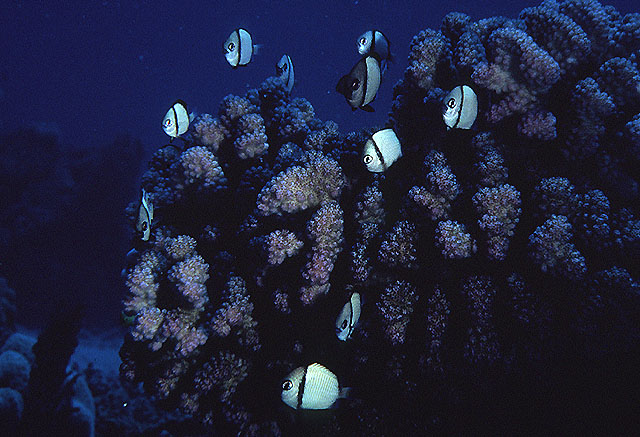
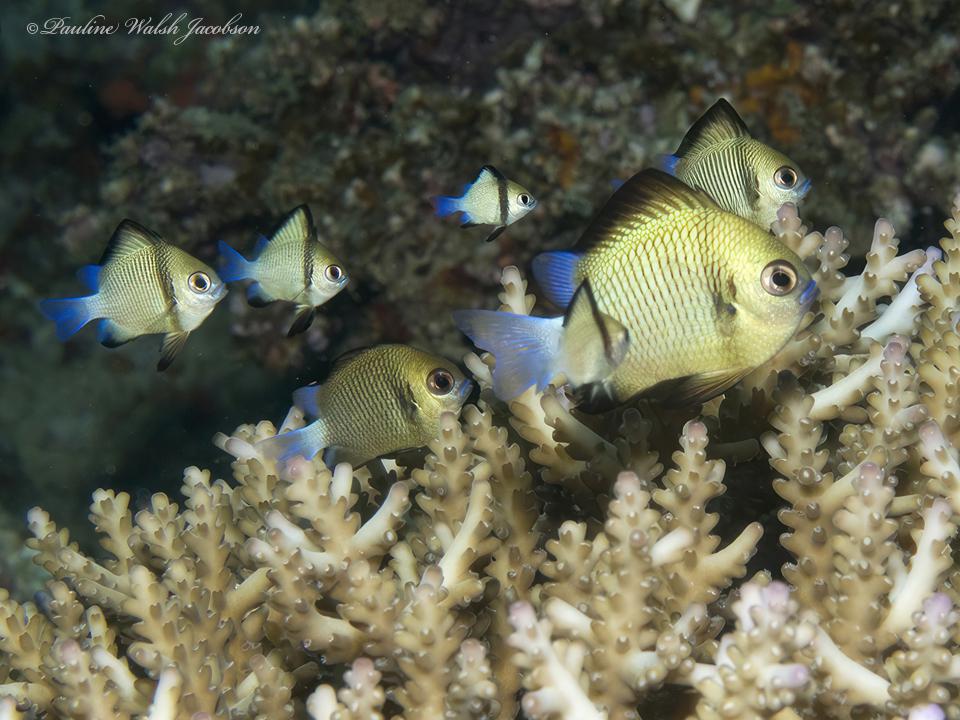
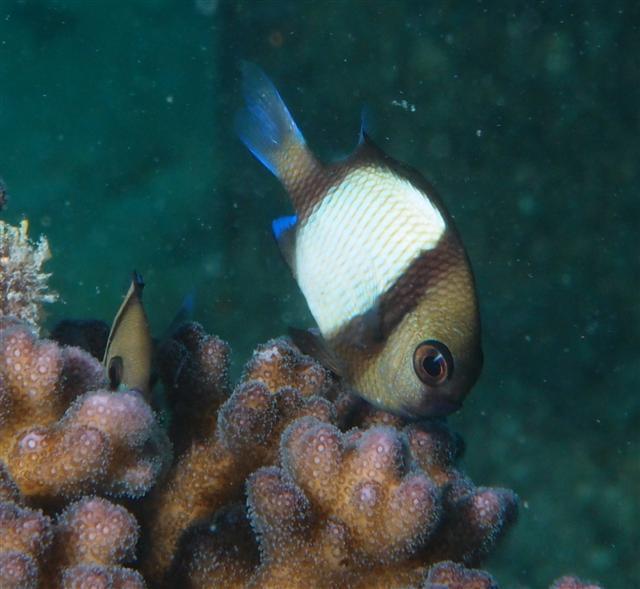
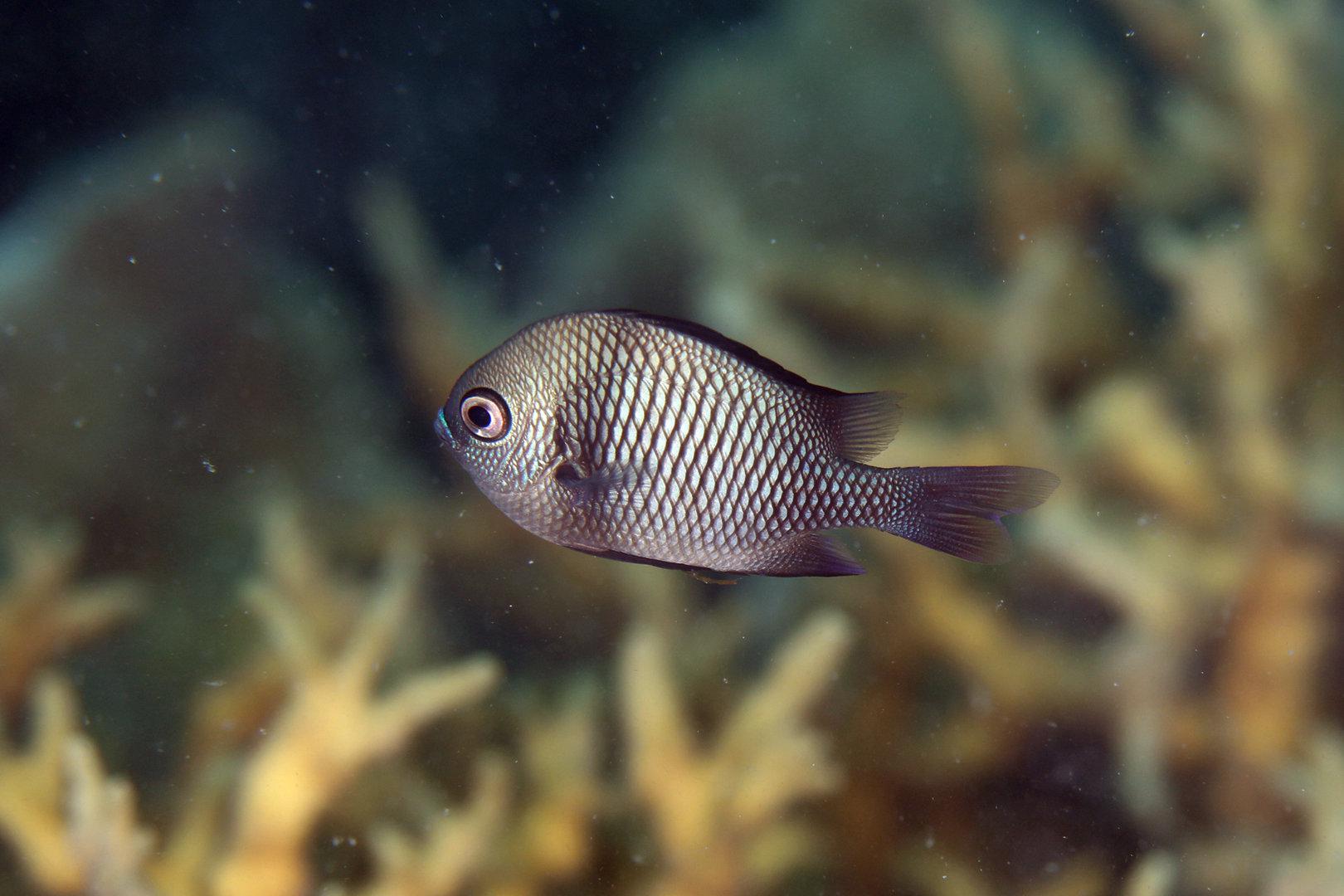
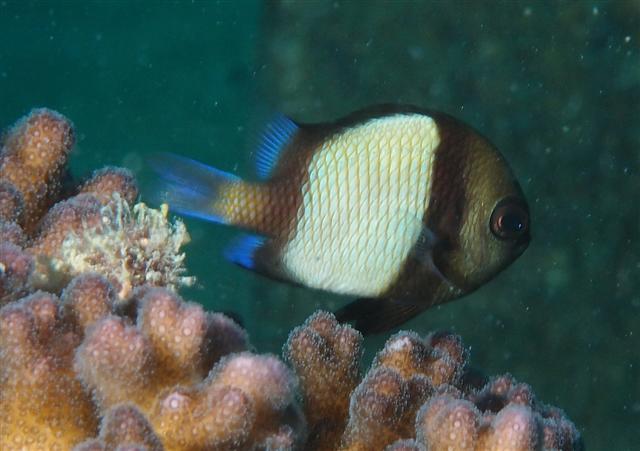
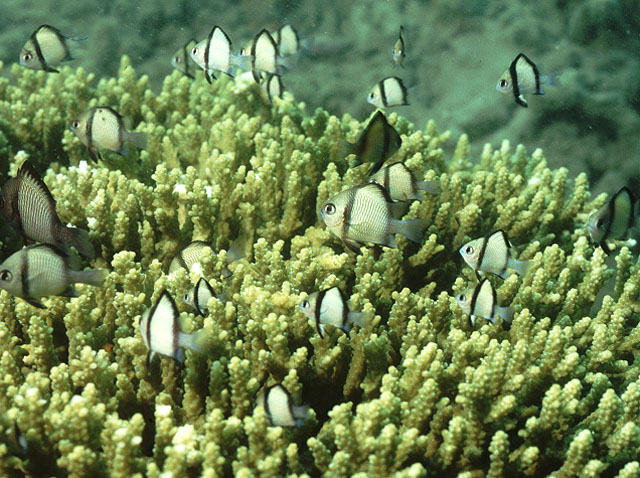
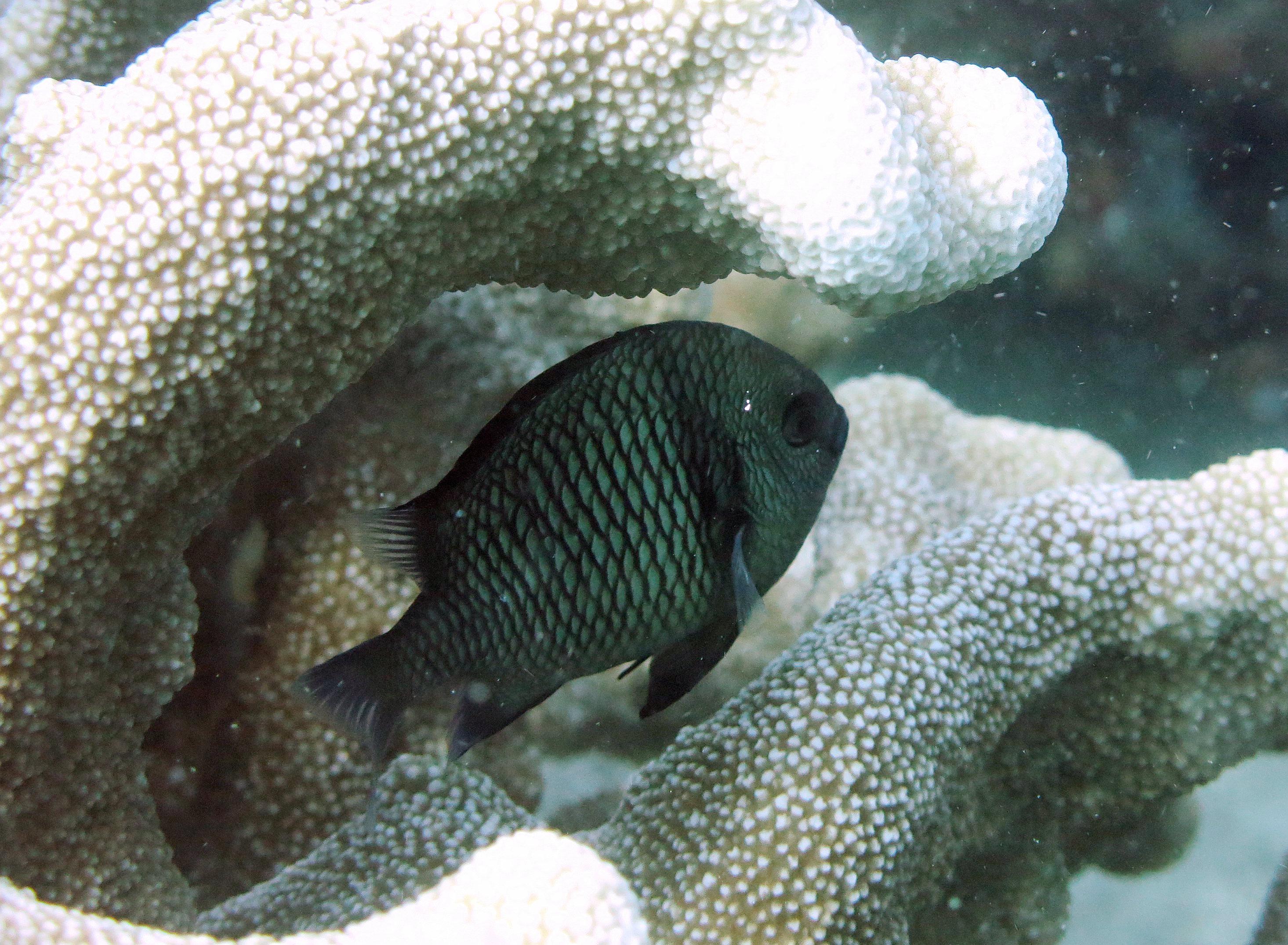
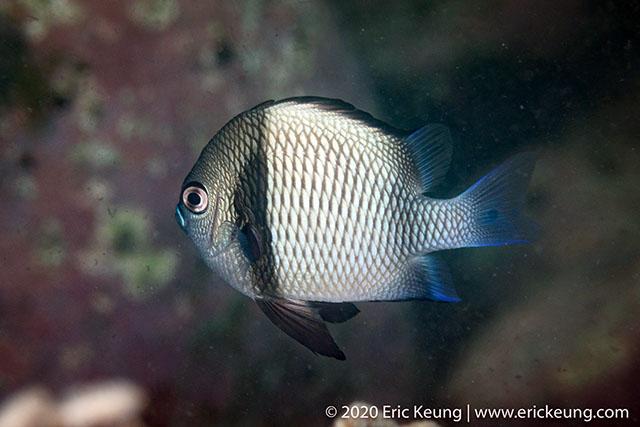
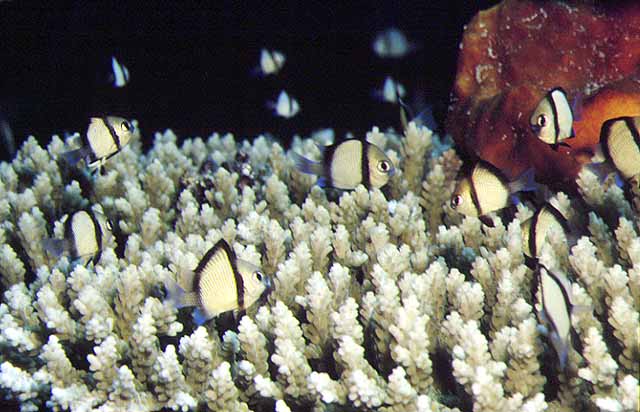
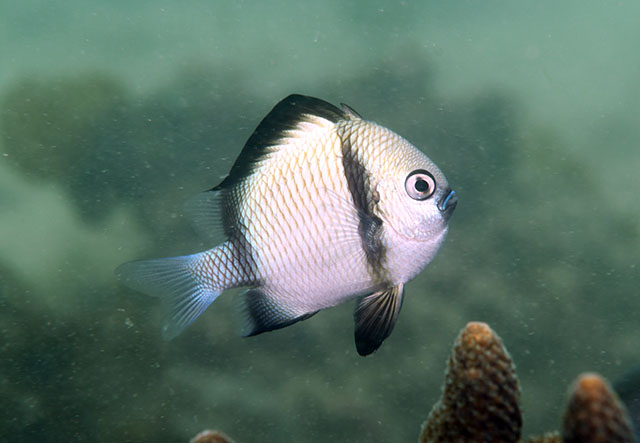
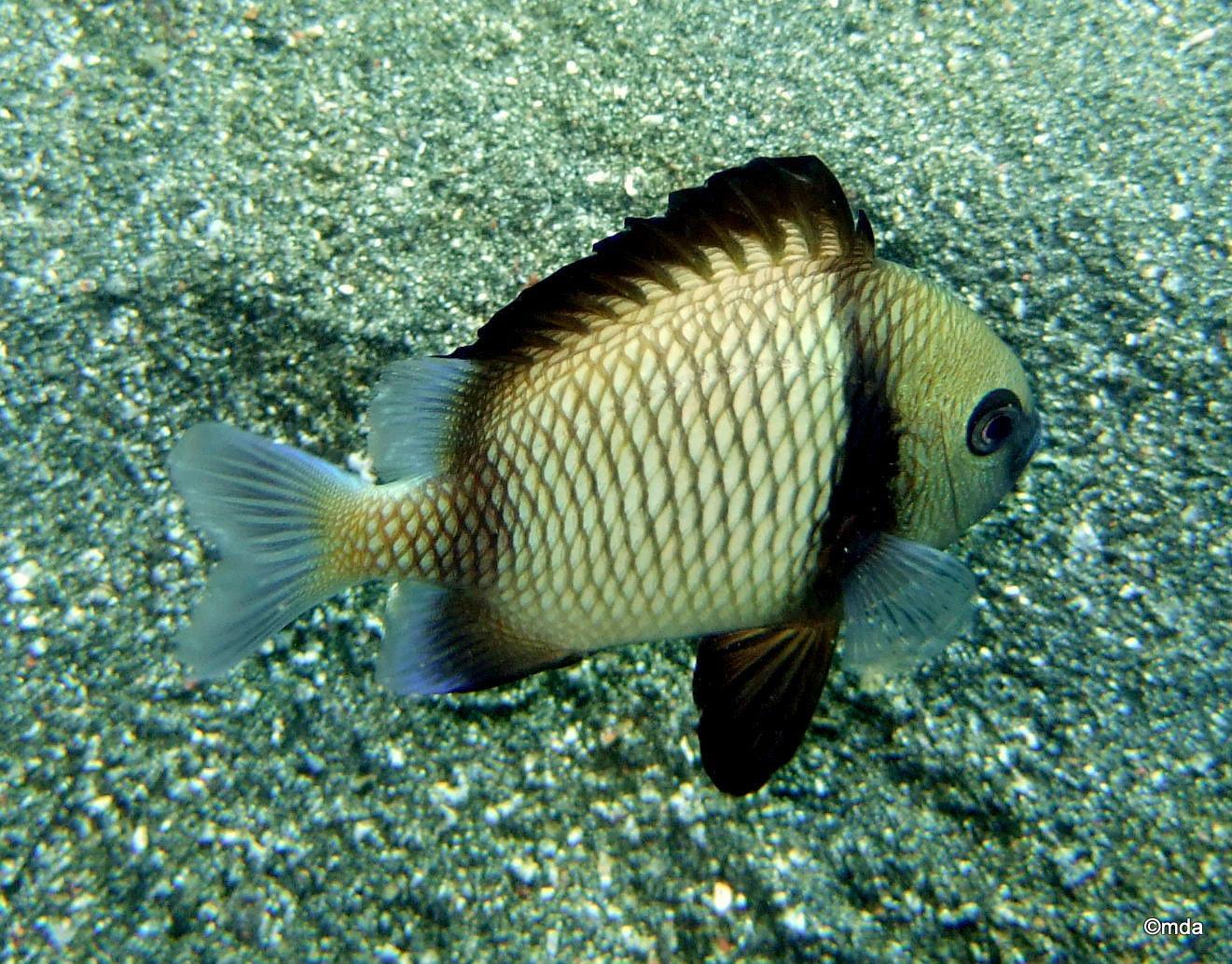
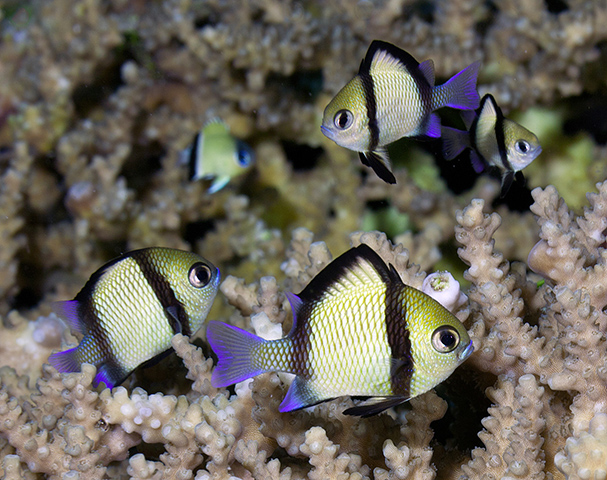
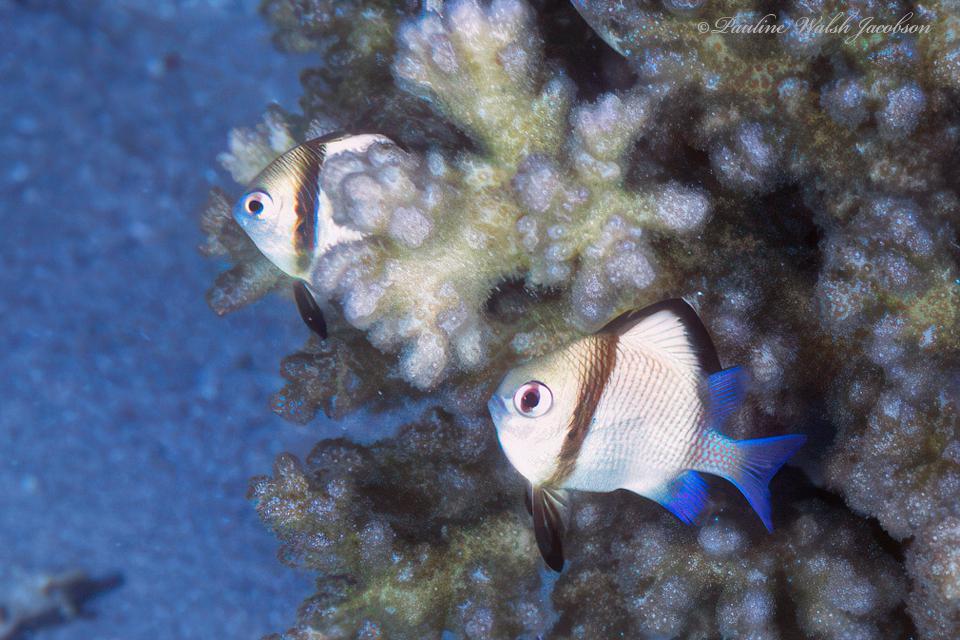
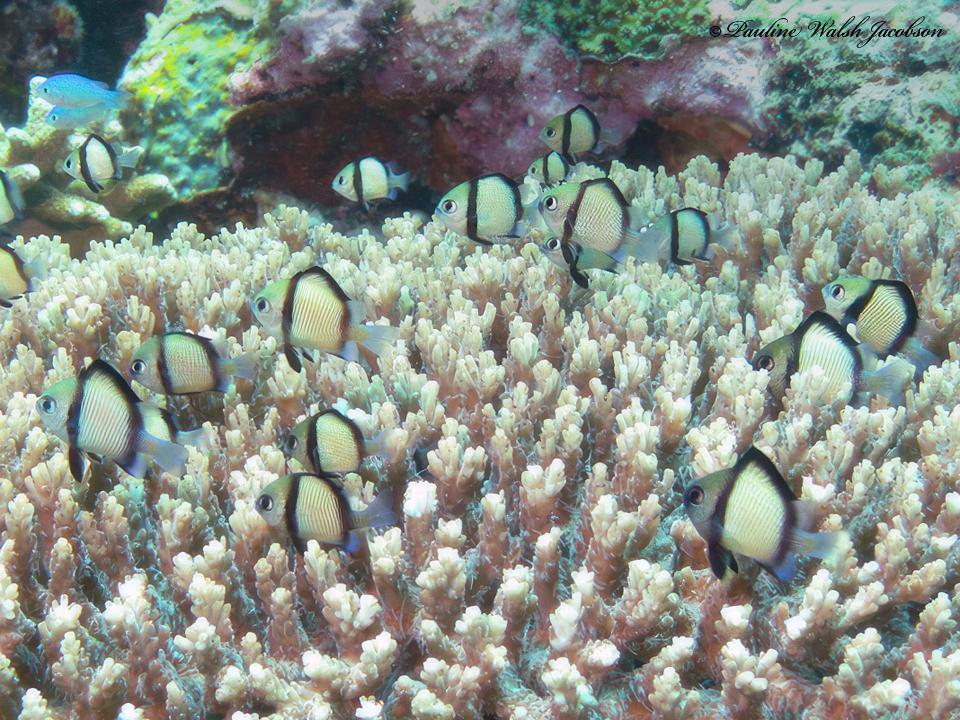
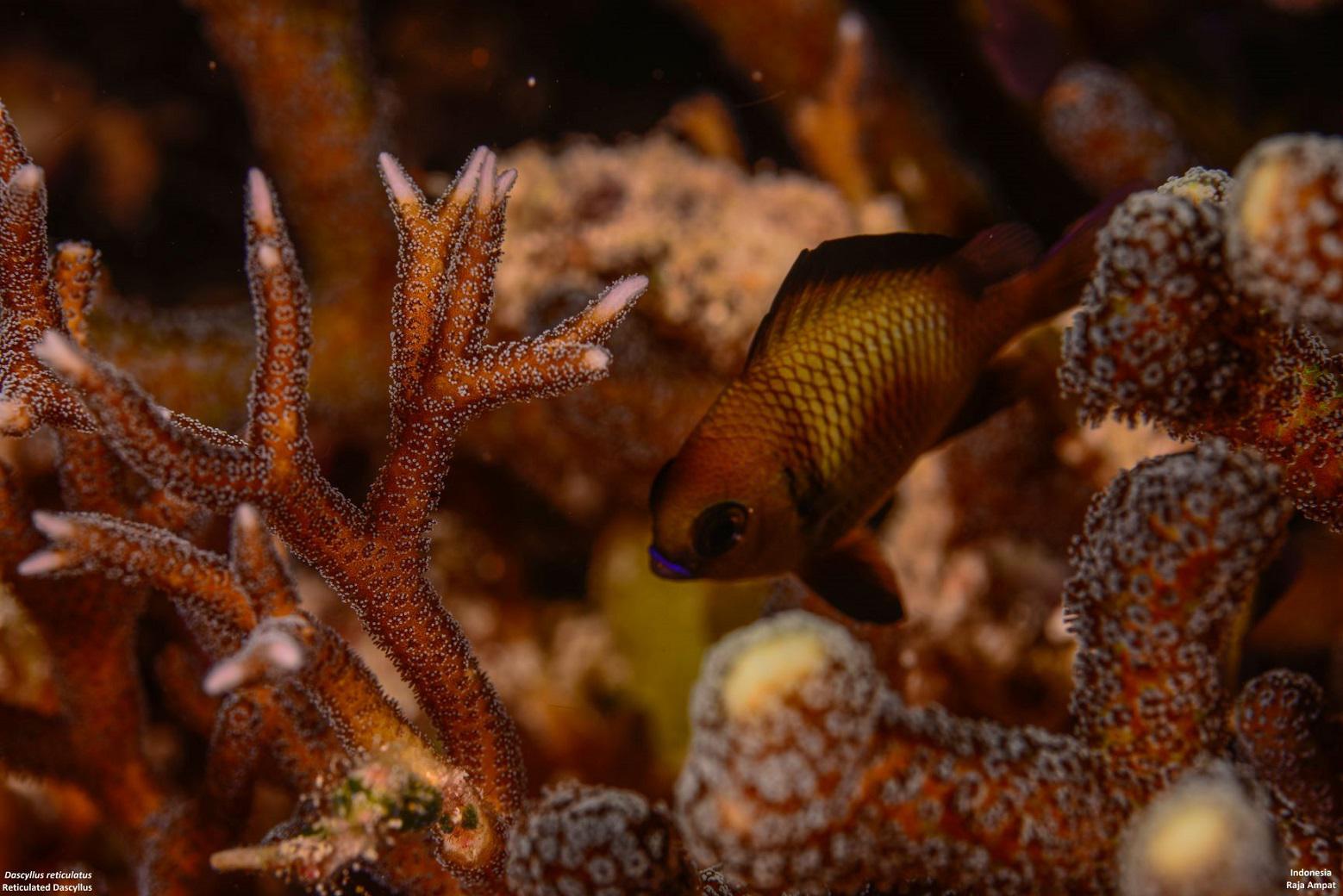
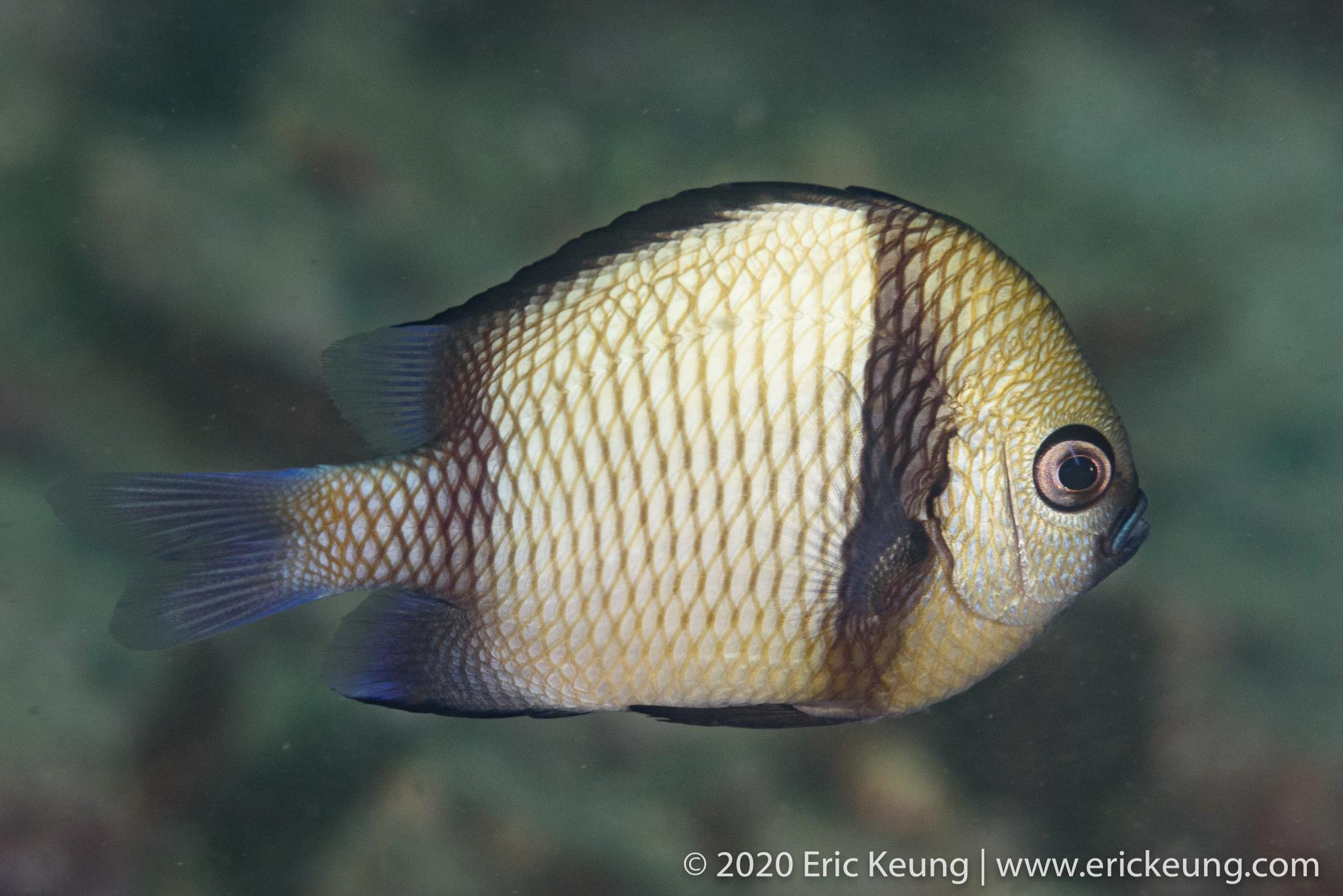
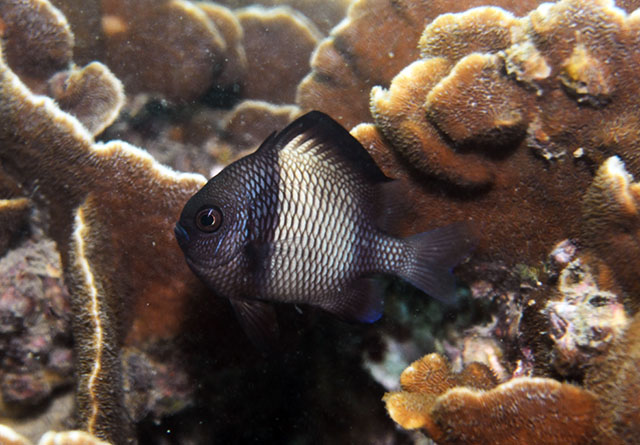
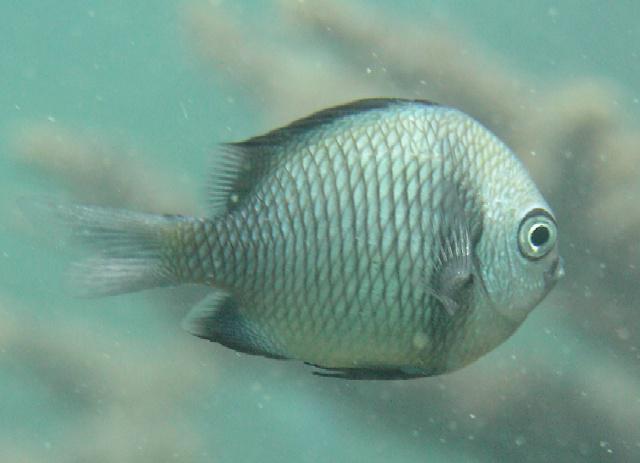
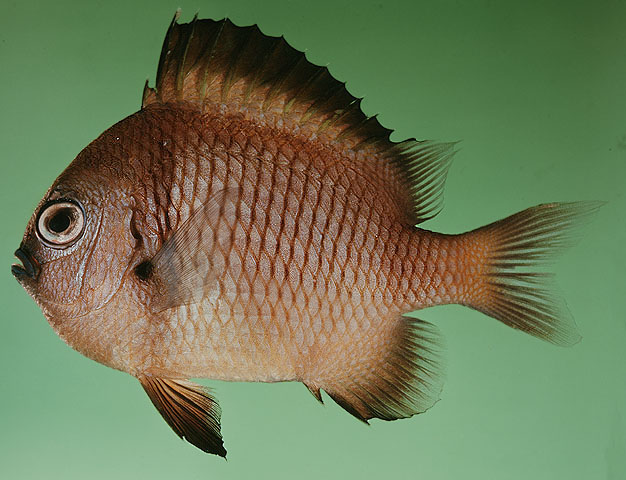
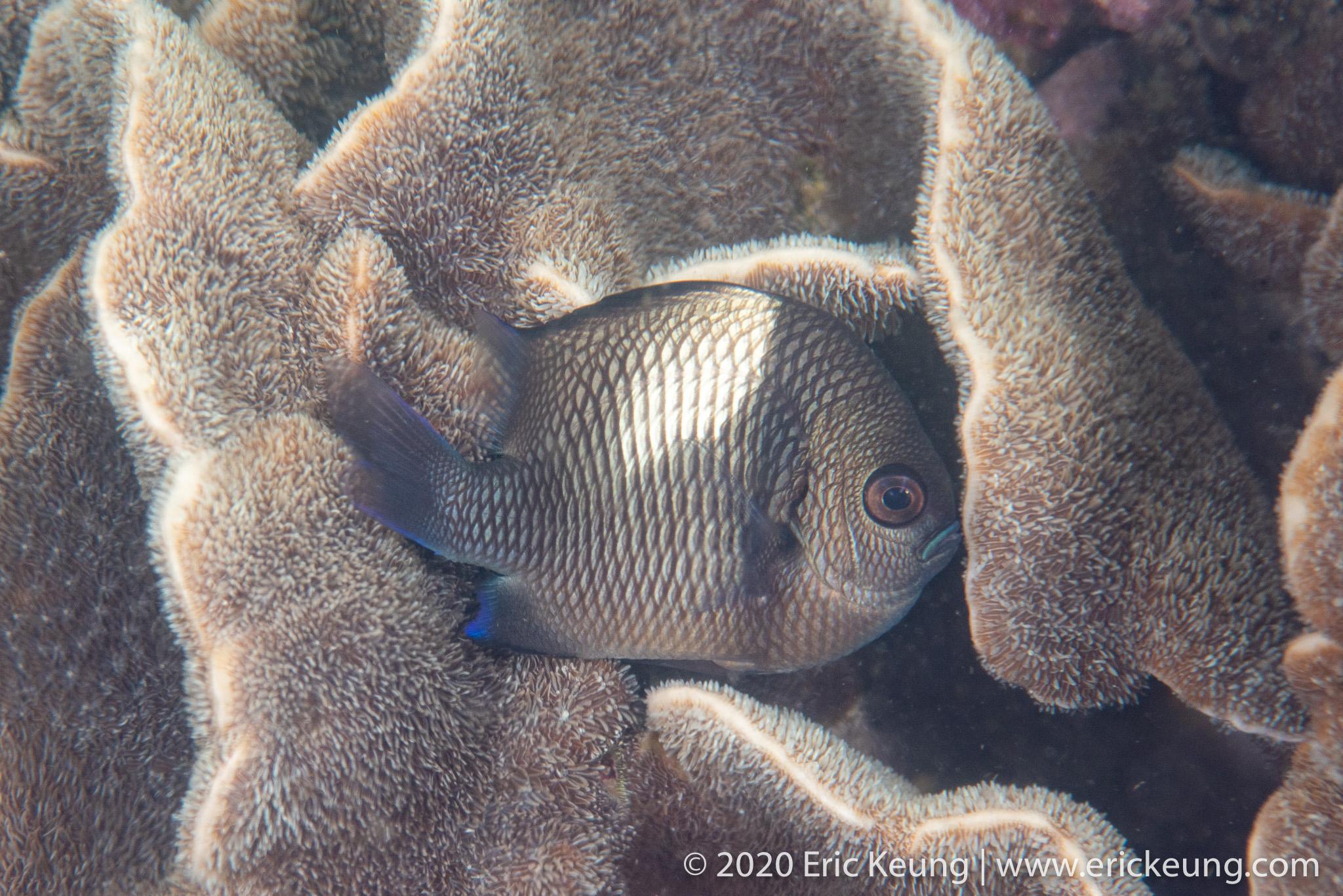
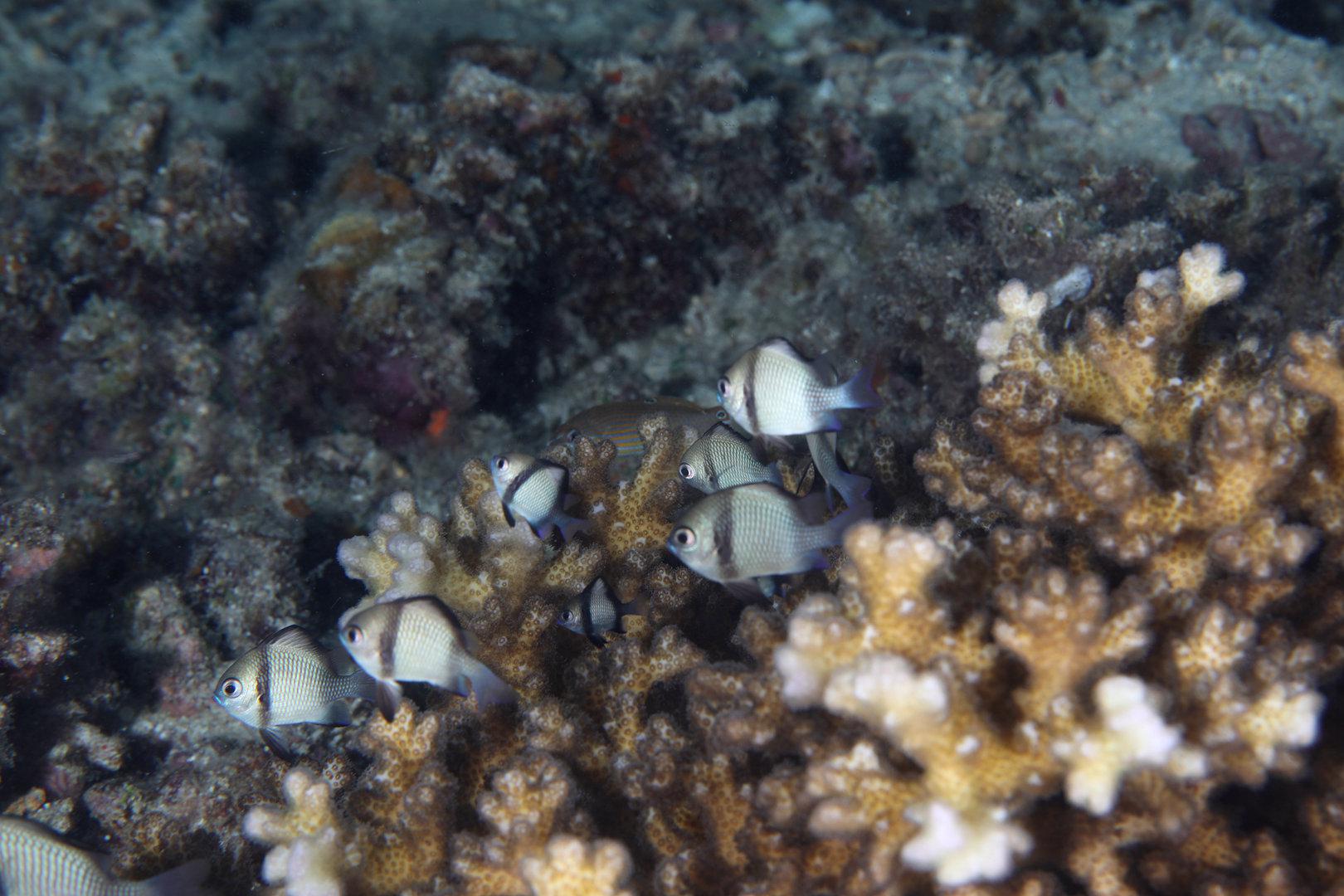
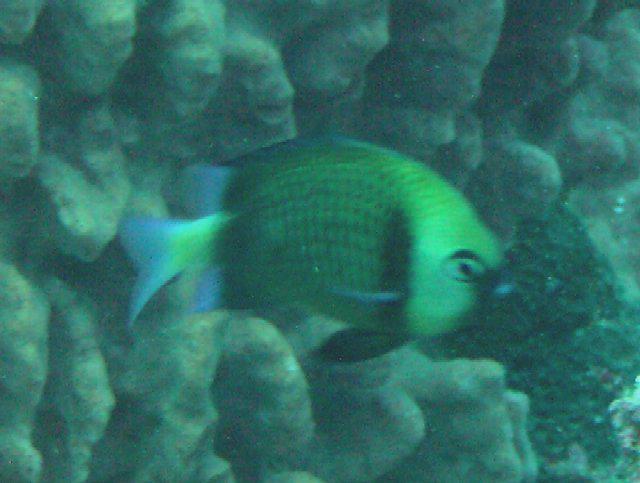
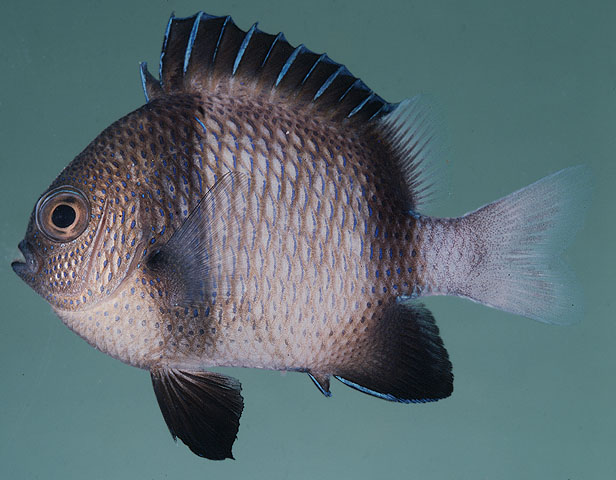
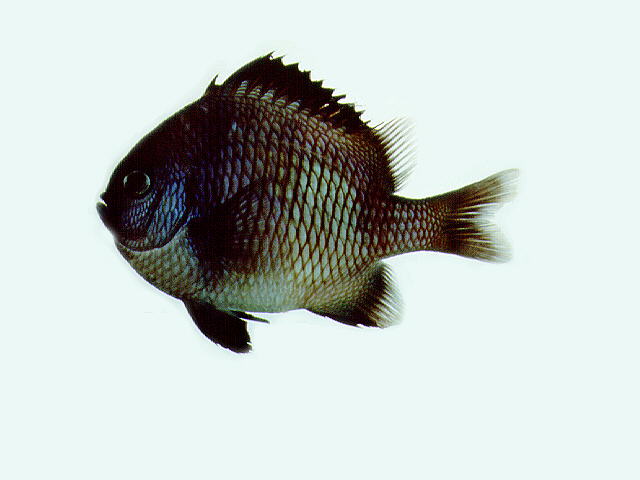
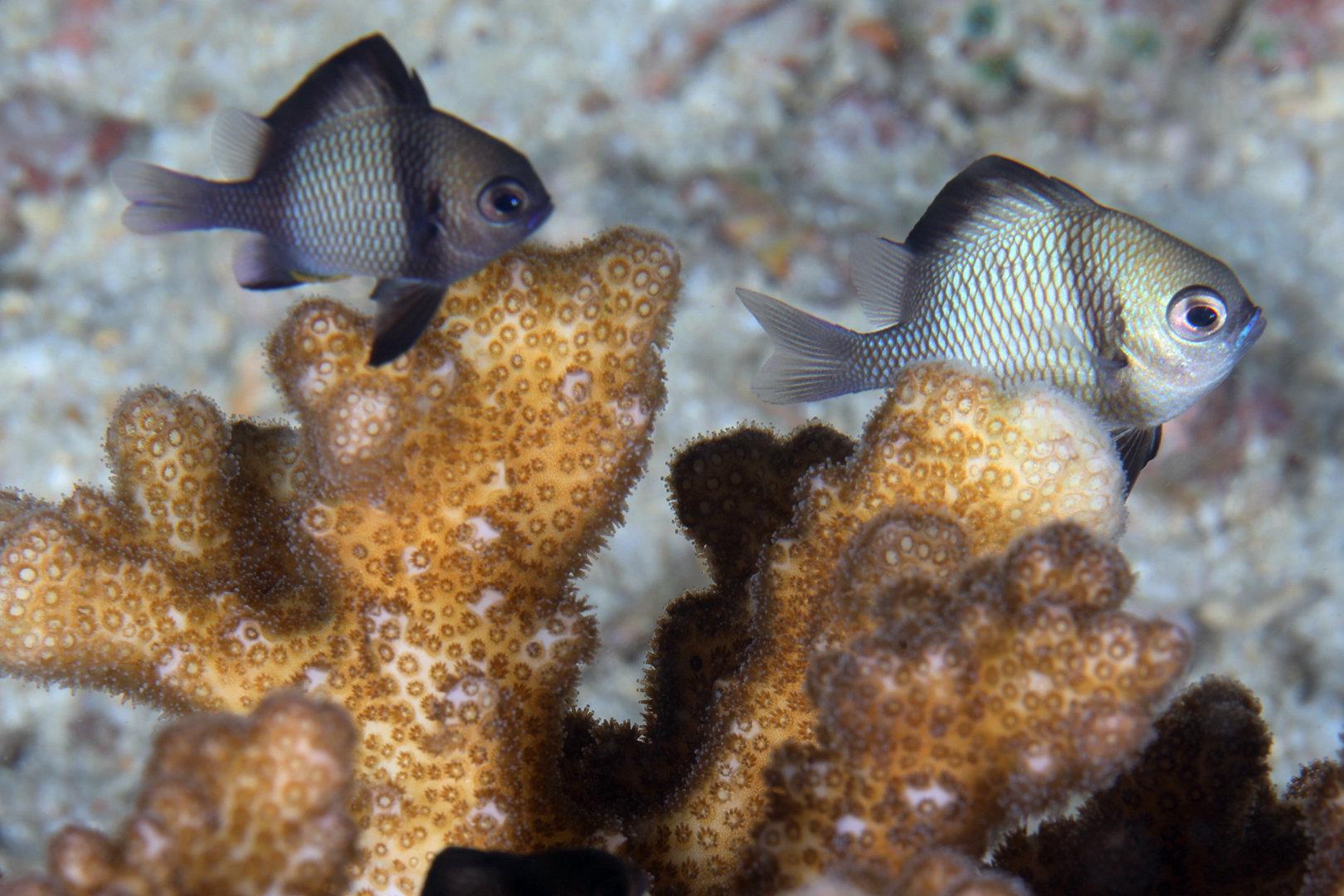
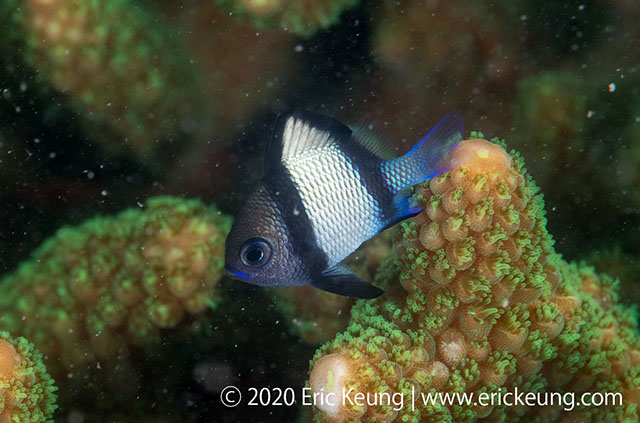
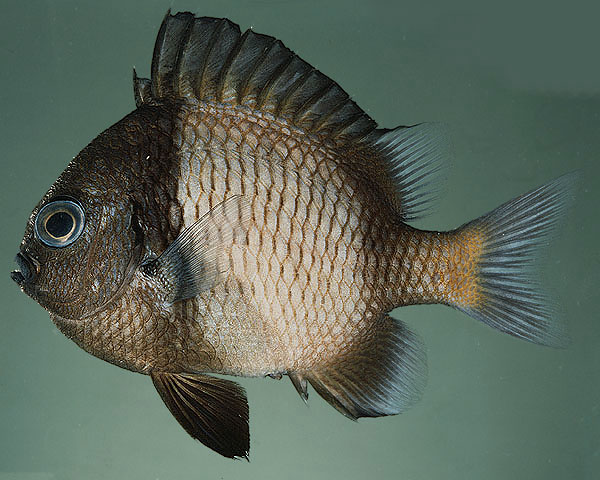
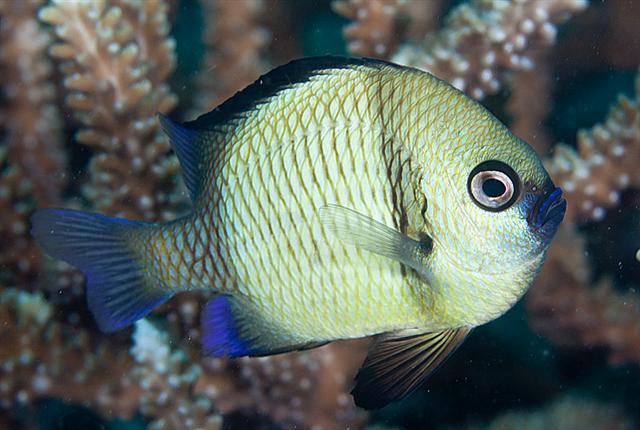
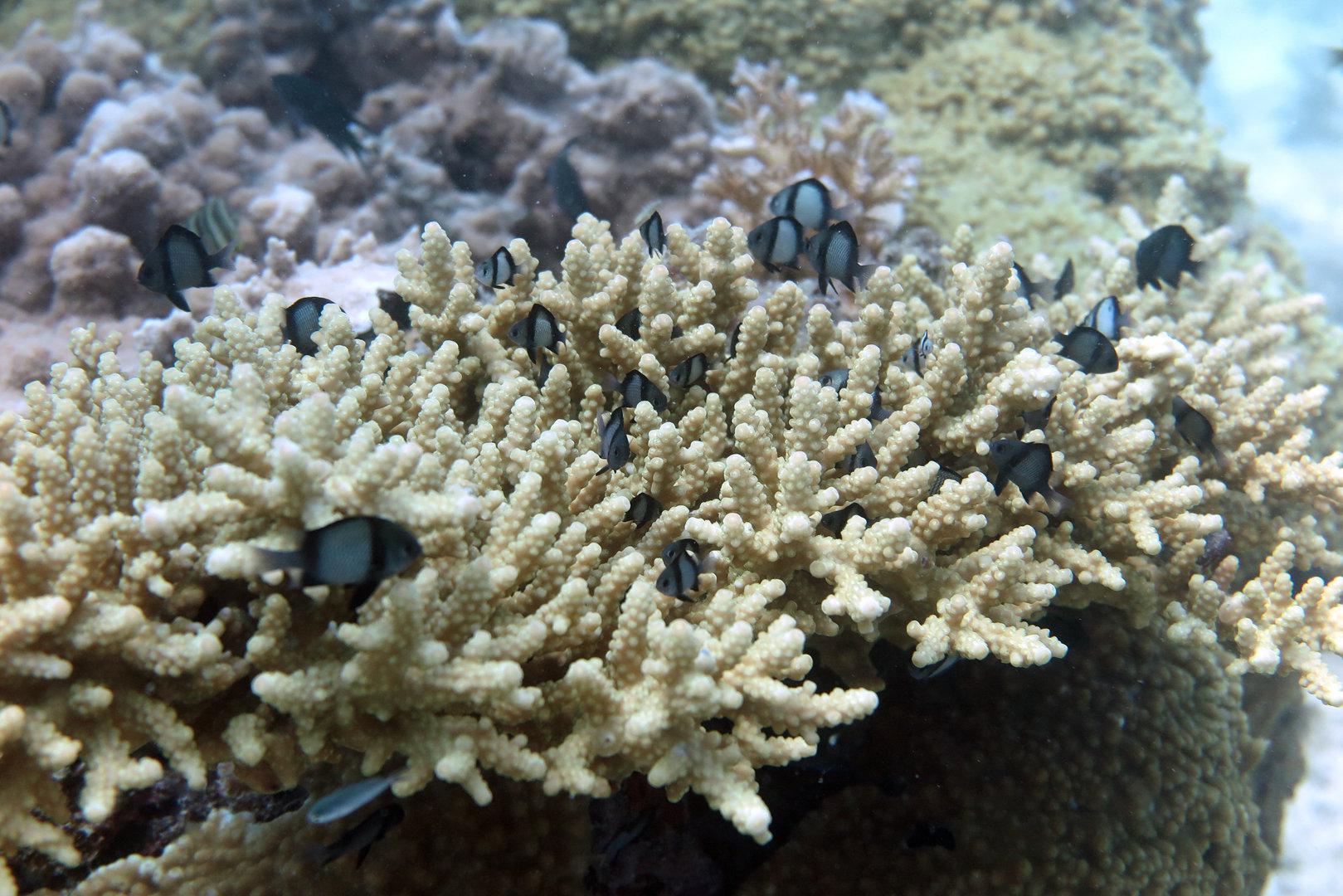
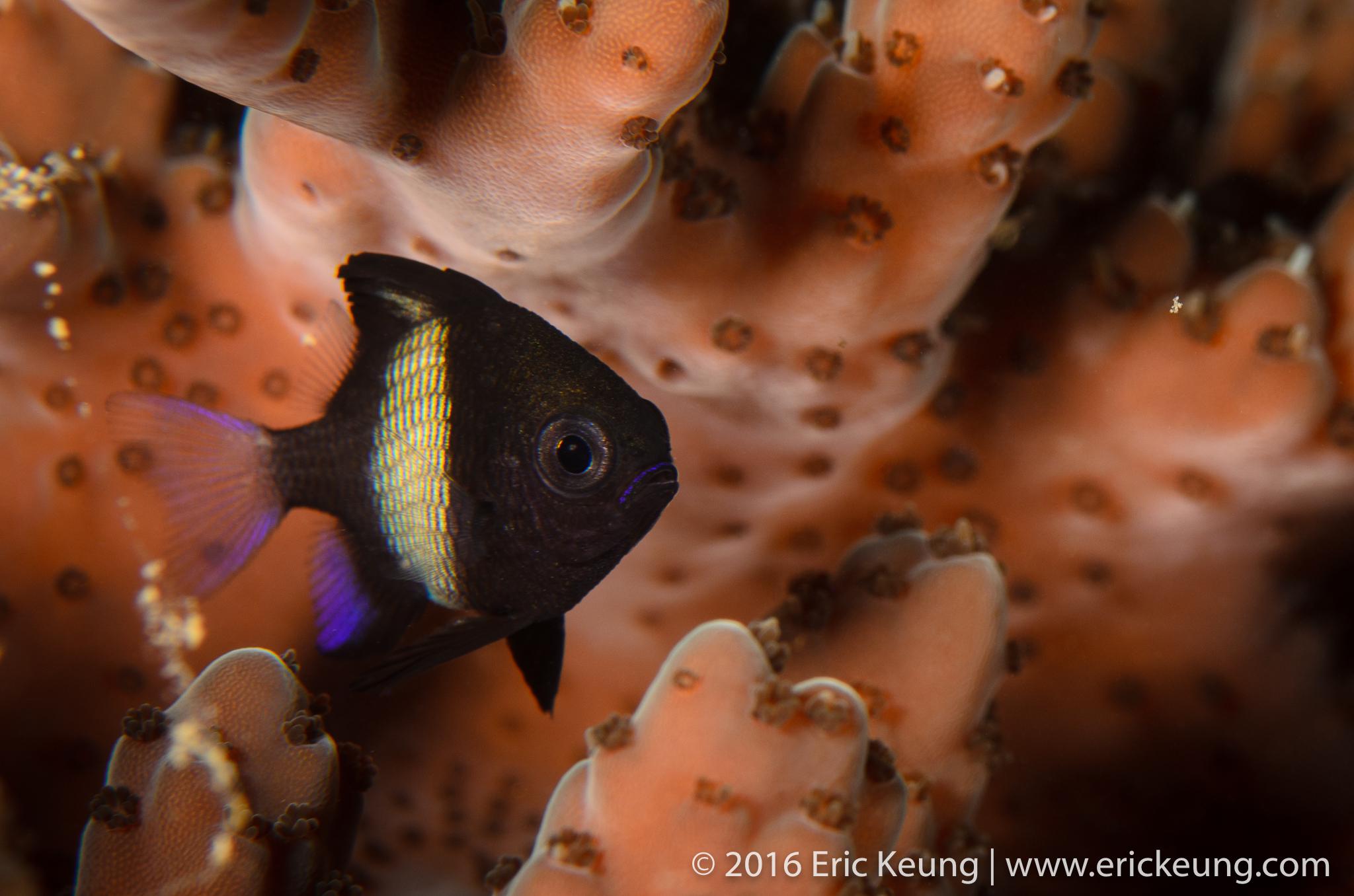
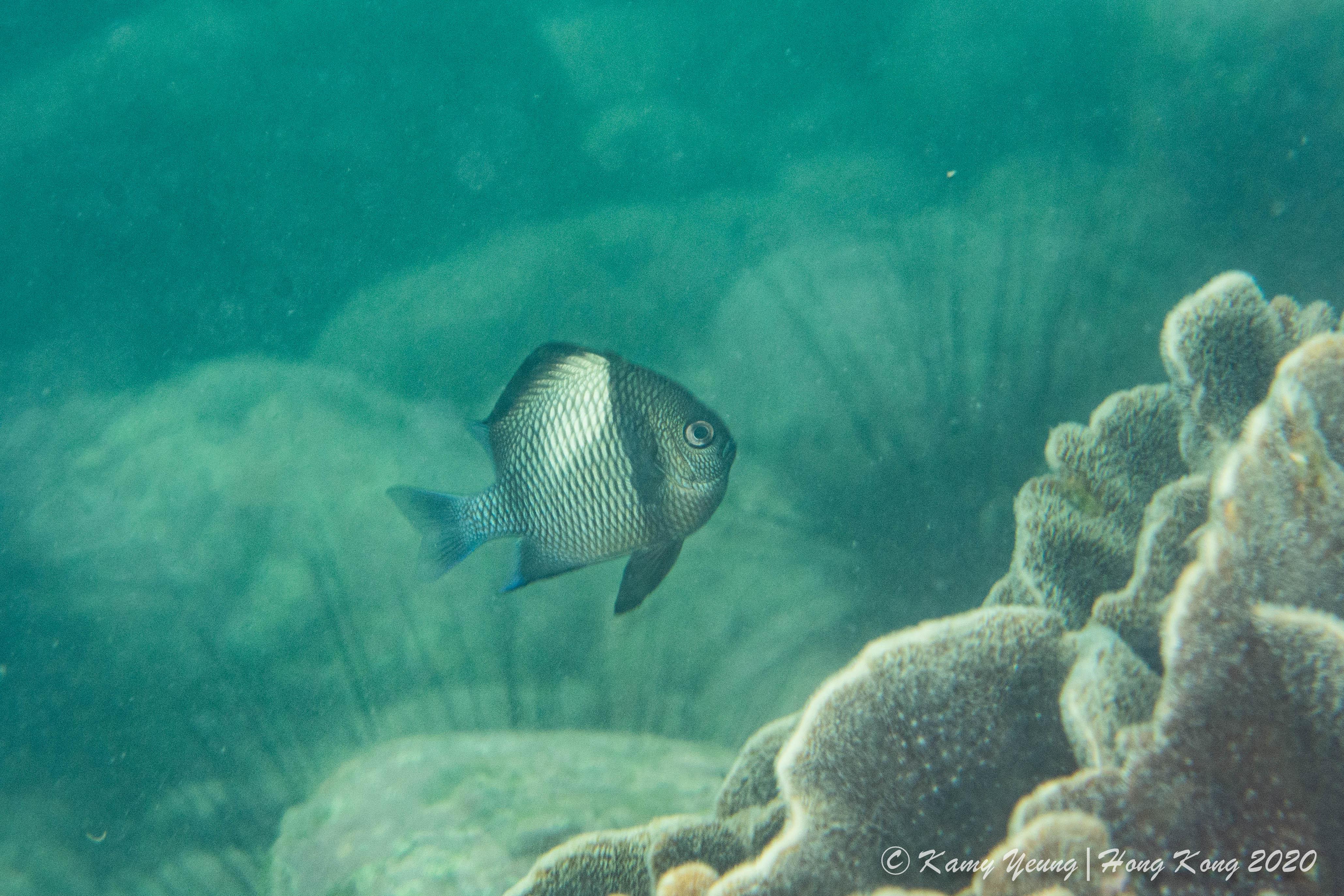
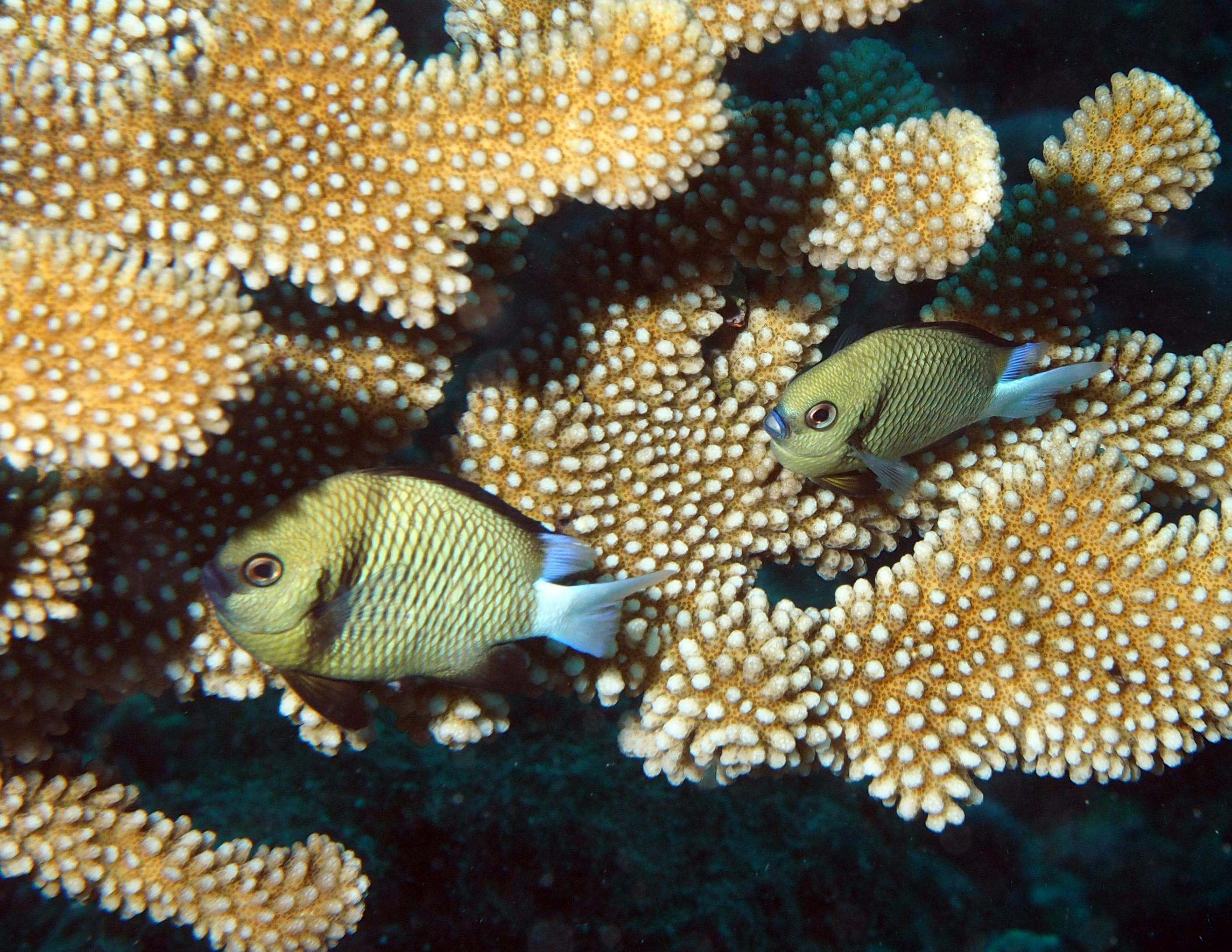
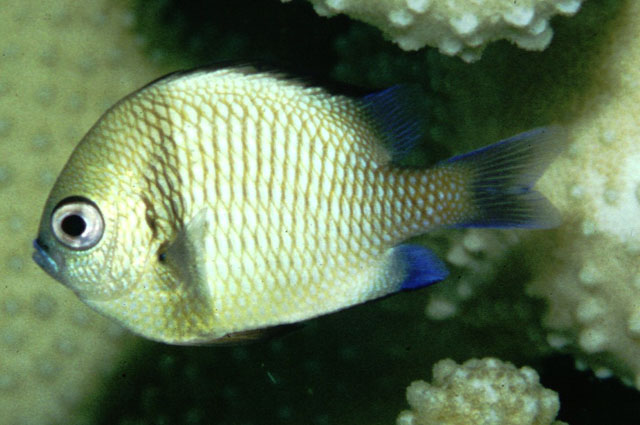
Dorsal spines (total): 12; Dorsal soft rays (total): 14 - 16; Anal spines: 2; Anal soft rays: 12 - 14. Color variable according to ecological and behavioral conditions: basically body whitish with snout, interorbital and forehead greenish; black bar on anterior and a fainter one on posterior part of the body; blackish scale margins; pelvic fins mostly black; pectorals transparent with a spot on its base. Margins of preorbital, suborbital, and preoperculum finely serrated (Ref. 2746). Body depth 1.4-1.6 in SL (Ref. 90102).
Common Names
Taxonomic Hierarchy
Kingdom: Animalia
Phylum: Chordata
Class: Teleostei
Order: Ovalentaria/misc
Family: Pomacentridae
Genus: Dascyllus
Species: Dascyllus reticulatus (Richardson, 1846)
Climate Zone
Location
- Eastern Central Indian Ocean to Western Pacific: : Cocos-Keeling Islands in the eastern Indian Ocean to Samoa and the Line Islands, north to southern Japan, south to Rowley Shoals (eastern Indian Ocean) and Lord Howe Island (Ref. 37816). Not found in the Hawaiian and Society islands and islands beyond. Replaced by Dascyllus carneus in the Indian Ocean (Ref. 37816).
Biology
Adults occur in outer lagoon and seaward reefs. They inhabit branching coral heads, particularly Pocillopora eydouxi. Form schools, often in silty habitats (Ref. 48636). Male prepares a nest by cleaning with its mouth a rock or coral surface where the female will attach the eggs (Ref. 5503). Oviparous, distinct pairing during breeding (Ref. 205). Diurnal species (Ref. 54980; 113699).
Habitat
associated
Conservation Status
Least Concern
Threat to Humans
Harmless
Dascyllus reticulatus (Richardson, 1846)