Dallia pectoralis Bean, 1880

Description
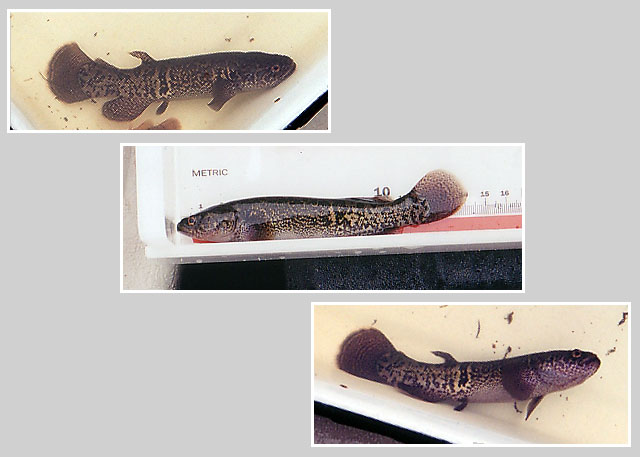
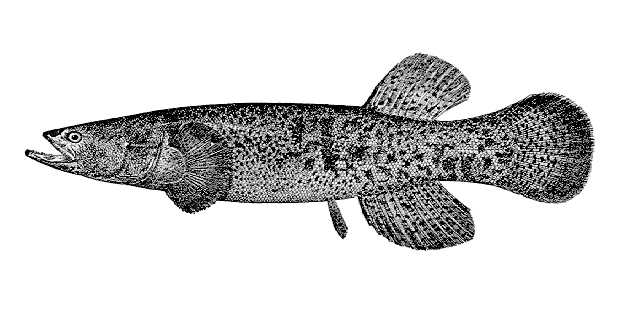
Dorsal spines (total): 0; Dorsal soft rays (total): 10 - 14; Anal spines: 0; Anal soft rays: 12 - 16; Vertebrae: 40 - 42. Identified by its short, flattened snout, the rearward location of the dorsal and anal fins, the presence of about 33 rays in the pectorals, and the presence of a pelvic fin that has only 3 rays (Ref. 27547). Gill rakers short; lateral line with minute pores: 76 to 100 scales in midlateral series (Ref. 27547). Dorsal located far back on body; anal more or less under dorsal; edge of pectorals rounded; pelvic fins very small and located just before anus; caudal broad and rounded (Ref. 27547). Dark green or brown above and on upper sides, pale below with dark speckles; four to six irregular dark bars or blotches on sides; fins have dark brownish specklings; dorsal, anal and caudal fins with pale margin, which are pink to red in spawning adults (Ref. 27547).
Common Names
Taxonomic Hierarchy
Kingdom: Animalia
Phylum: Chordata
Class: Teleostei
Order: Esociformes
Family: Umbridae
Genus: Dallia
Species: Dallia pectoralis Bean, 1880
Climate Zone
Location
Biology
Facultative air-breathing (Ref. 126274); Usually found in heavily vegetated swamps and ponds; occasionally in medium to large rivers and lakes with abundant vegetation (Ref. 5723). Migrations appear to be limited to inshore or upstream movements to spawning grounds in the spring and (presumably) reverse migrations to deeper water in the fall (Ref. 27547). Oviparous, batch spawner (Ref. 205). Known for their tolerance to cold water: survives exposures to -20°C for up to 40 minutes, and can survive for a few days after complete freezing of parts of the body, even the head (Ref. 28673, 28674). Uses its esophagus as auxiliary breathing organ (Ref. 27797).
Habitat
demersal
Conservation Status
Least Concern
Threat to Humans
Harmless