Dactylopus dactylopus (Valenciennes, 1837)





Description
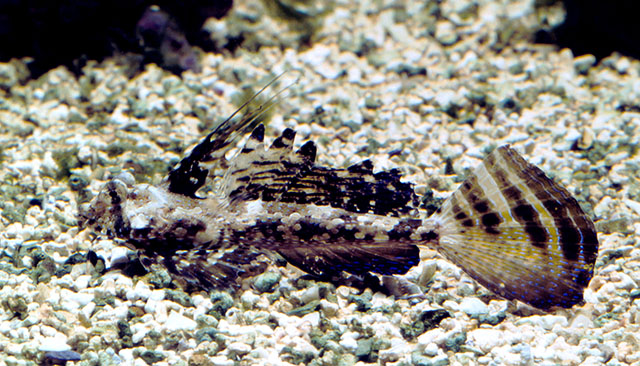
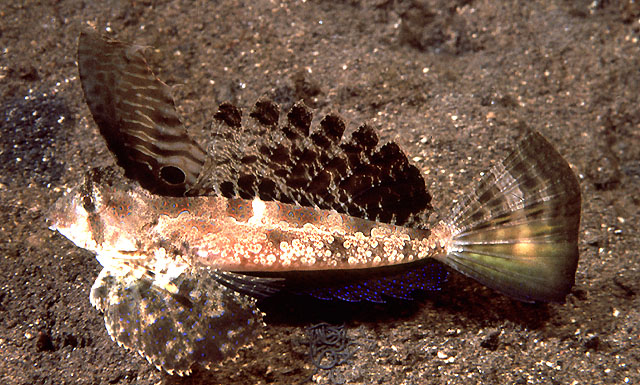
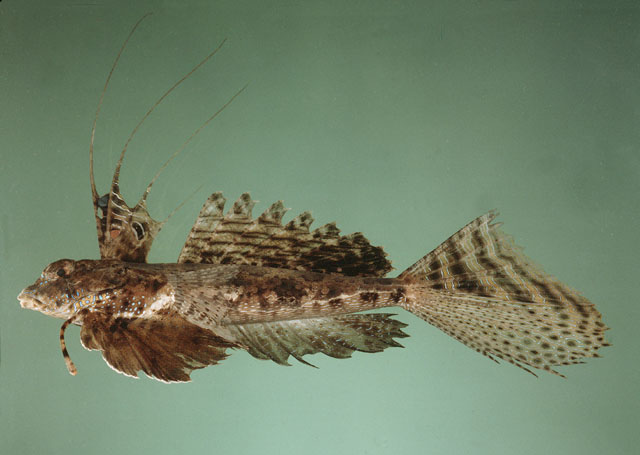
Dorsal spines (total): 4; Dorsal soft rays (total): 8; Anal spines: 0; Anal soft rays: 7. Identified by the finger-like separate first rays of the ventral fins, and distinguished from the similar D. kuiteri in usually having 8 divided rays in the second dorsal fin (versus 9), the fin with a distinct horizontal pattern of lines in adults, and males have long filaments on the first dorsal fin (versus short or absent) (Ref. 48636). Body moderately depressed. Preopercular spine with processes on both inner and outer sides. Pelvic spine and 1st pelvic ray fused into an elongate rod, separated from the other pelvic rays. Attains 10 cm SL.
Common Names
Taxonomic Hierarchy
Kingdom: Animalia
Phylum: Chordata
Class: Teleostei
Order: Callionymiformes
Family: Callionymidae
Genus: Dactylopus
Species: Dactylopus dactylopus (Valenciennes, 1837)
Climate Zone
Location
Biology
Lives on sand-weed bottoms (Ref. 559). Inhabits protected sand and mud flats and slopes at depths of 1 to 55 m (Ref. 37816); also include estuaries and deep water (Ref. 48636). May be seen solitary or in pairs (Ref. 90102).
Habitat
associated
Conservation Status
Least Concern
Threat to Humans
Harmless