Betta ocellata de Beaufort, 1933
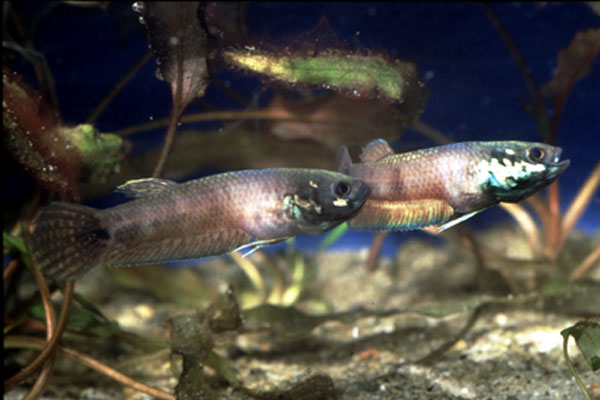
Description
Dorsal spines (total): 0 - 1; Dorsal soft rays (total): 7 - 8; Anal spines: 1 - 2; Anal soft rays: 28 - 30; Vertebrae: 33 - 34. Differs from other members of the Betta unimaculata species group by the following combination of characters: distinct black spot near caudal peduncle; body wormish; opercle blue; uniform caudal fin coloration; vertebrae 33-34 (mode 33); anal-fin rays 30-31 (mode 30); dorsal-fin rays 8; pectoral fin rays 12-13 (mode 13); subdorsal scales 5-5 1/2 (mode 5 1/2); lateral scales 32-34 (mode 33); predorsal scales 24; predorsal length 68.8-71.9% SL; head length 31.4-33.3% SL; length of anal-fin base 52.2-54.5% SL; length of dorsal-fin base 10.5-11.3% SL; lower jaw length 27.3-33.1% HL (Ref. 56613).
Taxonomic Hierarchy
Kingdom: Animalia
Phylum: Chordata
Class: Teleostei
Order: Anabantiformes
Family: Osphronemidae
Genus: Betta
Species: Betta ocellata de Beaufort, 1933
Climate Zone
Location
- Asia: restricted to northeastern Borneo in Sabah and East Kalimantan.
Biology
Facultative air-breathing (Ref. 126274); Inhabit more slow flowing areas of the headwater habitats (Ref. 34011). Found usually in ravines and isolated elevated pools. An adult and several juveniles are usually encountered in submerged leaf litter. Adults may take cover under floating leaves and are excellent jumpers, which may explain their presence in isolated elevated pools (Ref. 56613). Feed mainly on terrestrial insects and occasionally on aquatic invertebrates (Ref. 56613).
Habitat
benthopelagic
Conservation Status
Least Concern
Threat to Humans
Harmless
Betta ocellata de Beaufort, 1933