Betta dennisyongi Tan, 2013
Description
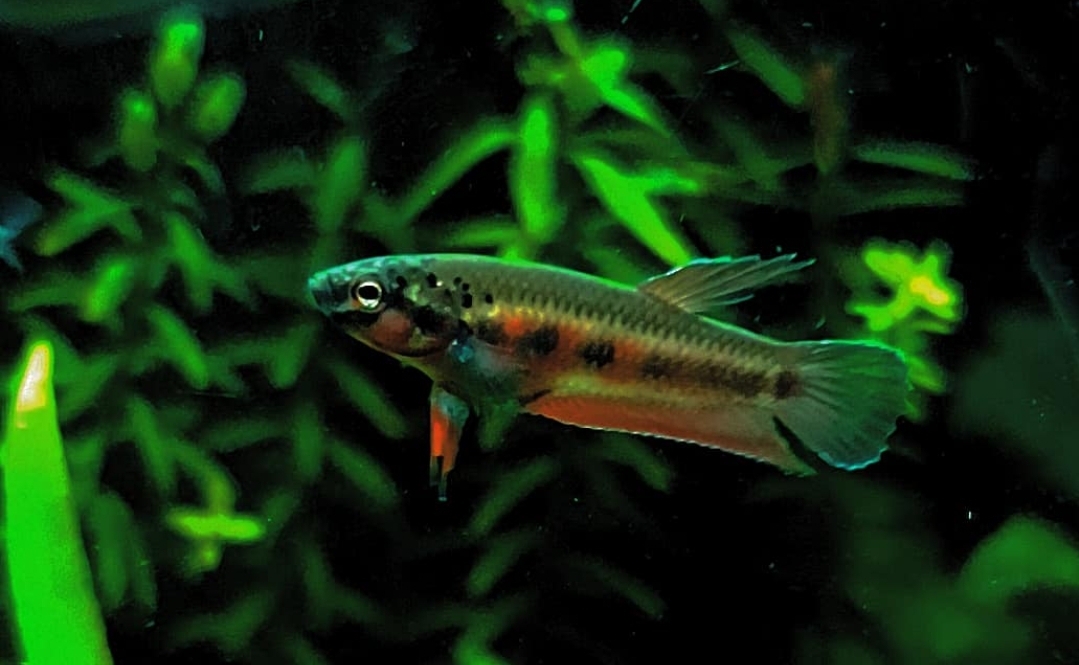
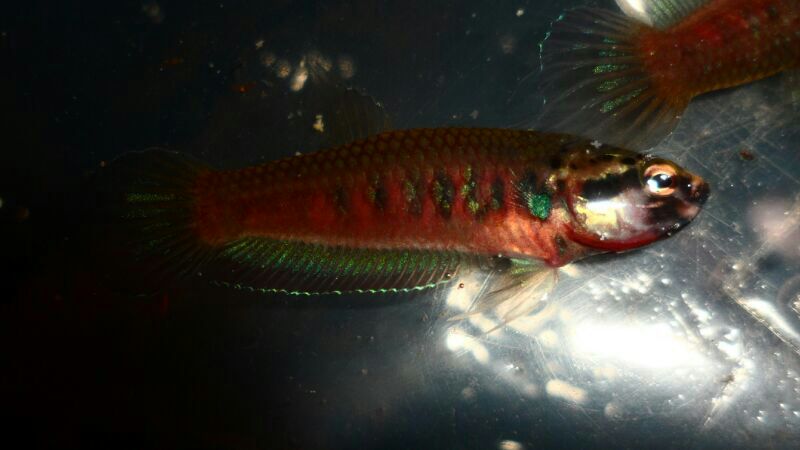
Dorsal spines (total): 1; Dorsal soft rays (total): 8; Anal spines: 2 - 3; Anal soft rays: 22 - 24; Vertebrae: 29 - 30. Differs from Betta rubra bypossessing the following characters: a continuous black postorbital stripe extending up to opercle edge (vs. interrupted stripe); broad suborbital stripe below eye forming a triangular black mark (4-5 scale rows wide, vs. 2-3); body coloration less intense with wider interspaces between the black body bars; fewer anal-fin n rays (mode 25, vs. 27); greater number of subdorsal scales (6-7 vs. 5-5 ½); greater number of lateral scales (mode 31, vs. 30); greater number of vertebrae (mode 30, vs. 29); longer dorsal-fin base length (13.0-18.4, vs. 11.0-13.4% SL); and smaller maximum size (35.4 vs. 42.1 mm SL) (Ref. 93059).
Taxonomic Hierarchy
Kingdom: Animalia
Phylum: Chordata
Class: Teleostei
Order: Anabantiformes
Family: Osphronemidae
Genus: Betta
Species: Betta dennisyongi Tan, 2013
Climate Zone
Location
- Asia: Sumatra in Indonesia, from Meulaboh to lowland hill streams before Singkil.
Biology
Facultative air-breathing (Ref. 126274); Occurs in lowland hillstream and acid water swamp habitats. Found in clear to brown-water habitats, from secondary forest to plantation and farmland environments. Syntopic with Osteochilus jeruk, Rasbora jacobsoni, Rasbora kluetensis (Cyprinidae); Nemacheilus tuberigum (Nemacheilidae); Mystus punctifer (Bagridae); and Ompok brevirictus, Kryptopterus piperatus (Siluridae) (Ref. 93059).
Habitat
benthopelagic
Conservation Status
Vulnerable
Threat to Humans
Harmless
Betta dennisyongi Tan, 2013