Betta coccina Vierke, 1979
Description
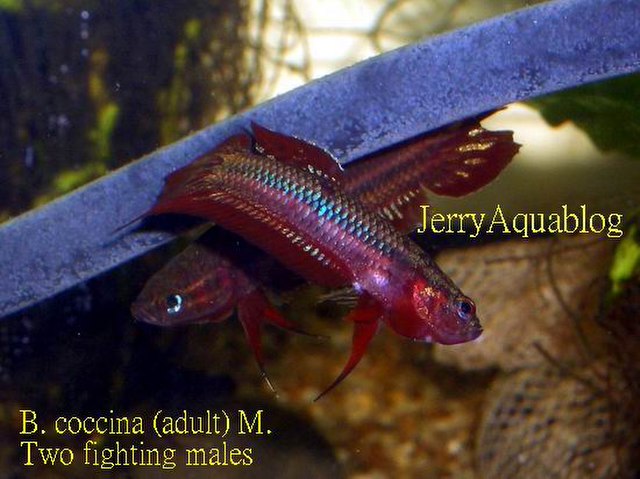
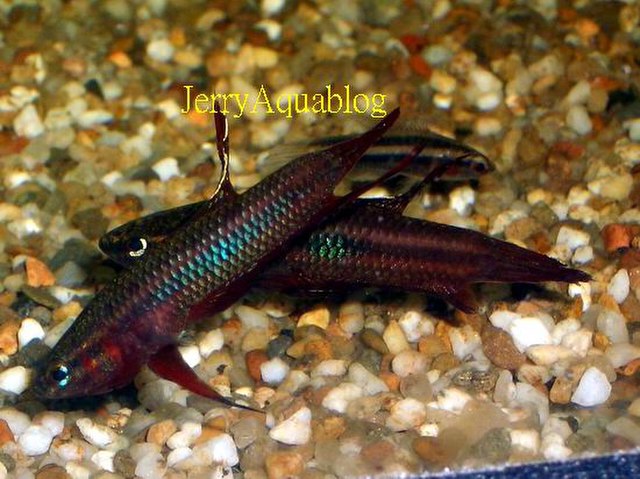
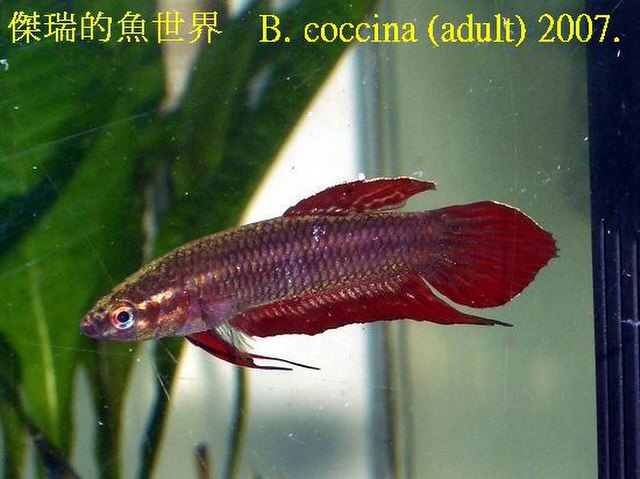
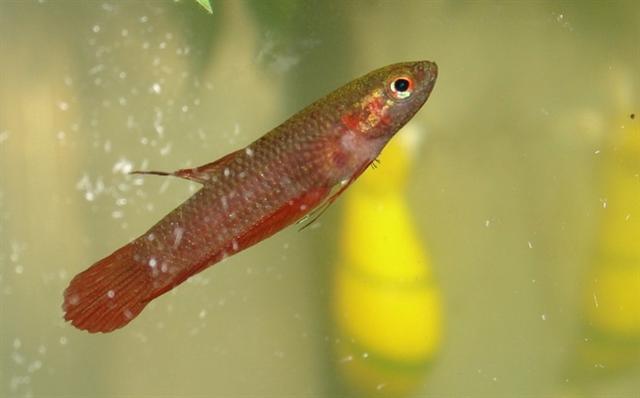
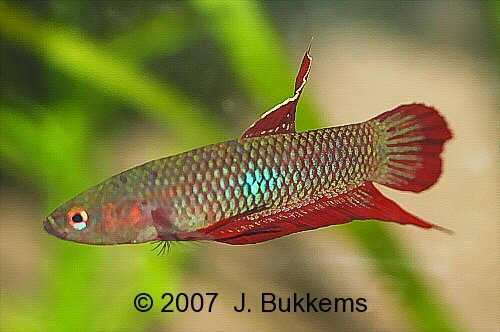
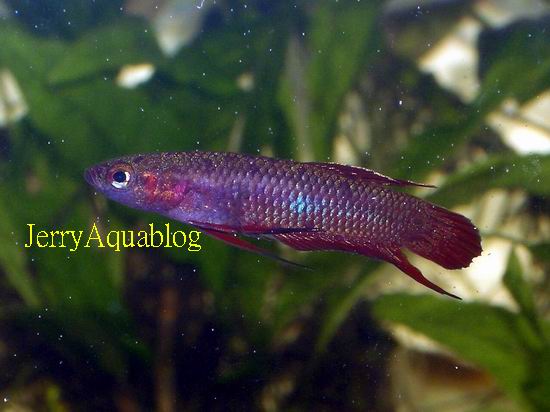
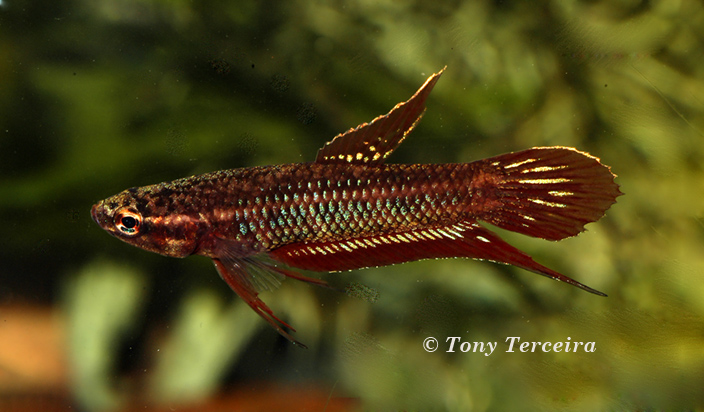
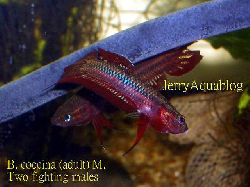
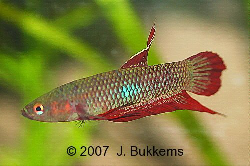
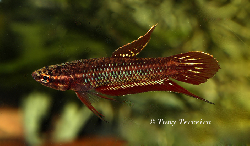
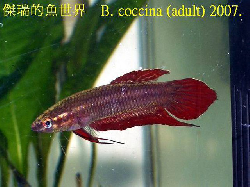
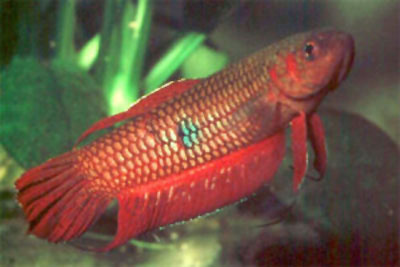
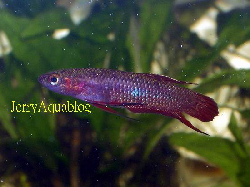
Dorsal soft rays (total): 9 - 12; Anal soft rays: 27 - 29. Distinguished from Betta burdigala in the following characters: presence of lateral iridescent blotch in males (vs. absence); black pelvic fin tip (vs. white); fewer dorsal fin rays (9-12 vs. 14-15); fewer subdorsal scales (7-8 vs. 11-11 1/2); more anal fin rays (27-29 vs. 24-26); more predorsal scales (18-21 vs. 15-16); greater total length (132.7-138.5% SL vs. 131.0-132.3% SL); smaller postorbital length (14.3-15.5% SL vs. 16.7-17.4); smaller dorsal fin base length (15.2-20.4% SL vs. 26.8-28.6). Can be differentiated from Betta miniopinna in the following characters: body red in color (vs. black); presence of lateral iridescent blotch in males (vs. absence); black pelvic fin tip (vs. white); presence of iridescent green spots on median fins (vs. absence); greater postorbital length (14.3-15.5% SL vs. 12.3-13.3); and smaller pelvic fin length (7.8-8.8% SL vs. 8.7-12.0) (Ref. 56386).
Common Names
Taxonomic Hierarchy
Kingdom: Animalia
Phylum: Chordata
Class: Teleostei
Order: Anabantiformes
Family: Osphronemidae
Genus: Betta
Species: Betta coccina Vierke, 1979
Climate Zone
Location
- Asia: Malaysia and Indonesia.
Biology
Facultative air-breathing (Ref. 126274)
Habitat
benthopelagic
Conservation Status
Vulnerable
Threat to Humans
Harmless
Betta coccina Vierke, 1979