Trachipterus altivelis Kner, 1859

Description
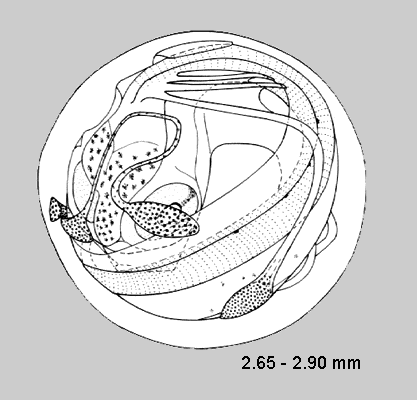
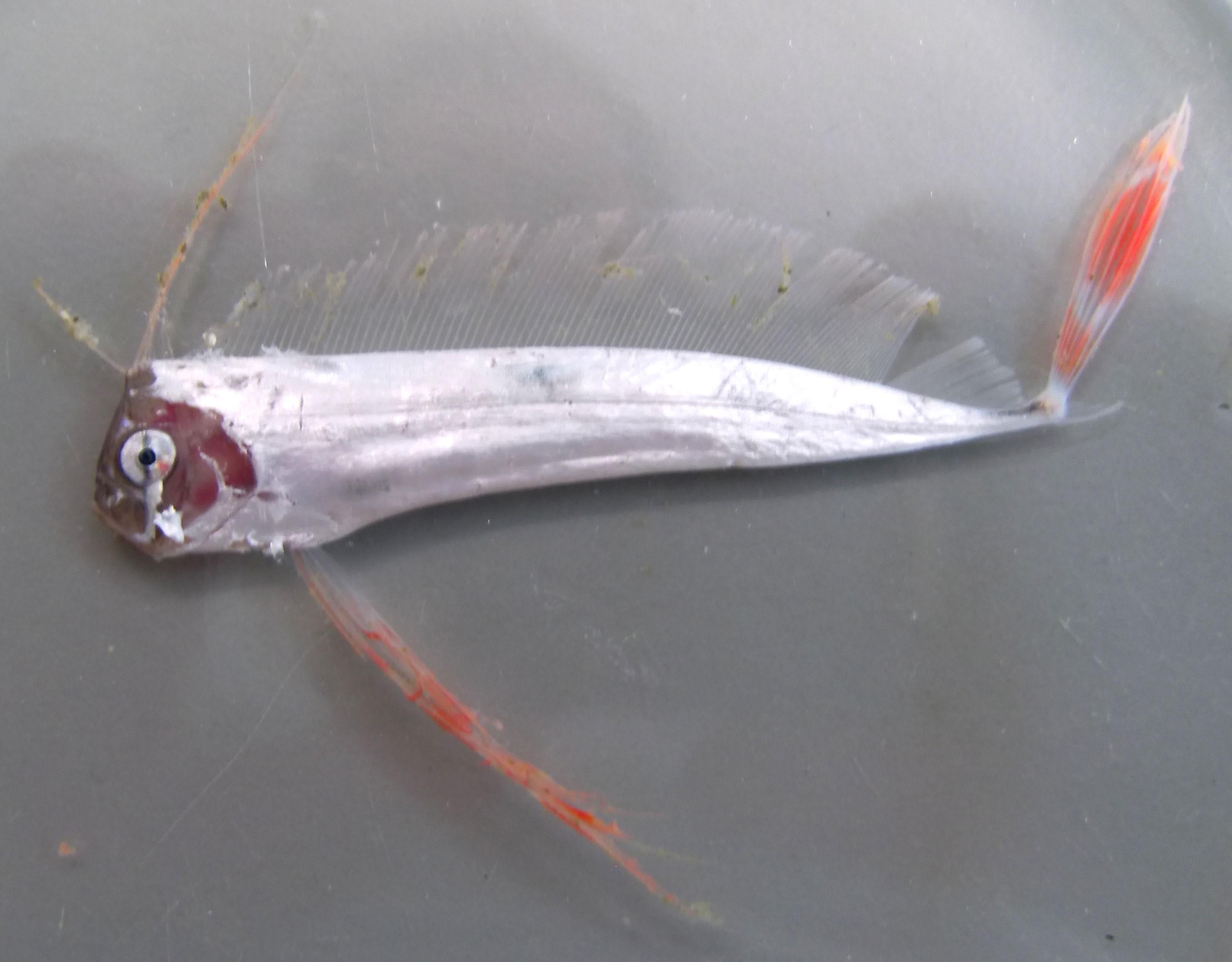
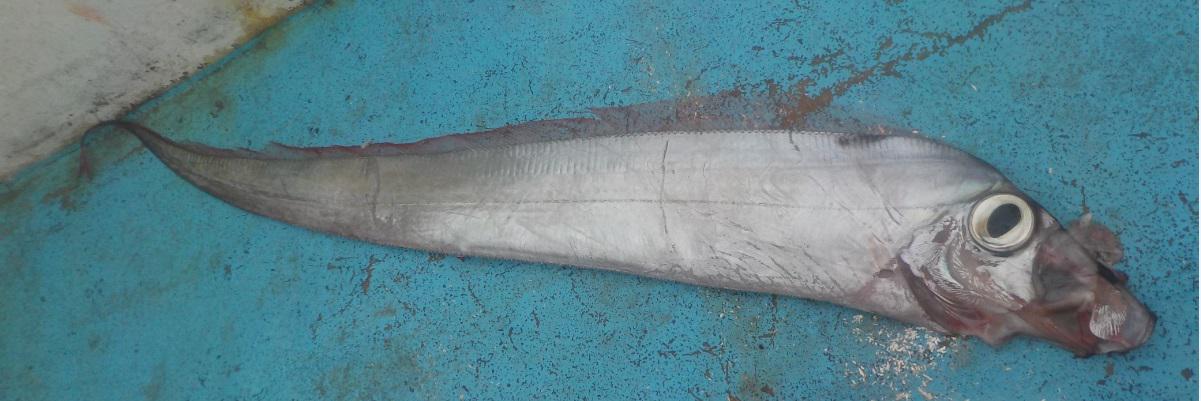
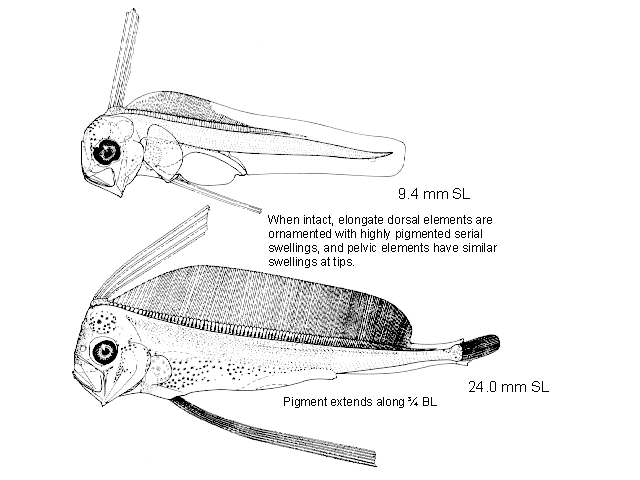
Dorsal spines (total): 0; Dorsal soft rays (total): 165 - 184; Anal spines: 0; Anal soft rays: 0; Vertebrae: 90 - 94. First 5 rays of dorsal fin greatly elongated in young becoming reduced with age, otherwise rather higher in center, extending almost to caudal and ends abruptly (Ref. 6885); caudal fin highly asymmetric, dorsal lobe becomes well developed in juveniles with 7-8 rays directed upward at an angle of 45° to body axis, and eventually with growth is much reduced; ventral lobe elongate in young specimens becoming reduced to 5-6 spines directed backward from the caudal base in older individuals; anal fin absent; pectorals small, rounded; pelvic fins elongate in young and juveniles, reduced to base in larger individuals (Ref. 6885). Juveniles iridescent silvery with a series of about 4 dark blotches spaced above lateral line canal; upright and pelvic fins carmine red; larger individuals rather very silvery and greener with light spots, around scales; posterior end of dorsal fin darker (Ref. 6885).
Common Names
Taxonomic Hierarchy
Kingdom: Animalia
Phylum: Chordata
Class: Teleostei
Order: Lampriformes
Family: Trachipteridae
Genus: Trachipterus
Species: Trachipterus altivelis Kner, 1859
Climate Zone
Biology
Oceanic (Ref. 2850). Also found near shore, but large adults sometimes feed on the bottom (Ref. 2850). Small individuals feed on copepods, annelid worms, and fish larvae; larger individuals feed on copepods, euphausiids, small pelagic fishes, young rockfishes, squid, and Octopoda (Ref. 6885). Oviparous, with planktonic eggs and larvae (Ref. 36610).
Habitat
oceanic
Conservation Status
Least Concern
Threat to Humans
Harmless
Trachipterus altivelis Kner, 1859