Sargocentron spiniferum (Forsskål, 1775)

Description
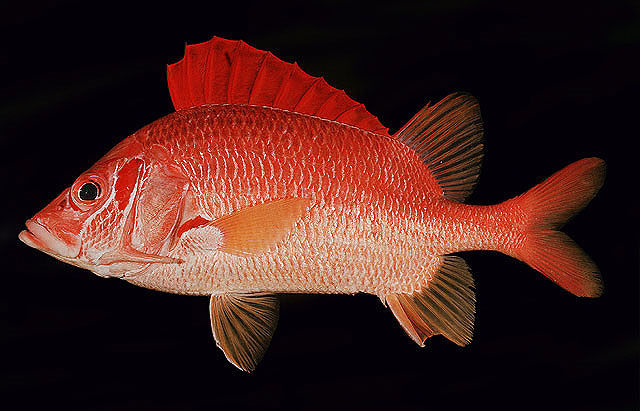
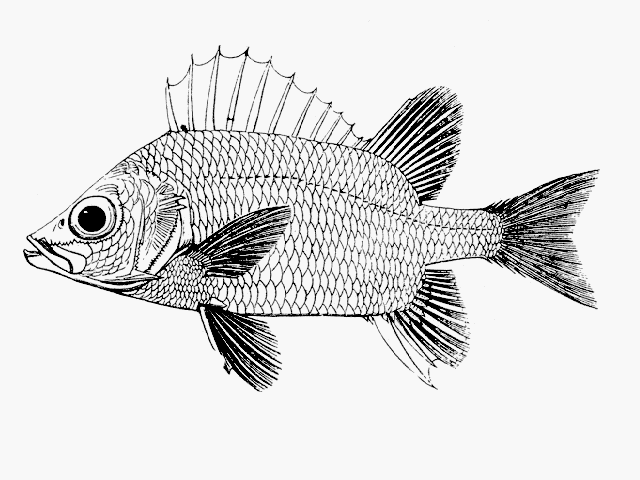
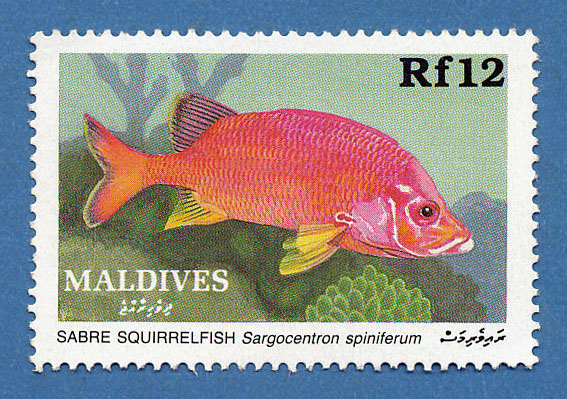
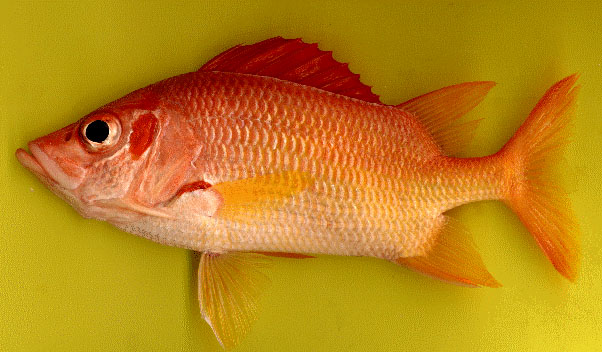
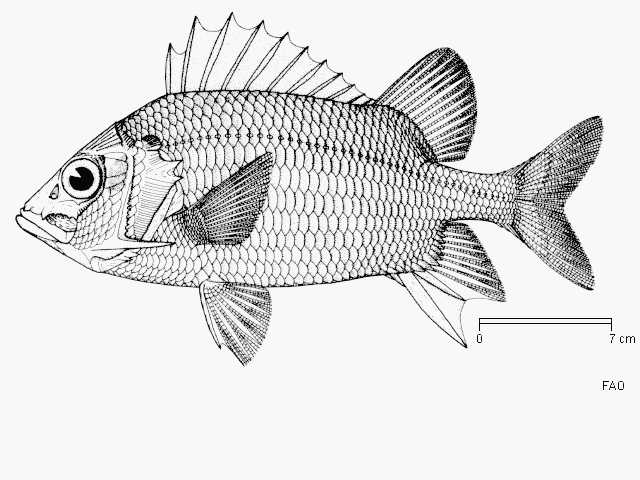
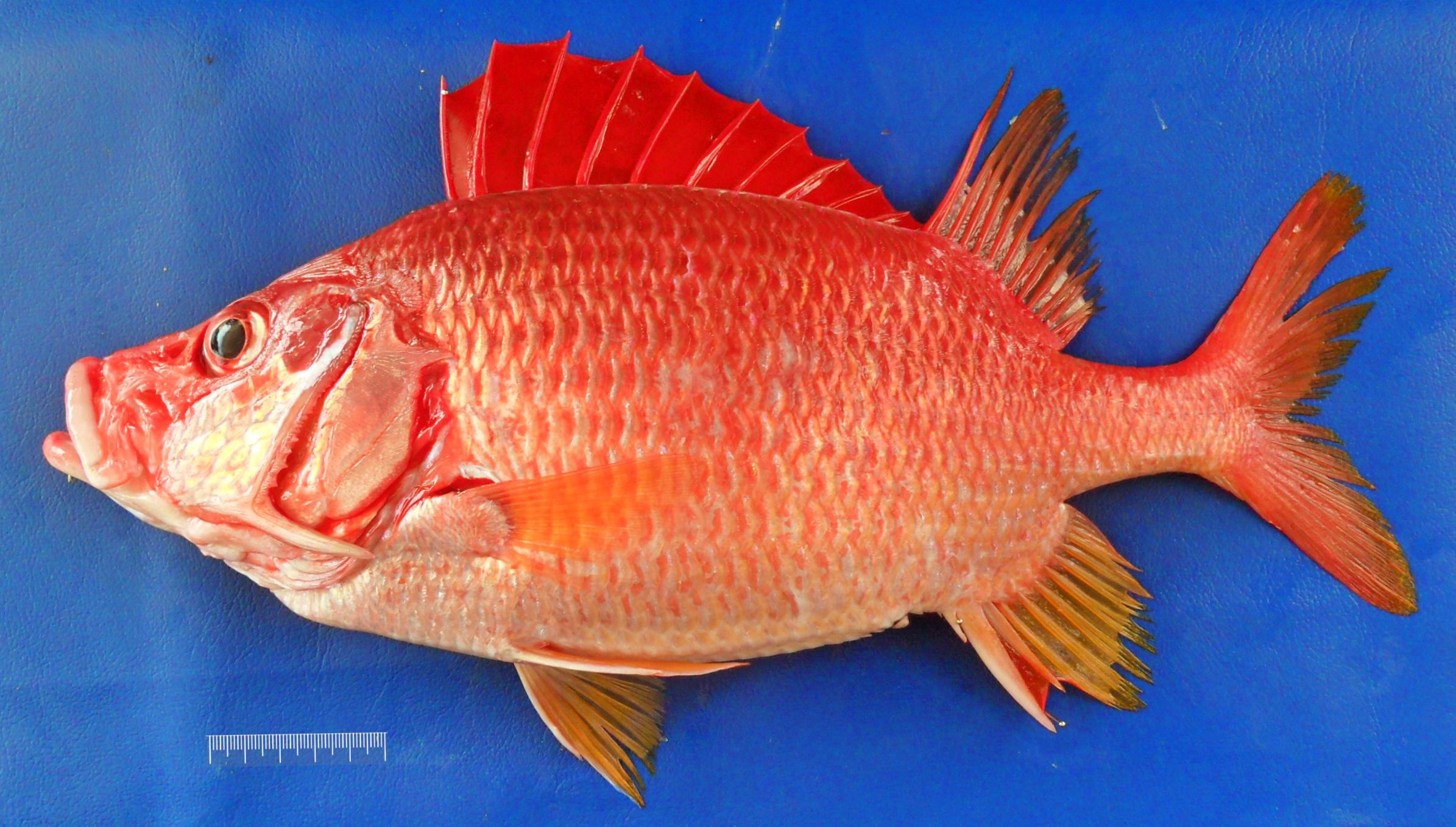
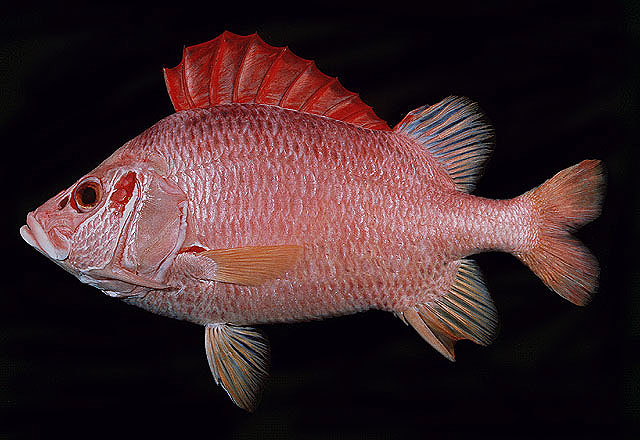
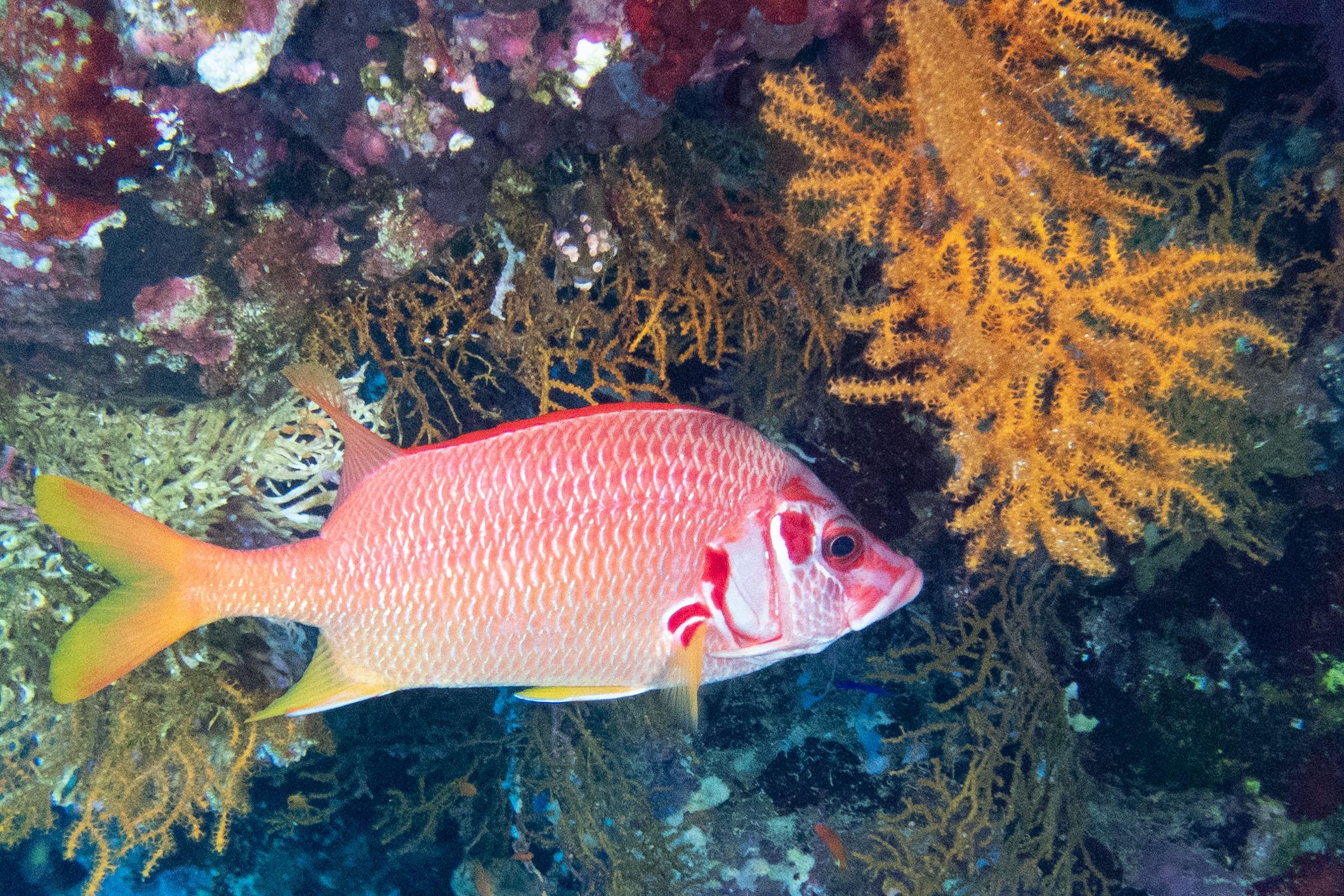
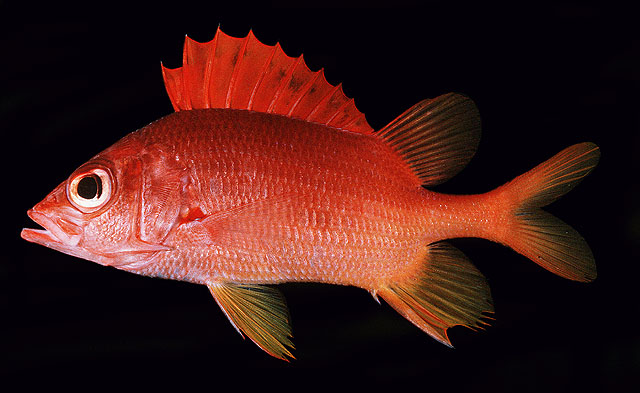
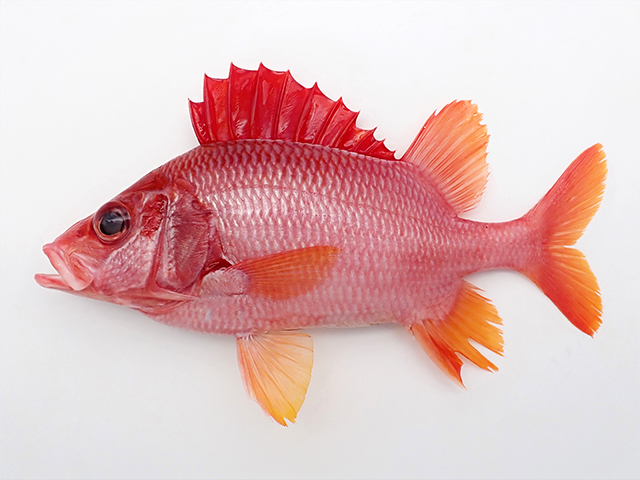
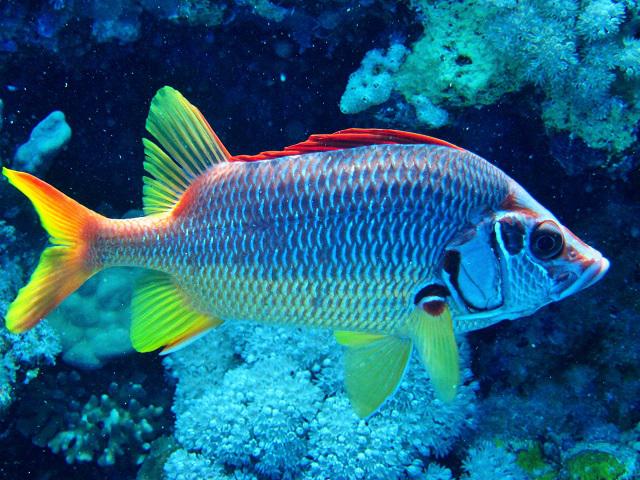
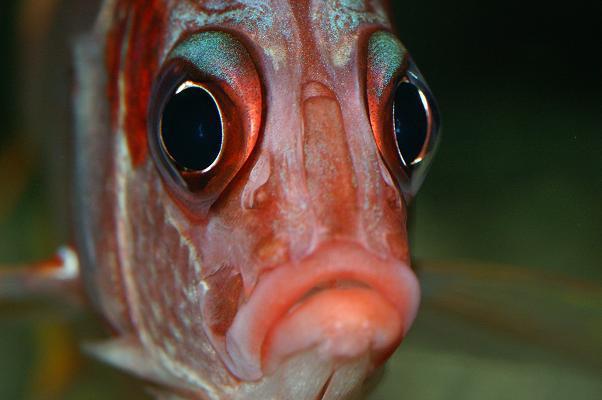
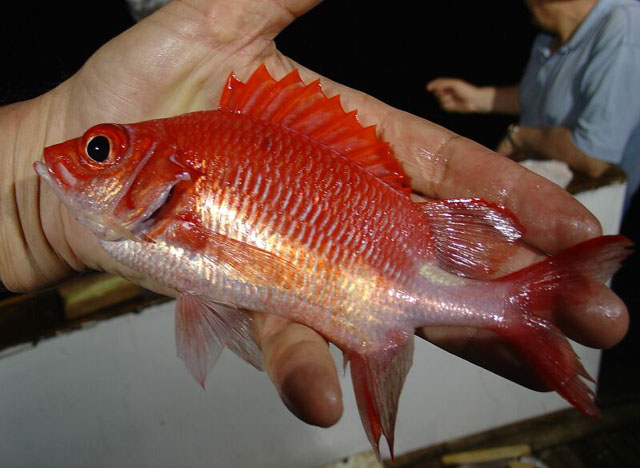
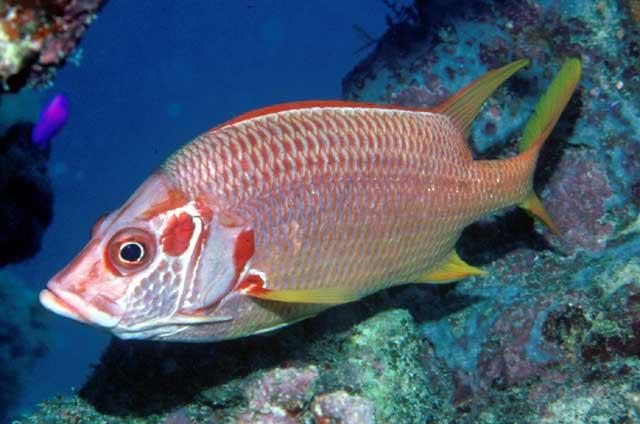
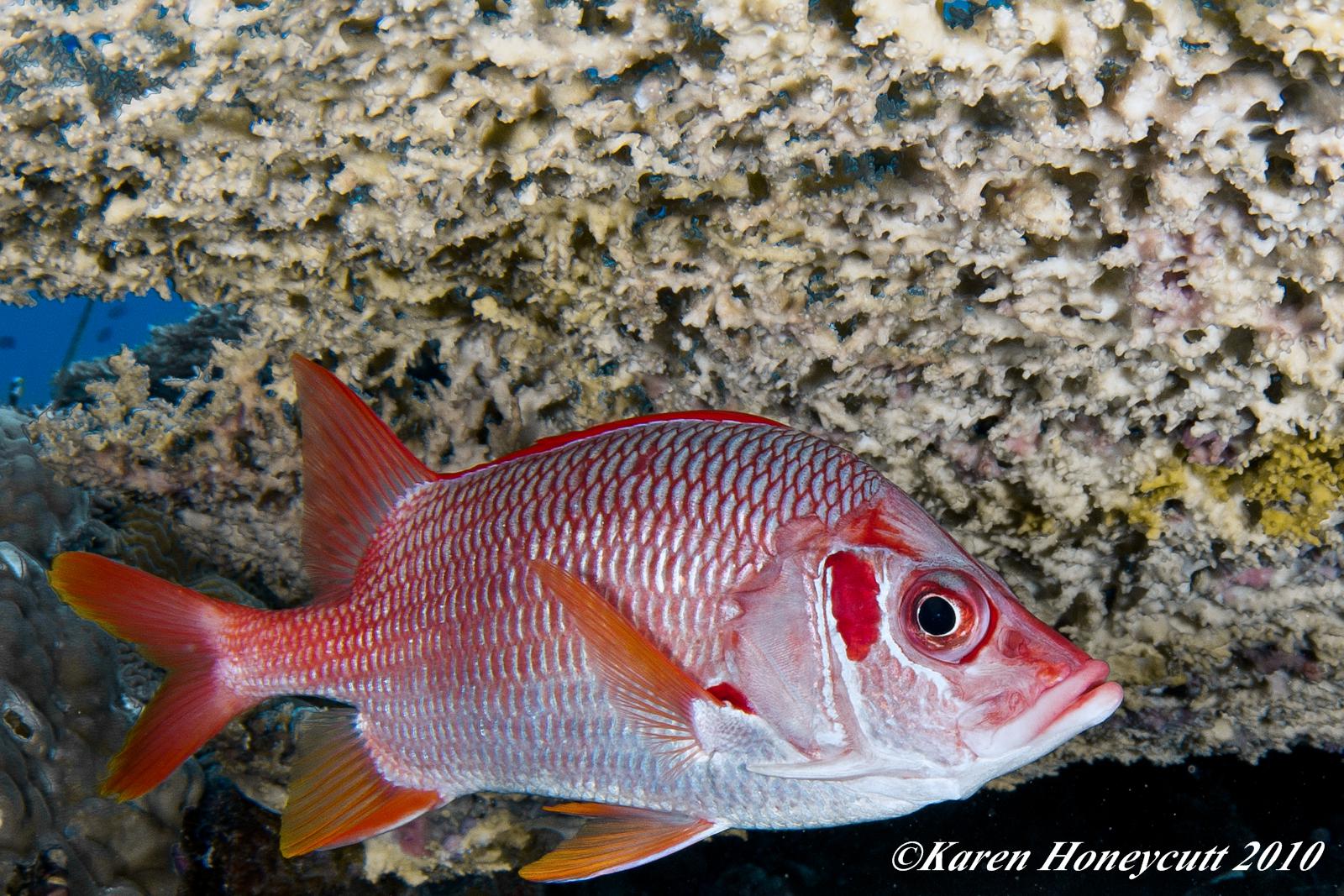
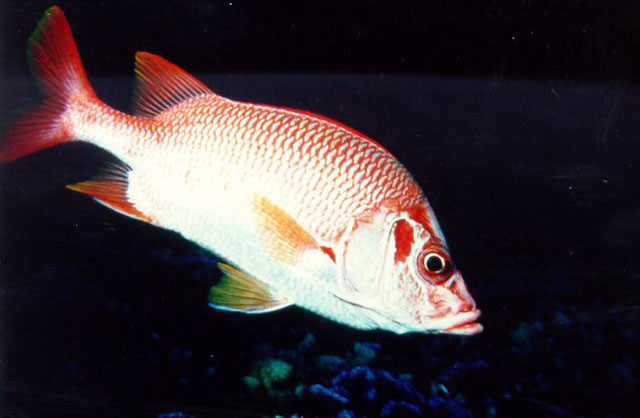
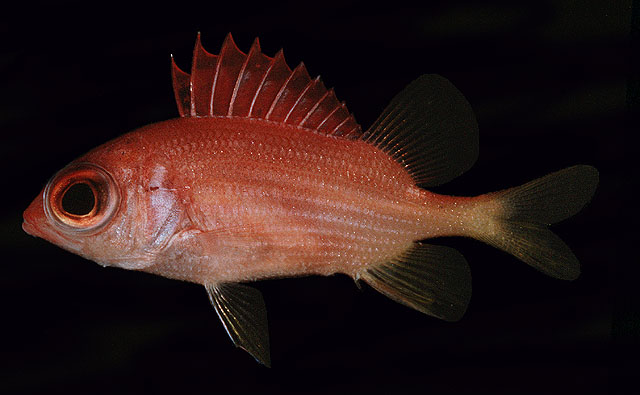
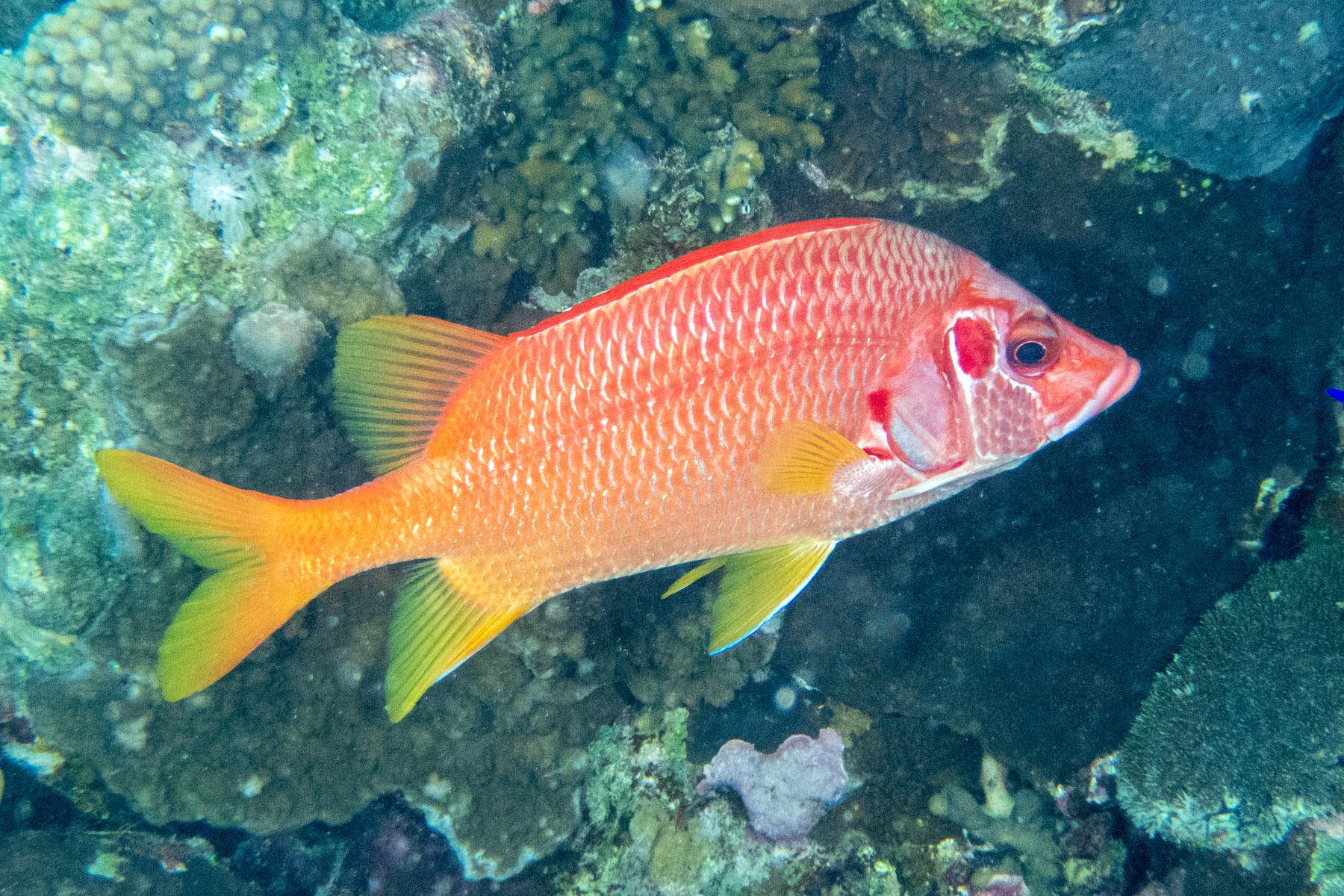
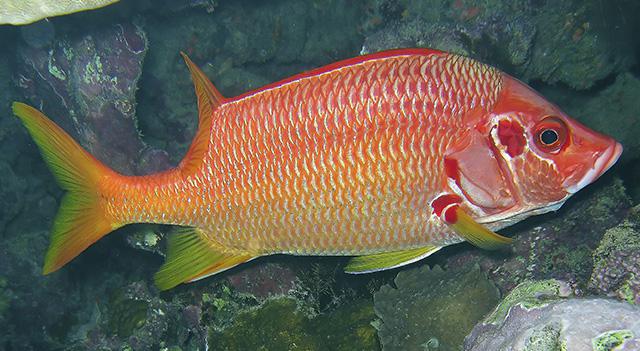
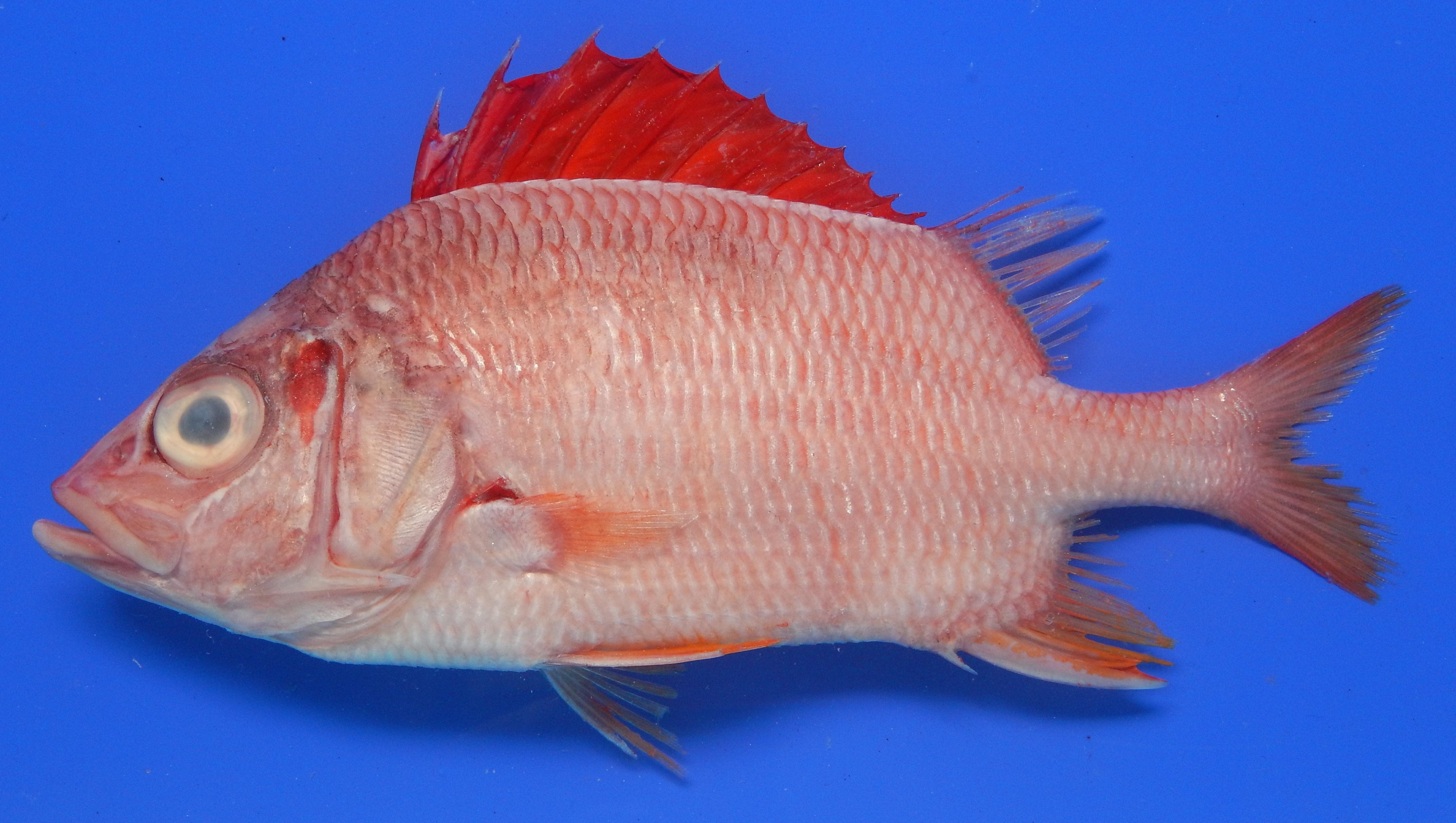
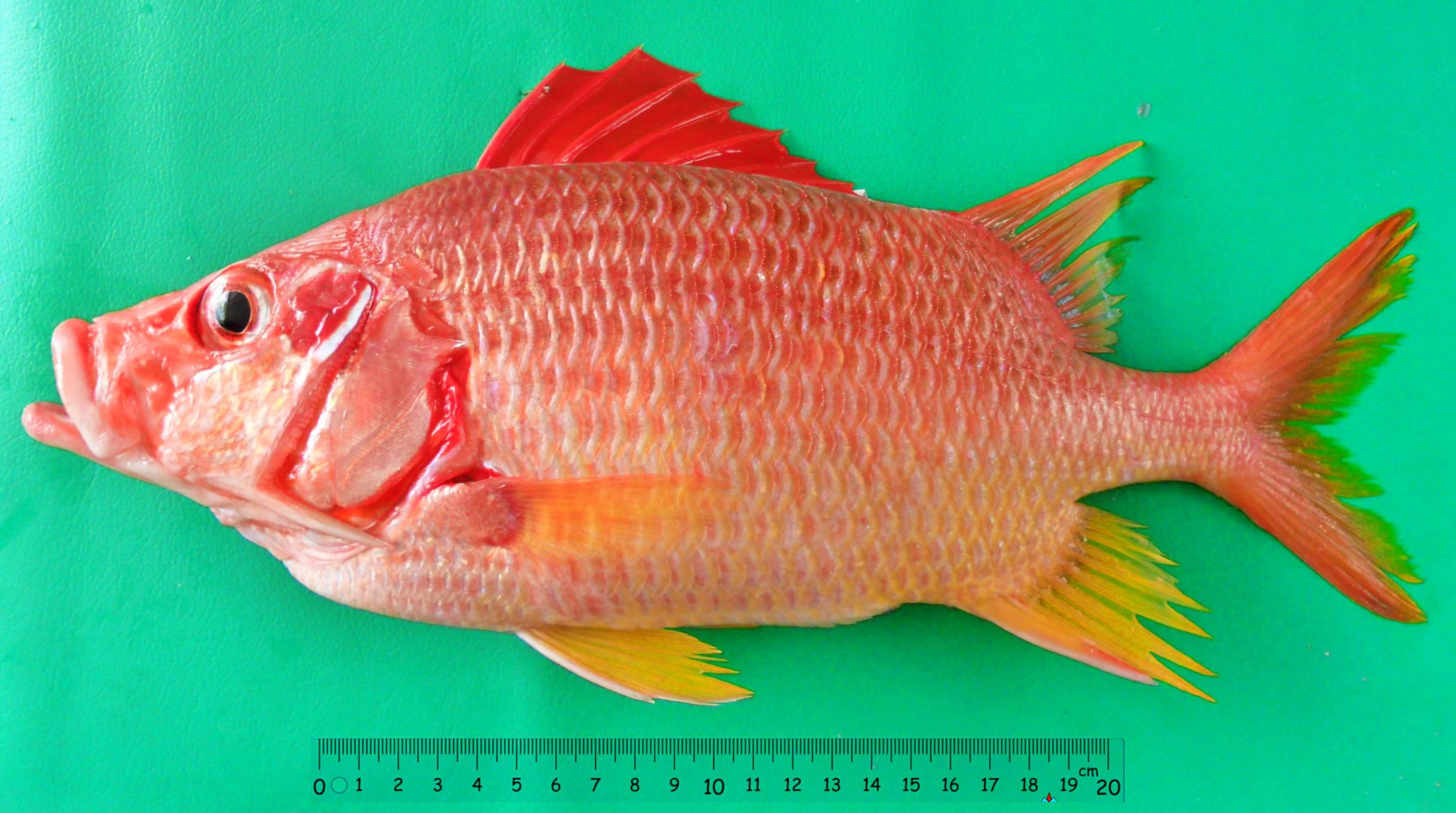
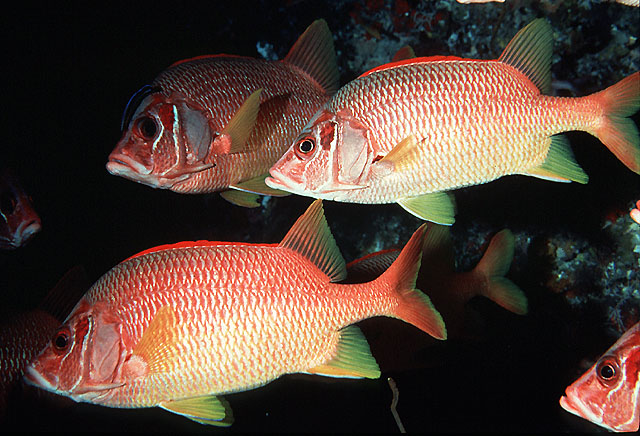
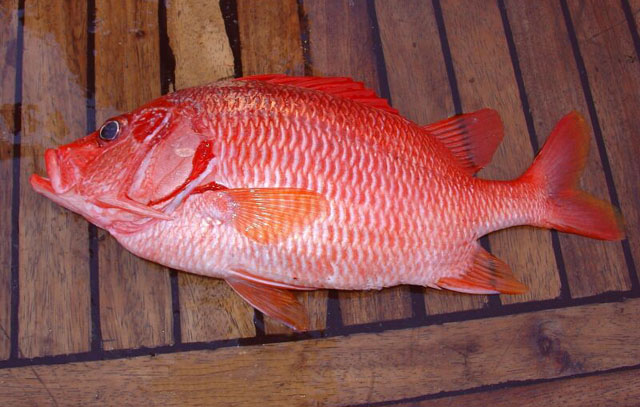
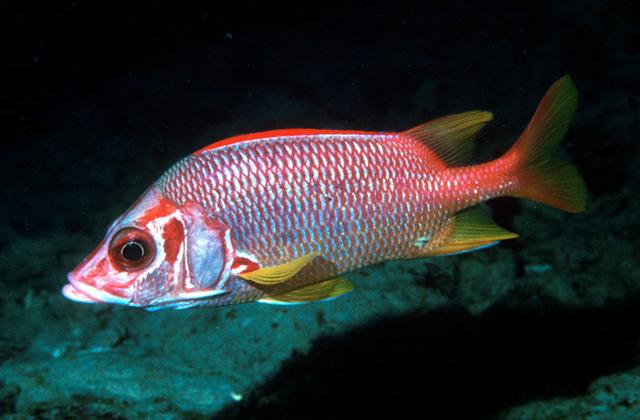
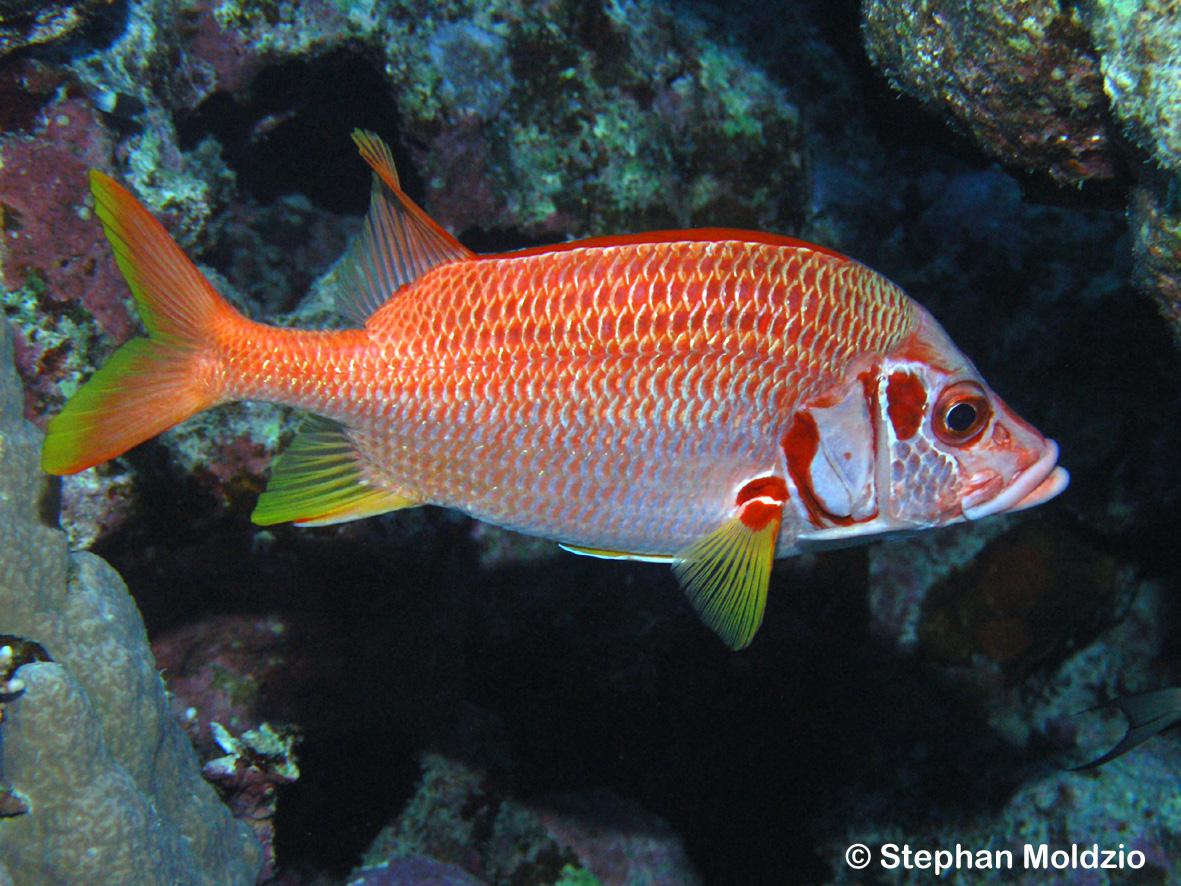
Dorsal spines (total): 11; Dorsal soft rays (total): 14 - 16; Anal spines: 4; Anal soft rays: 9 - 10. Head and body red, scale edges silvery white; spinous dorsal crimson in color; other fins orange-yellow; vertically oblong crimson spot on preopercle behind eye (Ref. 4201). Five oblique scale rows on cheek; body depth 2.4-2.6 in SL; head length (HL) 2.55-2.85 in SL; lower jaw when closed slightly to moderately projecting; snout length 3.0-3.8 in HL larger than orbit diameter in adults; interorbital width 6.3-8.7 in HL; maxilla extending posteriorly to a vertical at front edge of the orbit; anterior end of nasal bone often with 2 close-set, short spines; medioposterior margin of nasal bone spineless; large nasal fossa spineless on margin; slight ridge of upper edge of suborbital bones weakly serrate; 2 subequal opercular spines; long preopercular spine, usually greater than orbit diameter in specimens at least 20 cm SL; 3rd or 4th dorsal spine longest, 1.7-2.3 in HL; 3rd anal spine 1.7-2.3 in HL (Ref. 27370).
Common Names
Taxonomic Hierarchy
Kingdom: Animalia
Phylum: Chordata
Class: Teleostei
Order: Holocentriformes
Family: Holocentridae
Genus: Sargocentron
Species: Sargocentron spiniferum (Forsskål, 1775)
Climate Zone
Biology
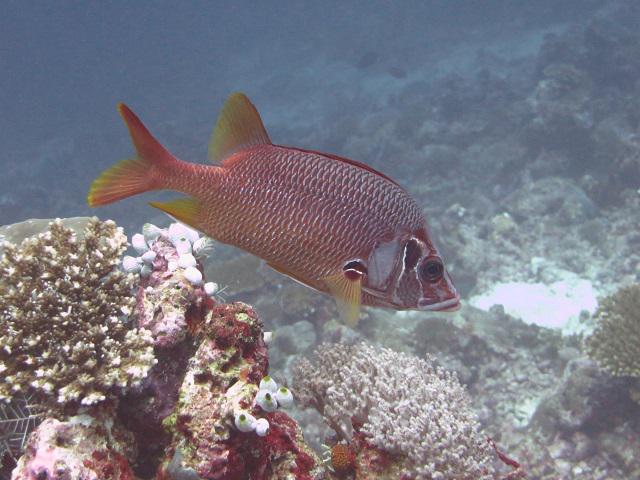
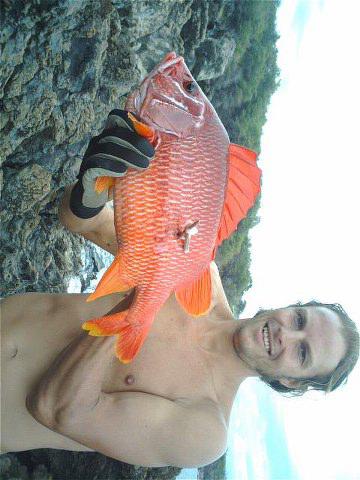
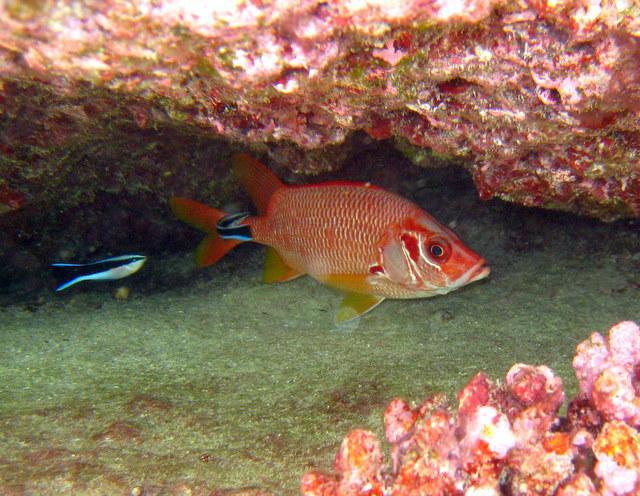
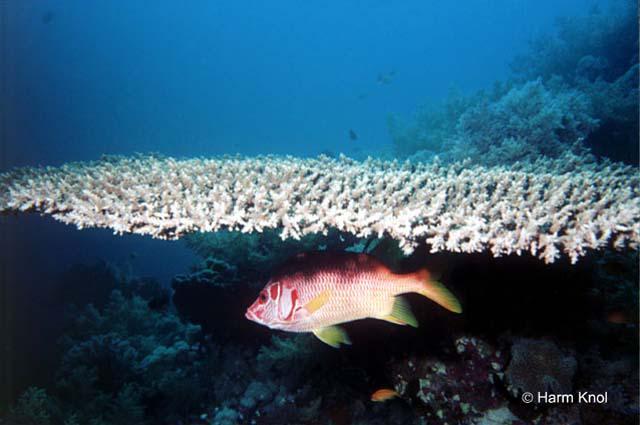
A solitary species that inhabits a variety of reef zones from reef flats to lagoon and seaward reefs to a depth of at least 122 m and is fairly common in areas not subjected to heavy spear fishing. Found under ledges during the day (Ref. 9710). Benthopelagic (Ref. 58302). Largest species of squirrelfish and the highest-bodied Sargocentron (Ref. 37816). Juvenile inhabits shallow protected reefs. A nocturnal species that feeds on crabs, shrimps and small fishes. Spine of preopercle venomous. Largest squirrelfish (Ref. 48635). Minimum depth reported taken from Ref. 128797.
Habitat
associated
Conservation Status
Least Concern
Threat to Humans
Reports of ciguatera poisoning
Sargocentron spiniferum (Forsskål, 1775)