Sargocentron diadema (Lacepède, 1802)

Description
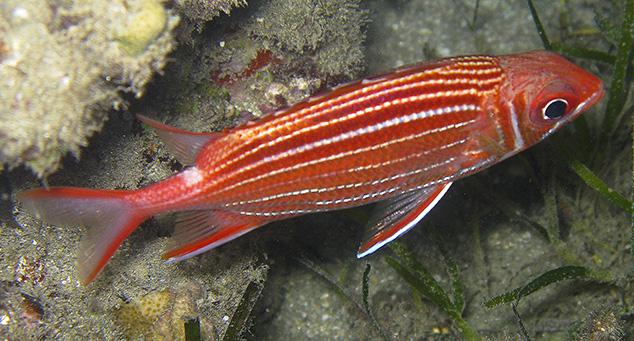
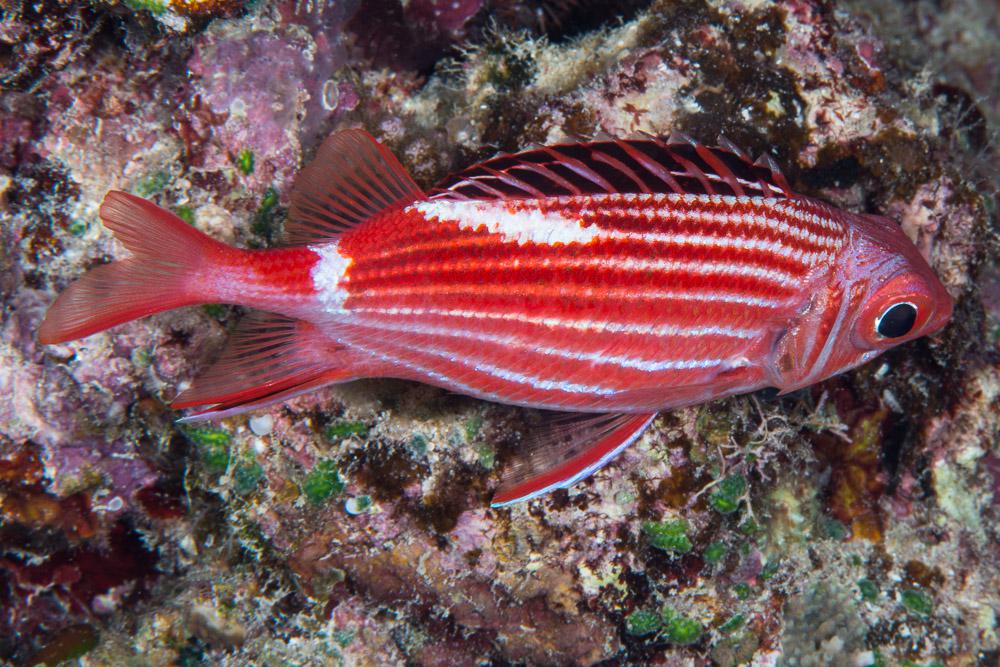
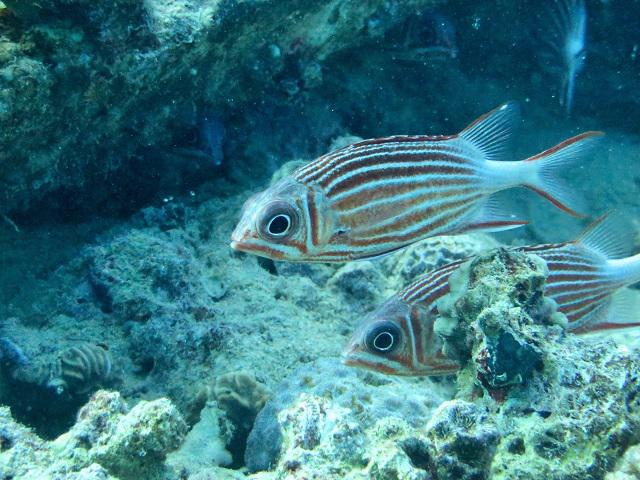
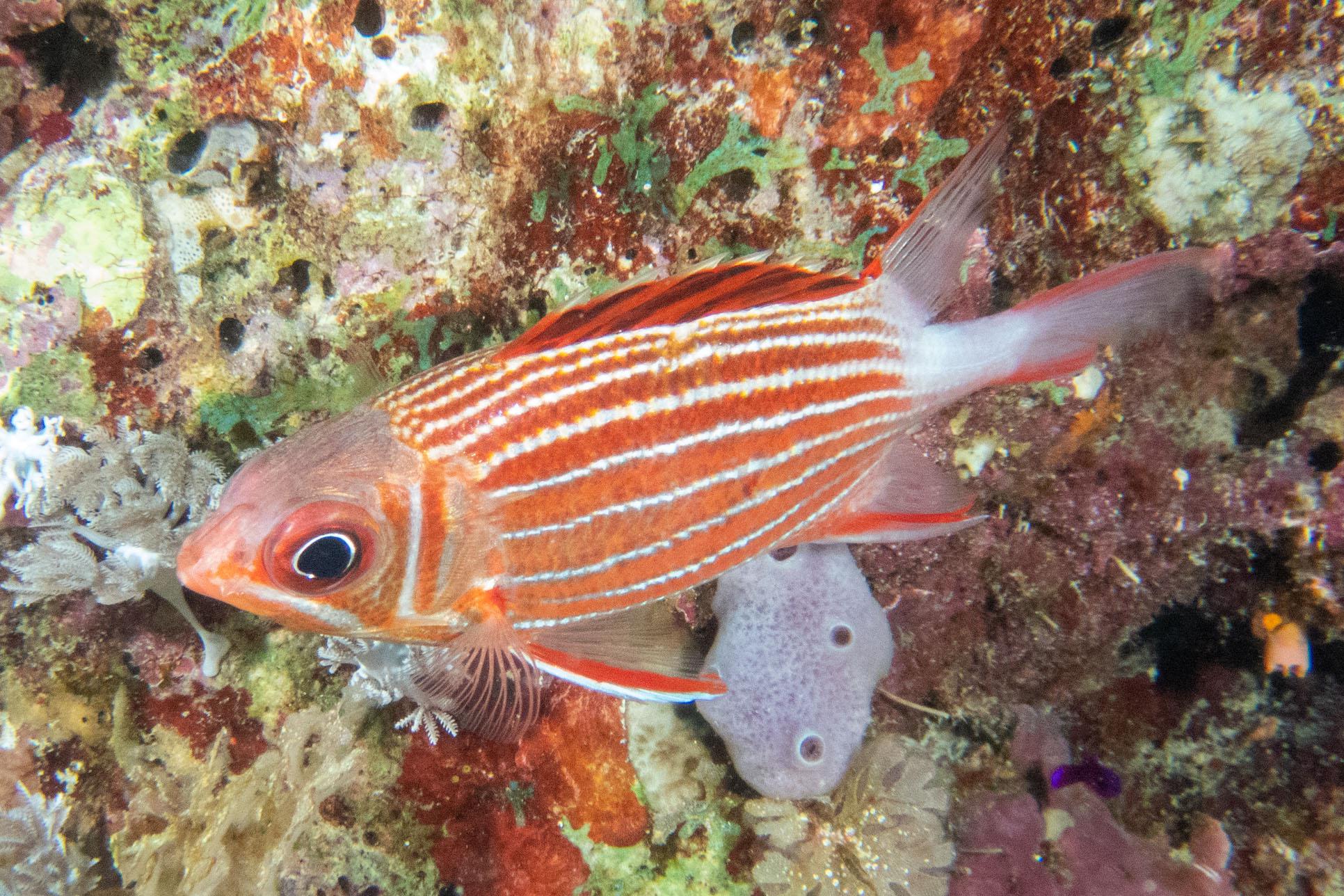
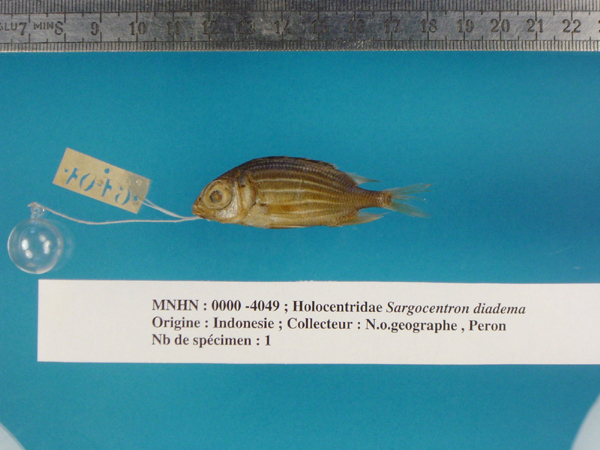
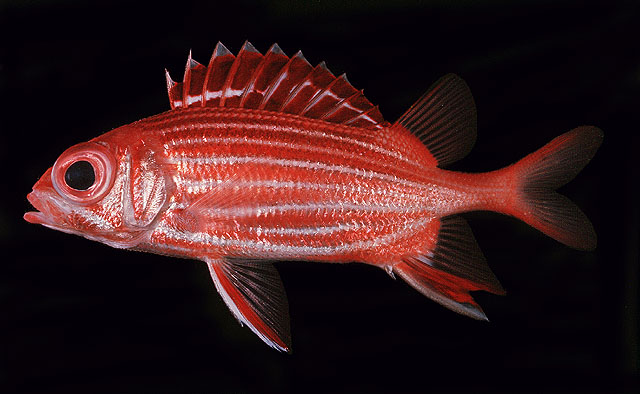
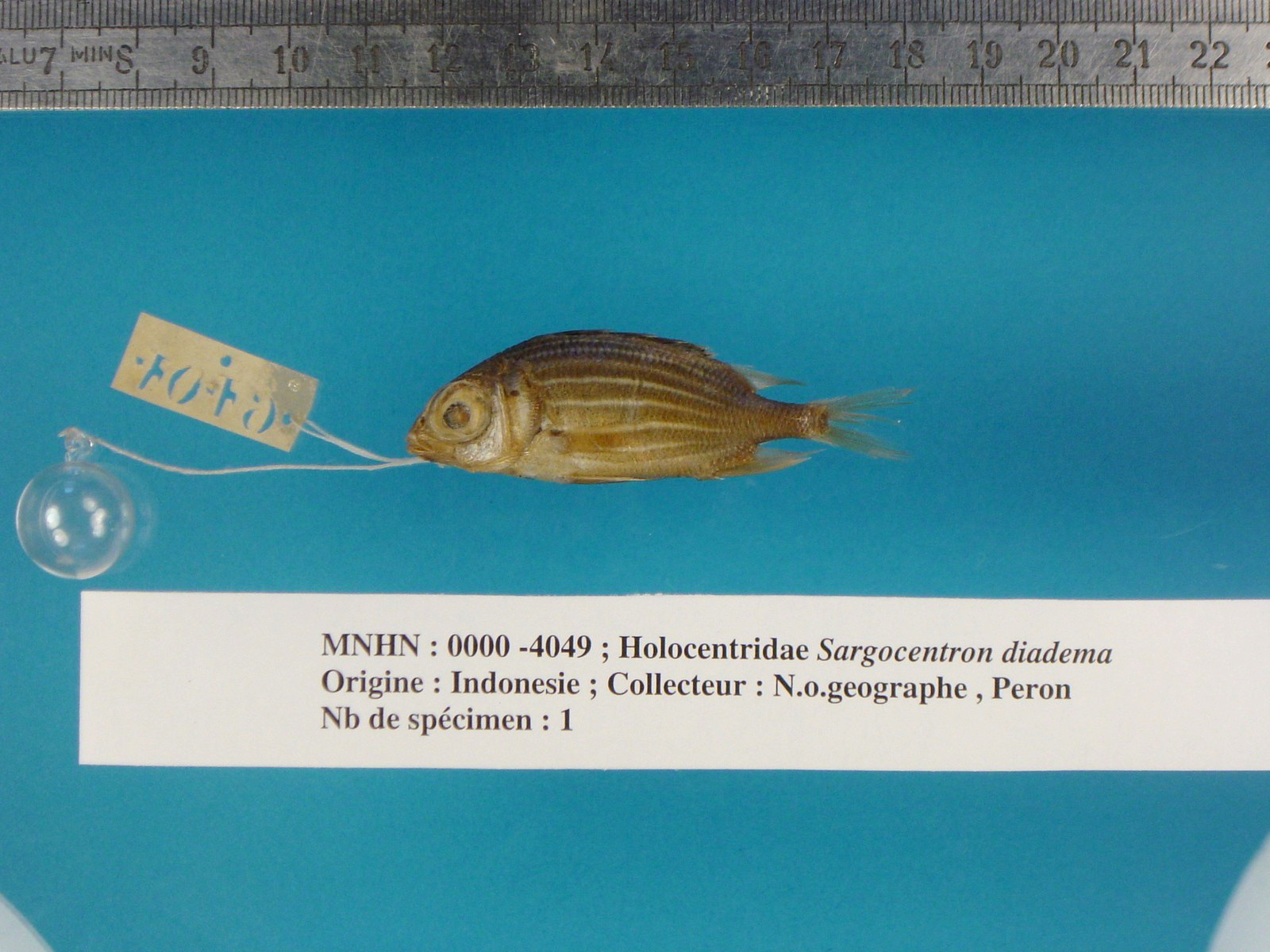
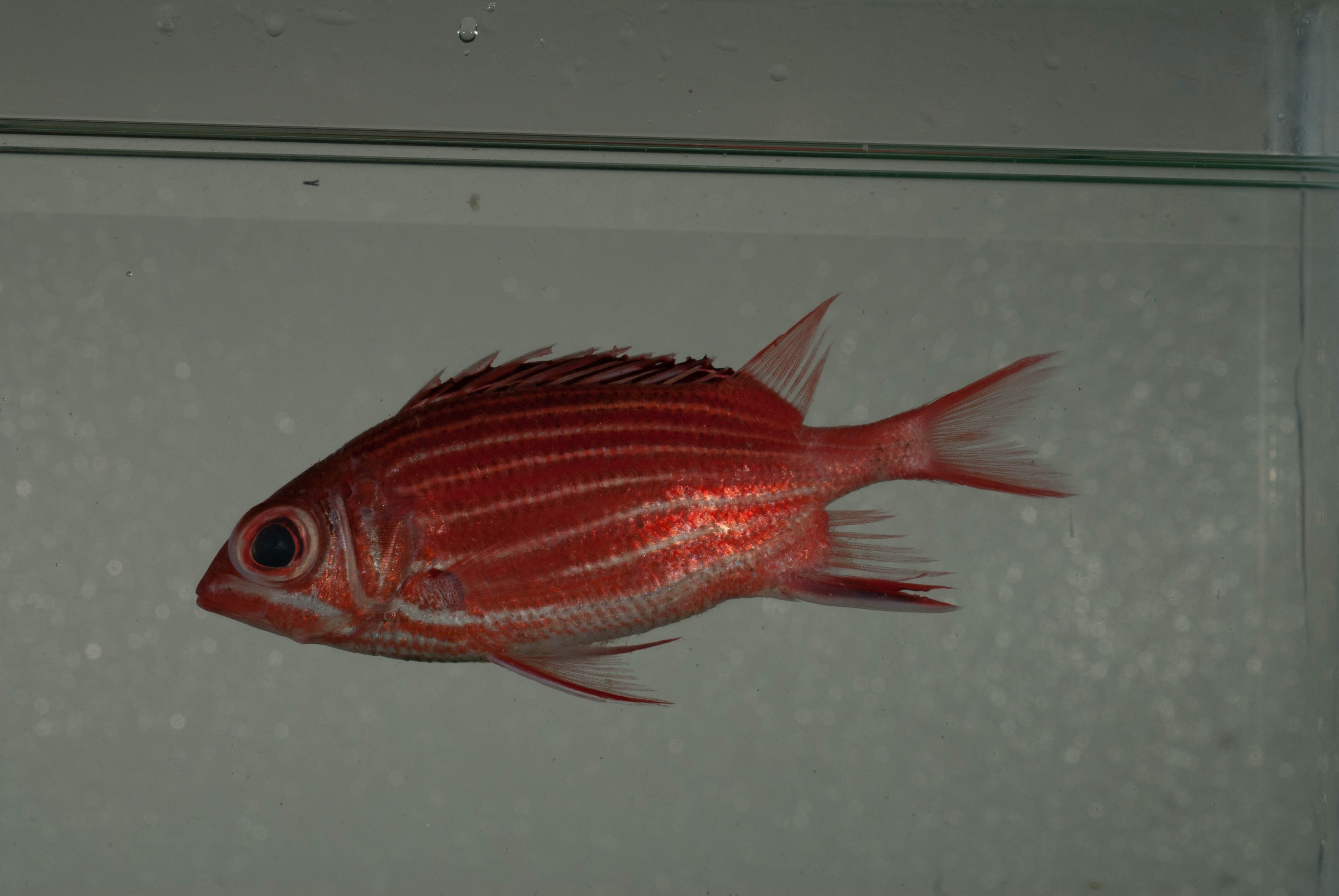
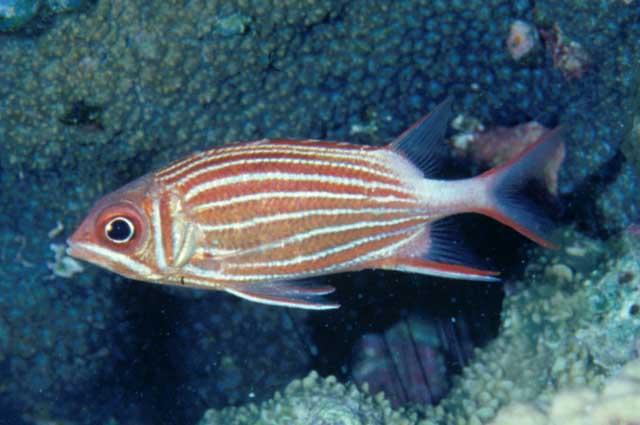
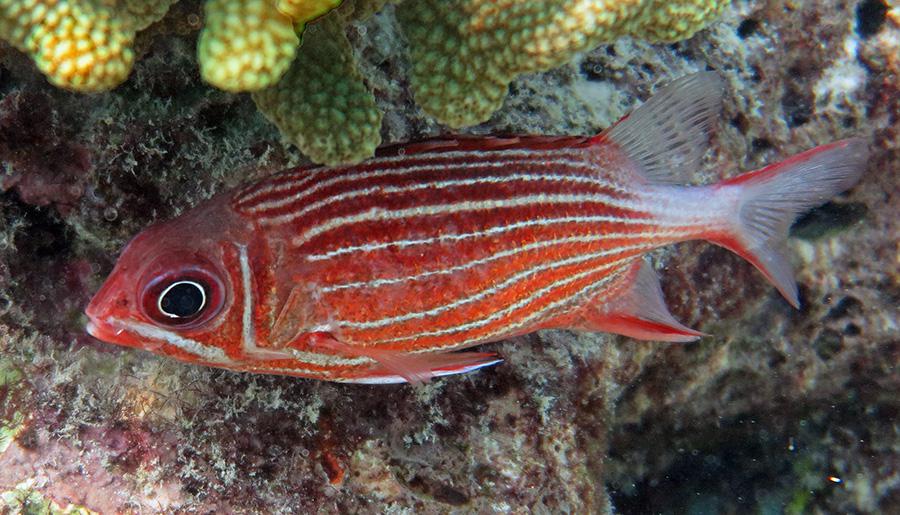
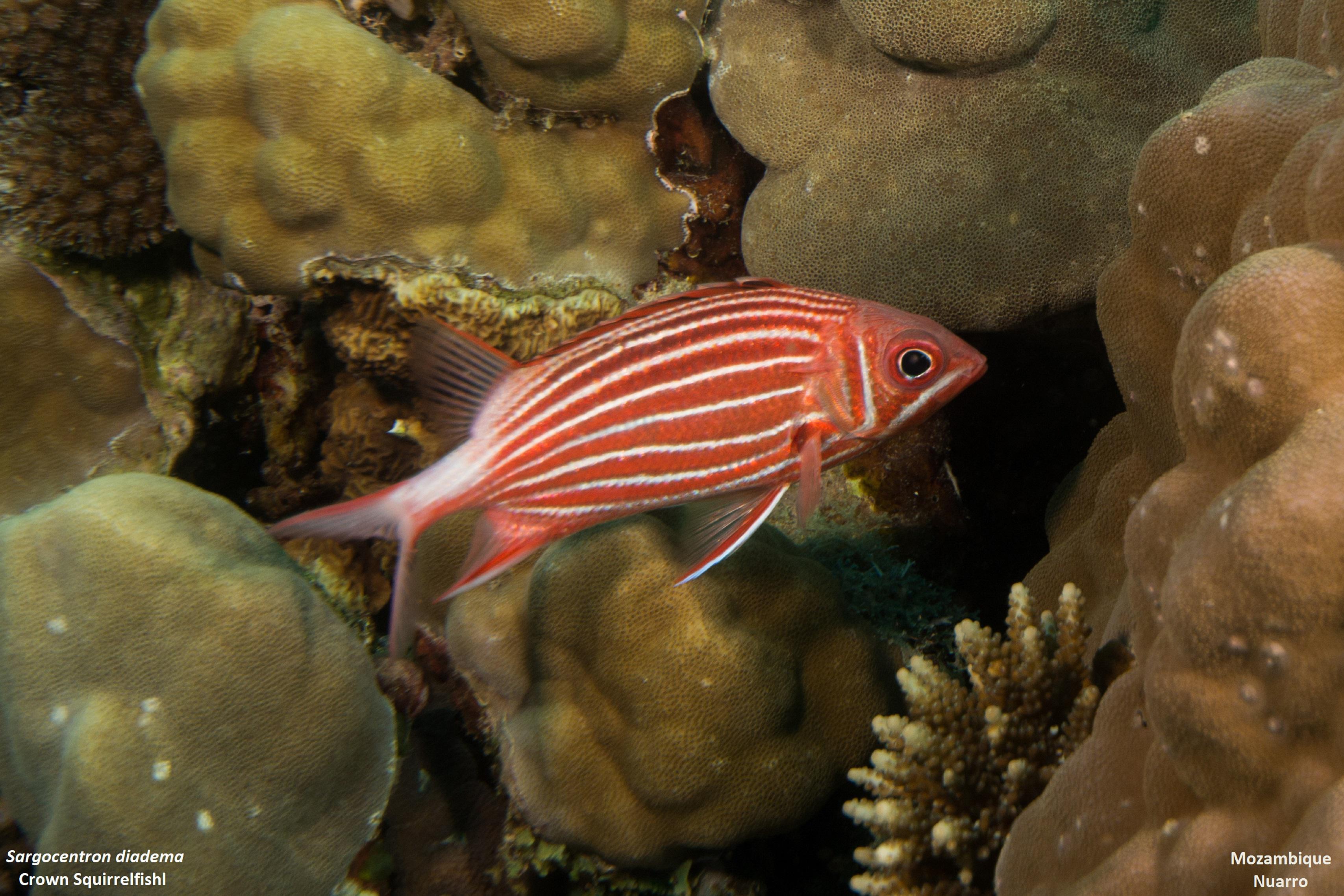
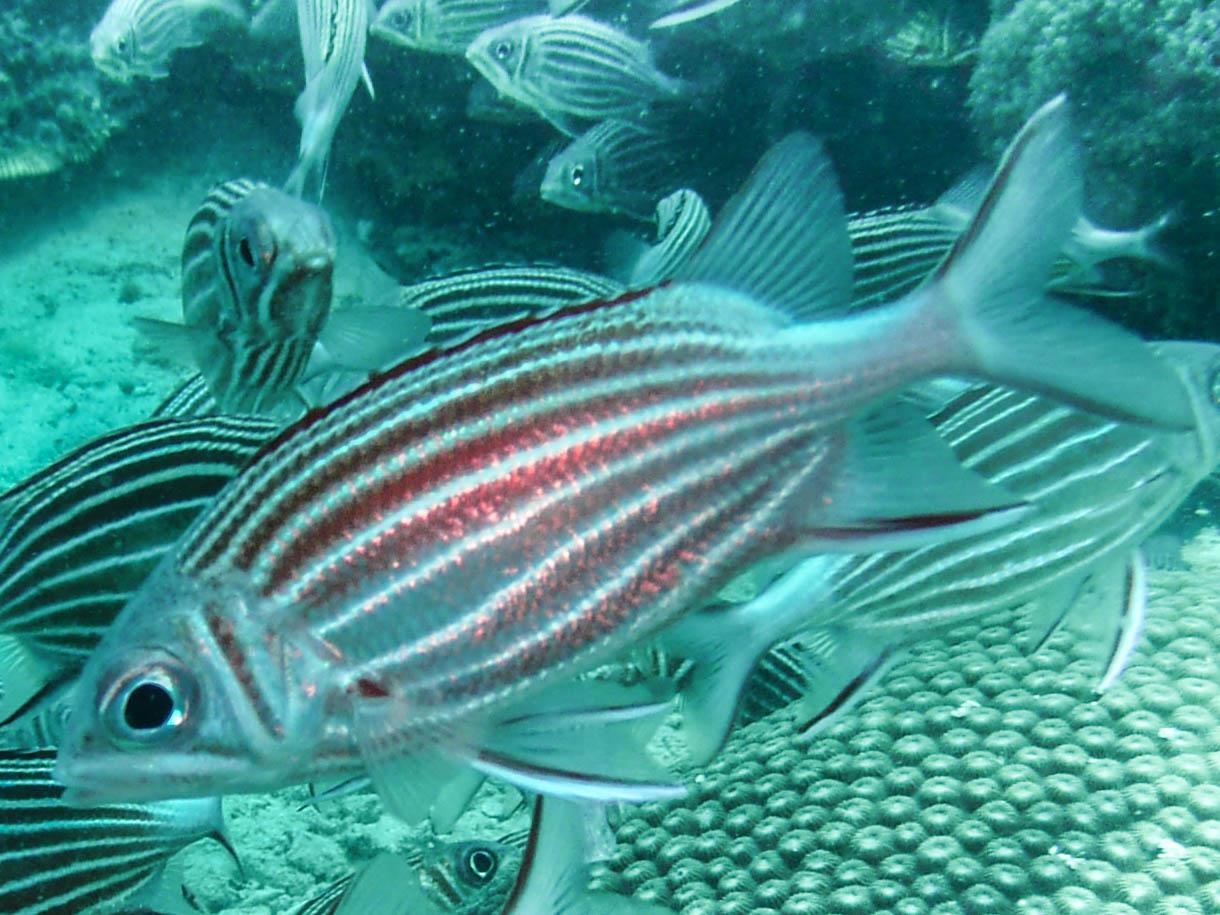
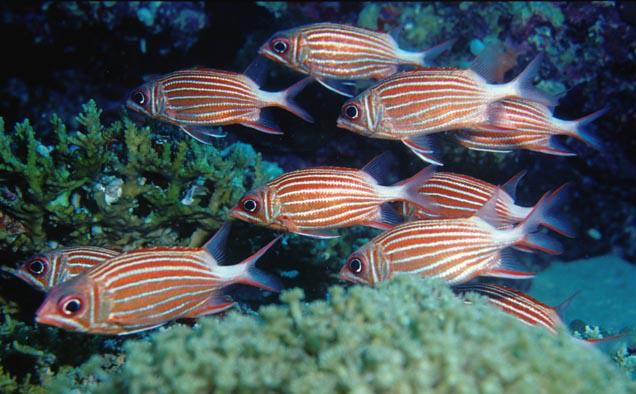
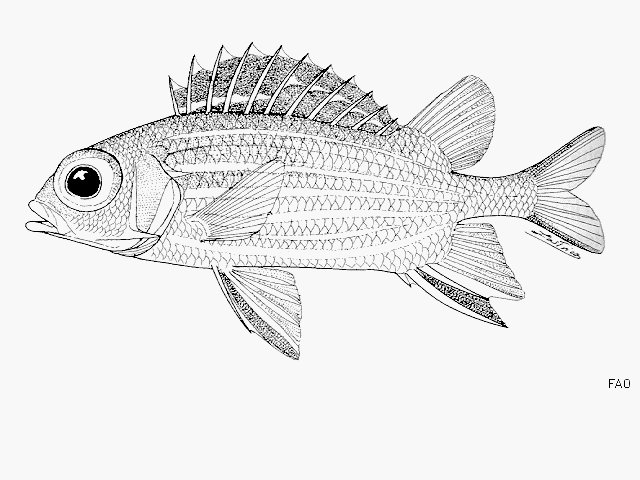
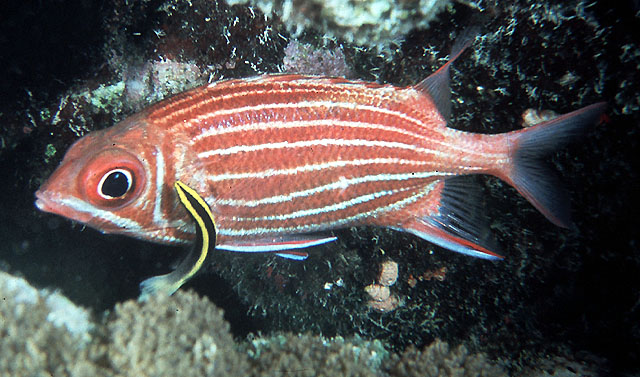
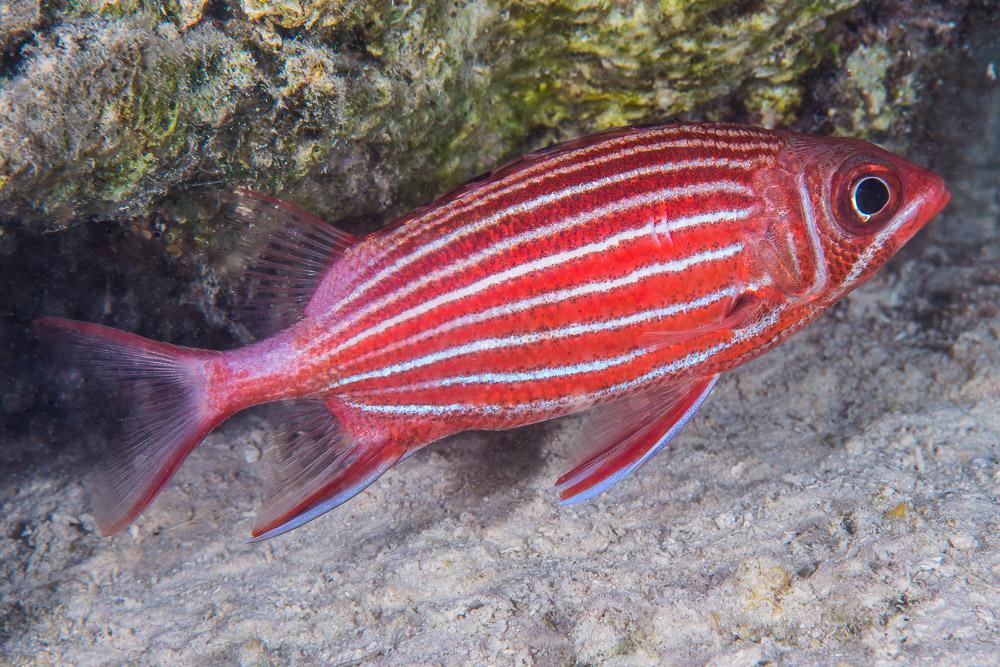
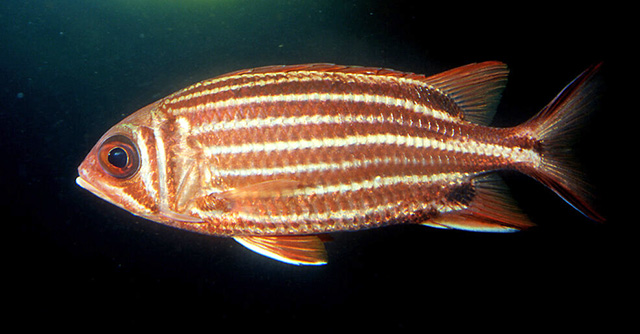
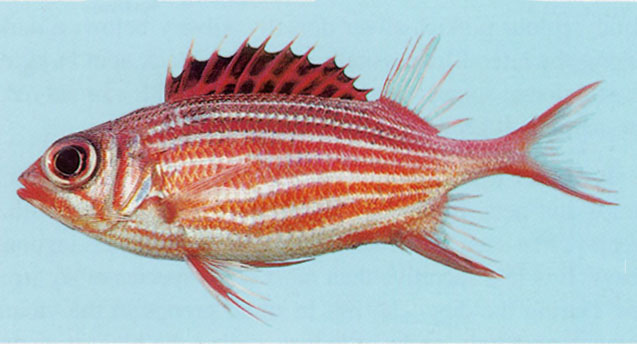
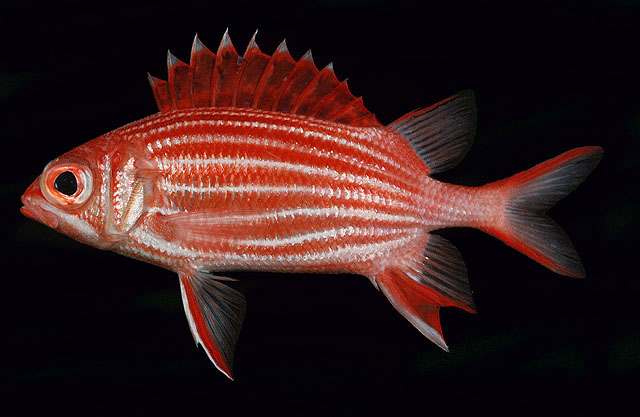
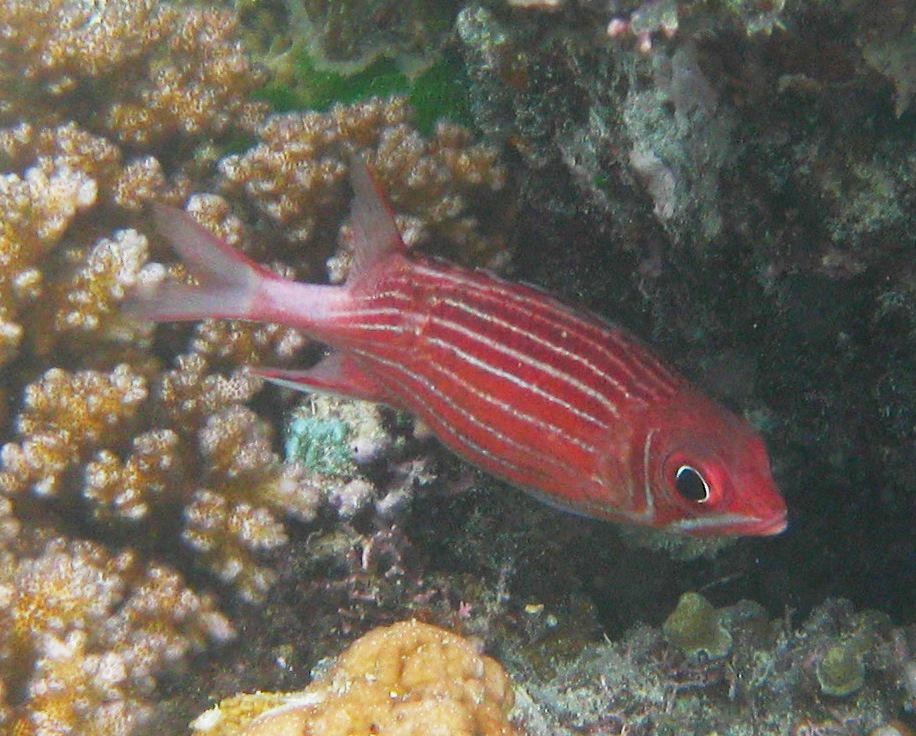
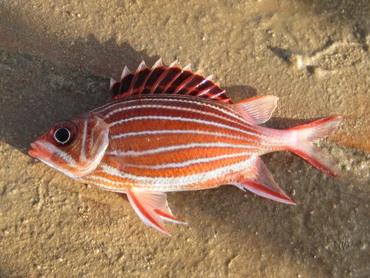
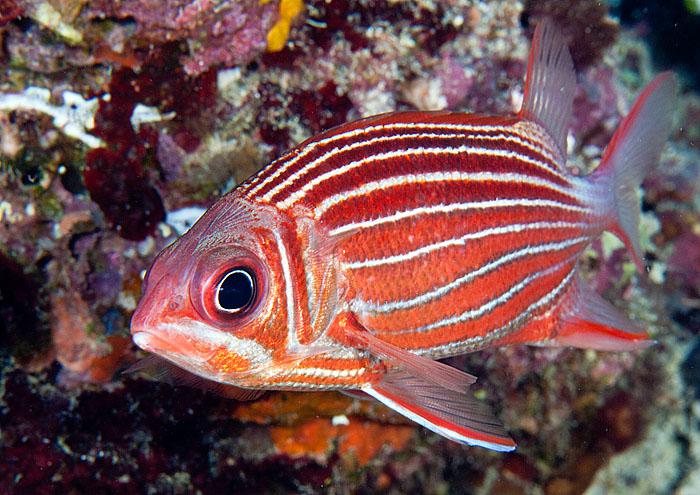
Dorsal spines (total): 11; Dorsal soft rays (total): 12 - 14; Anal spines: 4; Anal soft rays: 8 - 9. Body with alternating broad red and narrower silvery white stripes (Ref. 4201); red head with 2 vertical white streaks on the opercle, one on its edge and an oblique one below the eye; distinctive reddish-black to black dorsal fin with two white streaks. Five or 6 oblique rows of scales on cheek. Maxilla nearly reaching or extending slightly beyond a vertical at anterior edge of the pupil; upper jaw length 2.75-2.95 in head length. Body depth 2.75-3.25 in SL; head length 2.7-3.15 in SL; snout length 4.0-4.4 in head length; interorbital width 4.4-4.9 in head length; premaxillary groove extending slightly posterior to a vertical at anterior edge of orbit; anterior end of nasal bone rounded; medial margin of nasal bone without spinule; nasal fossa without spinules on its edge; upper edge of suborbital bones below anterior half of eye spineless; small preopercular spine, its length 2-3 times in orbit diameter, 2.85-3.5 in head length; longest 4th dorsal spines, 1.7-2.25 in head length; third anal spine 1.2-1.35 in head length (Ref. 27370).
Common Names
Taxonomic Hierarchy
Kingdom: Animalia
Phylum: Chordata
Class: Teleostei
Order: Holocentriformes
Family: Holocentridae
Genus: Sargocentron
Species: Sargocentron diadema (Lacepède, 1802)
Climate Zone
Biology
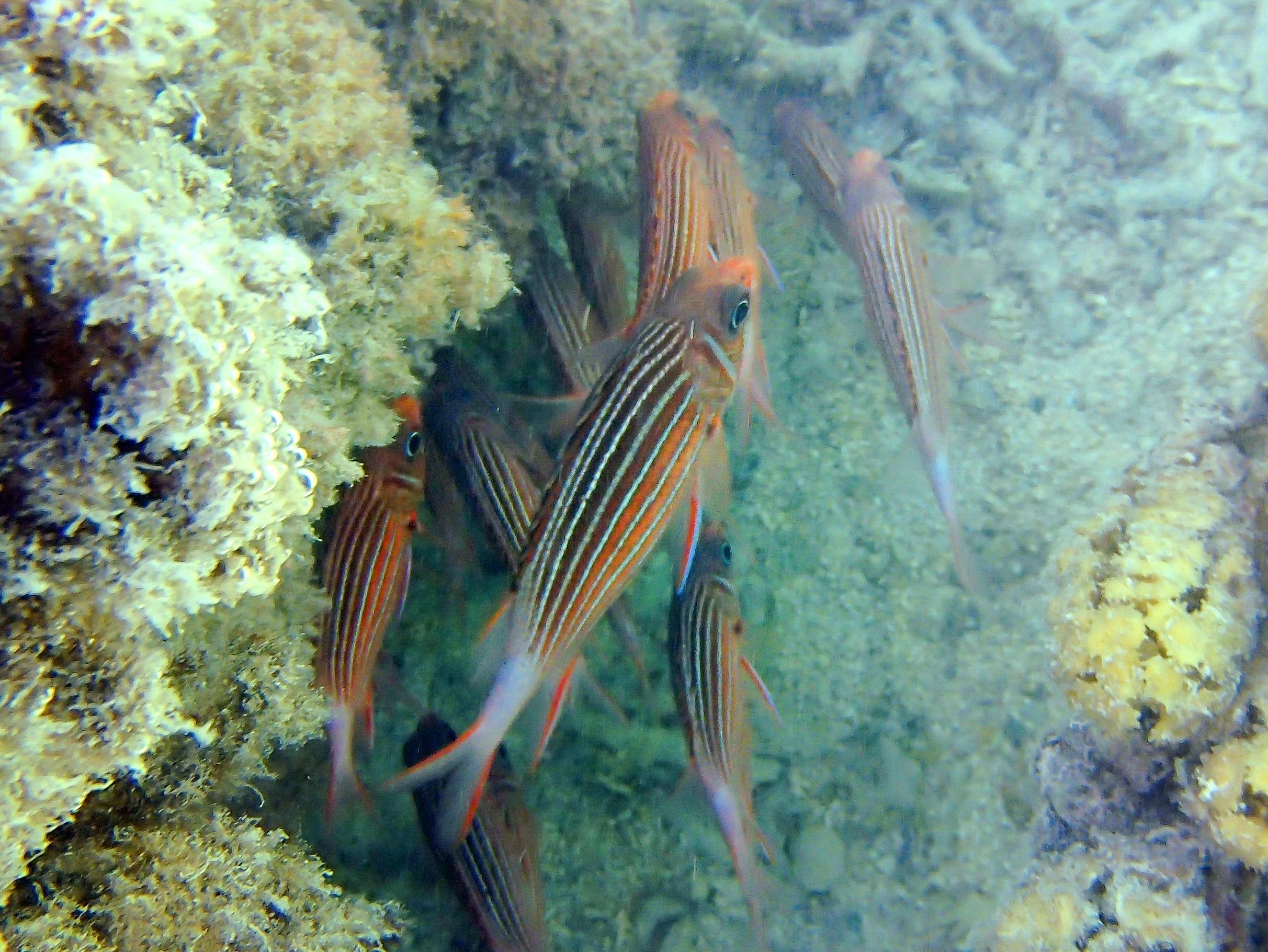
A common species that inhabits shallow coral reefs (Ref. 58534) and lagoon and seaward reefs to depths of 30 m or more. Benthopelagic (Ref. 58302). Occurs under ledges or in crevices during the day and feeds on isopods; at night it roams over open sand and low-profile reef areas to feed on polychaetes and small crabs. Stomach contents listed gastropods (e.g. Atys sp.), polychaetes, small clams, solenogastrid, isopods, brachyuran crabs, and other crustaceans (Ref. 27370). Tends to occur in aggregations (Ref. 30573). Venomous spine on its preopercle. Size rarely exceeds 13 cm. Minimum depth reported taken from Ref. 30874.
Habitat
associated
Conservation Status
Least Concern
Threat to Humans
Venomous
Sargocentron diadema (Lacepède, 1802)