Upeneus sundaicus (Bleeker, 1855)
Description
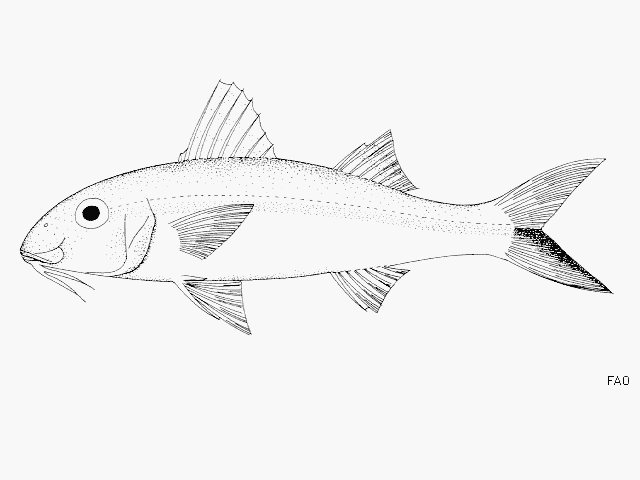
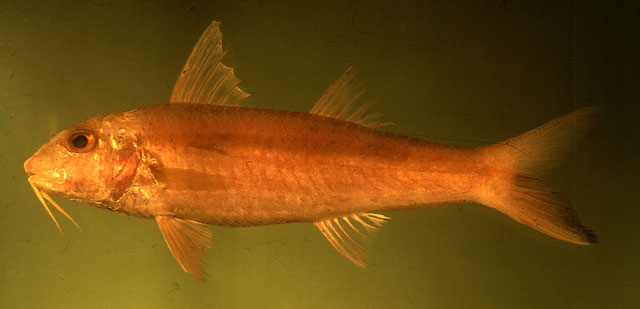
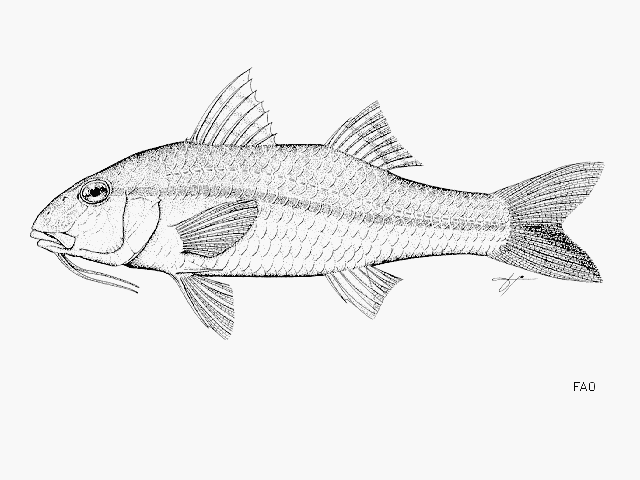
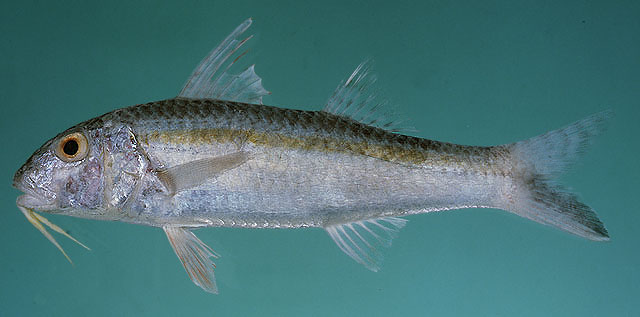
Dorsal spines (total): 8; Dorsal soft rays (total): 9; Anal spines: 1; Anal soft rays: 7 - 8. This species is distinguished by the following characters: D VIII,9; pectoral fins 13-14; gill rakers 4-5 + 14-15 = 18-20; lateral line scales 31-34; body depth at first dorsal fin origin 25-28% SL and at anal-fin origin 22-24% SL; caudal-peduncle depth 11-13% SL; maximum head depth 21-23% SL; head depth through eye 17-20% SL; head length 27-30%SL; orbit length 6.1-7.2% SL; upper jaw length 11-12% SL; barbel length 18-21% SL; caudal-fin length 26-29% SL; anal-fin height 16-18% SL; pelvic-fin length 20-23% SL; pectoral-fin length 21-23% SL; first dorsal-fin height 25-29% SL; second dorsal-fin height 16-18% SL; 5-6 weak, red or grey bars on upper caudal fin lobe (not retained on preserved fish); no bars on lower lobe, fully to partly covered with a reddish or greyish band (lost in preserved fish); a pale brown mid-lateral body stripe from behind eye to caudal-fin base (sometimes retained in preserved fish); no dark dorsal-fin tip; yellow barbels when fresh; body reddish or dark grey dorsally, whitish-rose ventrally; head with red or grey pigmentation at snout and above eyes (body may darken dorsally in preserved fish (Ref. 83903).
Common Names
Taxonomic Hierarchy
Kingdom: Animalia
Phylum: Chordata
Class: Teleostei
Order: Mulliformes
Family: Mullidae
Genus: Upeneus
Species: Upeneus sundaicus (Bleeker, 1855)
Climate Zone
Biology
Inhabits coastal waters down to 100 m. Usually occurs in schools. Feeds on benthic animals (Ref. 2110).
Habitat
brackish
Conservation Status
Least Concern
Threat to Humans
Harmless
Upeneus sundaicus (Bleeker, 1855)