Upeneus sulphureus Cuvier, 1829
Description


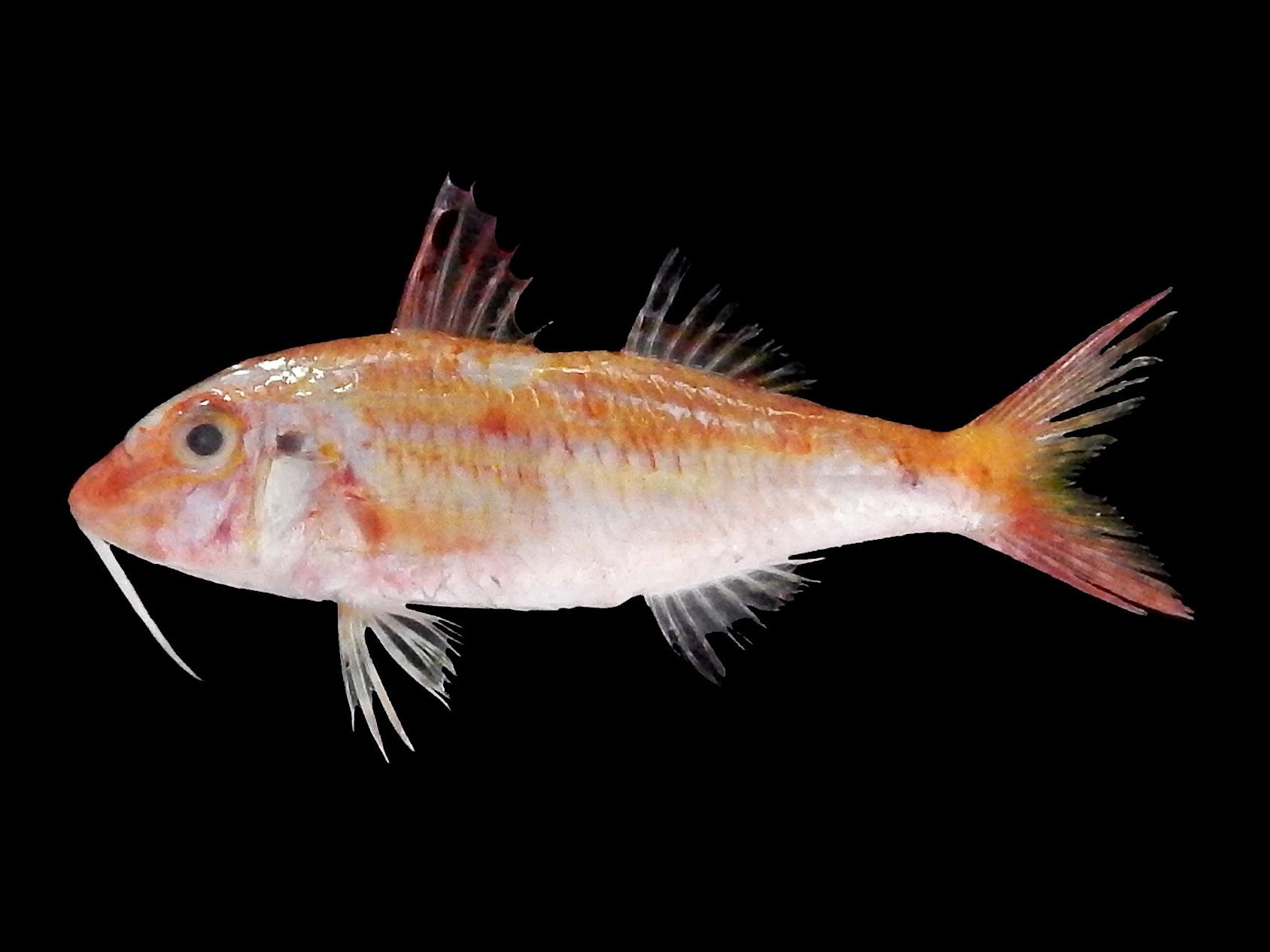
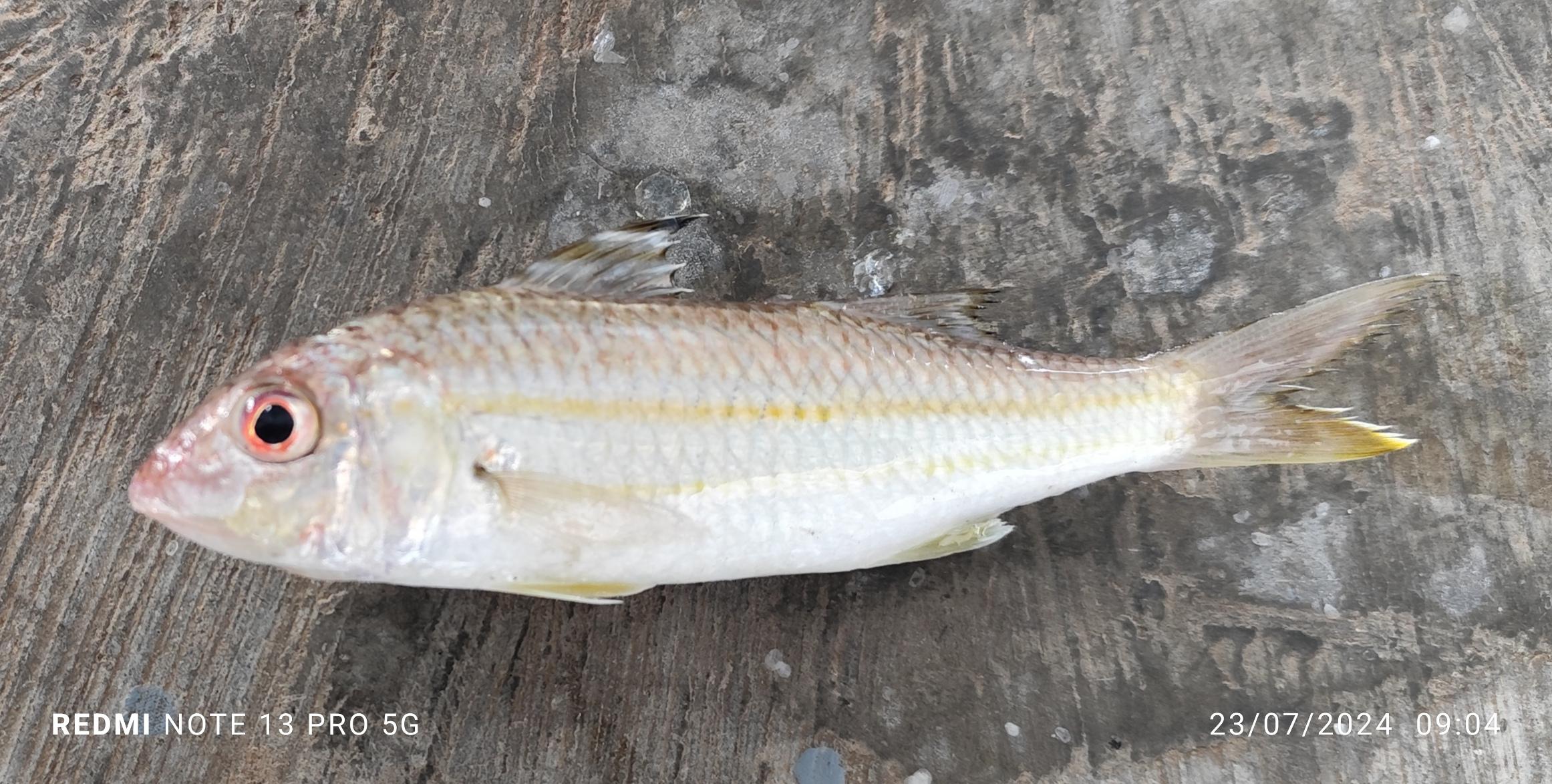
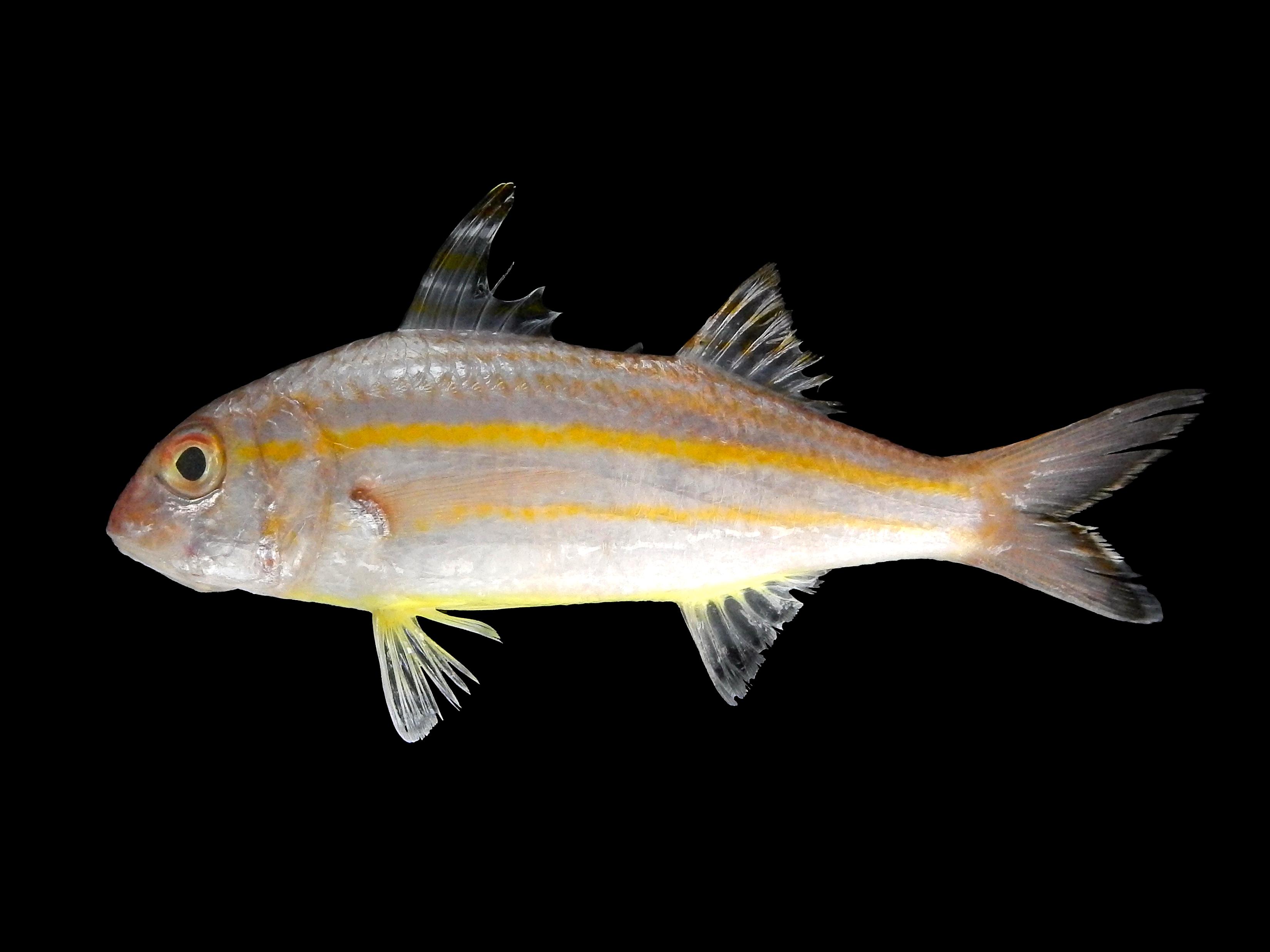
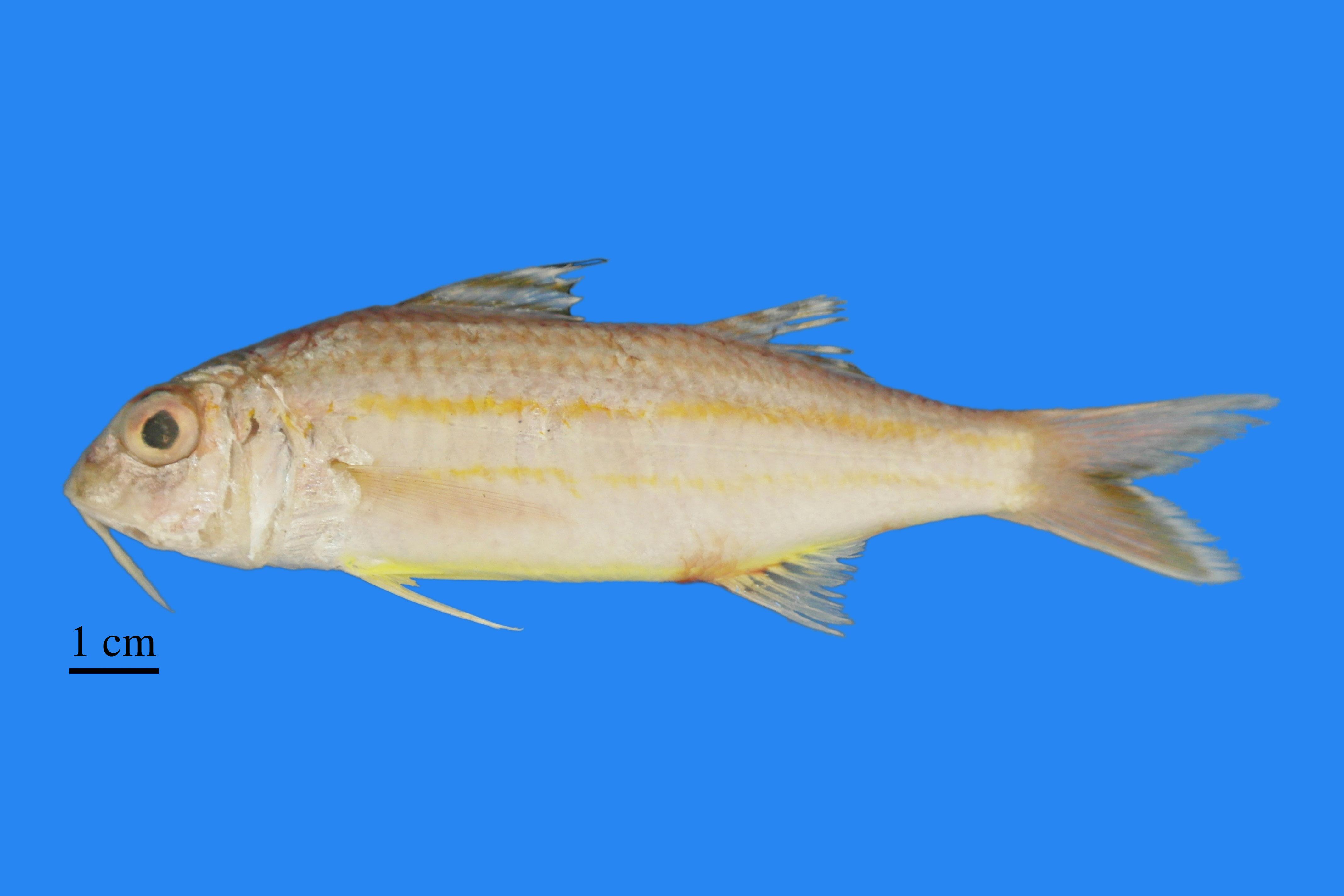
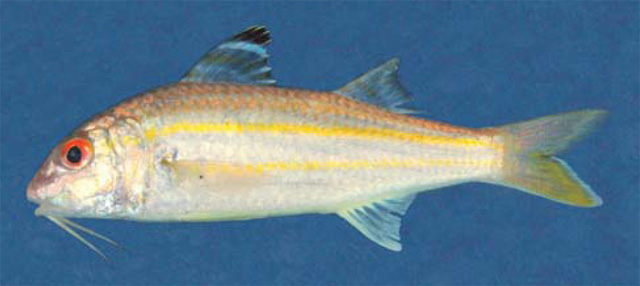
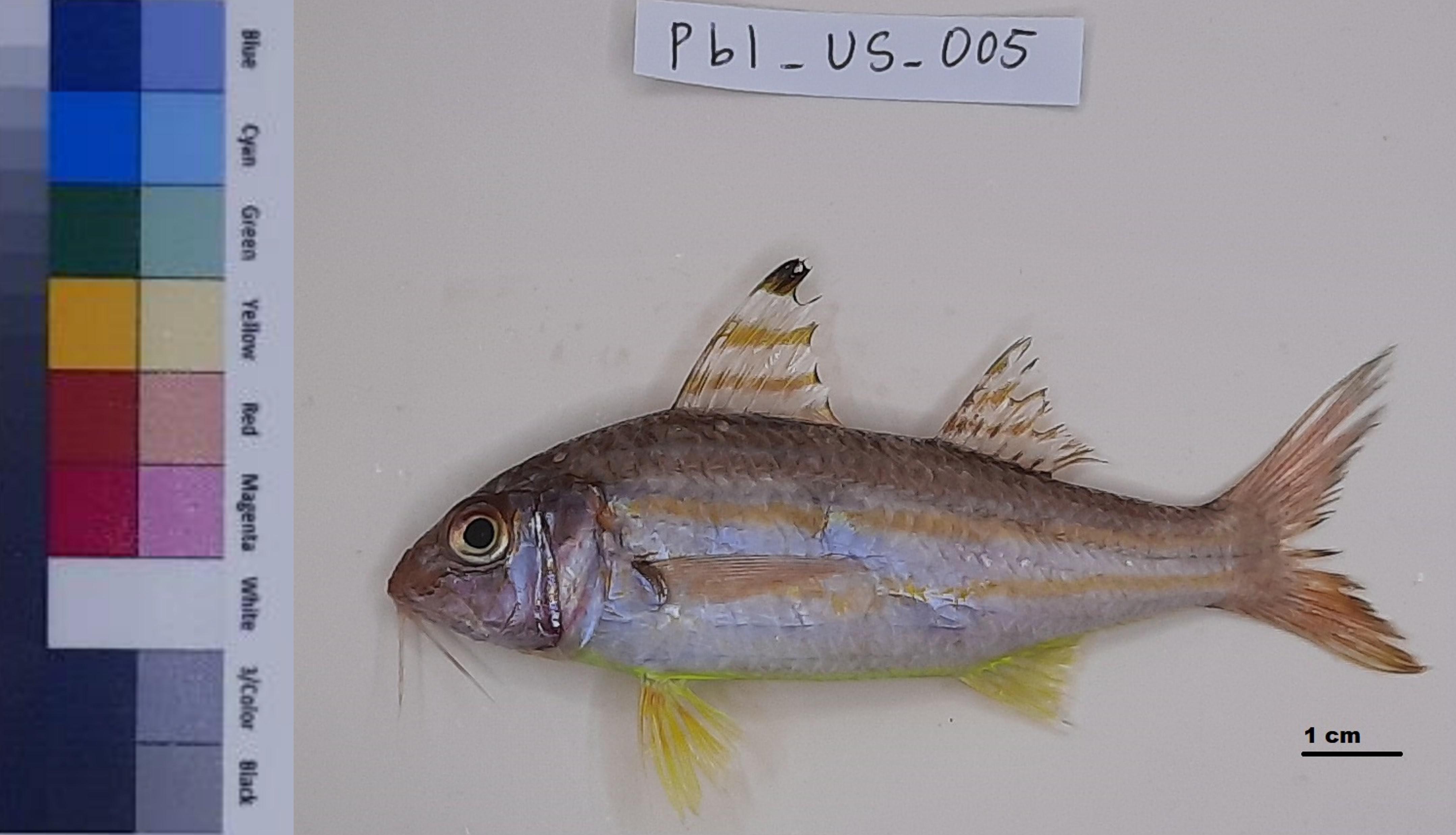
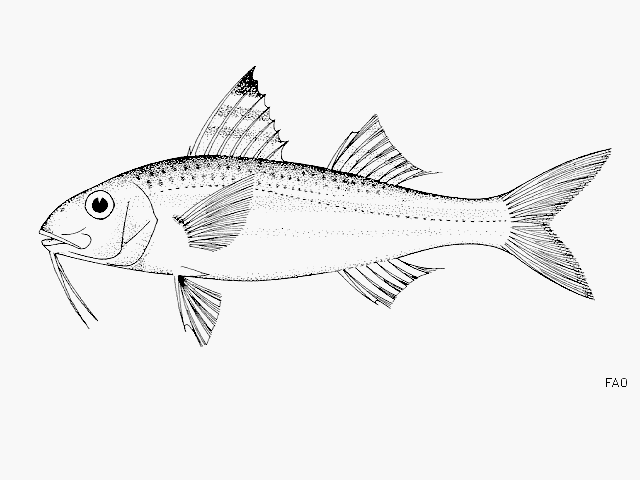
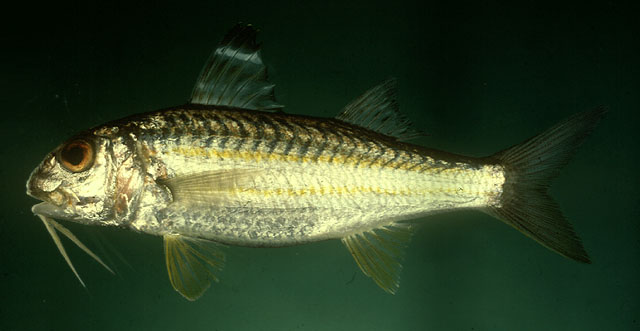
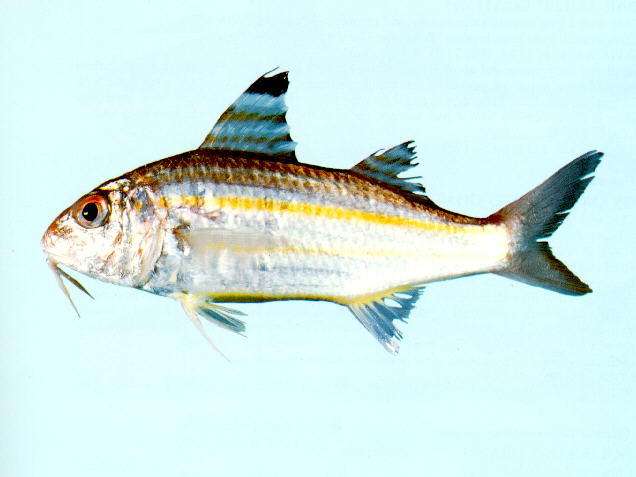
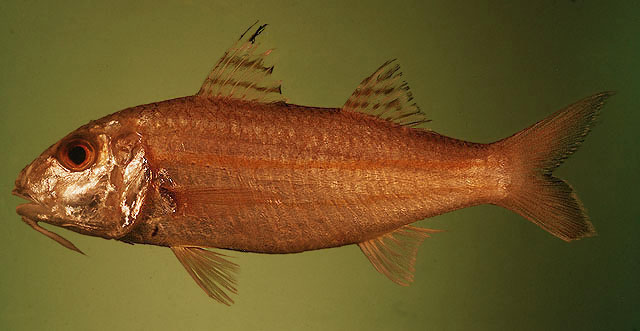
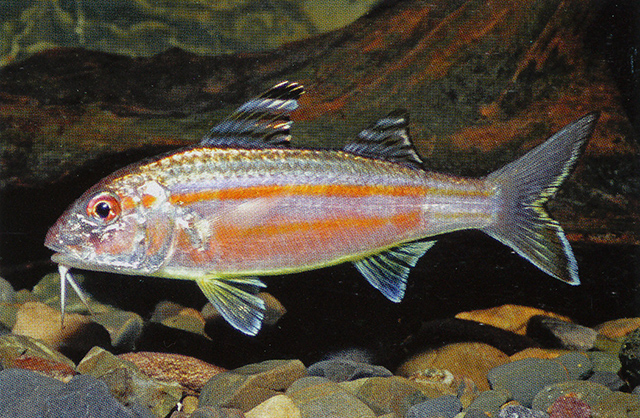
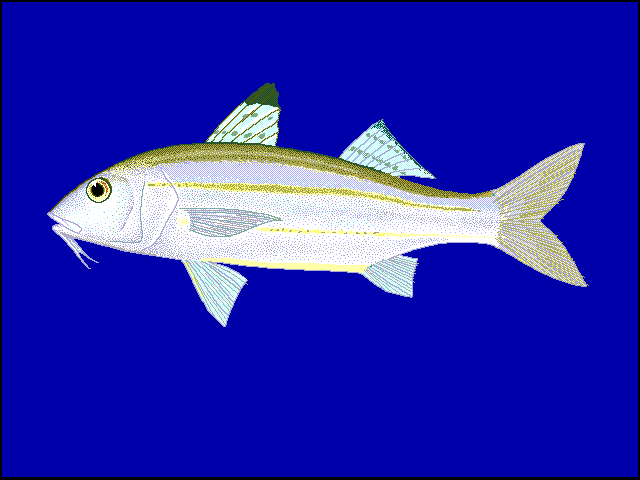
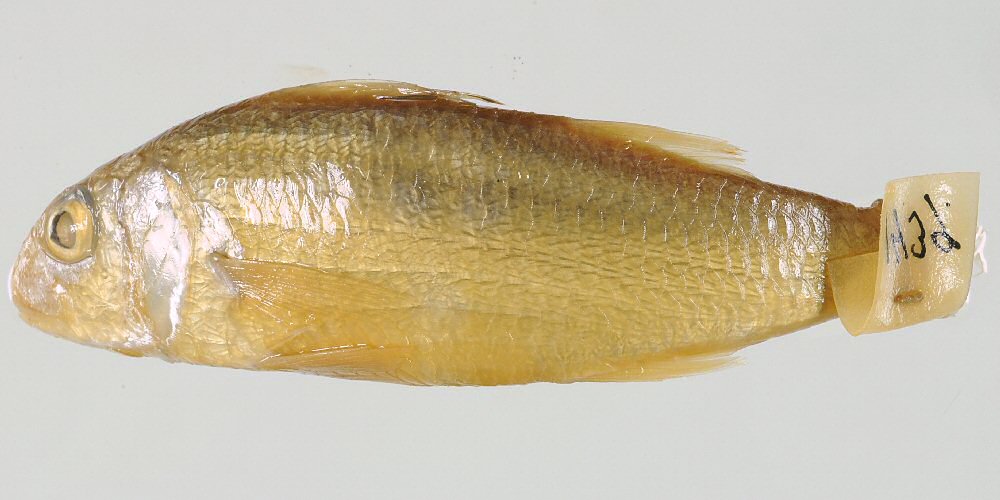
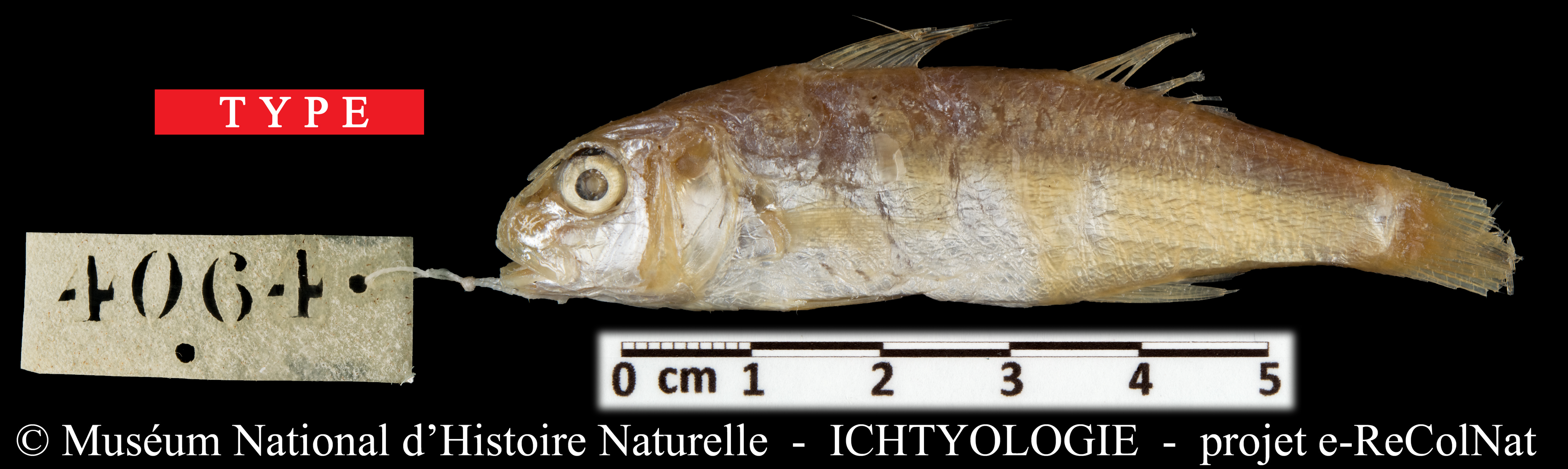
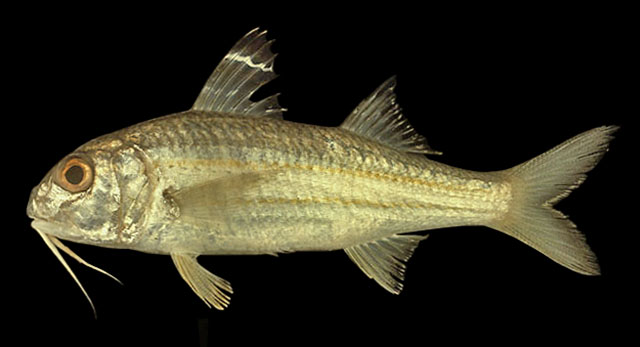
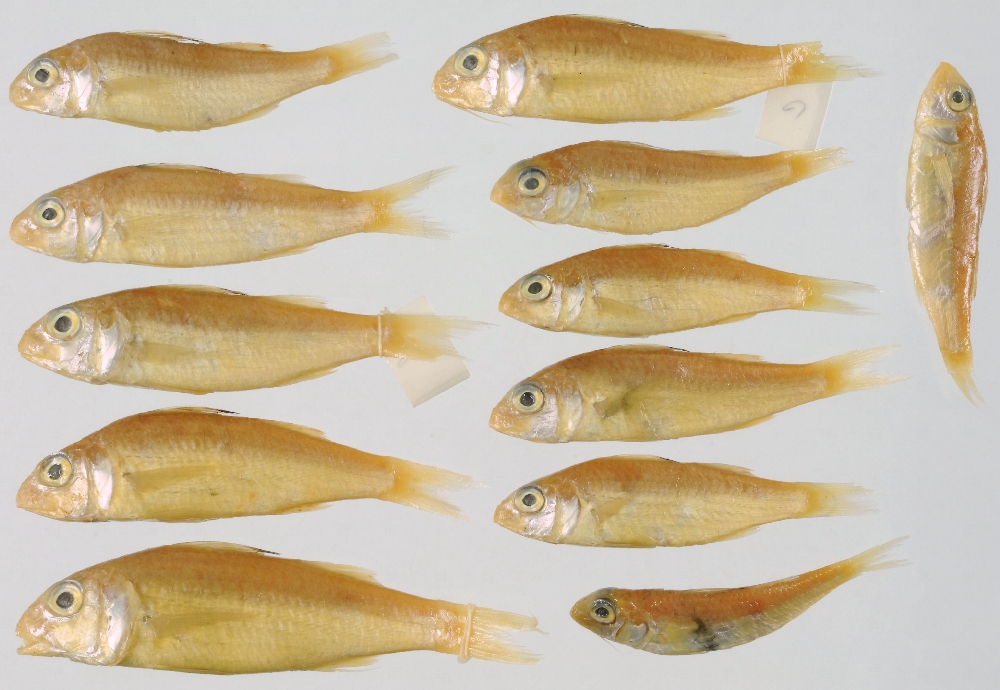
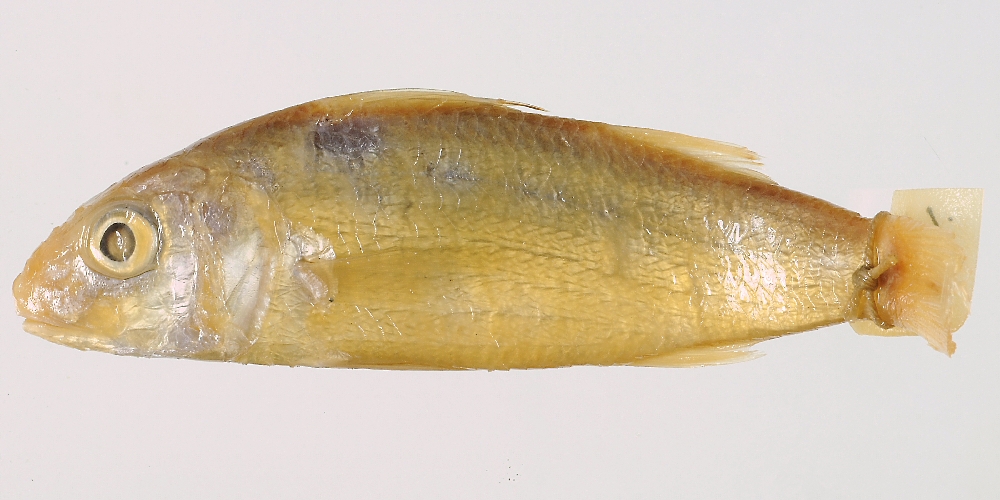
Dorsal spines (total): 8; Dorsal soft rays (total): 9; Anal spines: 1; Anal soft rays: 7. This species is distinguished by the following characters: D VIII,9; pectoral fins 15-16; gill rakers 7-8 + 19-21 = 27-28; lateral line scales 34-37; body depth at first dorsal-fin origin 29-33% SL and at anus 25-27% SL; caudal-peduncle depth 11-12% SL; maximum head depth 23-25% SL; head depth through eye 18-20% SL; head length 29-30%SL; orbit length 7.4-8.7% SL; upper jaw length 11-13% SL; barbel length 17-21% SL; caudal-fin length 27-30% SL; anal-fin height 16-18% SL; pelvic-fin length 20-22% SL; pectoral-fin length 24-26% SL; first dorsal-fin height 23-26% SL; second dorsal-fin height 17-18% SL; no bars on caudal-fin lobes; yellowish lower lobe base, grey on upper lobe (some of the caudal-fin lobe pigmentation retained when preserved, including inner margin of fin lobes); 2 yellow body stripes, 1 mid-lateral body from operculum to caudal-fin base (both faintly retained in preserved fish); white barbels; body dorsally pale brown and ventrally white (pale brown with some reddish or darker brown area at mid-body in preserved fish) (Ref. 82903).

Common Names


  • Dagbreek-bokvis
  • Ubakan
  • Hamer
  • Sultan Ibrahim
  • Ek-ek
  • Agingoy
  • Remoliete
  • Saminayon
  • Tiaw
  • Timhungan
  • Kwo-war
  • Kyoe-war
  • Nga-moat-seik
  • Bud-bod
  • Timbungan
  • Saramulyete
  • Timbugan
  • Escuedo
  • Hagiyus
  • Timbongan
  • Beach goatfish
  • Goat fish
  • Goatfish
  • Sulphur goat fish
  • Sulphur goatfish
  • Sulphur goatfish
  • Sulphur goatfish
  • Sulphur goatfish
  • Sulphur goatfish
  • Sulphur goatfish
  • Sunrise goatfish
  • Sunrise goatfish
  • Sunrise goatfish
  • Sunrise goatfish
  • Sunrise goatfish
  • Yellow goat fish
  • Yellow goatfish
  • Yellow goatfish
  • Yellow goatfish
  • Yellow goldfish
  • Yellow-goatfish
  • Kollane merisultan
  • Ki
  • Rouget-souris aurore
  • Rouget-souris aurore
  • Rouget-souris aurore
  • Cheeri
  • Chiri
  • \u0a9a\u0ac0\u0ab0\u0ac0
  • Henos
  • Salmonete
  • Balaki
  • Malmot
  • Kohaku-himeji
  • Mebuto-kandari
  • Kakunir
  • Kunir
  • Kuniran
  • Timbungan
  • Saramulyete
  • \uba39\uc904\ucd09\uc218
  • Ubakan
  • Timbungan
  • Bandang janggut
  • Biji nangka
  • Biji nangka biasa
  • Butir nangka
  • Kunir
  • Lebai
  • \u56db\u7dda\u7dcb\u9bc9
  • \u56db\u7ebf\u7eef\u9ca4
  • \u79cb\u59d1
  • \u987b\u54e5
  • \u9ec3\u5e36\u7dcb\u9bc9
  • \u9ec3\u5e36\u7dcb\u9bc9
  • \u9ec4\u5e26\u7eef\u9ca4
  • Piao
  • Chidi
  • Chiri Rana
  • \u091a\u093f\u0926\u0940
  • \u091a\u093f\u0930\u0940 \u0930\u093e\u0928\u093e
  • Boz-mahi-e-zard-jameh
  • Barwena z\u00f3lta
  • Salmonete aurora
  • \u0441\u0443\u043b\u0442\u0430\u043d\u043a\u0430 \u0436\u0435\u043b\u0442\u0430\u044f
  • Fangalaato
  • Salmonete aurora
  • Salmonete
  • Talingo-tingo
  • Mkundaji
  • Sonyo
  • Amarilis
  • Bisugo
  • Dalagang bukid
  • Kapon
  • Manitis
  • Putikan
  • Saging-saging
  • Salmonito
  • Salmunete
  • Saramuliete
  • Saramulyete
  • Saramulyeteng hato
  • Saramulyeteng hulik
  • Saramulyeteng tagisi
  • Tuyo
  • Yangutan
  • Sennagarai
  • Sennagarai
  • \u0b9a\u0bc6\u0ba8\u0bcd\u0ba8\u0b95\u0bb0\u0bc8
  • \u0b9a\u0bc6\u0ba9\u0bcd\u0ba9\u0bbe\u0b95\u0bb1\u0bc0
  • Rahtee-goolirindi
  • \u0c30\u0c3e\u0c24\u0c40 \u0c17\u0c42\u0c32\u0c3f\u0c30\u0c3f\u0c02\u0c26\u0c3f
  • Phaelueang
  • \u0e41\u0e1e\u0e30\u0e40\u0e2b\u0e25\u0e37\u0e2d\u0e07
  • Maile akoa
  • C\u00e1 Ph\u00e8n hai s\u1ecdc
  • Bayahao
  • Bayhao
  • Malitubong
  • Salmonete
  • Dumpilas
  • Hinok
  • Intsek-intsek
  • Ti-aw
  • Tiao
  • Taxonomic Hierarchy


    Kingdom: Animalia

    Phylum: Chordata

    Class: Teleostei

    Order: Mulliformes

    Family: Mullidae

    Genus: Upeneus

    Species: Upeneus sulphureus Cuvier, 1829

    Climate Zone


  • Tropical
  • Biology


    Found in coastal waters, entering estuaries (Ref. 30573). Sandy-muddy bottom (Ref. 43239). Forms schools (Ref. 5213). Has appearance of sillaginids when schooling (Ref. 48636).

    Habitat


    brackish

    Conservation Status


    Least Concern

    Threat to Humans


    Harmless

    Ask me about the species
    Ask about
    Upeneus sulphureus Cuvier, 1829