Upeneus pori Ben-Tuvia & Golani, 1989
Description
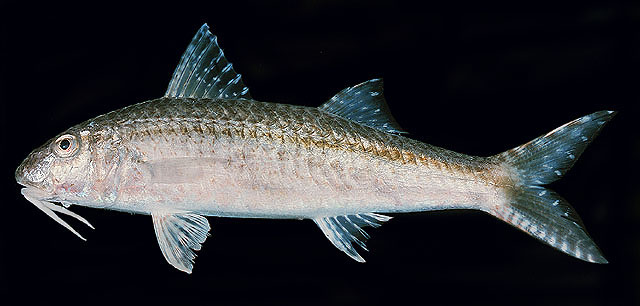
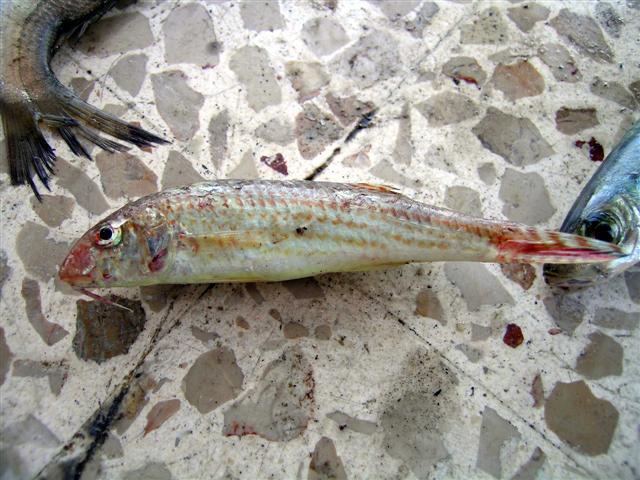
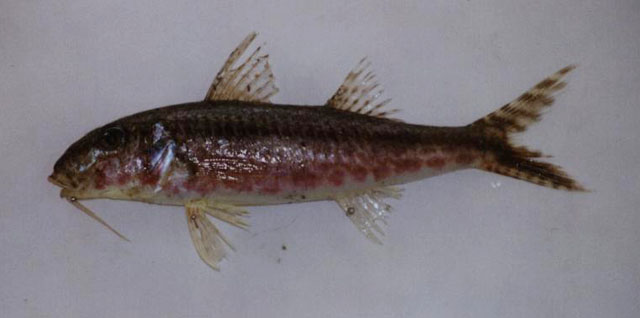
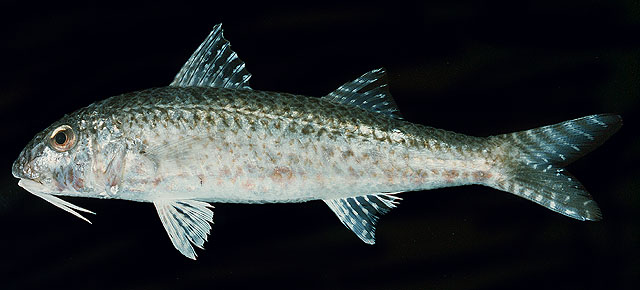
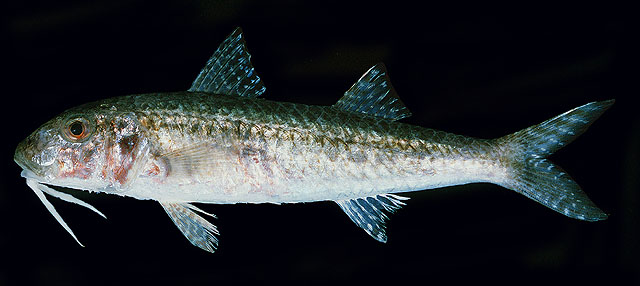
Dorsal spines (total): 7; Dorsal soft rays (total): 9. This species is distinguished by the following characters: D VII,9; pectoral fins 13-15; gill rakers 7-8 + 18-21 = 25-29. Measurements as % SL: body depth at first dorsal fin origin 21-24, at anus 18-22; caudal-peduncle depth 8.8-10; maximum head depth 18-21; head depth through eye 14-16; head length 26-380; snout length 9.5-12; orbit length 5.8-7.8; upper jaw length 9.9-12; barbel length 16-19; caudal-fin length 27-29; anal-fin height 14-17; pelvic-fin length 19-23; pectoral-fin length 18-22; first dorsal-fin height 18-22 with dorsal spines proportionally decreasing in height; second dorsal-fin height 13-17. Caudal fin of adults with 11-16 total bars, upper caudal-fin lobe with 5-6 reddish or red-brown bars, with 4-5 (rarely 3) bars distally from fork, and 1 bar close to lobe base, mostly narrower than the pale interspaces between bars; the ventral half side of lower lobe with 5-9 red, red-brown or grey bars, extending to a broad red, brown or dark-grey stripe along middle of lobe; inner, dorsal third of lower caudal-fin lobe with 3-4 red, red-brown or grey bars; when preserved the caudal-fin bar pigmentation often retained; fresh fish sometimes with a faint or (in life) conspicuous red or red-brown mid-lateral stripe from snout through eye to caudal-fin base, not retained in preservative. Colouration: barbels are white or creamy white in fresh fish; head and body colour white, pale grey or pale yellow ventrally and red brown or grey dorsally; the belly is white; when preserved the is body pale brown ventrally and often dorsally darkened (Ref. 123119).
Taxonomic Hierarchy
Kingdom: Animalia
Phylum: Chordata
Class: Teleostei
Order: Mulliformes
Family: Mullidae
Genus: Upeneus
Species: Upeneus pori Ben-Tuvia & Golani, 1989
Climate Zone
Biology
Occurs in shallow littoral zone to 52 m depth (Ref. 123119); shallow dpeth from Khalaf et al., 1997 (Ref. 48643). Feeds on hypobenthic invertebrates, mainly crustaceans and, to a lesser extent, polychaetes, which they detect with their barbels (Ref. 43448).
Habitat
demersal
Conservation Status
Least Concern
Threat to Humans
Harmless
Upeneus pori Ben-Tuvia & Golani, 1989