Pseudocaranx wrighti (Whitley, 1931)

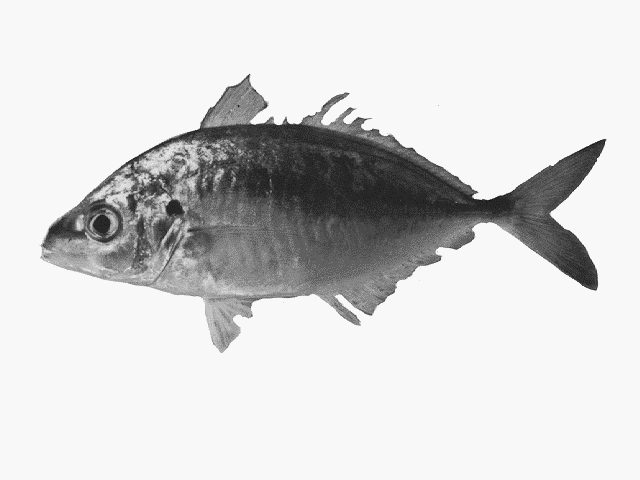
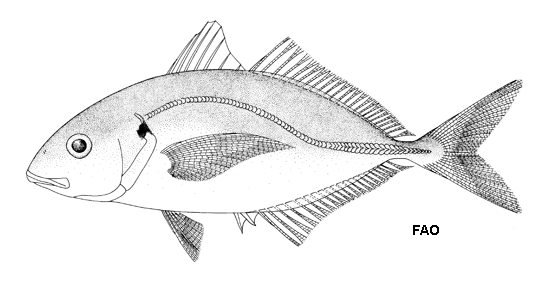
Description
Dorsal spines (total): 9; Dorsal soft rays (total): 22 - 26; Anal spines: 3; Anal soft rays: 18 - 22; Vertebrae: 24. This species is distinguished by the following characters: posterior margin of upper jaw canted posteroventrally; the lachrymal and expanded part of the maxilla densely covered with scales; a well-defined opercular spot, nearly solid black and approximately the diameter of the pupil; caudal vertebra 14; gill rakers, upper 10-15, lower 24-28, total 35-43; lateral line with 37-48 scales in the curved portion and 24-35 posterior scutes; never developing a yellow mid-lateral body stripe; second dorsal and anal fins transparent or dusky green, no yellow pigmentation. (Ref. 76781).
Common Names
Taxonomic Hierarchy
Kingdom: Animalia
Phylum: Chordata
Class: Teleostei
Order: Carangiformes
Family: Carangidae
Genus: Pseudocaranx
Species: Pseudocaranx wrighti (Whitley, 1931)
Climate Zone
Biology
Adults occur over sand and seagrass (Ref. 26068) in coastal waters including estuaries (Ref. 9563).
Habitat
brackish
Conservation Status
Least Concern
Threat to Humans
Harmless