Prosopium cylindraceum (Pennant, 1784)
Description
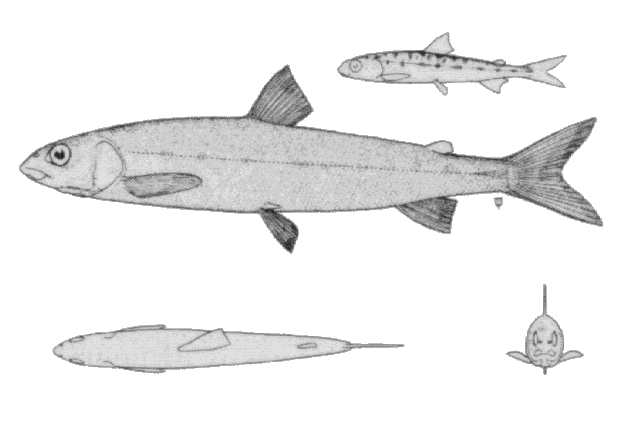
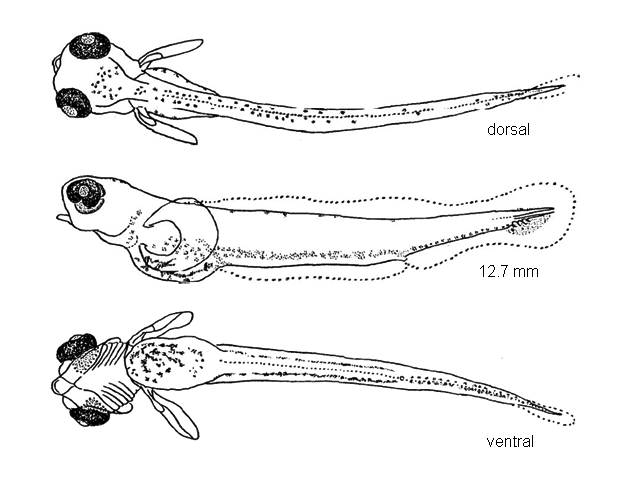
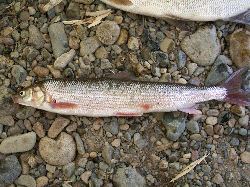
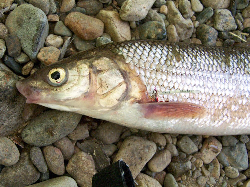
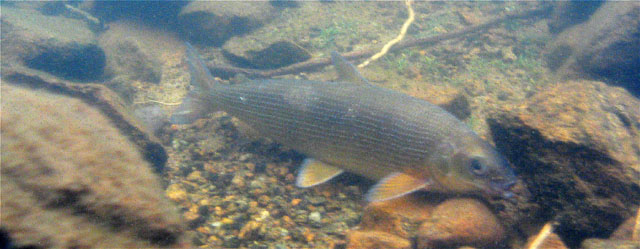
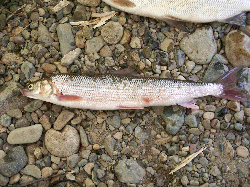
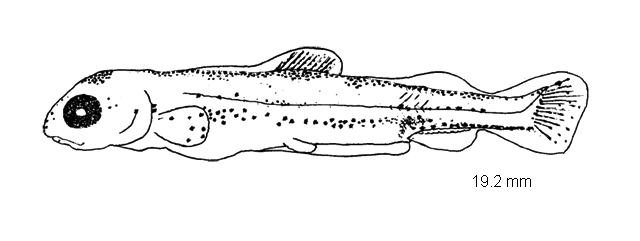
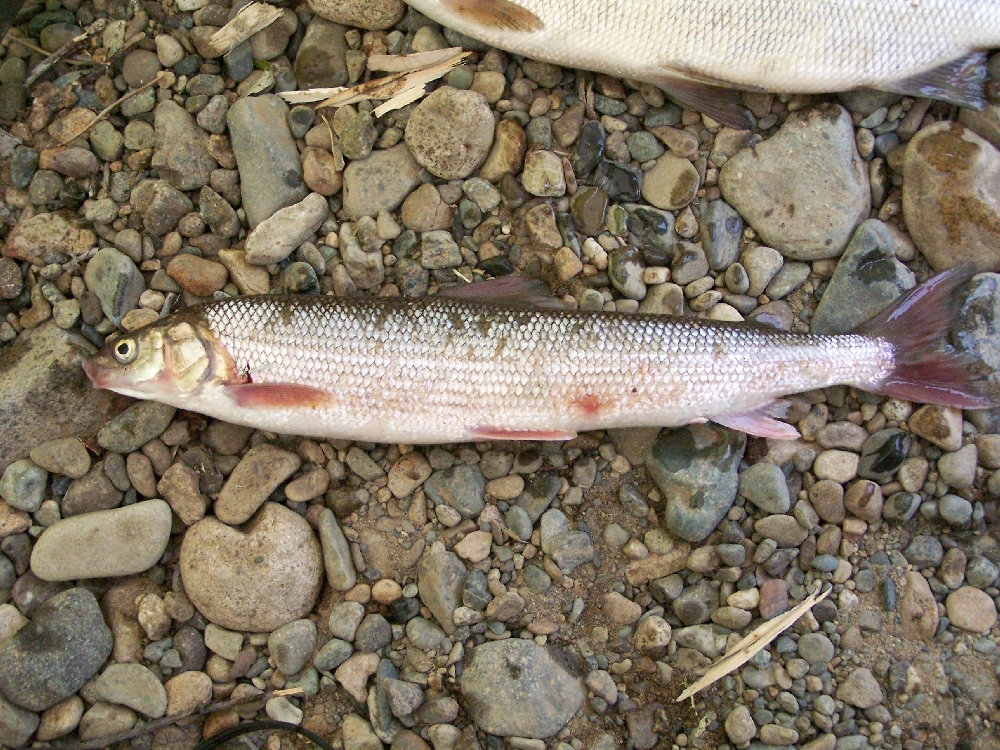
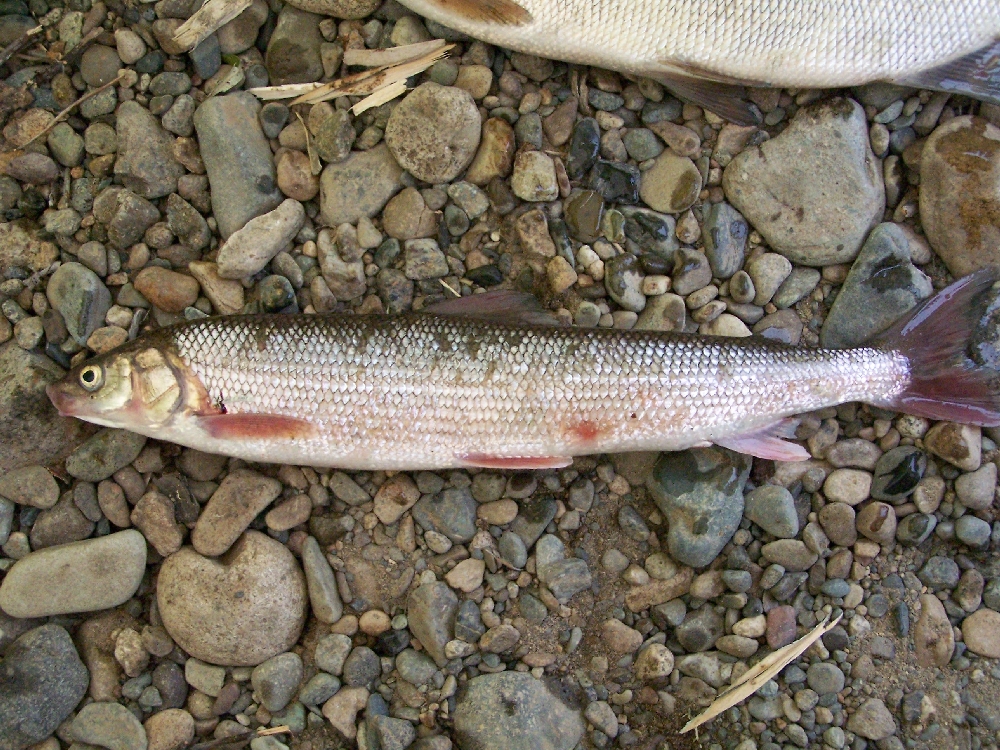
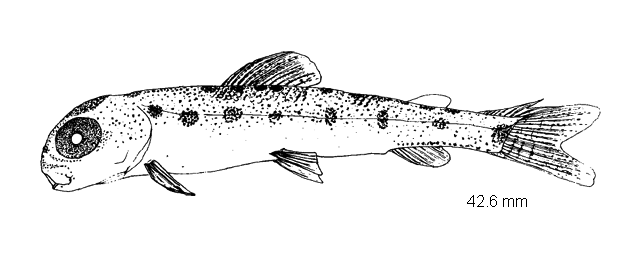
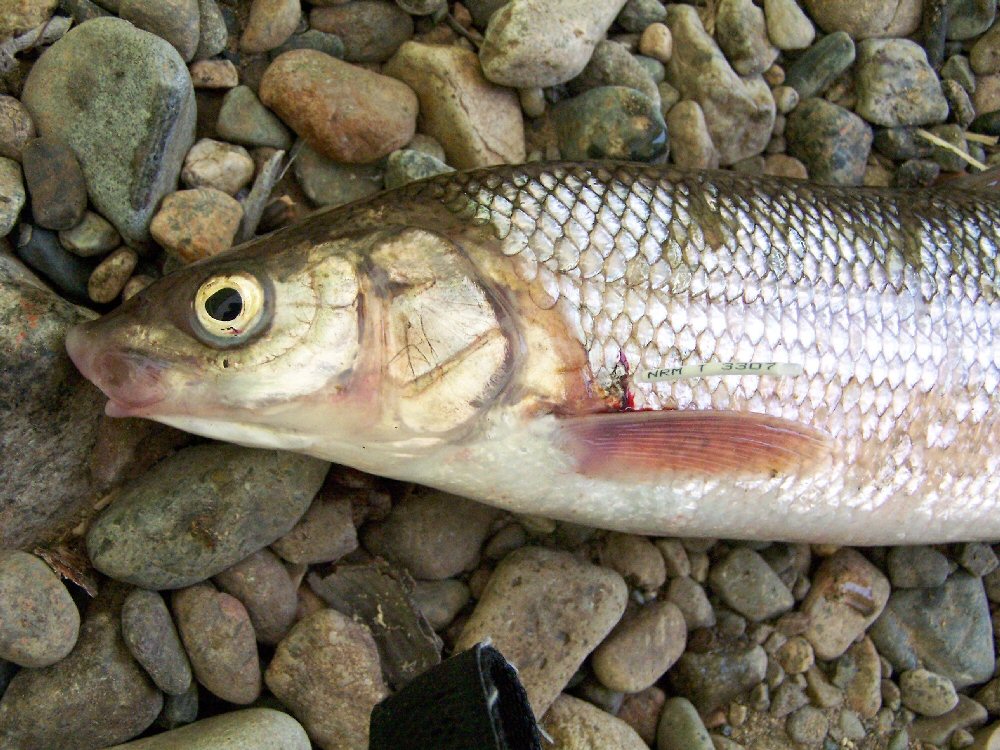
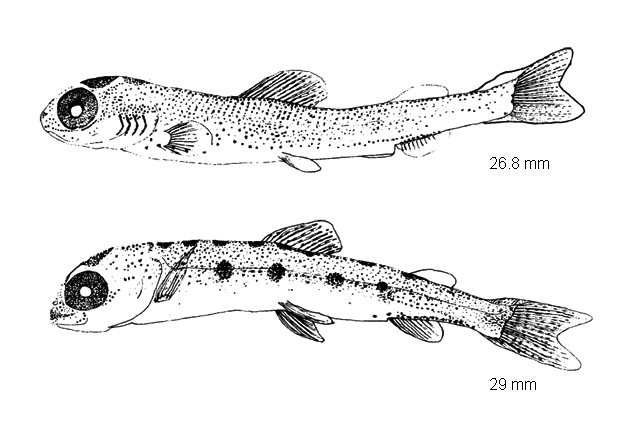
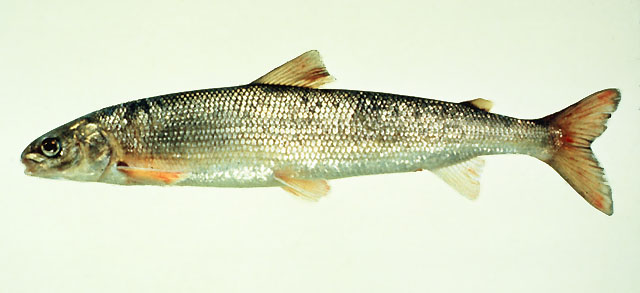
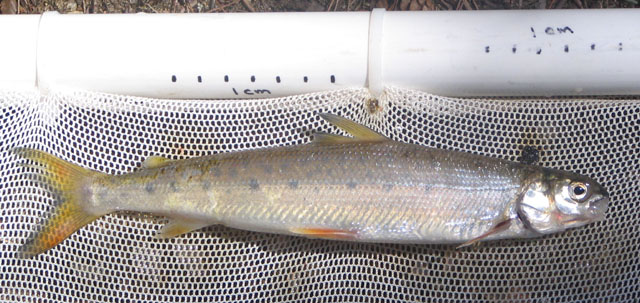
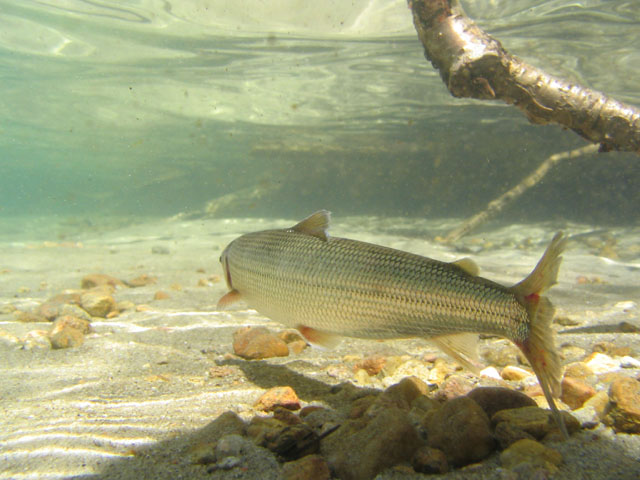
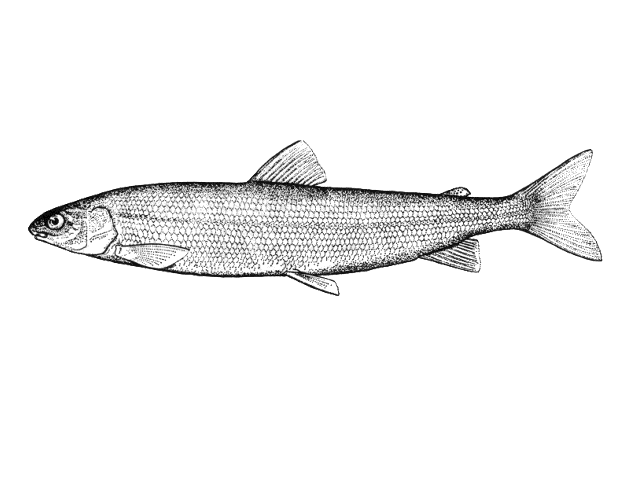
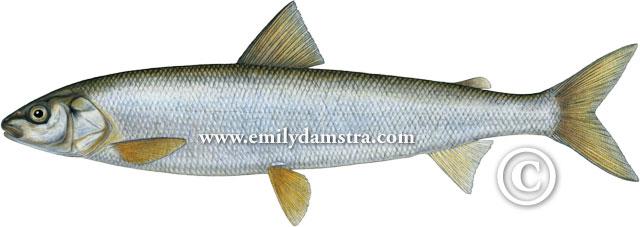
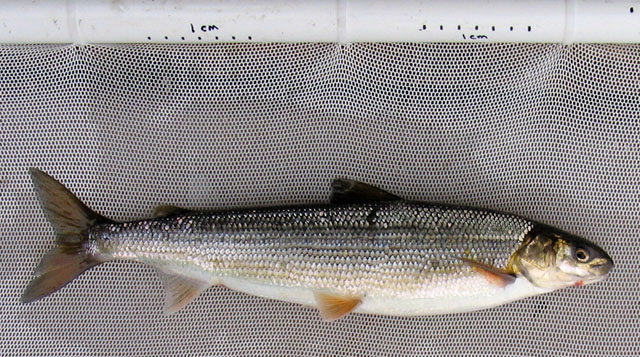
Dorsal spines (total): 0; Dorsal soft rays (total): 11 - 15; Anal spines: 0; Anal soft rays: 10 - 13. Body slender, elongate, almost cylindrical in cross section, posteriorly somewhat compressed laterally, greatest depth in front of the dorsal fin. Head relatively short; eye moderate, its diameter less than snout length; snout pointed, "pinched" or compressed laterally, rounded in lateral view, a single flap of skin present between the nostrils; mouth small, ventral in position, overhung by snout; maxillaries extending posteriorly almost to anterior margin or eye in adults. This species has more color than most coregonids. Overall coloration of adults almost silvery, silvery white below. Scales specially on back, with well-defined, dark pigmented borders, making them conspicuous. Pectoral fins are amber in color, slight amber tint also to pelvic and anal fins. Pectoral fins take on an orange tint during spawning, the pelvic and anal fins also to a lesser extent. the adipose fin is usually brown spotted, particularly in specimens from central and eastern Canada. Two or more longitudinal rows of black spots are present on the sides of young specimen.
Common Names
Taxonomic Hierarchy
Kingdom: Animalia
Phylum: Chordata
Class: Teleostei
Order: Salmoniformes
Family: Salmonidae
Genus: Prosopium
Species: Prosopium cylindraceum (Pennant, 1784)
Climate Zone
Biology
Inhabits shallow areas of lakes and clear streams and rarely enters brackish water (Ref. 5723, 86798). Also in rivers with swift current and stony bottom. Migration is limited to movements associated with spawning (Ref. 27547). Epipelagic (Ref. 58426). Feeds on benthic invertebrates and occasionally on fishes (Ref. 1998) and fish eggs (Ref. 593). One specimen taken from a depth of 218.9 m in eastern Lake Superior, off Grand Marais, Michigan (Ref. 1998).
Habitat
brackish
Conservation Status
Not Evaluated
Threat to Humans
Harmless
Prosopium cylindraceum (Pennant, 1784)