Prosopium coulterii (Eigenmann & Eigenmann, 1892)
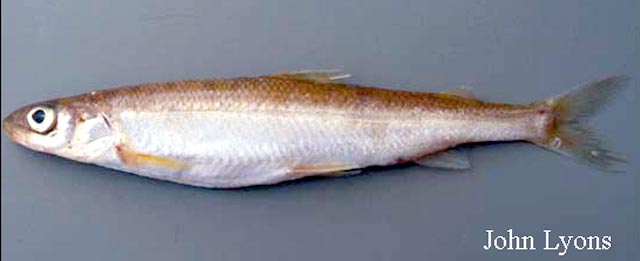
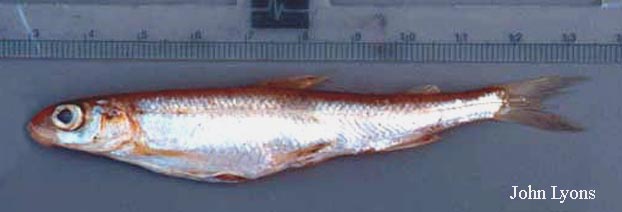
Description
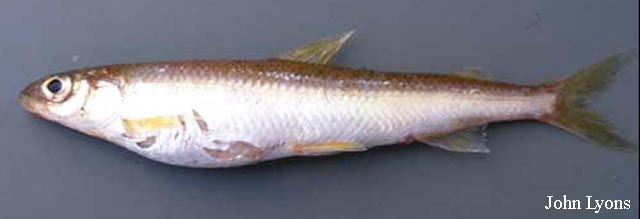
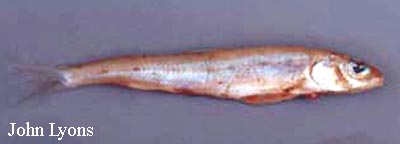
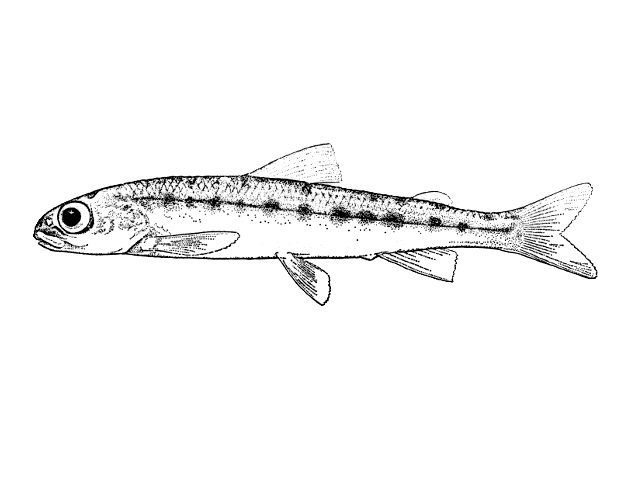
Dorsal spines (total): 0; Dorsal soft rays (total): 10 - 13; Anal spines: 0; Anal soft rays: 10 - 14; Vertebrae: 49 - 55. Body elongate, almost cylindrical. Head elongate, its length slightly greater than body depth; eye relatively large, its diameter greater than snout length; snout bluntly rounded, overhanging mouth, not obviously pointed, a single flap of skin present between nostrils. Nuptial tubercles developed in both males and females, but more conspicuous in males, and occur on top of head, on scales on back and sides, and on paired fins. Body is brownish above, silvery on sides and white below. Dorsal, caudal, and pectoral fins usually clear, anal and pelvic whitish and immaculate, a faint dark spot sometimes present on base of caudal fin. A series of 12 - 14 similar spots present along the midline of the back, and 7 - 14 dark, round or oval parr marks with diffuse borders present along the lateral line of young and sub adults, although some Alaskan forms retain parr marks even on largest fish.
Common Names
Taxonomic Hierarchy
Kingdom: Animalia
Phylum: Chordata
Class: Teleostei
Order: Salmoniformes
Family: Salmonidae
Genus: Prosopium
Species: Prosopium coulterii (Eigenmann & Eigenmann, 1892)
Climate Zone
Biology
Inhabits lakes and rivers of mountainous areas (Ref. 1998). Feeds mainly on crustaceans and aquatic insect larvae (Ref. 1998). Minimum depth reported from Ref. 1998.
Habitat
benthopelagic
Conservation Status
Not Evaluated
Threat to Humans
Harmless
Prosopium coulterii (Eigenmann & Eigenmann, 1892)