Pristiophorus japonicus Günther, 1870

Description
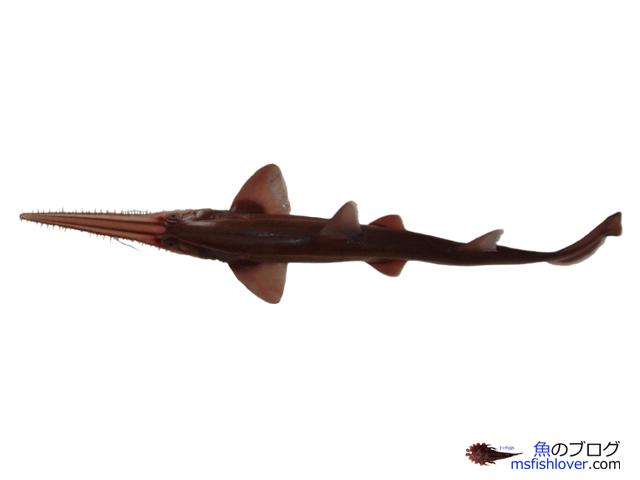
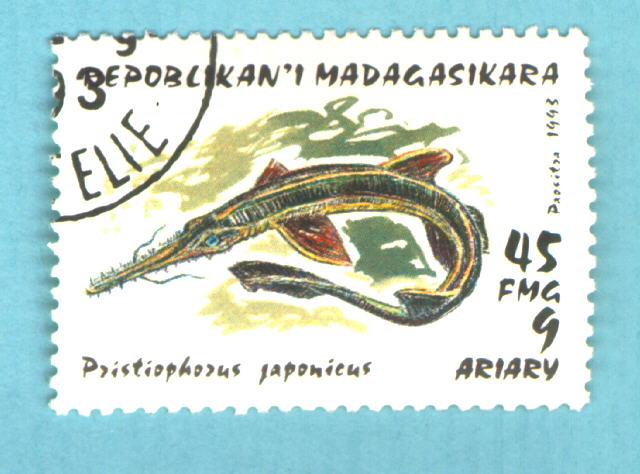
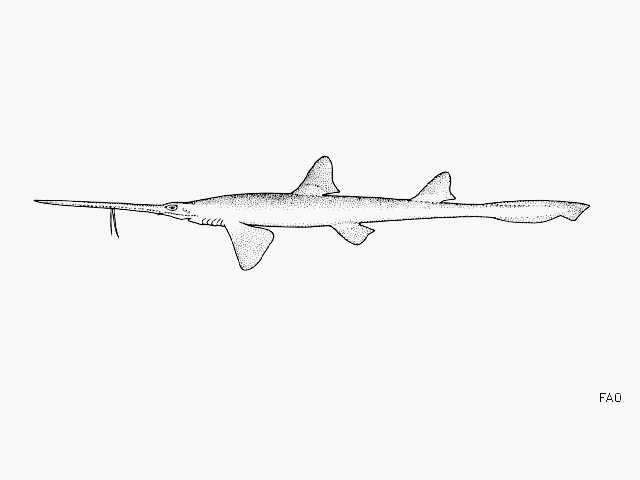
Pristiophorus japonicus has a long, narrow, and narrowly tapering rostrum (rostrum length is 26-29% of TL), distance from rostral tip to barbels about equal or slightly greater than distance from barbels to mouth (1:1.1-1.2); distance from rostral barbels to nostrils about equal to distance from nostrils to 1st gill slits. About 15-26 large rostral teeth on each side of the rostrum in front of the barbels, 9-17+ behind them; distance from mouth to nostrils 1.1-1.2 times internarial space. Tooth rows 34-58 in upper jaw. Dorsal and pectoral fins covered with denticles in large specimens. Lateral trunk denticles largely unicuspidate. First dorsal fin origin behind free rear tips of pectorals by eye length or more (Ref. 247). Caudal fin almost straight, with slender upper and lower lobes; pectoral well developed but are not ray-like (Ref. 6871).
Common Names
Taxonomic Hierarchy
Kingdom: Animalia
Phylum: Chordata
Class: Elasmobranchii
Order: Pristiophoriformes
Family: Pristiophoridae
Genus: Pristiophorus
Species: Pristiophorus japonicus Günther, 1870
Climate Zone
Biology
Lives on continental shelves and upper slopes on or near the bottom. Also found in coastal waters on sand or mud bottoms. Feeds on small bottom organisms using its barbels to poke the bottom with its snout. Ovoviviparous, with 12 young in a litter.
Habitat
demersal
Conservation Status
Least Concern
Threat to Humans
Harmless
Pristiophorus japonicus Günther, 1870