Platyrhina tangi Iwatsuki, Zhang & Nakaya, 2011


Description
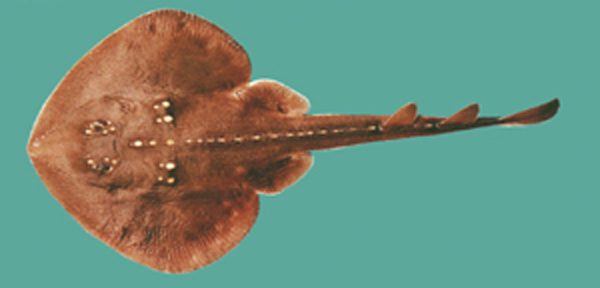
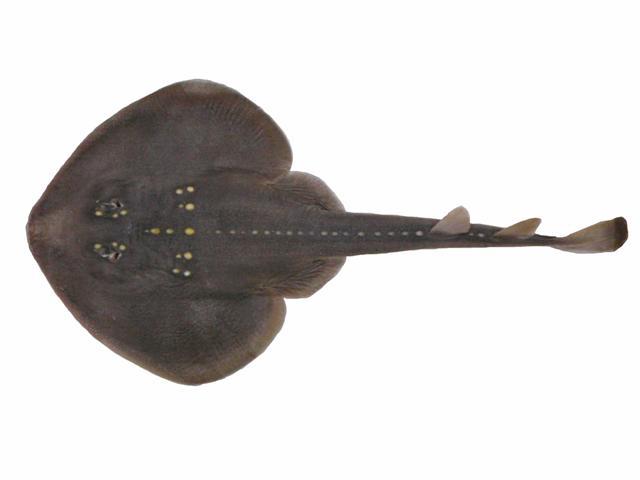
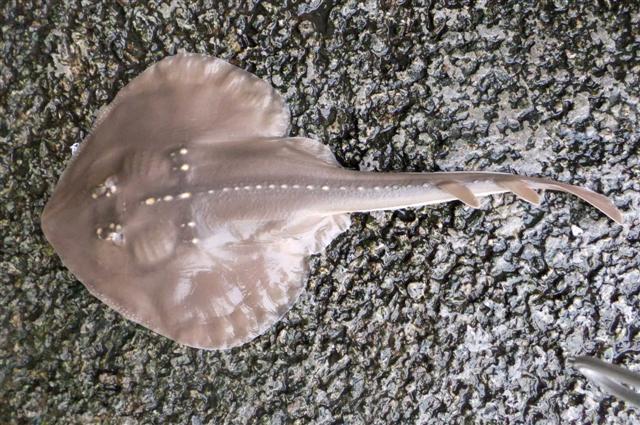
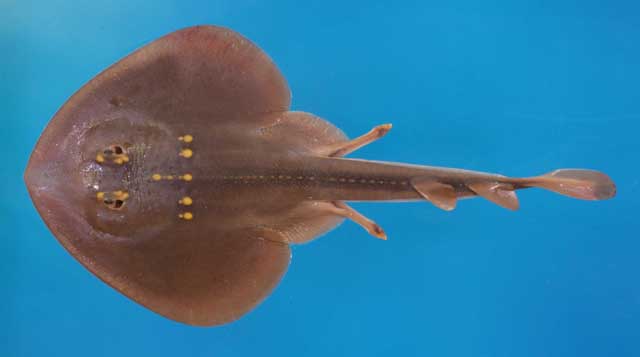
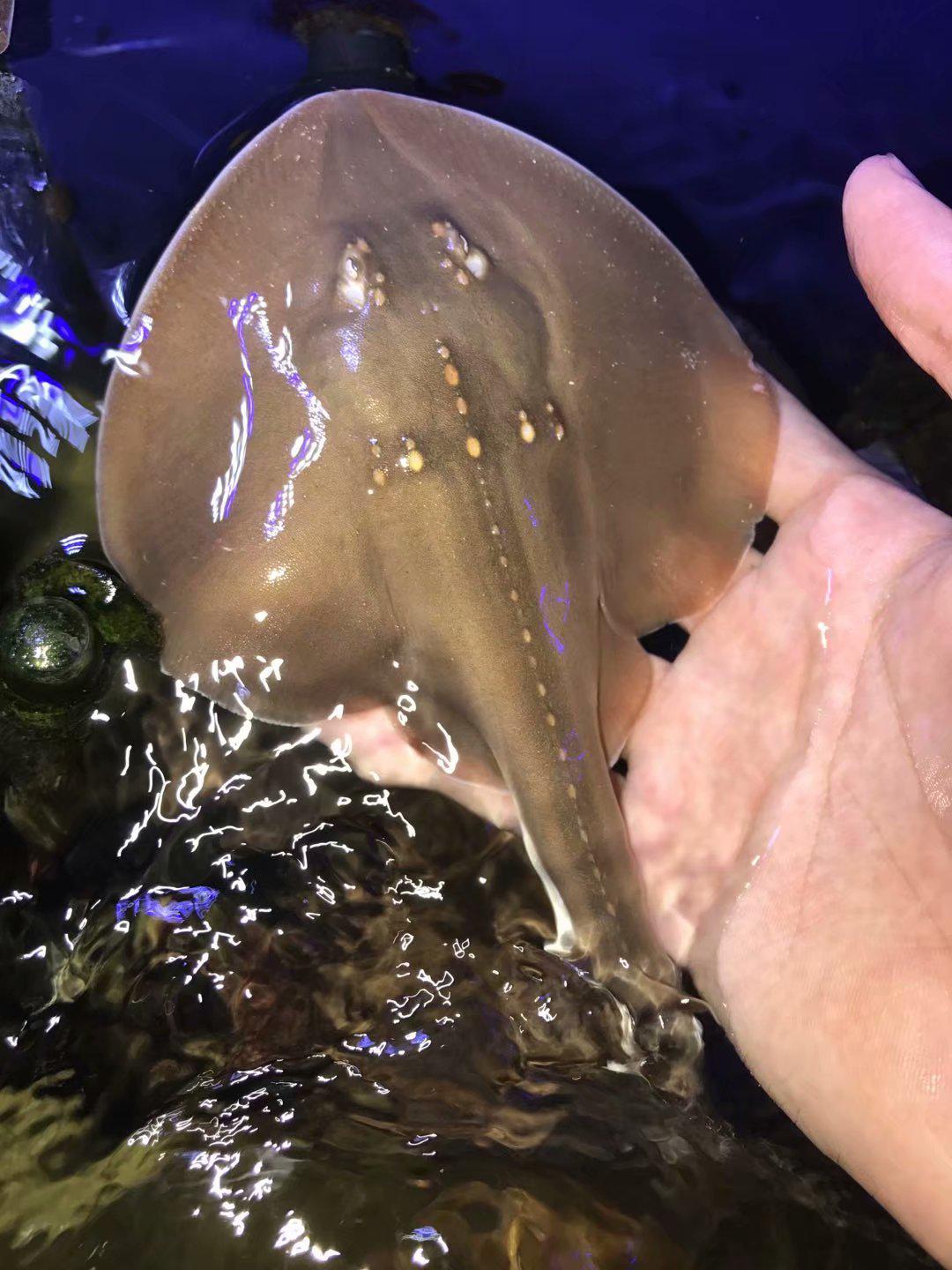
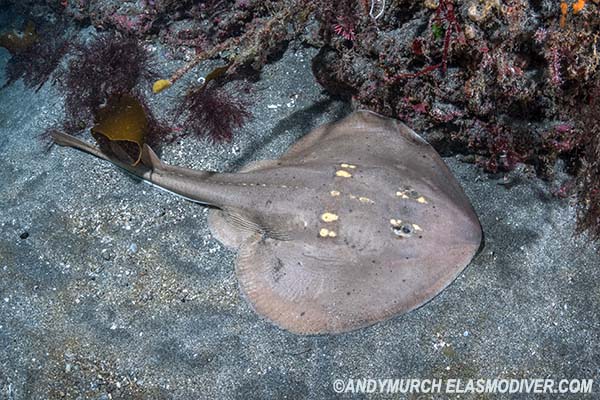
This species is distinguished from its congeners in having the following set of characters: a row of thorns (weakly hooked, sometimes tubercle-like) on mid-dorsum of tail; no thorns on the anterior part of scapular region; thorns on the orbital, nape and scapular regions encircled by light yellow or white pigment; dorsal surface covered with minute and some clearly larger dermal denticles (coarse to touch) (Ref. 86259).
Taxonomic Hierarchy
Kingdom: Animalia
Phylum: Chordata
Class: Elasmobranchii
Order: Torpediniformes
Family: Platyrhinidae
Genus: Platyrhina
Species: Platyrhina tangi Iwatsuki, Zhang & Nakaya, 2011
Climate Zone
Biology
From studies on vertebral centra, it has been suggested that females attain a greater asymptotic total length (55.58 cm TL) and grew more slowly than males (45.52 cm TL) (based on specimens from Ariake Bay, western Kyushu Island, Japan). The maximum ages observed were 5 years for males and 12 years for females. Furthermore, it was also reported that females reached sexual maturity at a greater size than males (total length at 50% sexual maturity: males, 39.3 cm; females, 42.1cm). Parturition occurred from August to November followed immediately by mating, ovulation and fertilization. Largest specimen yet recorded (USNM 51295, 68.0 cm TL, Tokyo, sex unknown) with the largest specimens examined and collected from the Hyuga Nada Sea to be 63.9 cm TL for female, and 52.5 cm TL for male; however, the species is likely to grow larger than ca. 70.0 cm TL according to local Miyazaki fishermen (Ref. 86259).
Habitat
neritic
Conservation Status
Vulnerable
Threat to Humans
Harmless
Platyrhina tangi Iwatsuki, Zhang & Nakaya, 2011