Pegasus volitans Linnaeus, 1758
Description
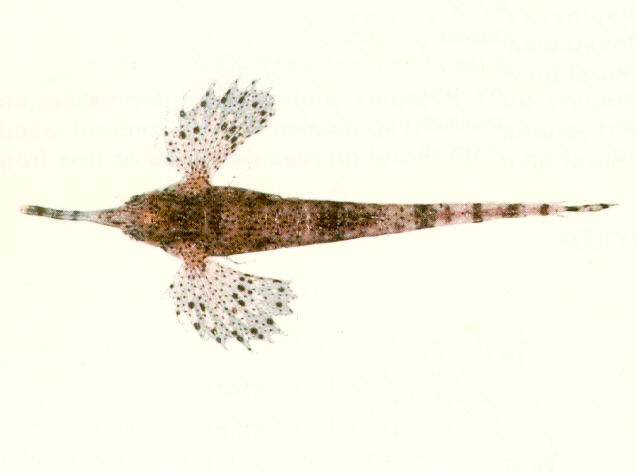
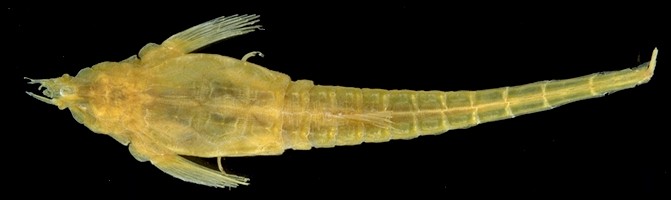
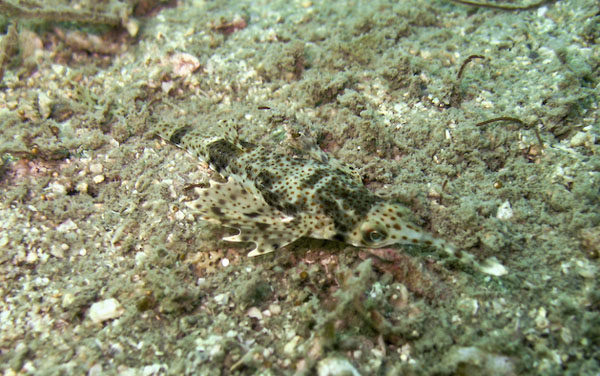
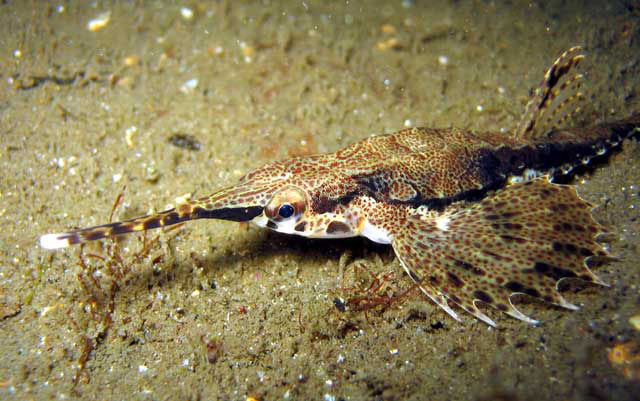
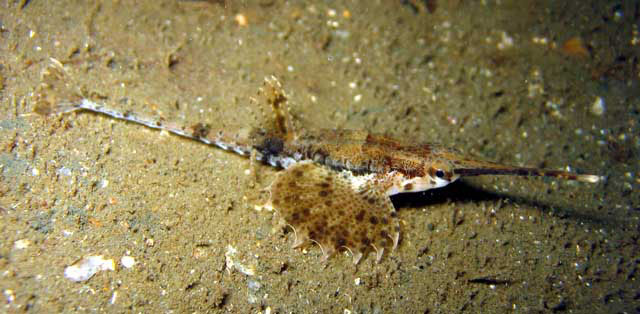
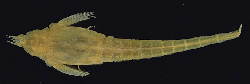
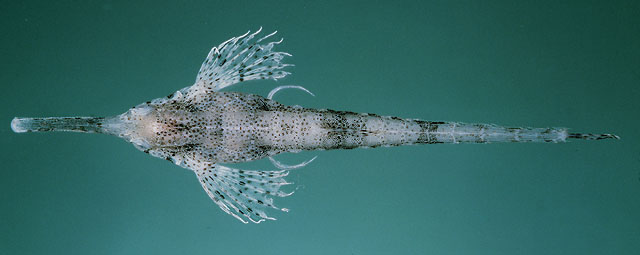
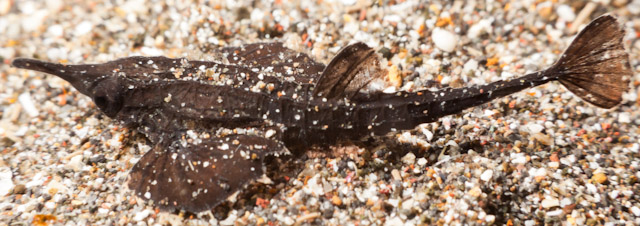
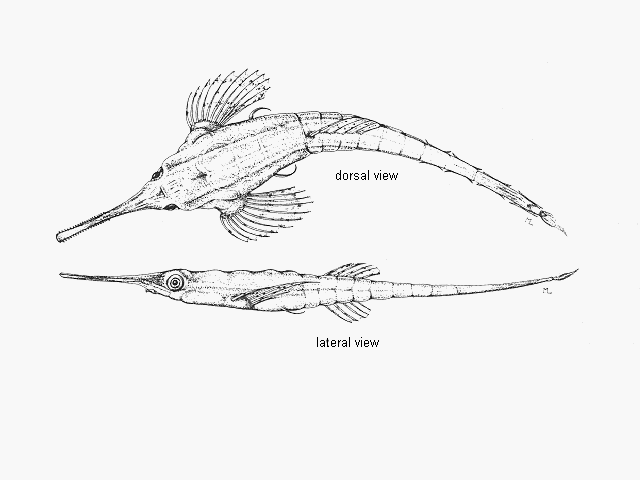
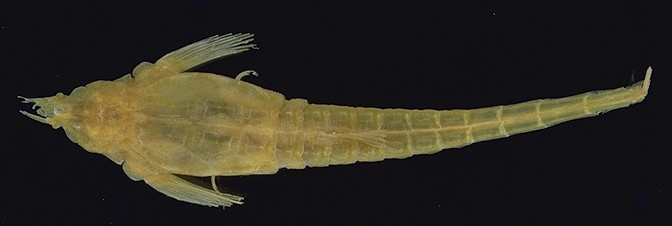
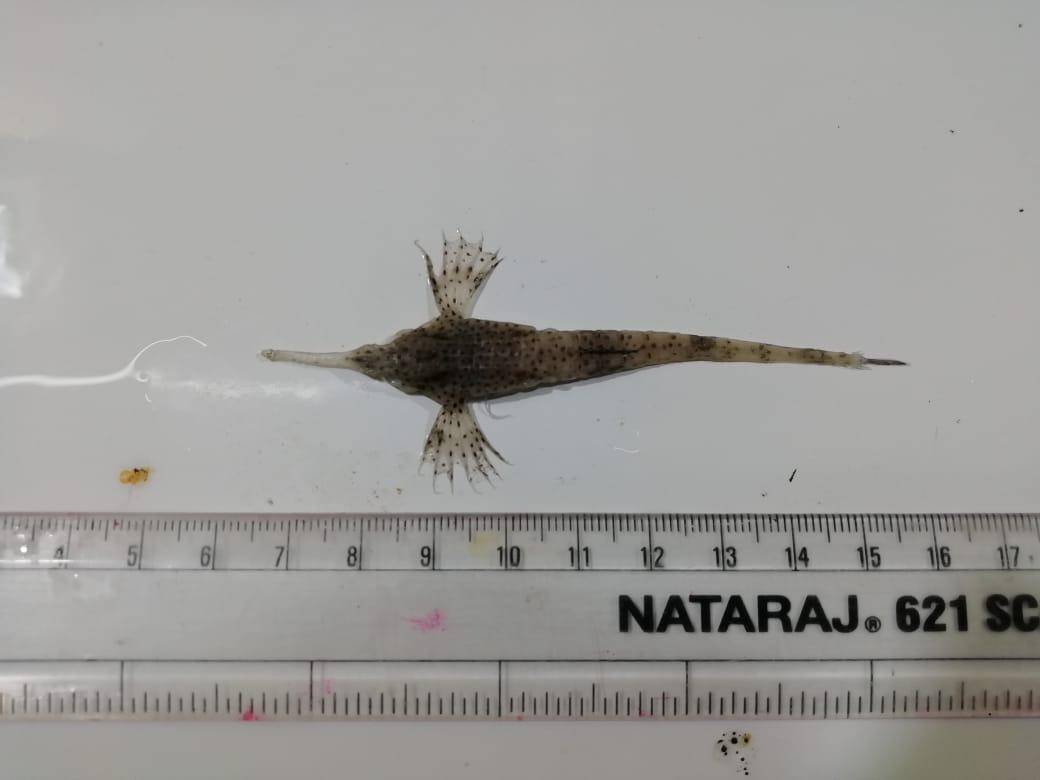
Dorsal spines (total): 0; Dorsal soft rays (total): 5; Anal spines: 0; Anal soft rays: 5; Vertebrae: 21. Body light brown or olive to dark brown-black dorsally and laterally, lighter ventrally. Tubercles absent on surface of carapace; no scales on orbit; distal margin of dorsal and anal fins perpendicular to horizontal axis of body. 4 pairs of dorsolateral body plates; 5 pairs of ventrolateral body plates; tail rings 12, anteriormost 9 mobile, last 3 fused; a lateral pair of posteriorly directed spines on terminal tail rings; suborbital shelf convex obscuring eye from ventral view; deep pits absent. Rostrum monomorphic and spatulate.
Common Names
Taxonomic Hierarchy
Kingdom: Animalia
Phylum: Chordata
Class: Teleostei
Order: Dactylopteriformes
Family: Pegasidae
Genus: Pegasus
Species: Pegasus volitans Linnaeus, 1758
Climate Zone
Biology
A rare species (Ref. 4264) collected from muddy and sandy bottoms of estuaries and bays. Known to 'walk' over the bottom using its tentacular pelvic fins. Juveniles expatriate to tropical regions; adults mainly found in muddy estuaries where they pair. Sometimes they are seen partly buried but also feed during the day. Sometimes found floating on the surface (Ref. 48635). Sometimes occurs in seagrass areas (Ref 90102). Feeds on small benthic organisms (Ref. 68964).
Habitat
brackish
Conservation Status
Data deficient
Threat to Humans
Harmless
Pegasus volitans Linnaeus, 1758