Pegasus lancifer Kaup, 1861

Description
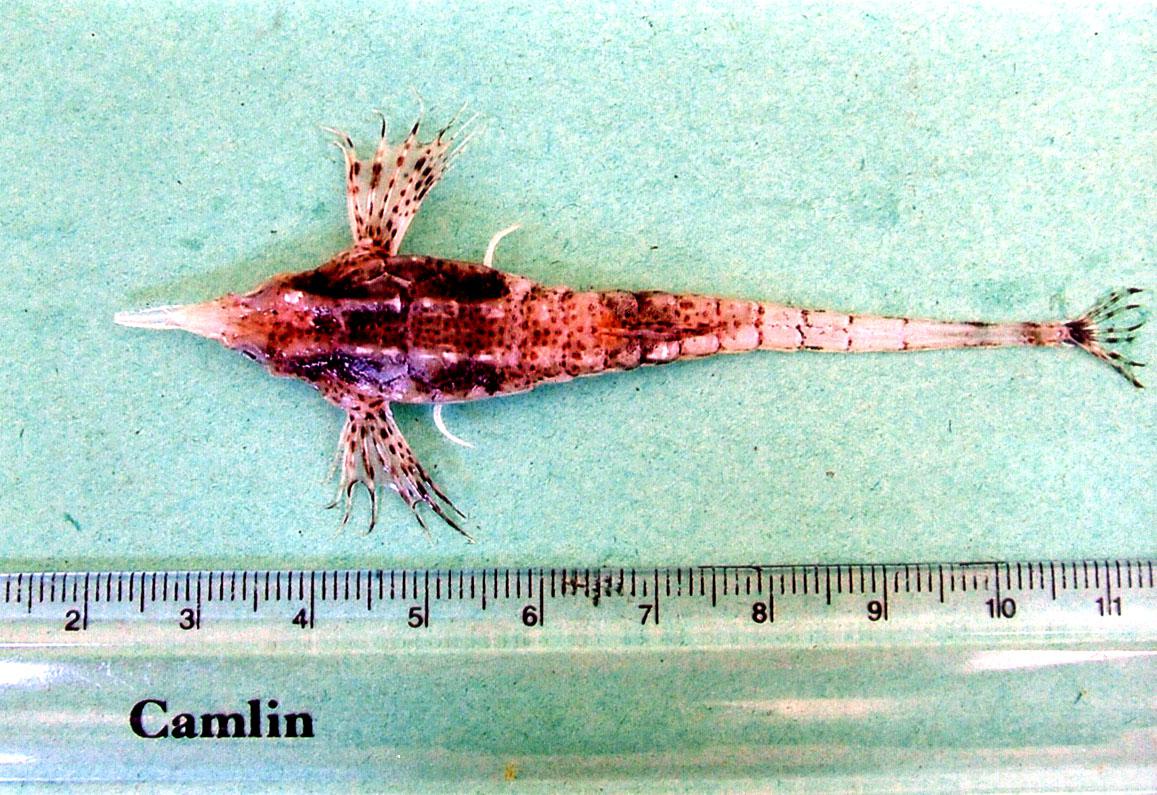
Dorsal spines (total): 0; Dorsal soft rays (total): 5; Anal spines: 0; Anal soft rays: 5; Vertebrae: 22. Body light to dark brown, olive or blue dorsally and laterally, light brown ventrally. Tail rings 14, anteriormost 7 mobile, remaining 7 fused; terminal tail rings with dorsal and ventral pairs of posteriorly directed spines; rostrum square in cross section; interpectoral plate absent. 4 pairs dorsolateral body plates; 5 pairs ventrolateral body plates; suborbital shelf convex, obscuring eye from ventral view; deep pits on dorsal surface of head and within interorbital depression absent. Orbit with small scales.
Common Names
Taxonomic Hierarchy
Kingdom: Animalia
Phylum: Chordata
Class: Teleostei
Order: Dactylopteriformes
Family: Pegasidae
Genus: Pegasus
Species: Pegasus lancifer Kaup, 1861
Climate Zone
Biology
A benthic species found inshore of the continental shelf in muddy, silty and sandy bottoms, usually with seagrass; intertidal to 50 m depth (Ref. 75154). Large numbers of individuals are known to congregate in the shallows of estuaries. The species is capable of burying itself in the sediment and change colors to match the background.
Habitat
brackish
Conservation Status
Least Concern
Threat to Humans
Harmless
Pegasus lancifer Kaup, 1861