Parupeneus margaritatus Randall & Guézé, 1984

Description
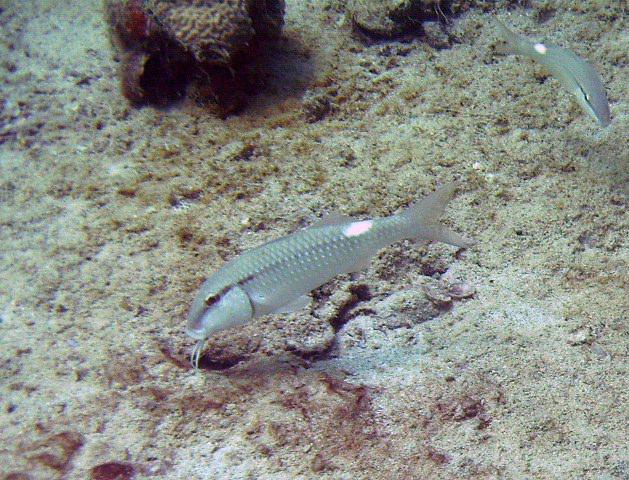
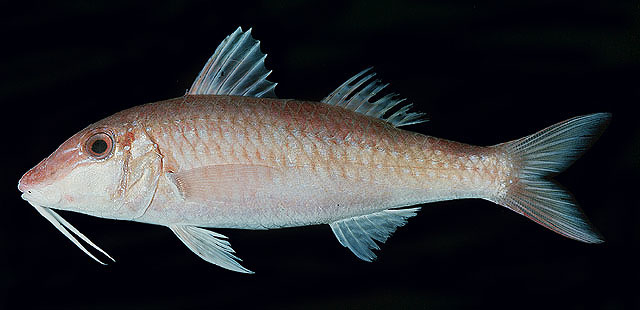
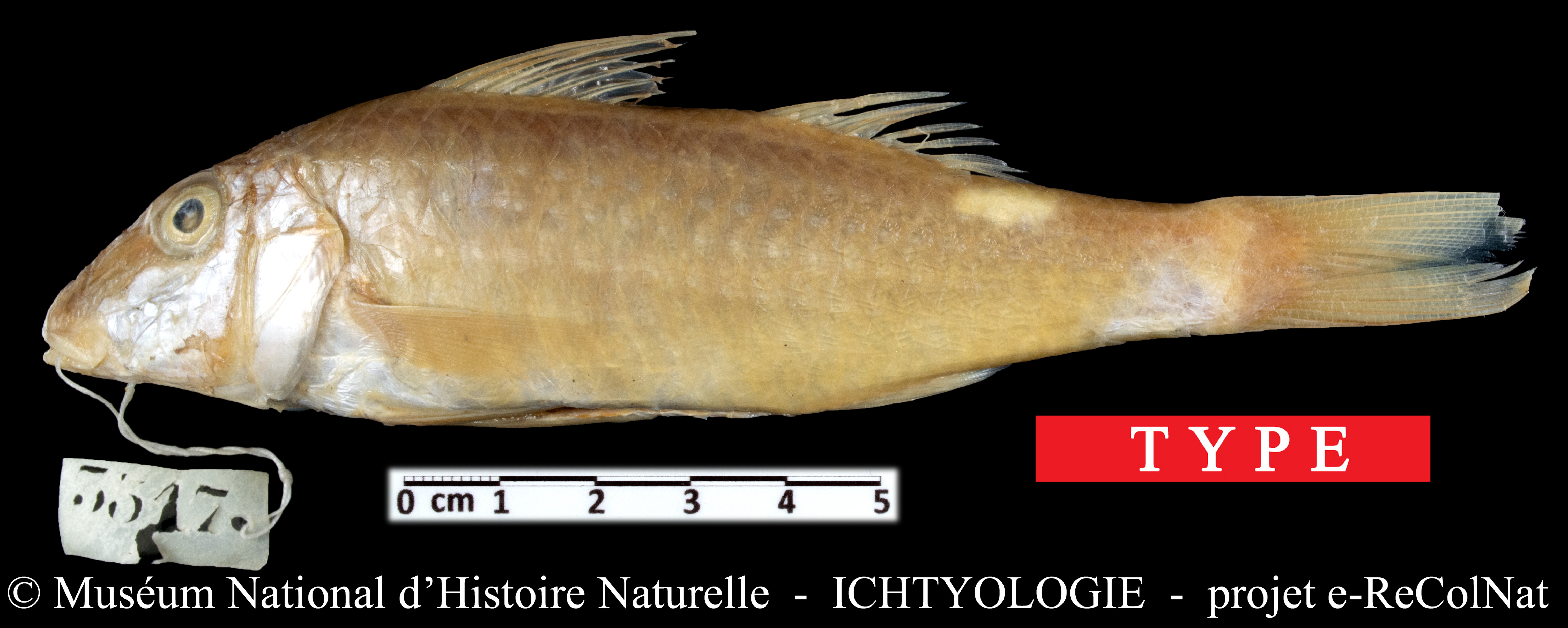
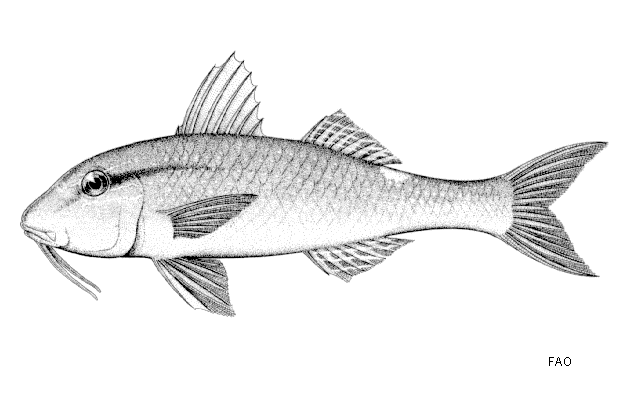
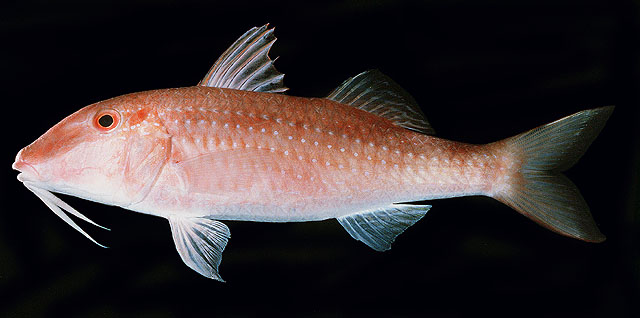
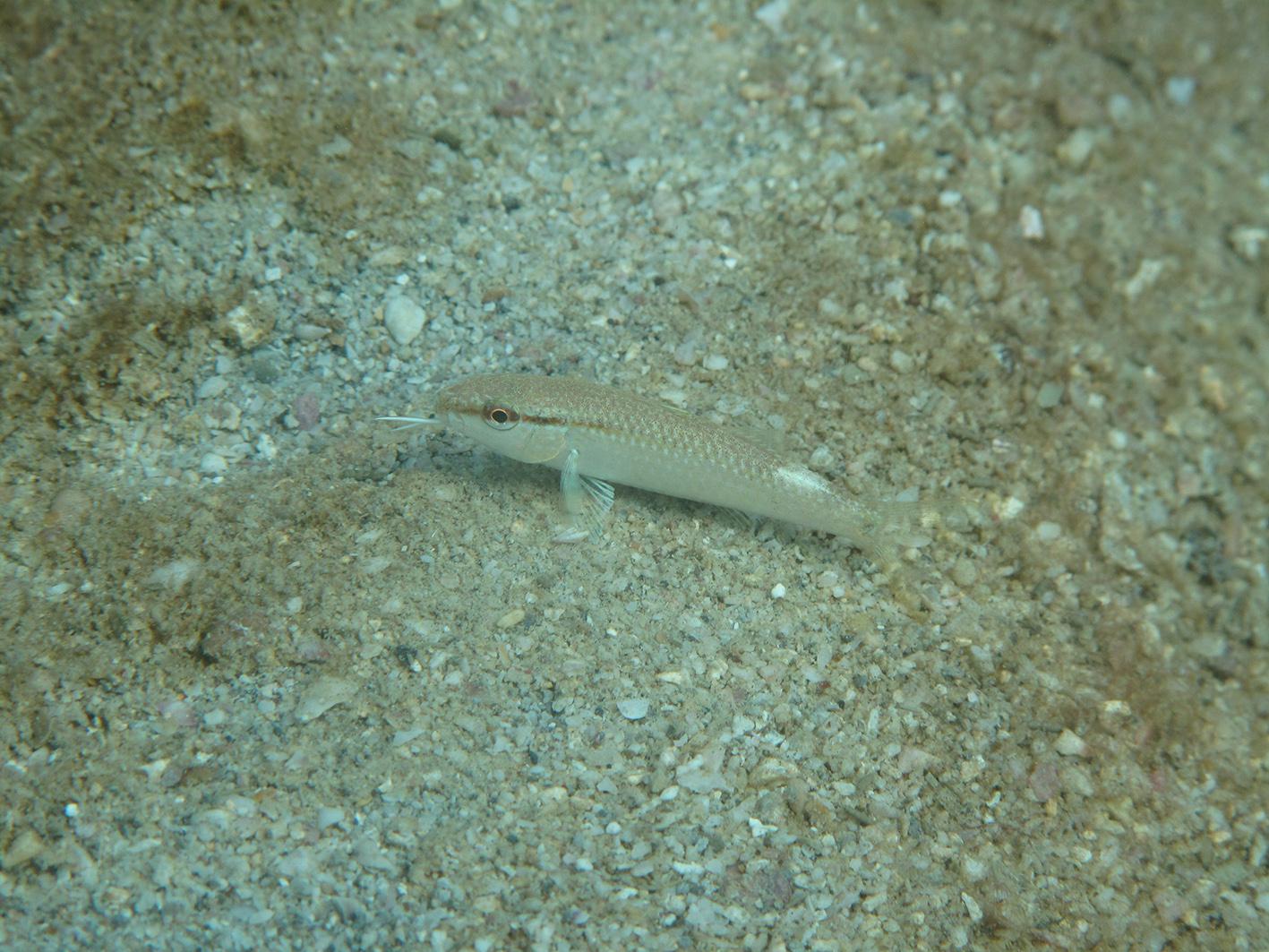
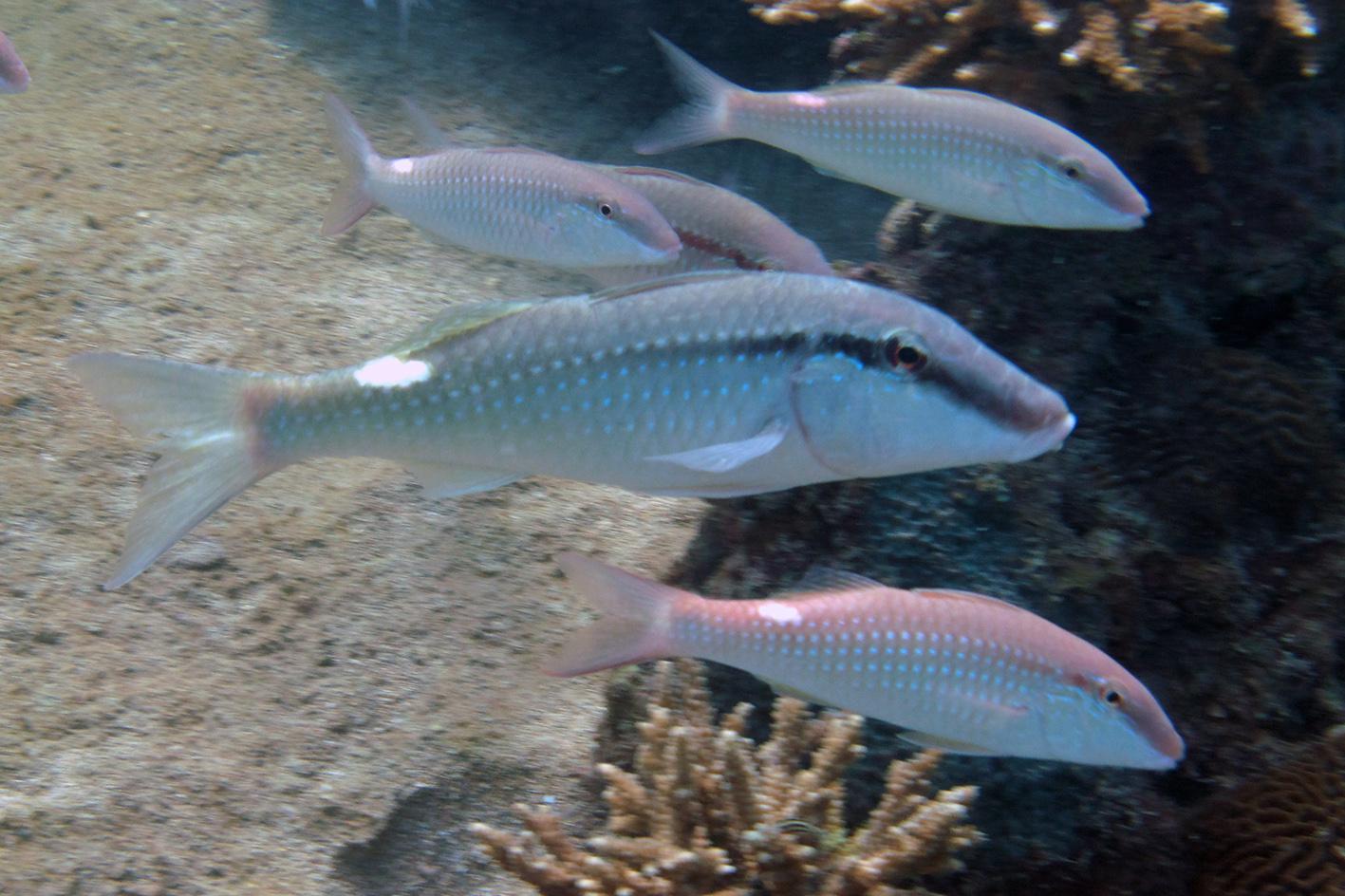
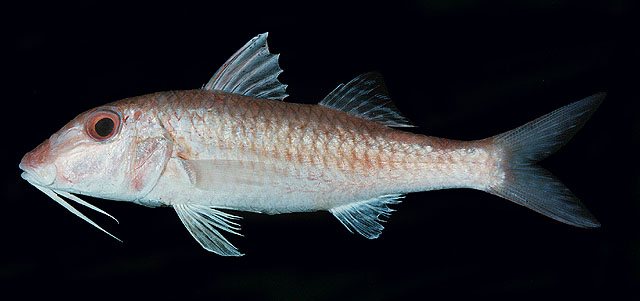
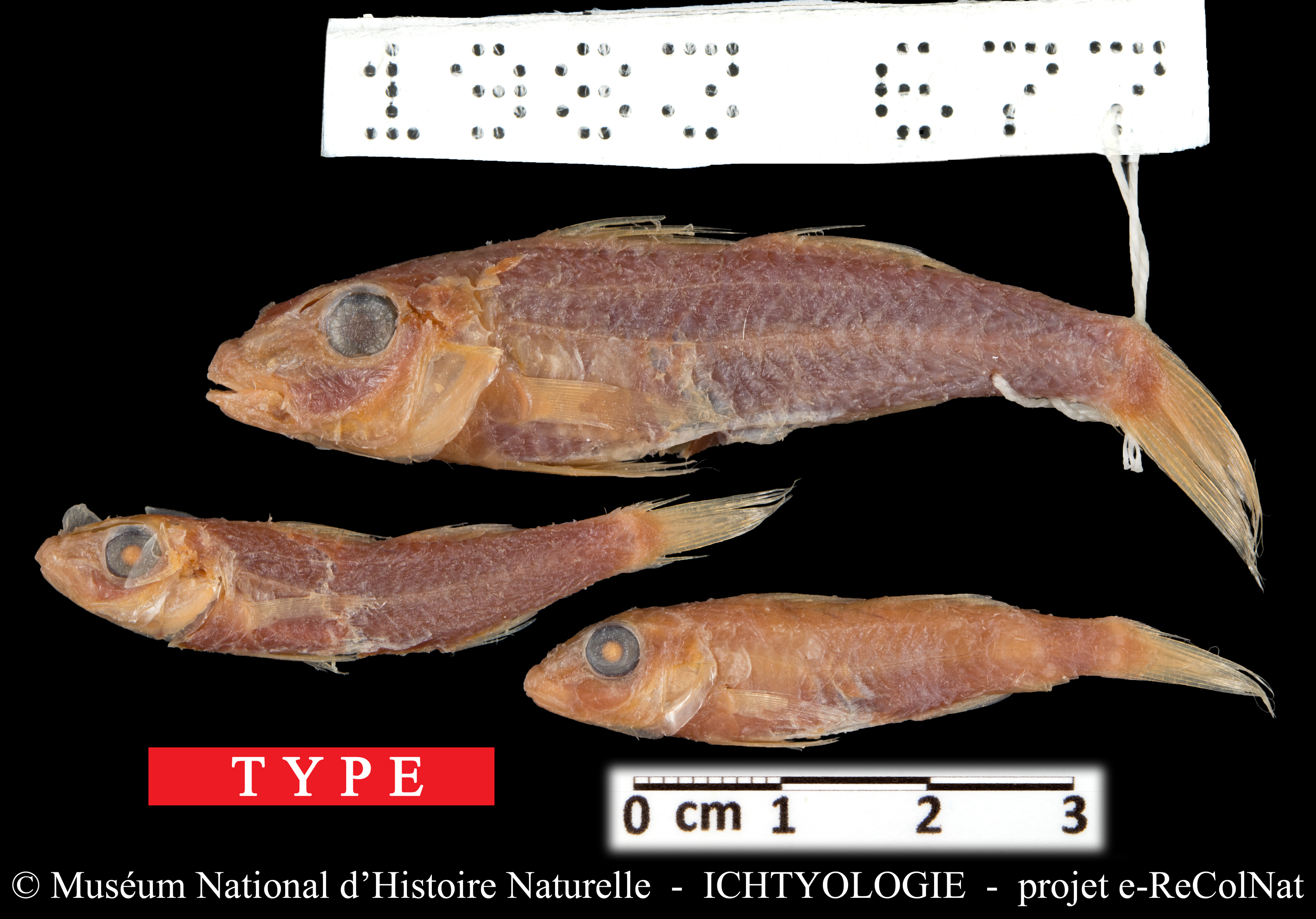
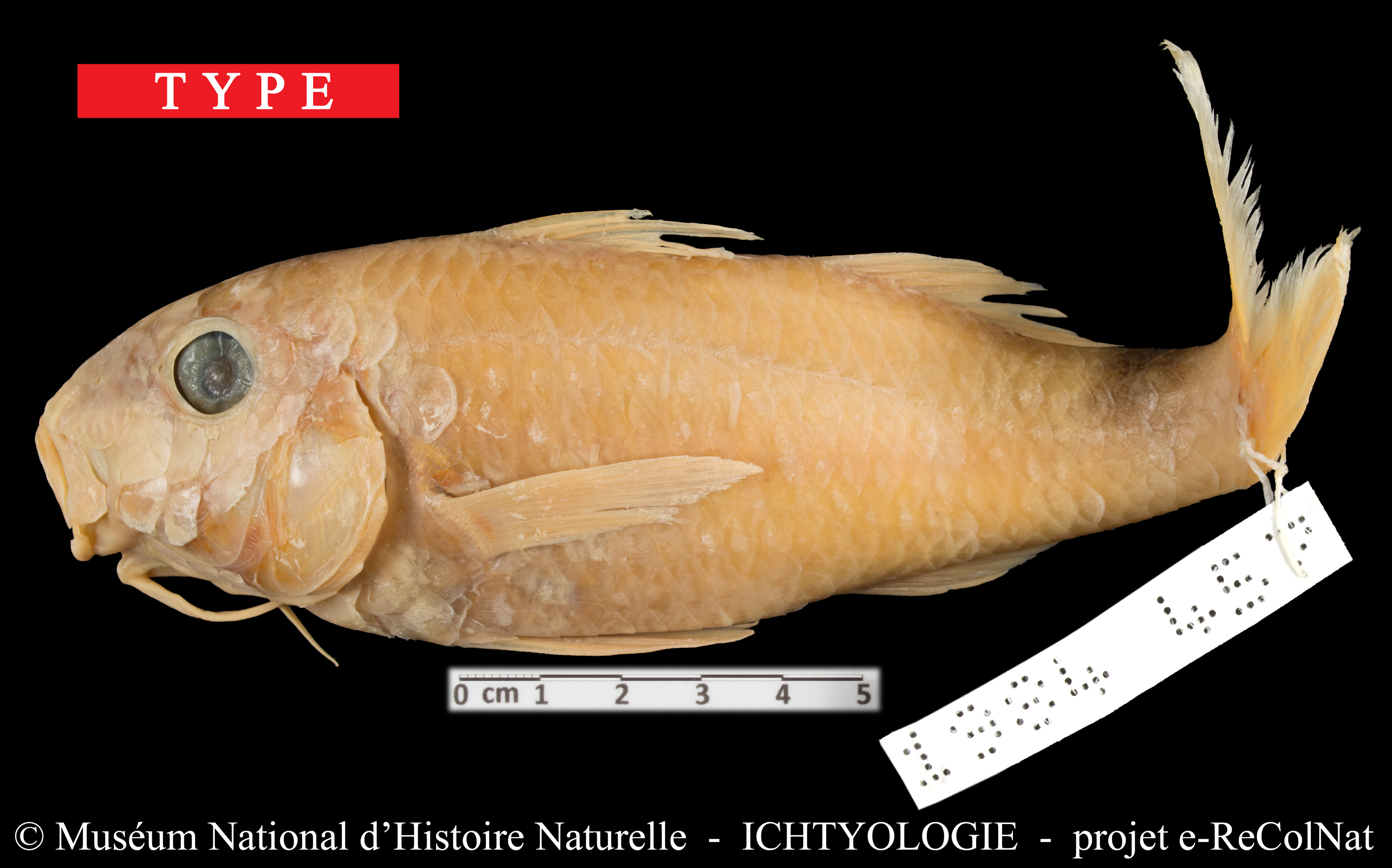
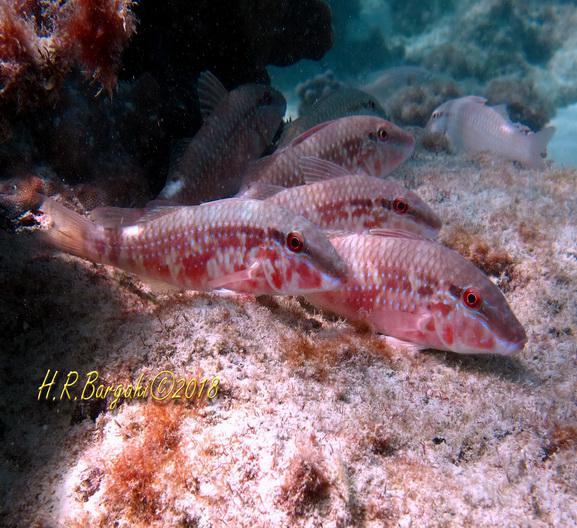
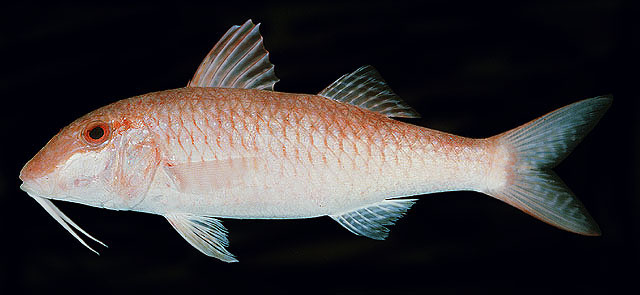
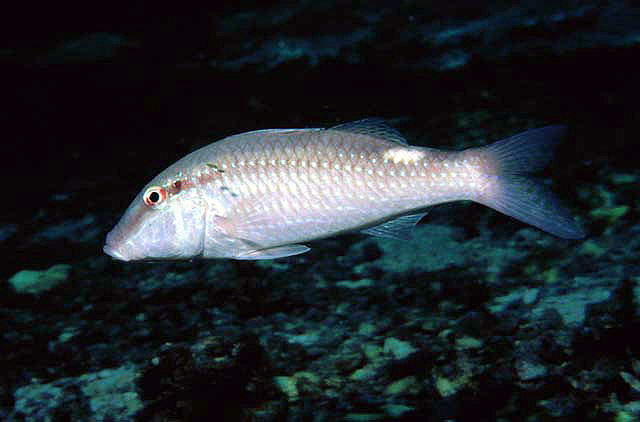
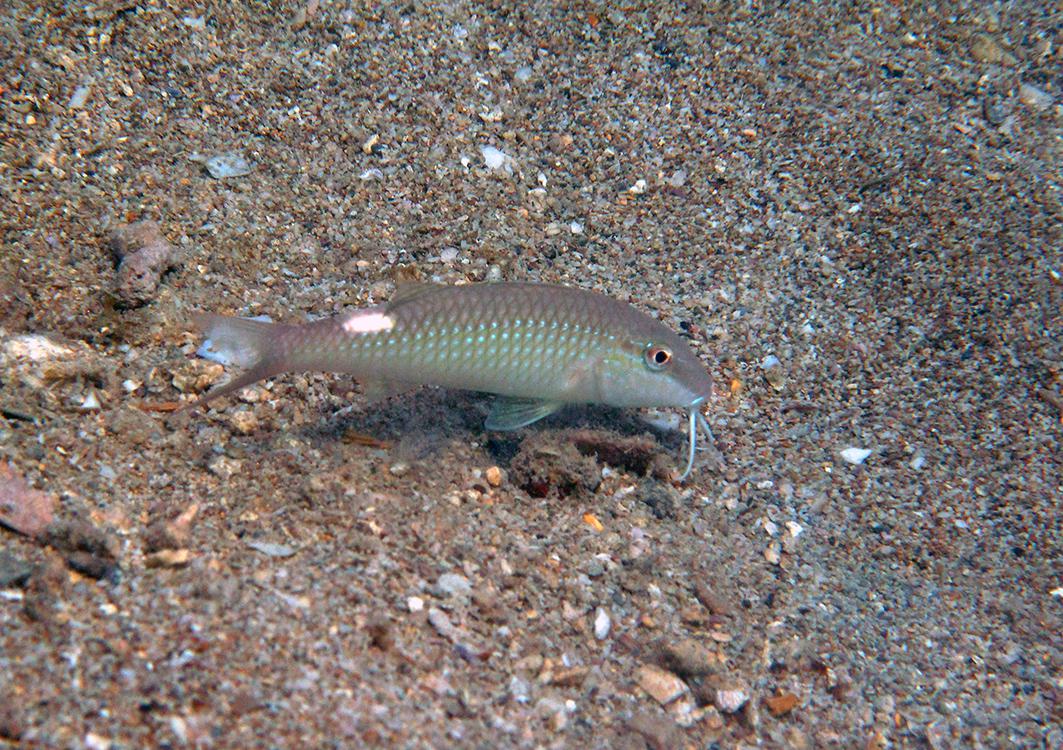
Dorsal spines (total): 8; Dorsal soft rays (total): 9; Anal spines: 1; Anal soft rays: 7; Vertebrae: 24. Diagnosis: Pectoral rays 15-17 (usually 16). Gill rakers 6-8 + 22-25 (total 29-33). Body moderately elongate, the depth 3.5-4.05 in SL (to 4.35 in juveniles); head length (HL) 2.75-3.0 in SL; snout length 1.75-2.3 in head length; upper-jaw length 3.0-3.5 in HL; barbels relatively short, 1.4-1.65 in HL; third dorsal spine longest, 1.65-1.95 in HL; last dorsal soft ray only slightly longer than penultimate ray; pectoral-fin length 1.5-1.7 in HL; pelvic-fin length 1.5-1.8 in HL. Gray to brownish red dorsally, whitish to light red ventrally, with a small pearly white to pale blue spot on each scale of body below the lateral line (center of scales on body above lateral line whitish but not as a distinct spot); an elongate white spot anteriorly on upper side of caudal peduncle, sometimes followed by a dusky spot of about the same size; a brown band on snout from upper lip to eye, often continuing onto postorbital head and narrowly a short distance onto body (band usually not persisting in preservative) (Ref. 54393).
Taxonomic Hierarchy
Kingdom: Animalia
Phylum: Chordata
Class: Teleostei
Order: Mulliformes
Family: Mullidae
Genus: Parupeneus
Species: Parupeneus margaritatus Randall & Guézé, 1984
Climate Zone
Biology
Occurs on open sand or silty sand bottom or on sand and rubble in the vicinity of reefs or rocky outcrops (Ref. 54393).
Habitat
associated
Conservation Status
Least Concern
Threat to Humans
Harmless
Parupeneus margaritatus Randall & Guézé, 1984