Parupeneus indicus (Shaw, 1803)
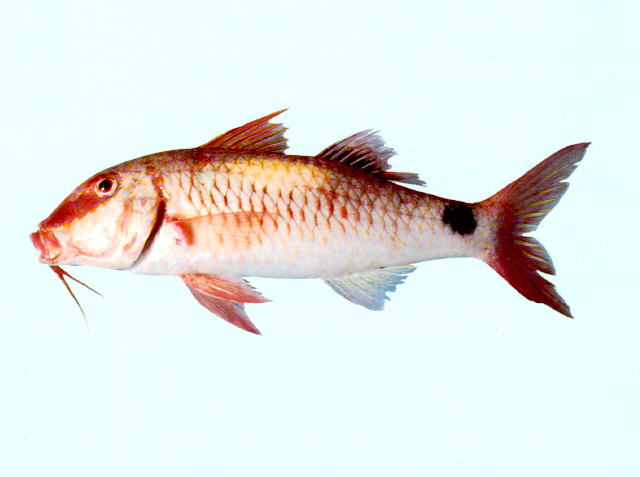
Description
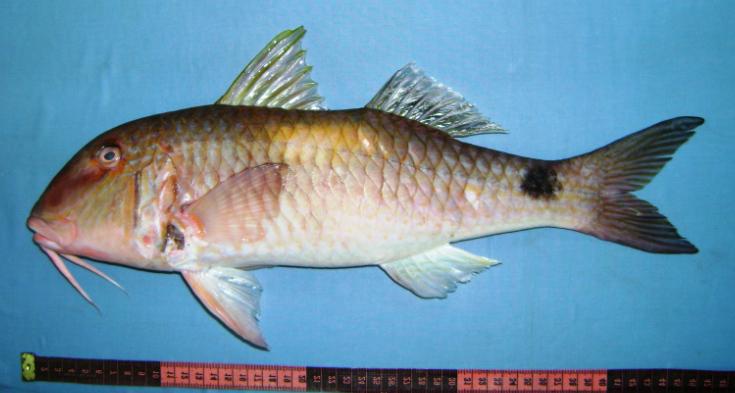
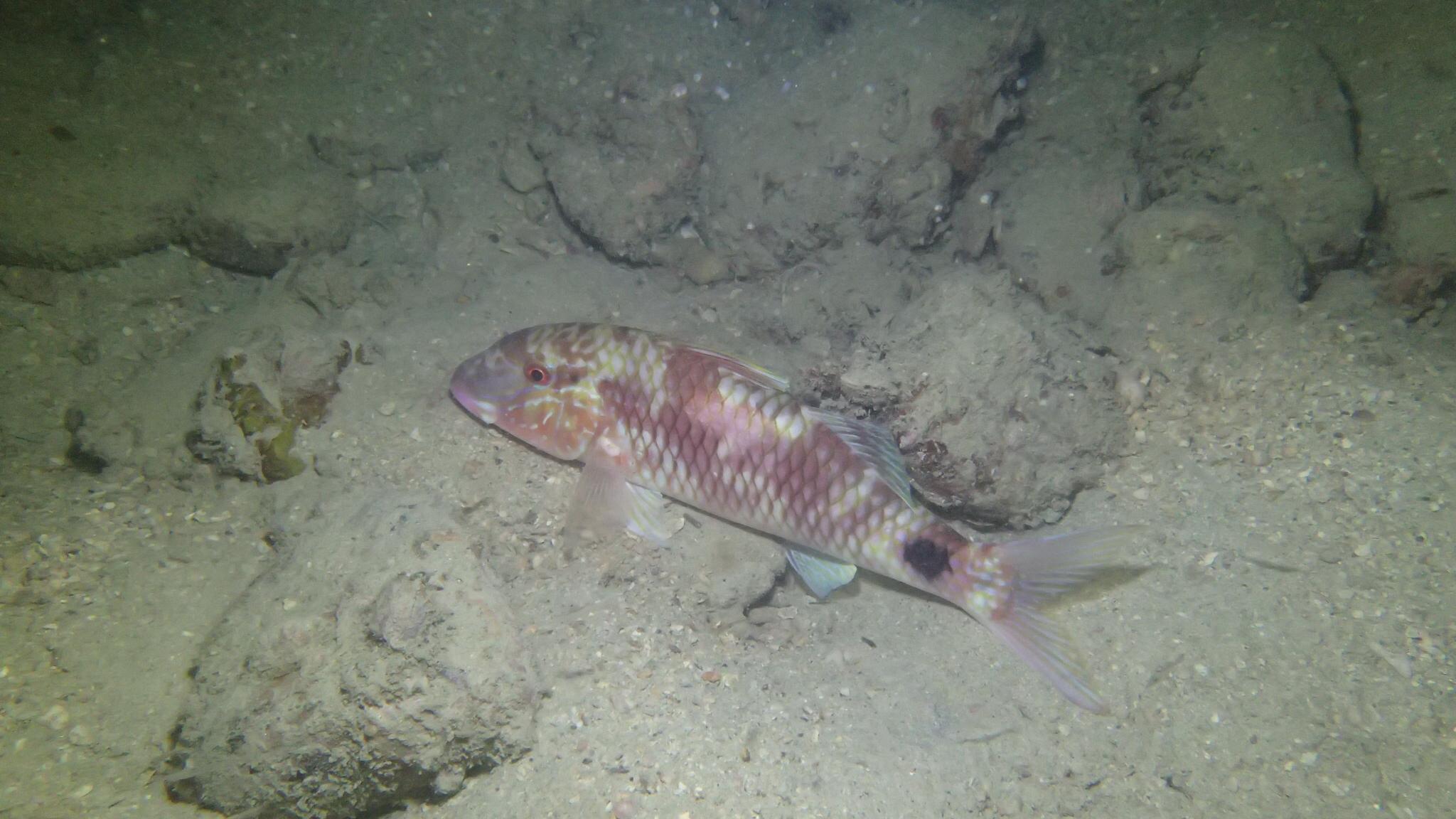
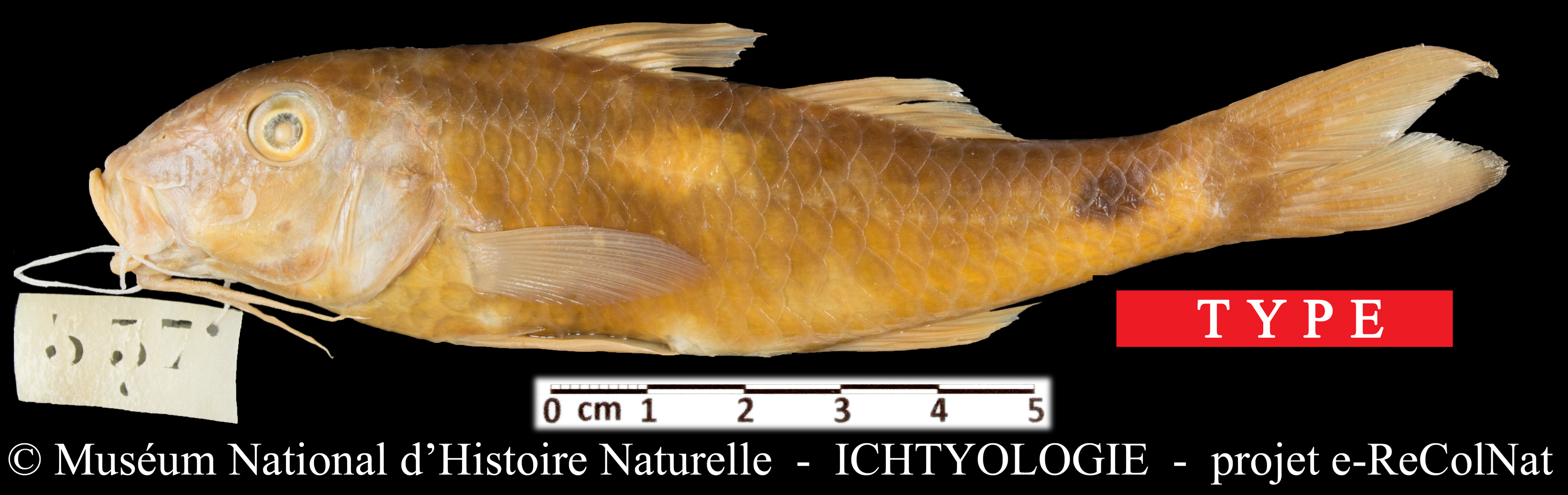
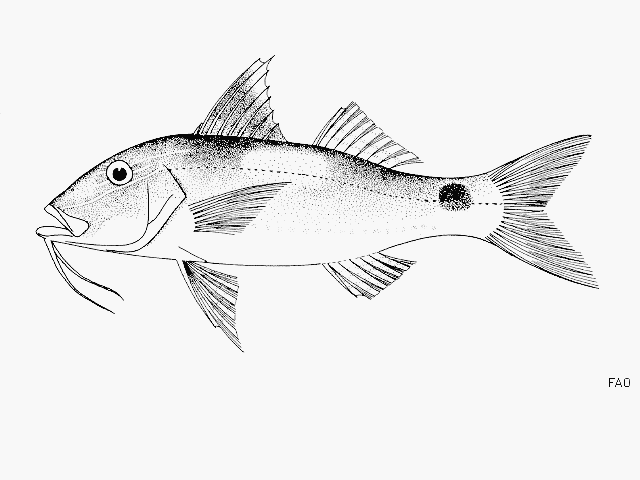
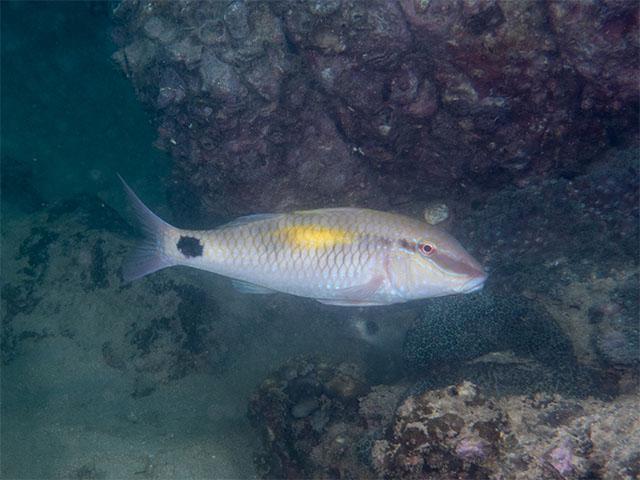
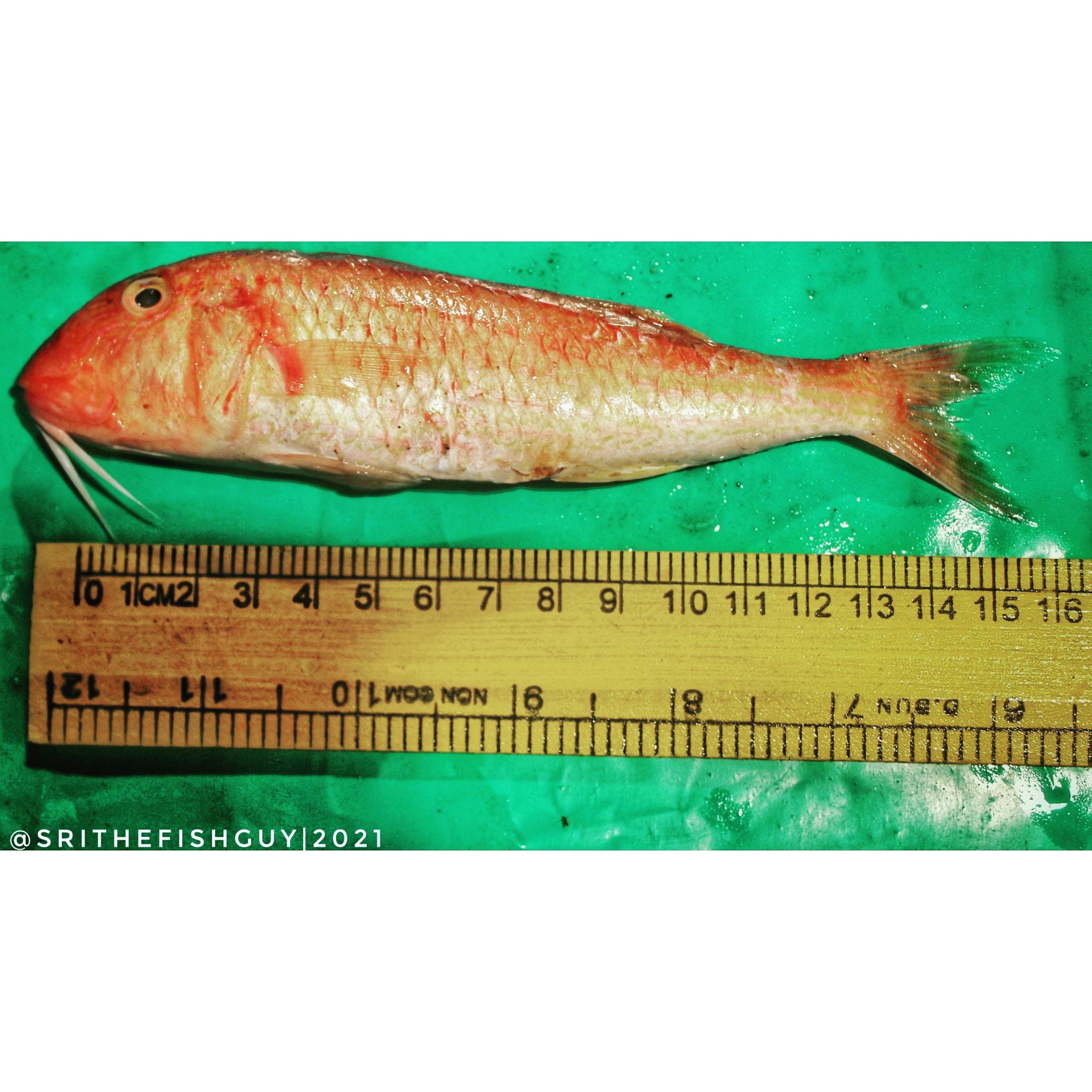
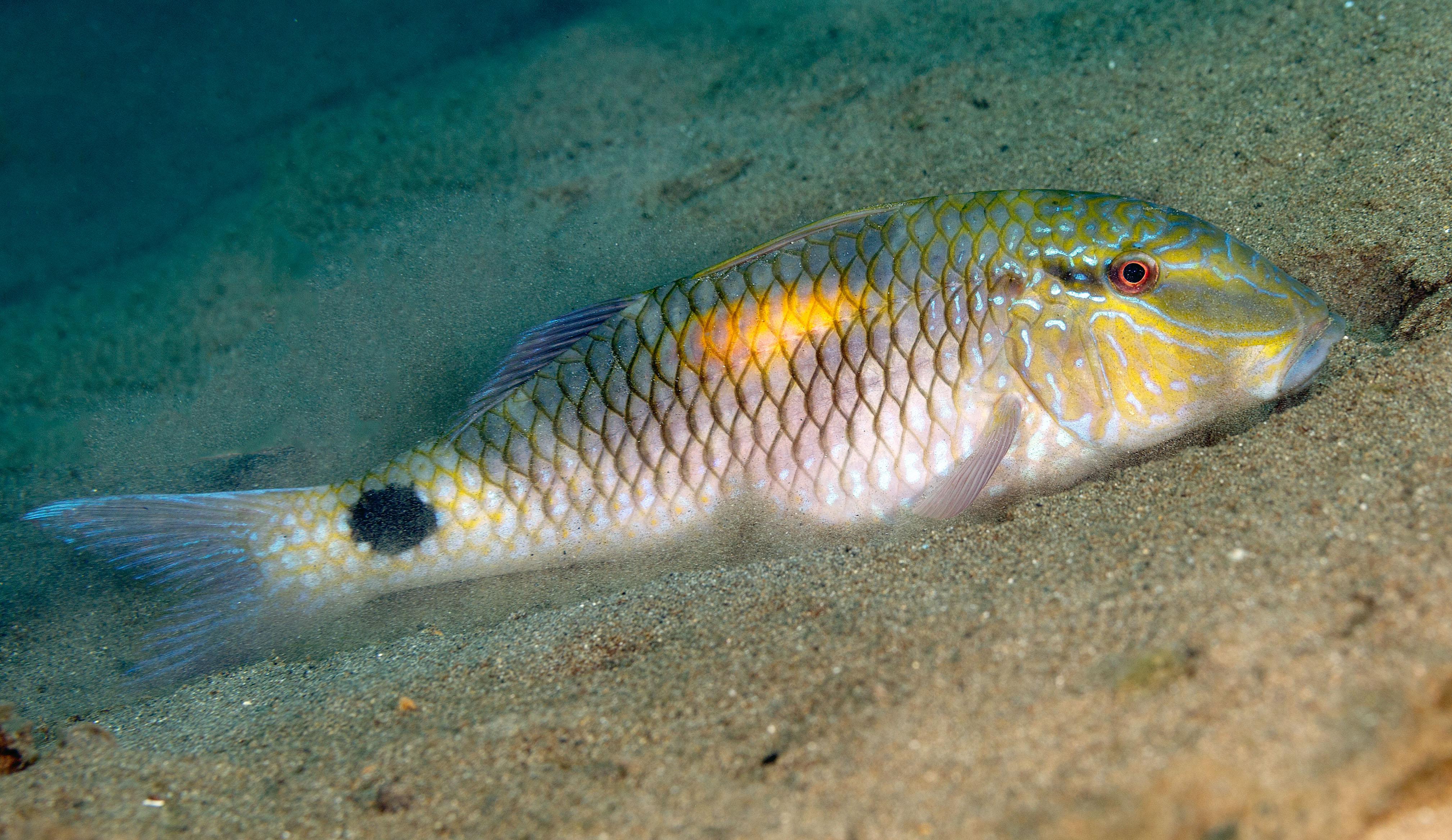
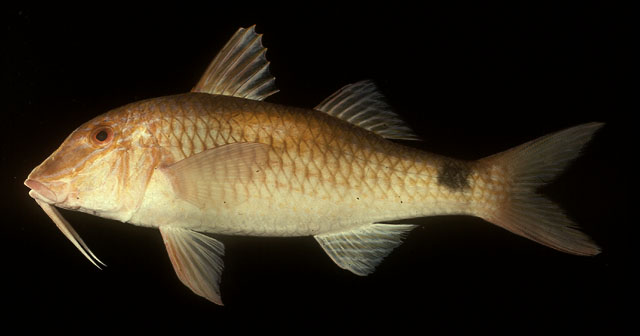
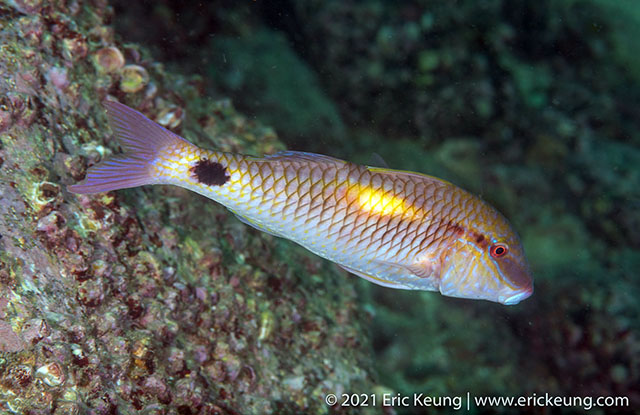
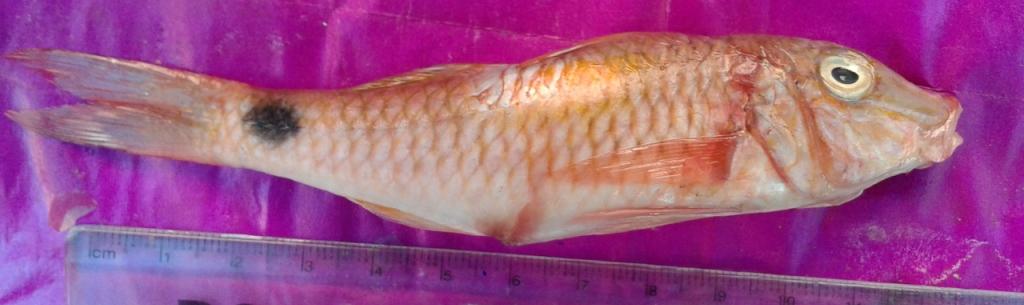
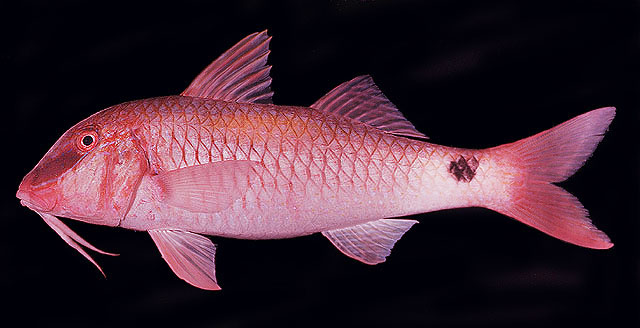
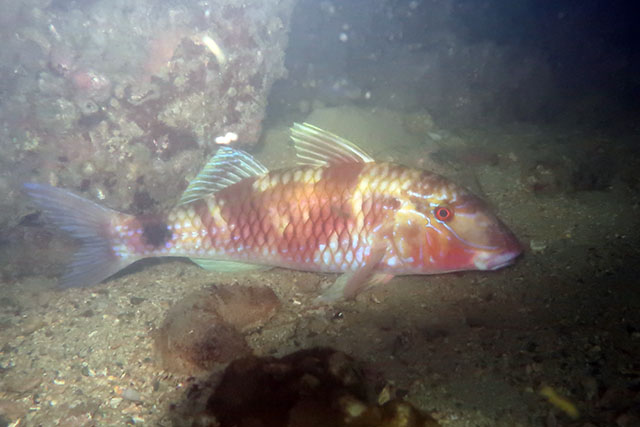
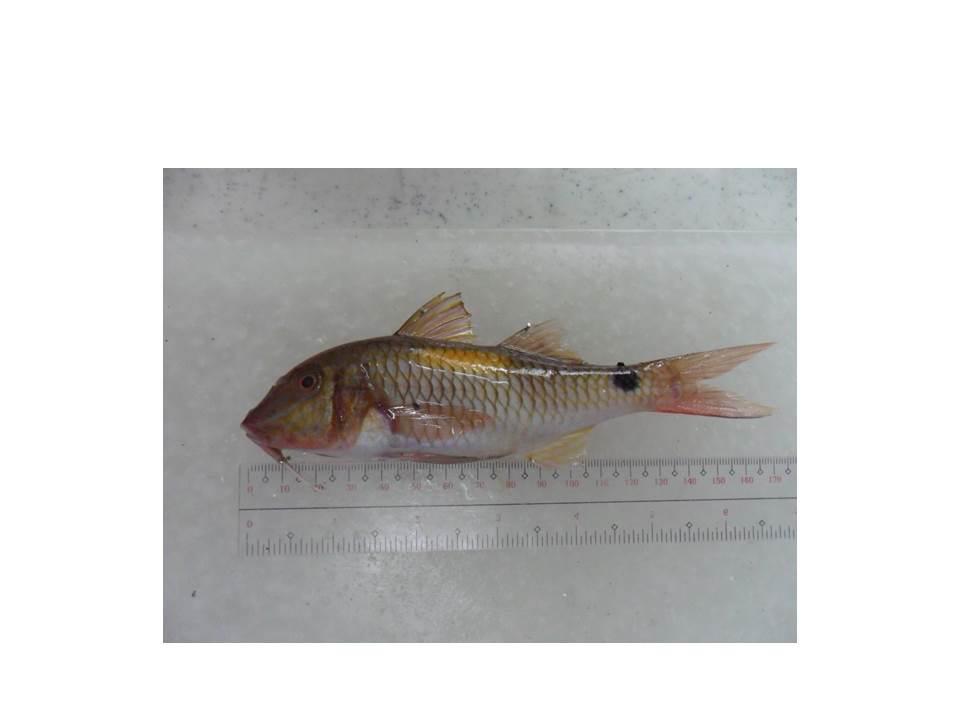
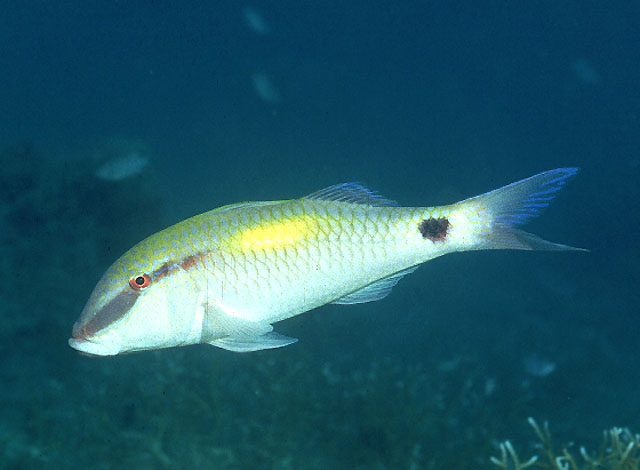
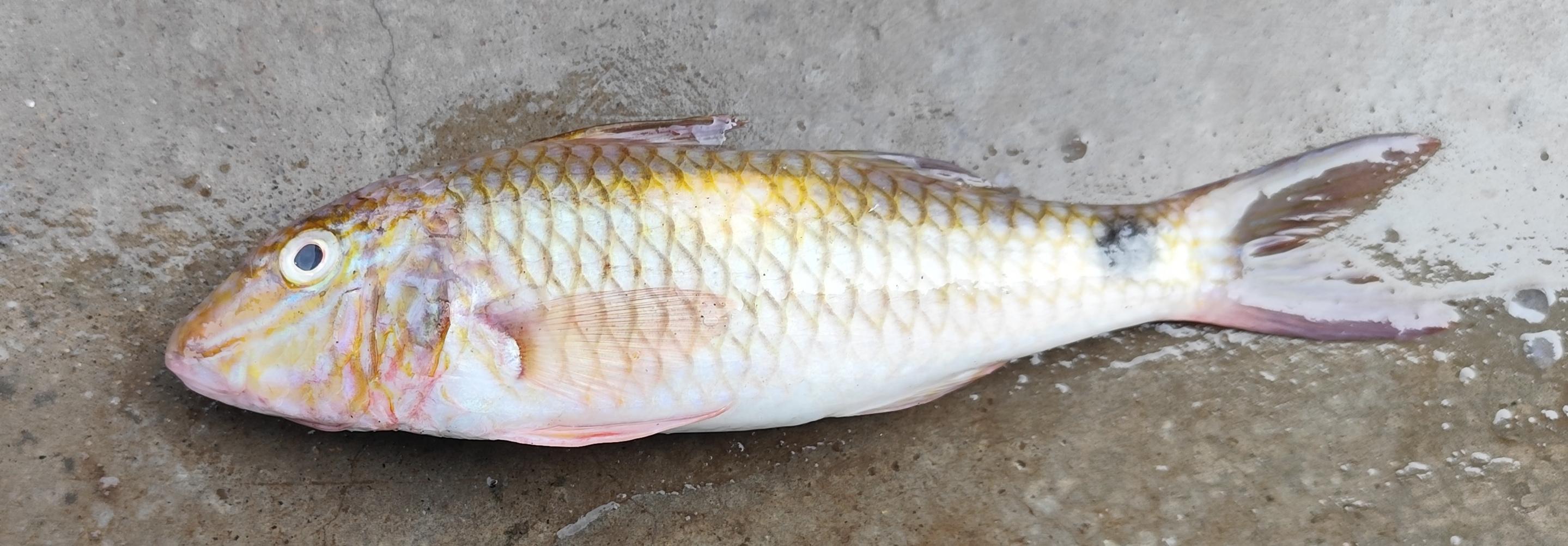
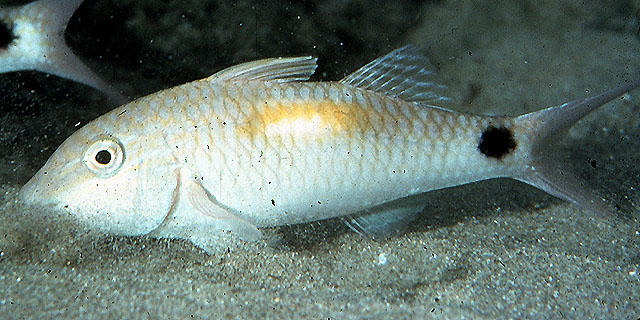
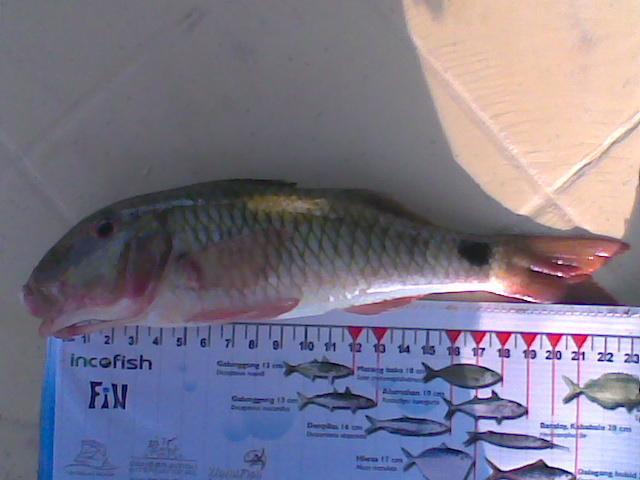
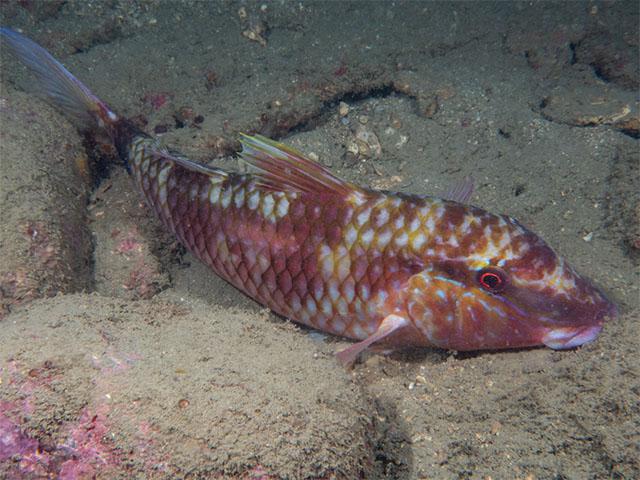
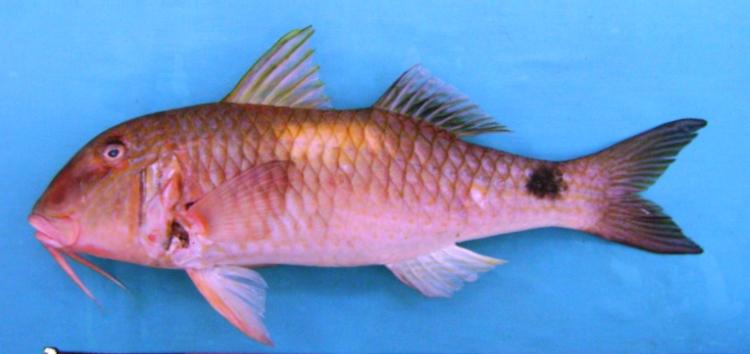
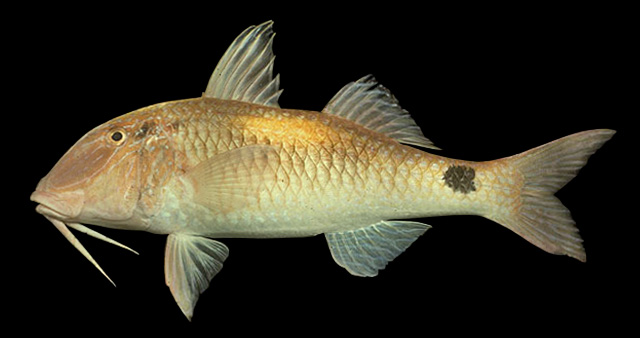
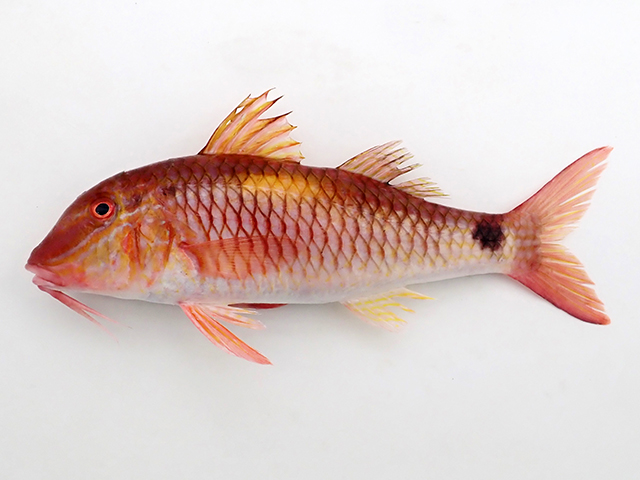
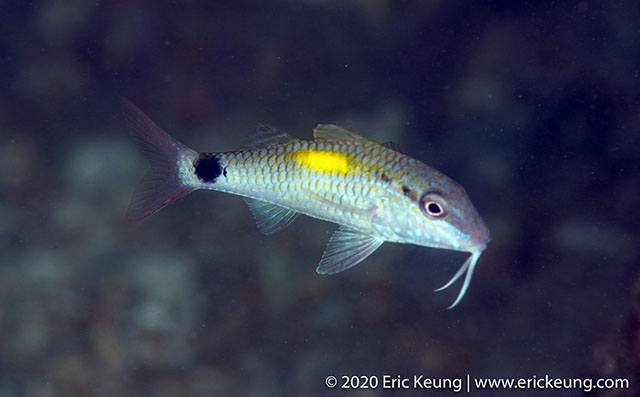
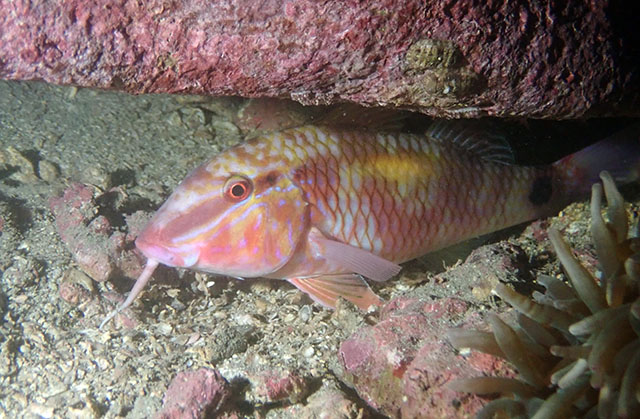
Dorsal spines (total): 8; Dorsal soft rays (total): 9; Anal spines: 1; Anal soft rays: 7. Diagnosis: Pectoral rays 16 (rarely 15 or 17). Gill rakers 5-7 + 18-21 (total 24-27)> Body depth 3.25-3.75 in SL; head length (HL) 2.9-3.25 in SL; snout length 1.65-1.95 in HL; barbel length 1.3-1.5 in HL. Longest dorsal spine 1.5-1.8 in HL; penultimate dorsal ray about equal to last dorsal ray in juveniles, 1.05-1.2 in length of last dorsal ray of adults; pectoral-fin length 1.35-1.55 in HL; pelvic-fin length 1.3-1.5 in HL. Body greenish brown to reddish brown dorsally, the scale edges narrowly dark, shading to whitish or pale pink ventrally, with a nearly round black spot as large or larger than eye on side of caudal peduncle, two-thirds of which lies above the lateral line; a large, horizontally elongate yellow spot (sometimes partly white) on lateral line below interdorsal space; barbels white; irregular pale blue lines extending anteroventrally and dorsoposteriorly from eye; second dorsal and anal fins with irregular oblique pale blue lines; caudal fin yellowish gray with faint blue lines paralleling rays; peritoneum dark brown (pale brown to white in other species of the genus except Parupeneus barberinus) (Ref. 54393).
Common Names
Taxonomic Hierarchy
Kingdom: Animalia
Phylum: Chordata
Class: Teleostei
Order: Mulliformes
Family: Mullidae
Genus: Parupeneus
Species: Parupeneus indicus (Shaw, 1803)
Climate Zone
Biology
Inhabit shallow sandy or silty areas (seagrass substrata) of coastal and inner lagoon reefs (Ref. 9710, 54393). Occur singly or in schools (Ref. 5213). Large adults usually at moderate depths to about 30 m (Ref. 48636). Feed on benthic invertebrates; the diet including small crabs, amphipods, shrimps, small octopuses, polychaete worms, and small fishes (Ref. 54393). Marketed fresh (Ref. 5284).
Habitat
brackish
Conservation Status
Least Concern
Threat to Humans
Harmless
Parupeneus indicus (Shaw, 1803)