Parupeneus forsskali (Fourmanoir & Guézé, 1976)
Description
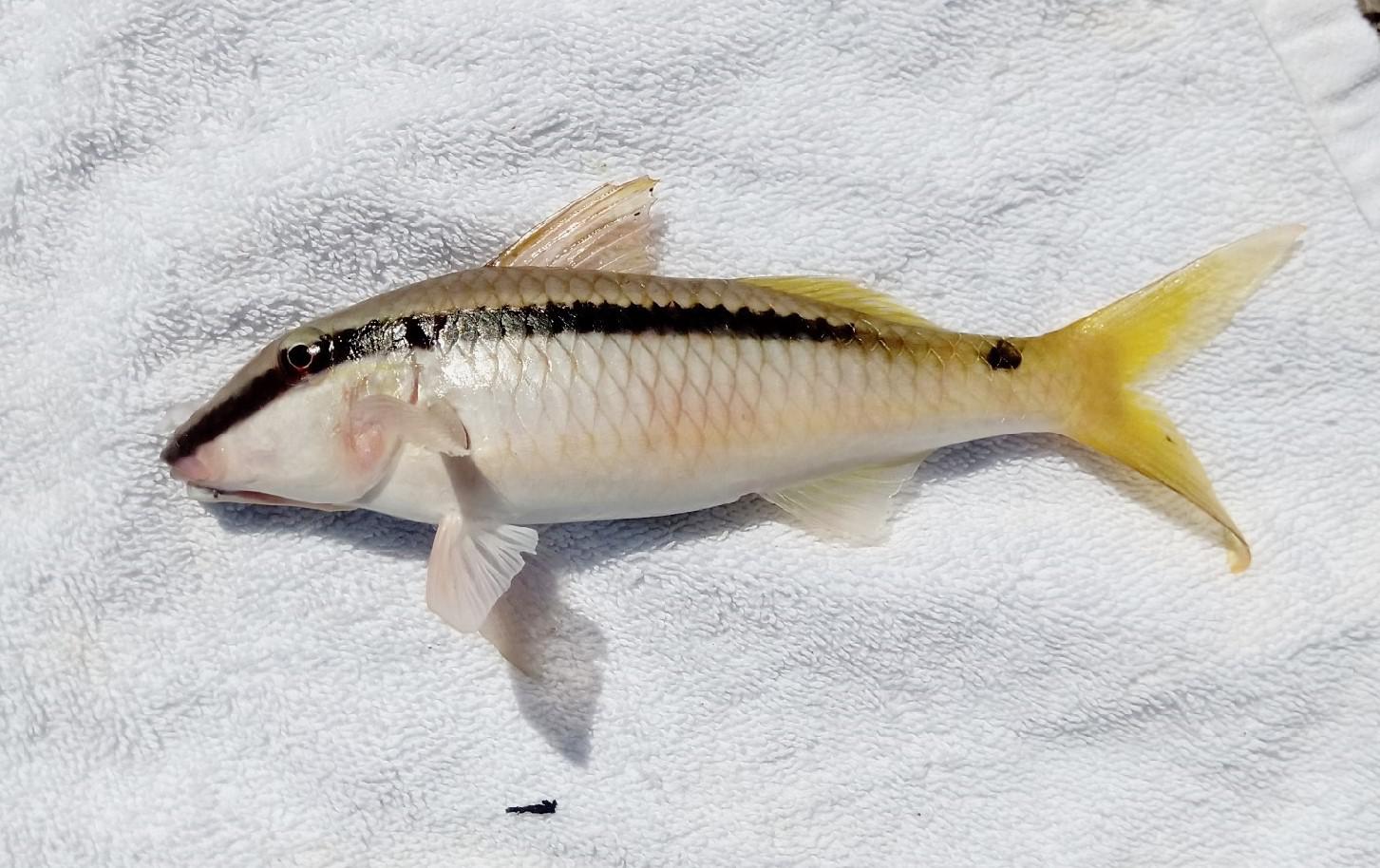
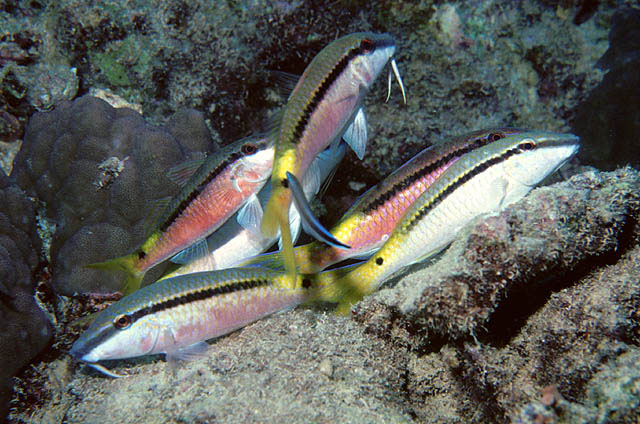
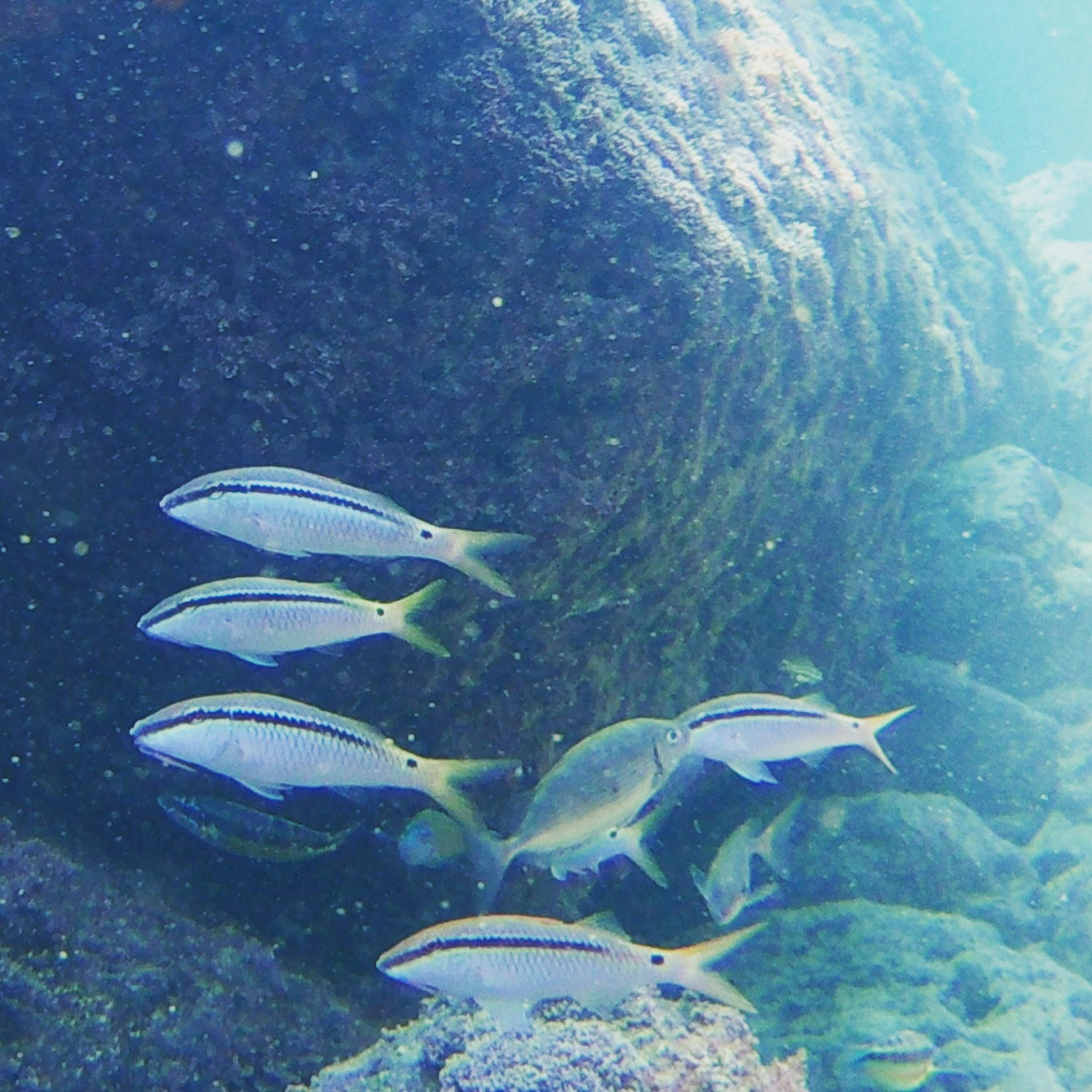
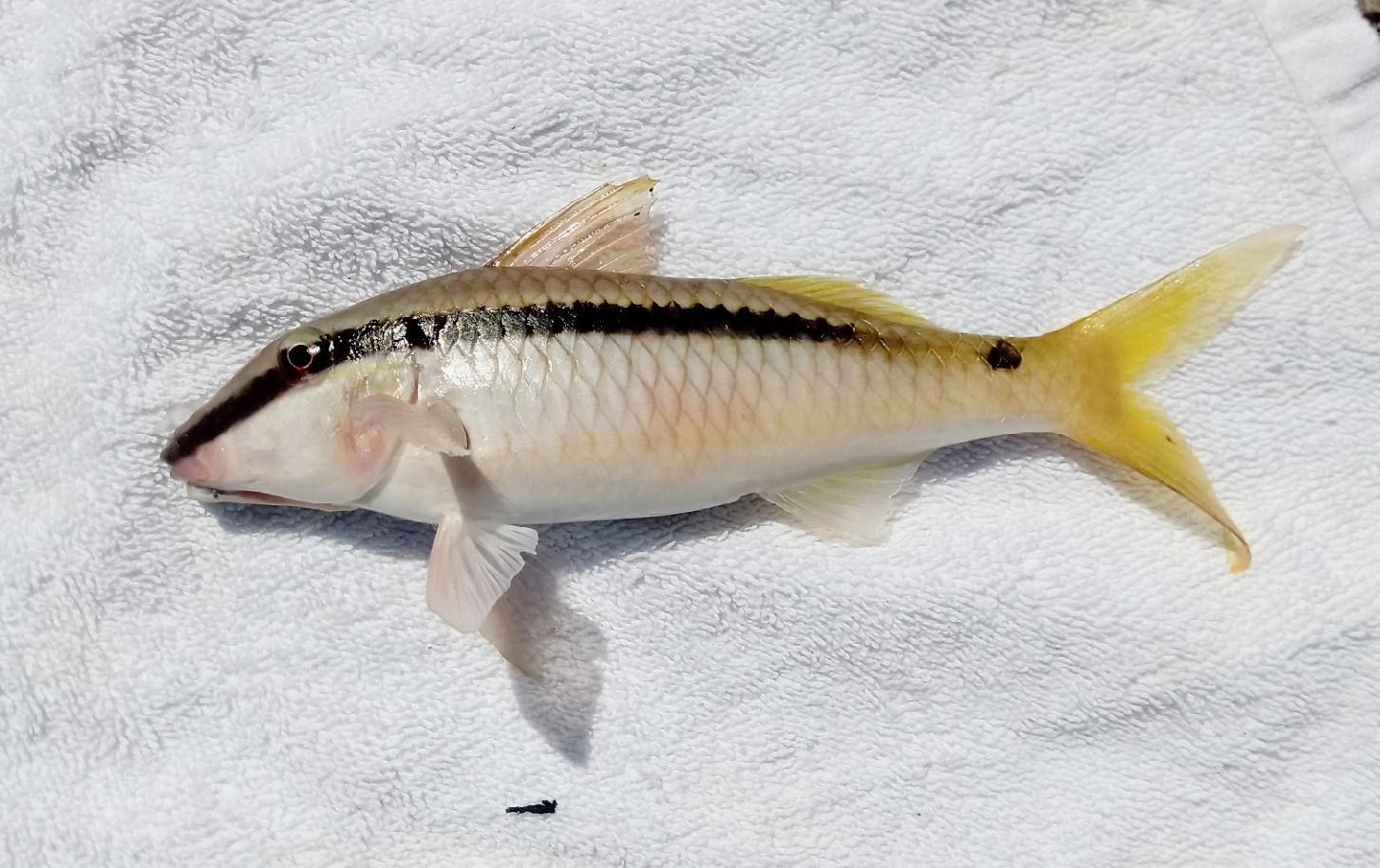
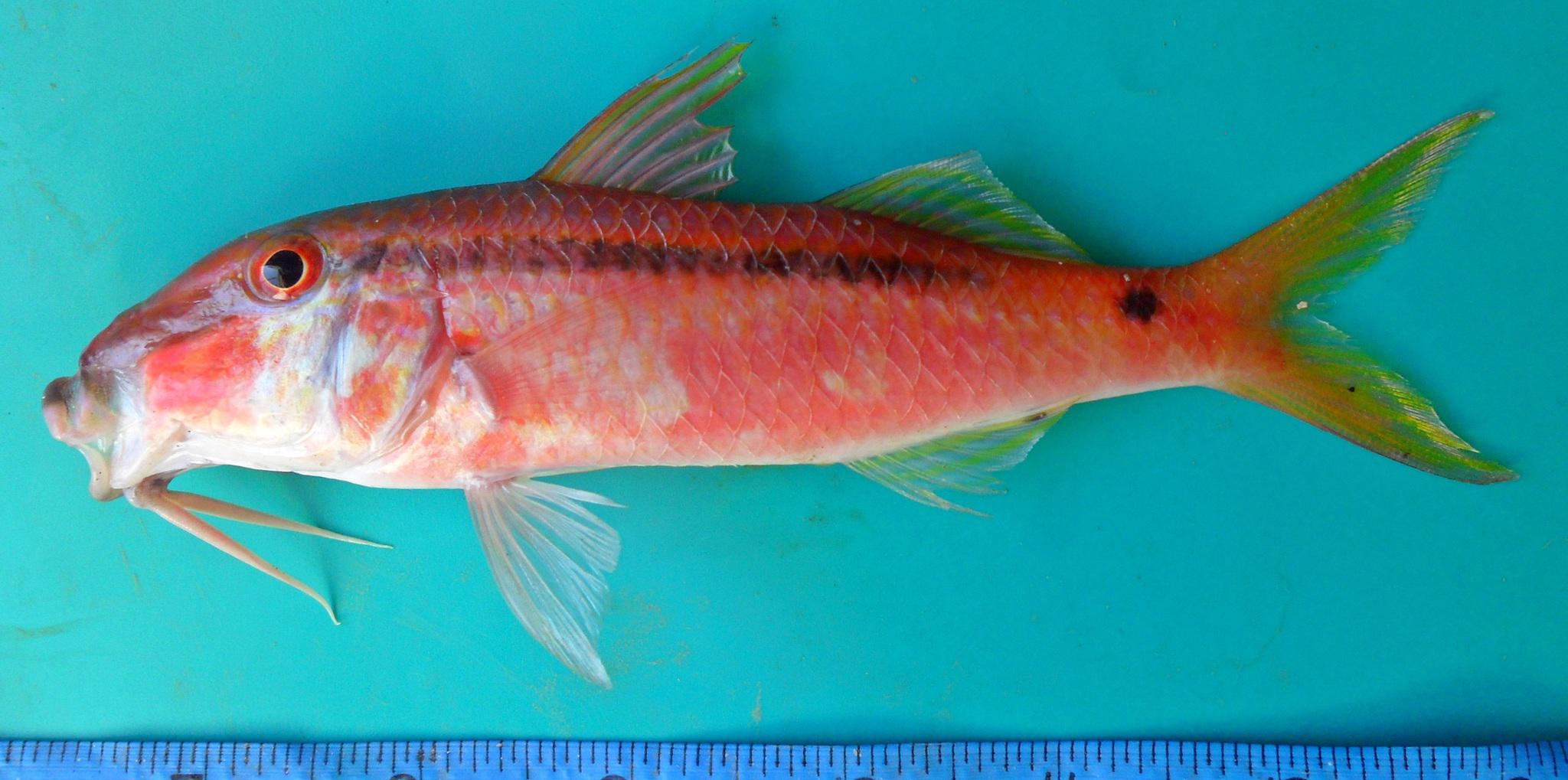
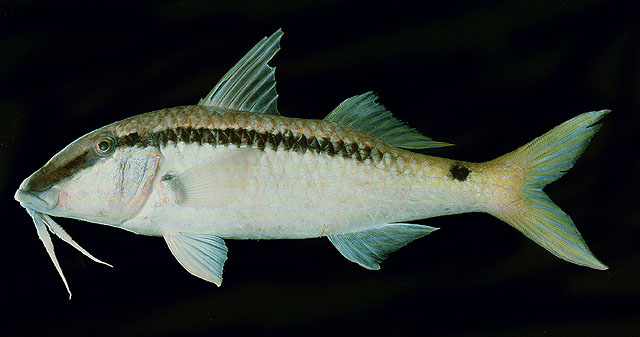
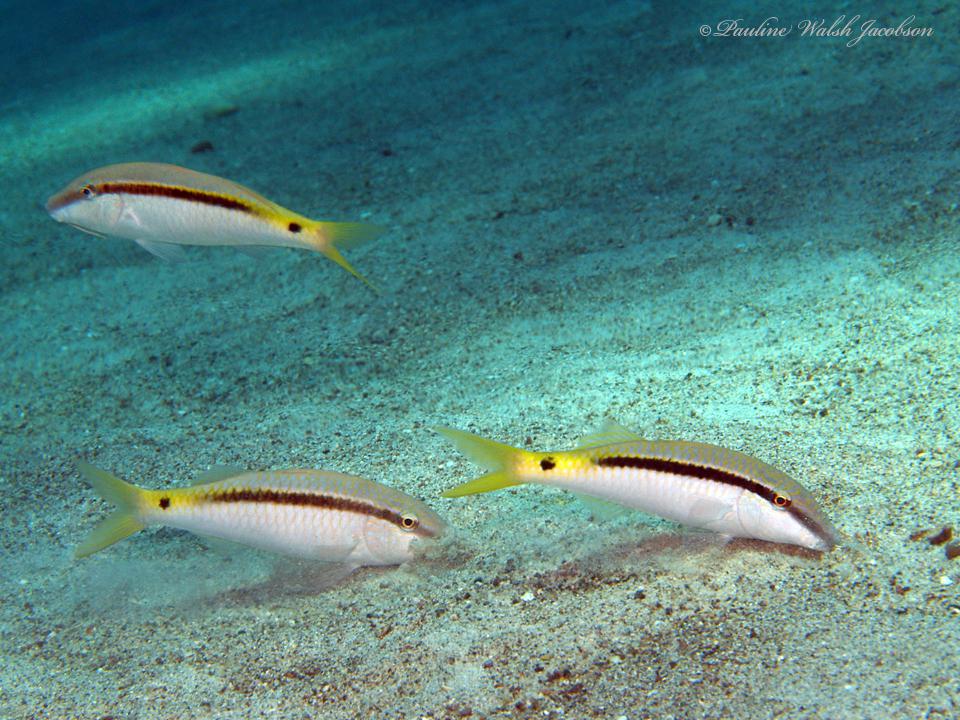
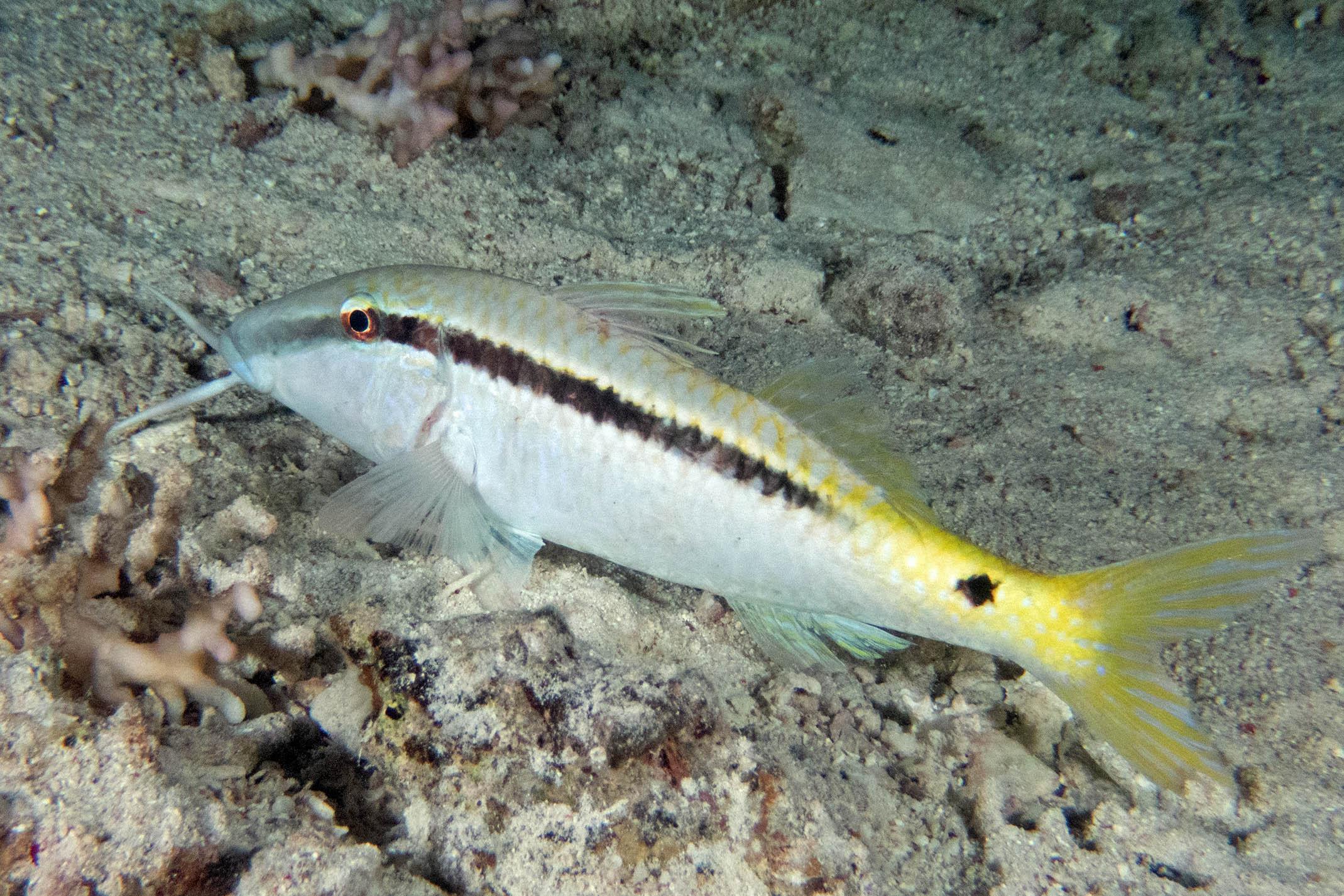
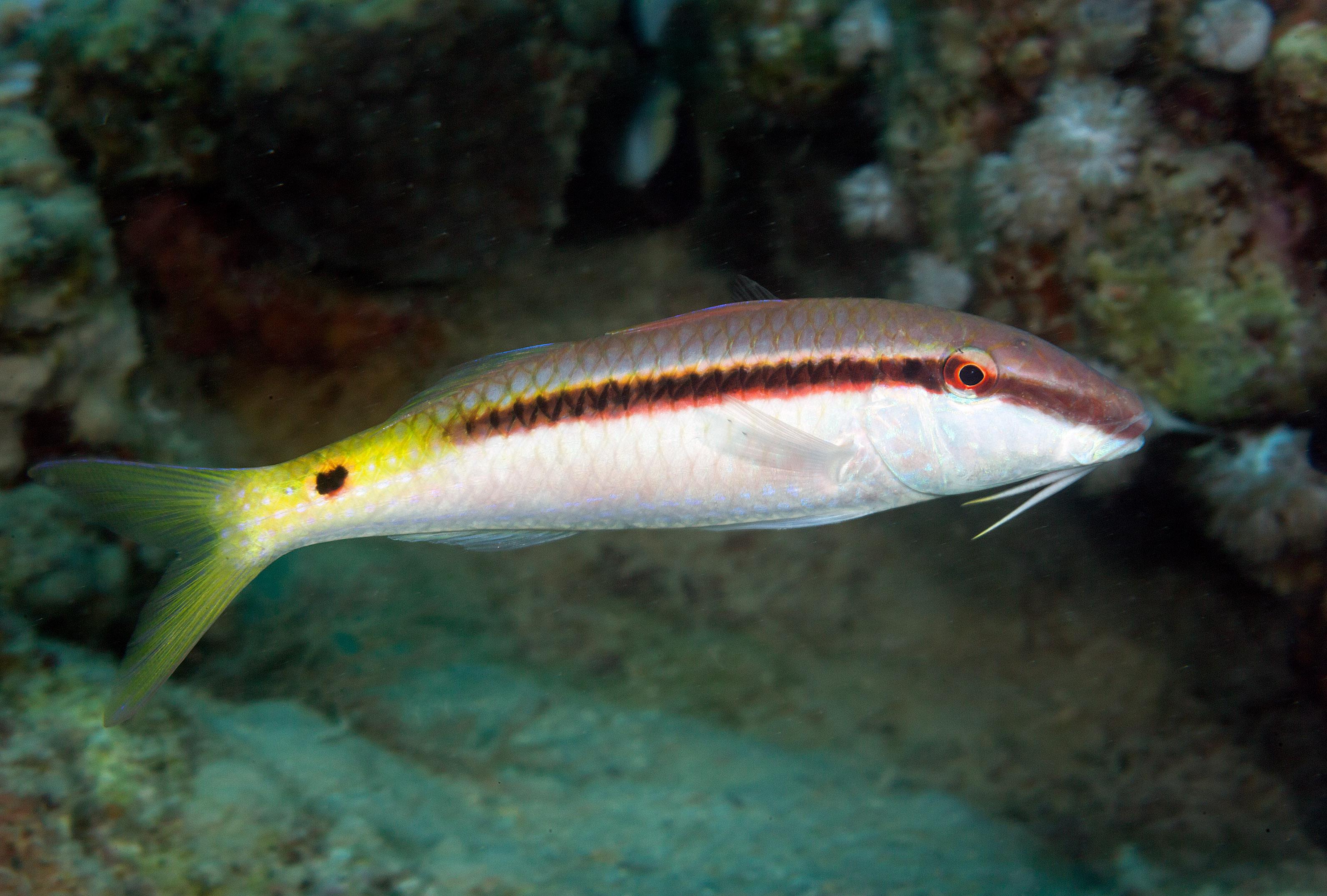
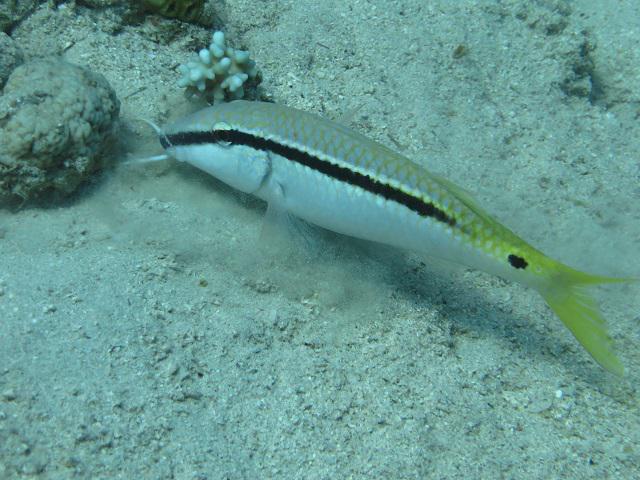
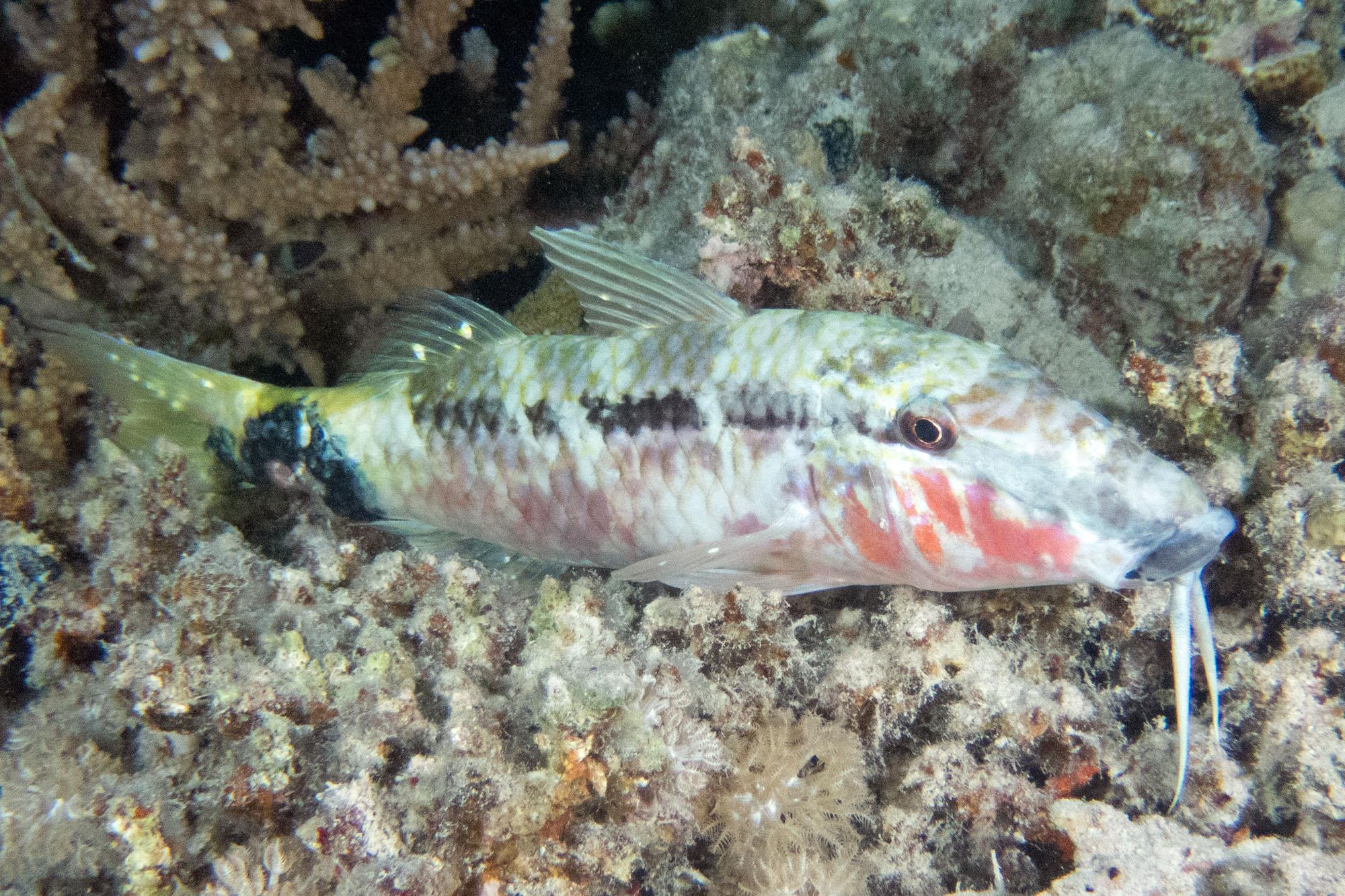
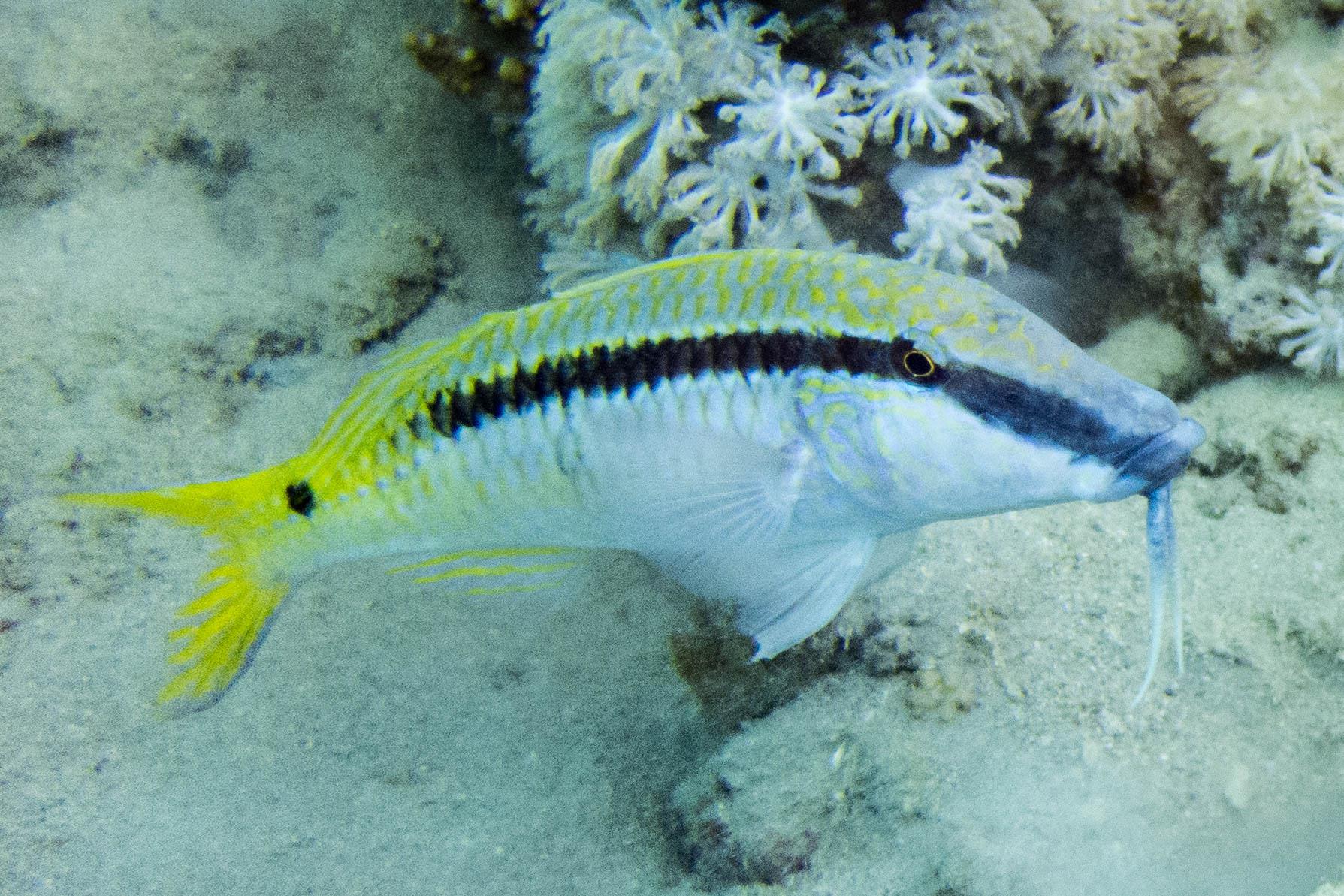
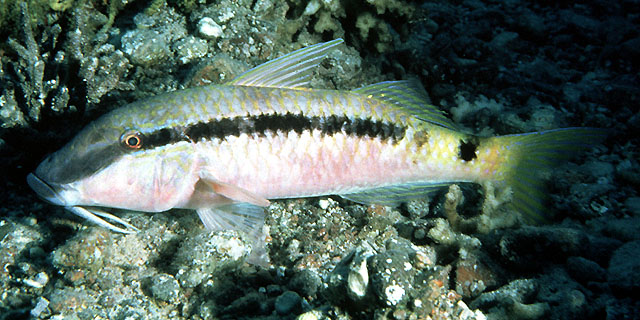
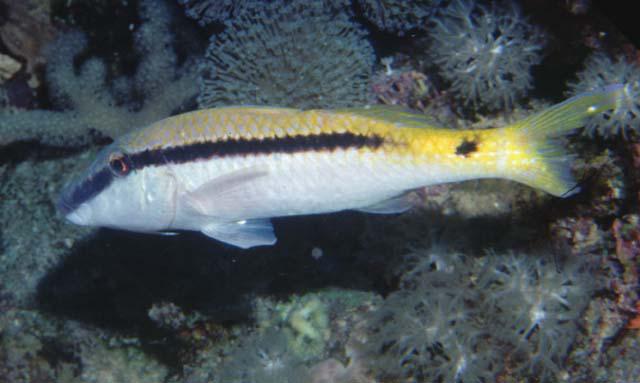
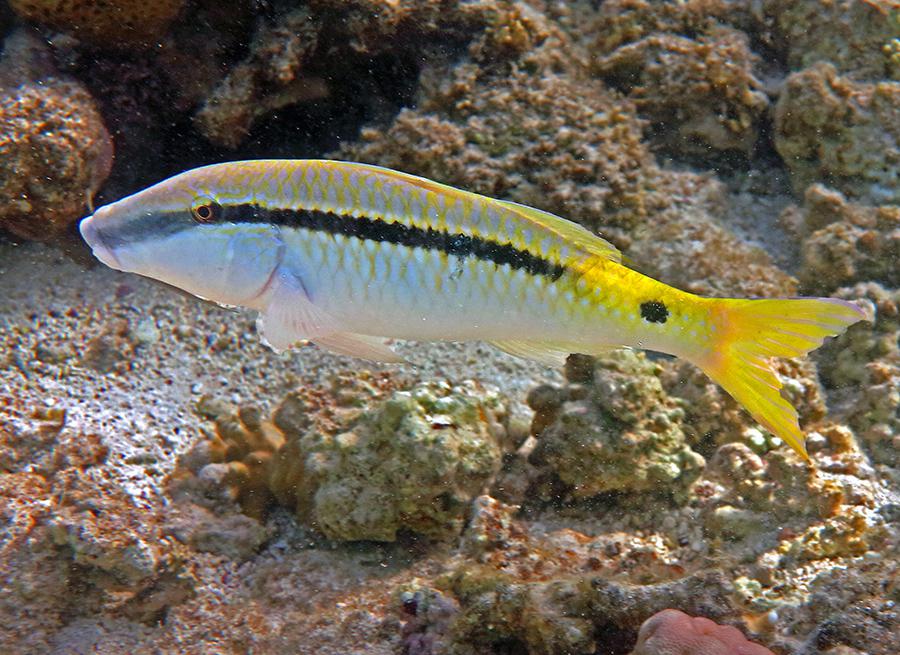
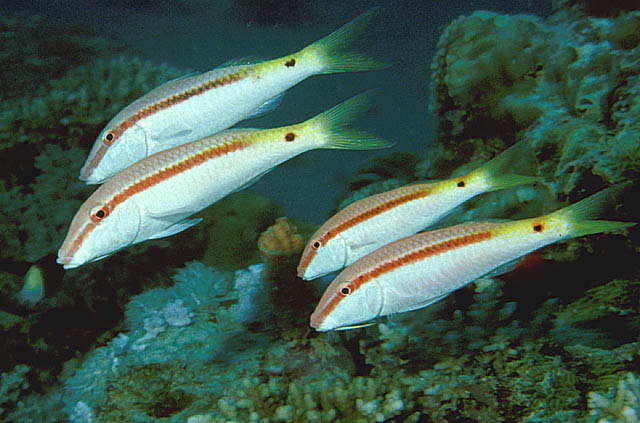
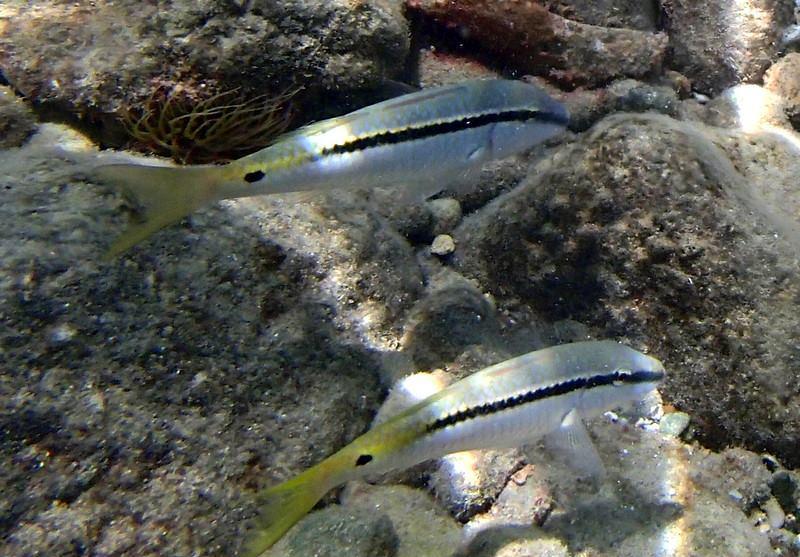
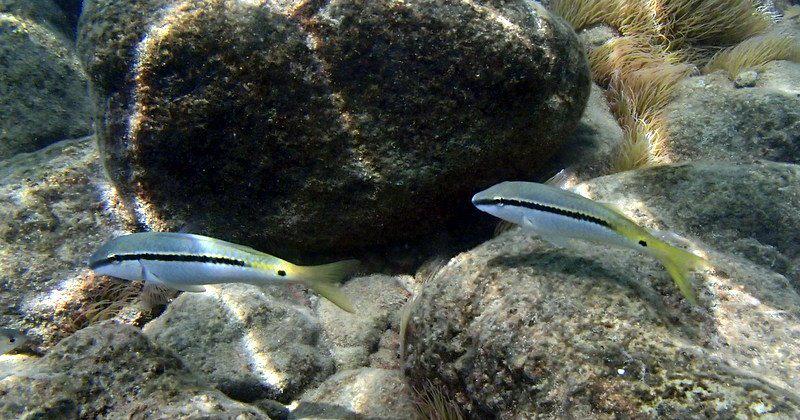
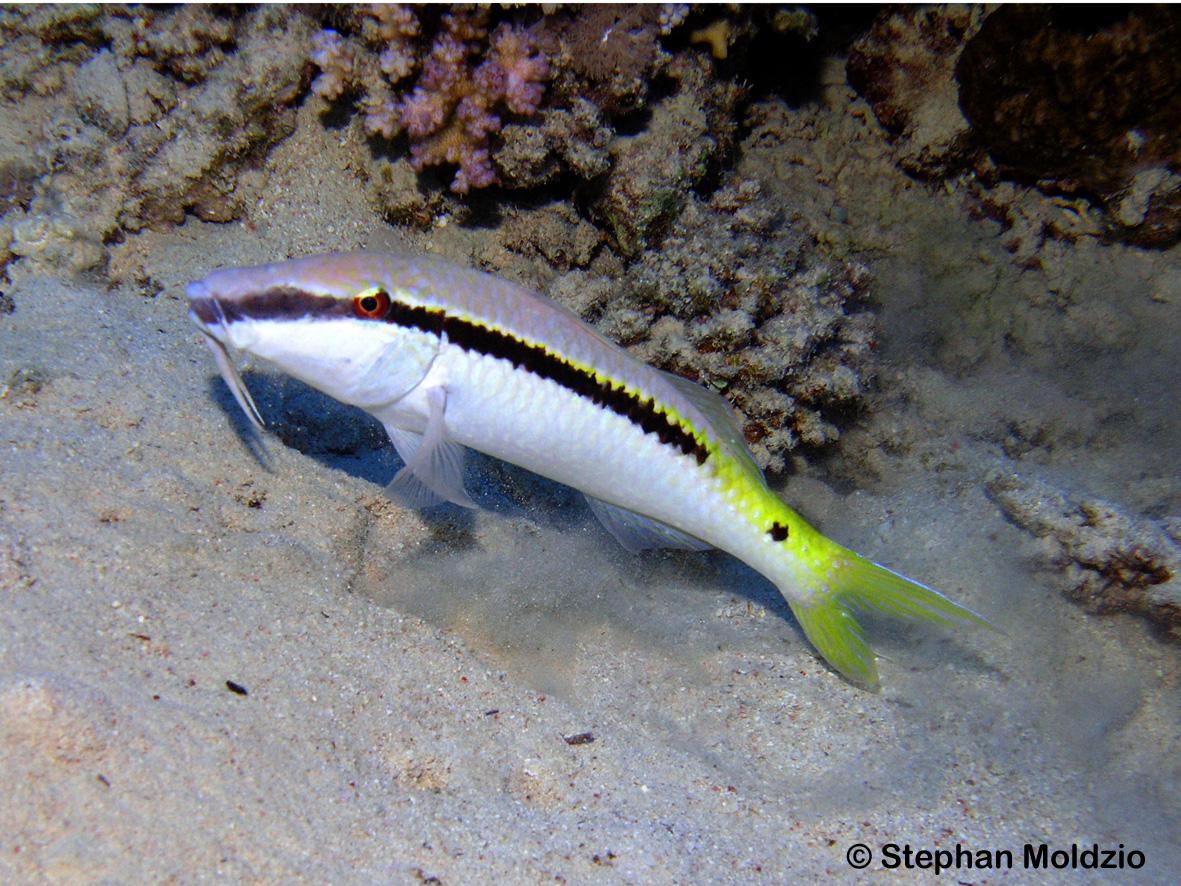
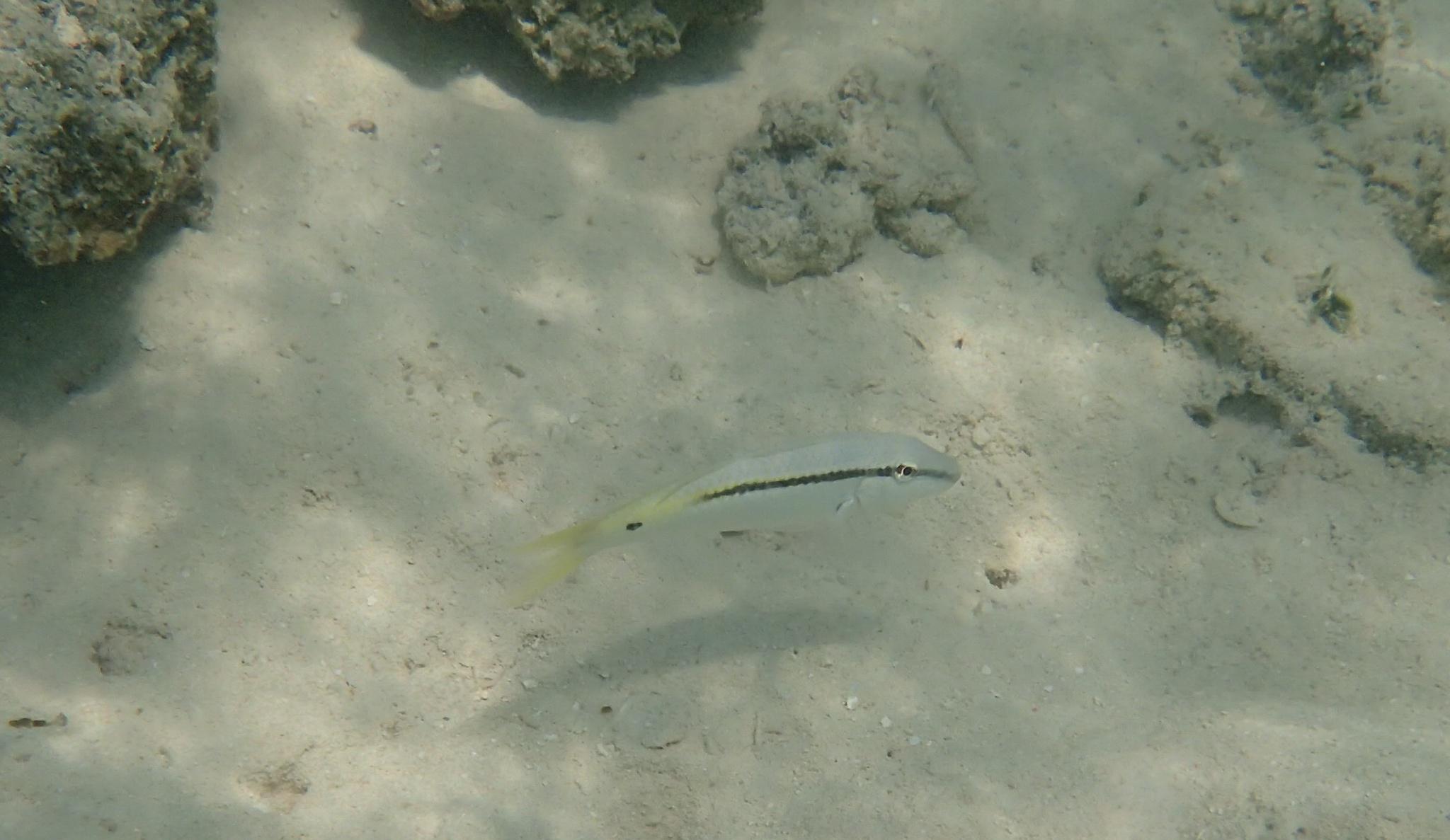
Dorsal spines (total): 8; Dorsal soft rays (total): 9; Anal soft rays: 7. Diagnosis: Pectoral rays 14-17 (usually 16). Gill rakers 7-9 + 23-26 (total 30-34). Body relatively elongate, the depth 3.65-4.2 in SL; head length (HL) 2.9-3.25 in SL; snout length 1.7-1.9 in HL; barbel length 1.4-1.5 in HL; longest dorsal spine 1.5-1.7 in HL; penultimate dorsal ray 1.15-1.25 in length of last dorsal ray; pectoral-fin length 1.4-1.65 in HL; pelvic-fin length 1.4-1.6 in HL. A broad black stripe is present from side of upper lip through eye along upper side of body, ending beneath posterior part of second dorsal fin; body above stripe grayish green, the scale edges yellow; body below stripe white, the scale edges narrowly reddish; caudal peduncle yellow dorsally with an irregular roundish black spot, mostly above lateral line; caudal fin yellow; second dorsal and anal fins with narrow blue and yellow stripes; peritoneum pale (Ref. 54393).
Common Names
Taxonomic Hierarchy
Kingdom: Animalia
Phylum: Chordata
Class: Teleostei
Order: Mulliformes
Family: Mullidae
Genus: Parupeneus
Species: Parupeneus forsskali (Fourmanoir & Guézé, 1976)
Climate Zone
Biology
The most common goatfish in shallow water in the Red Sea. Usually found on sand bottoms near coral reefs (Ref. 3470). Feeds on invertebrates that live on sand (Ref. 13550).
Habitat
brackish
Conservation Status
Least Concern
Threat to Humans
Harmless
Parupeneus forsskali (Fourmanoir & Guézé, 1976)