Parupeneus cyclostomus (Lacepède, 1801)

Description
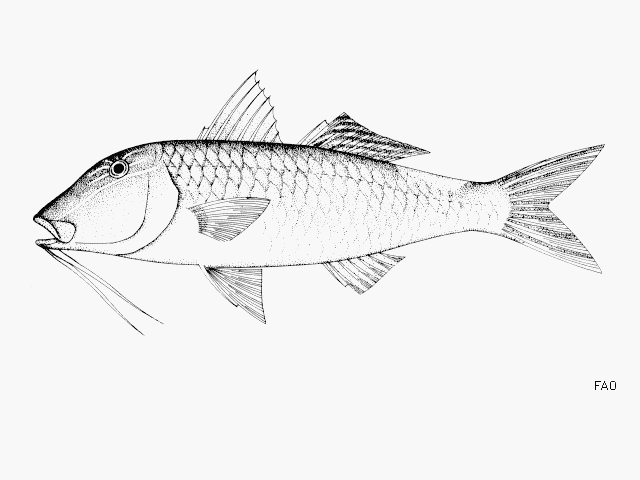
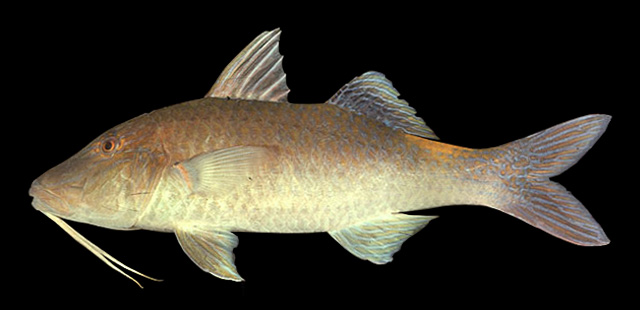
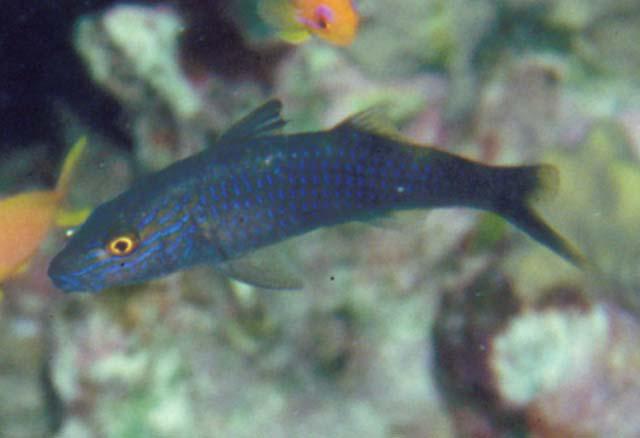
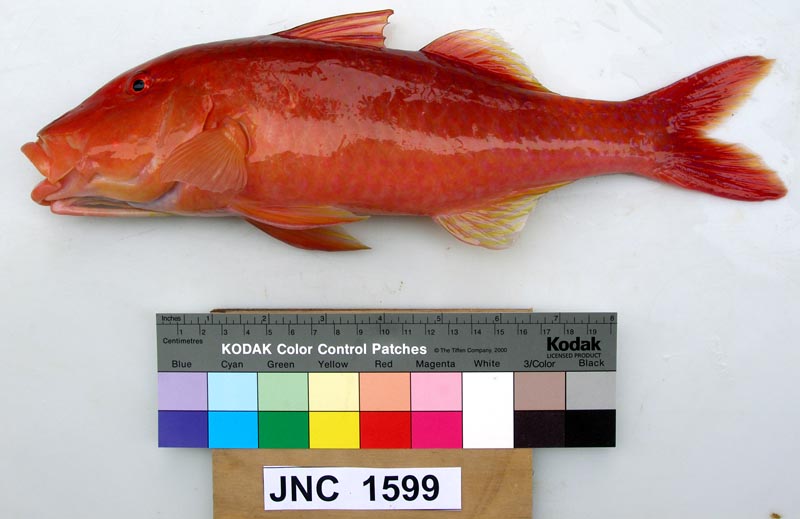
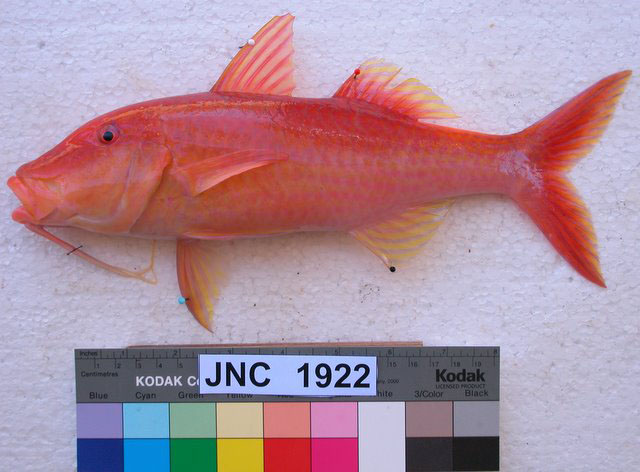
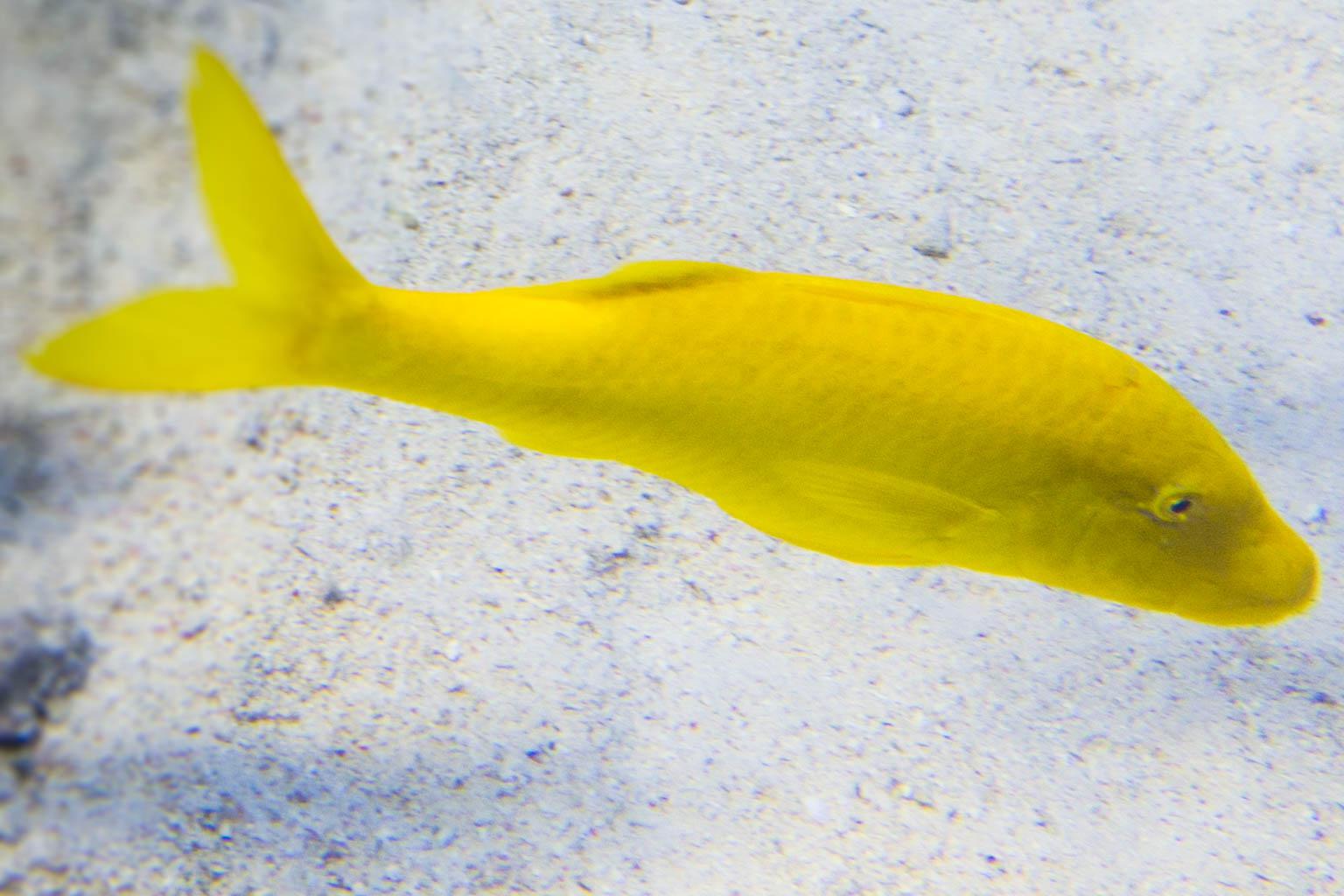
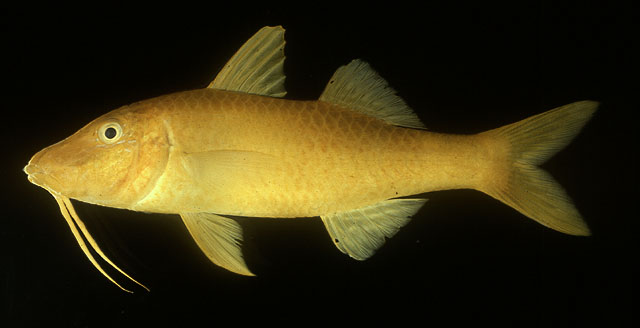
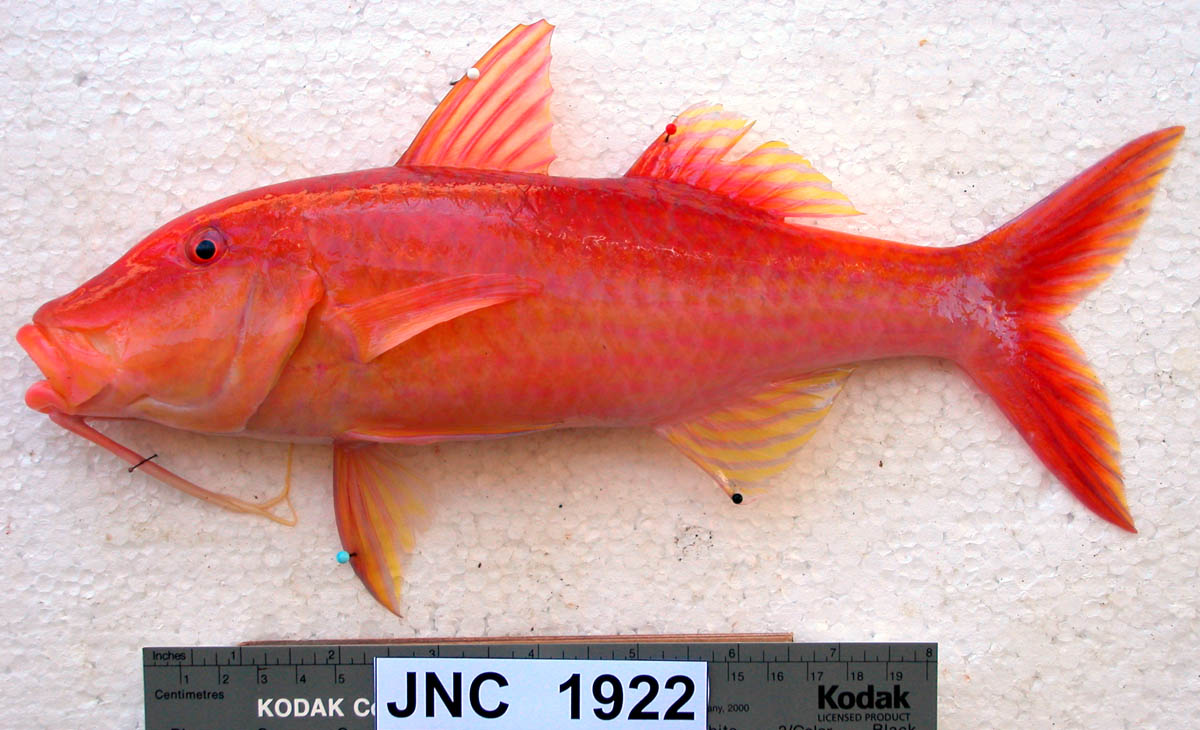
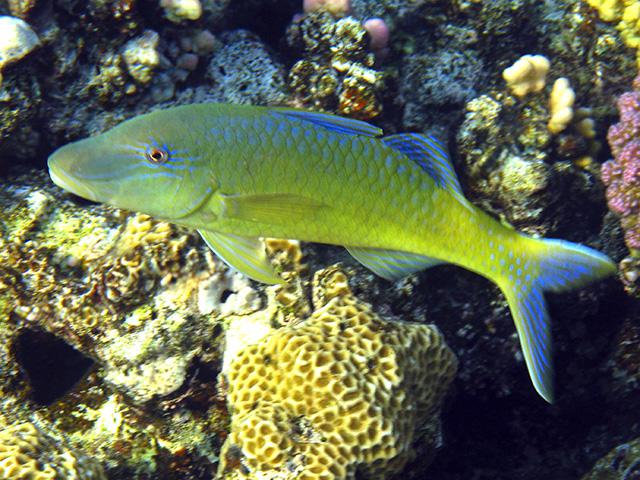
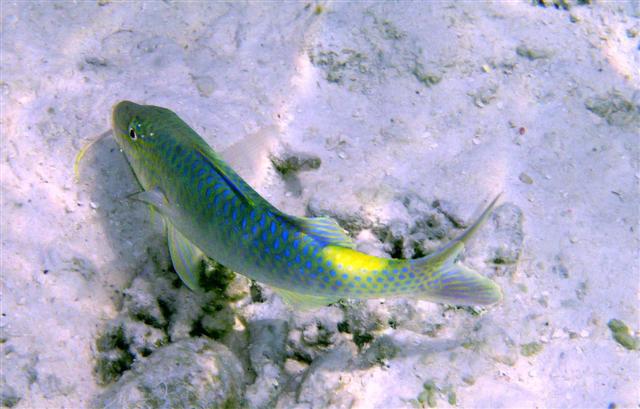
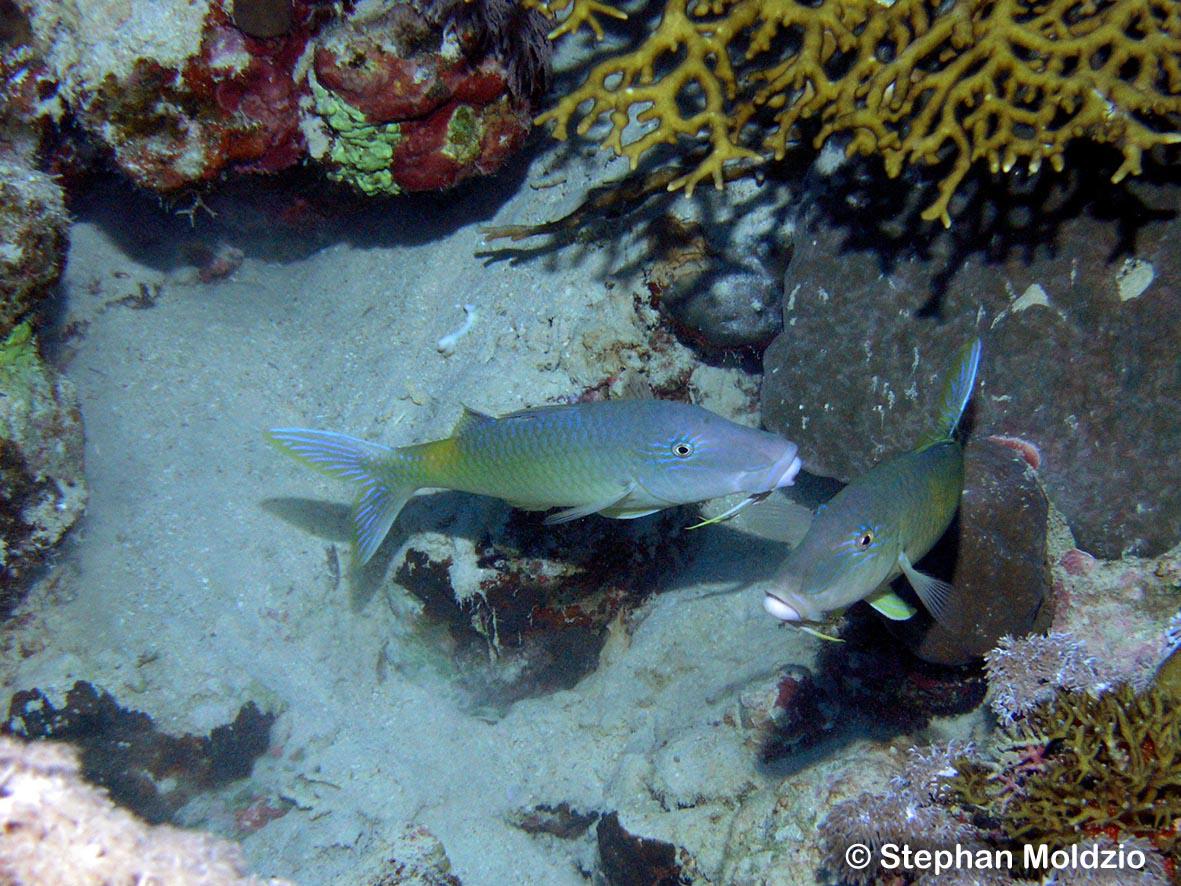
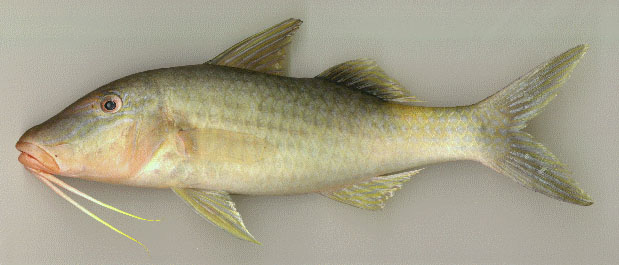
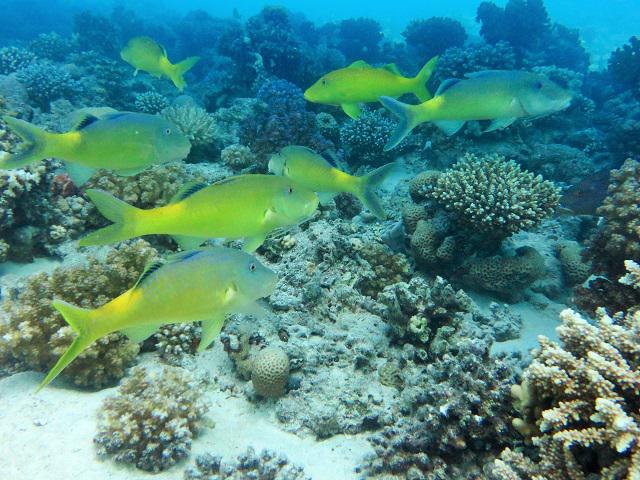
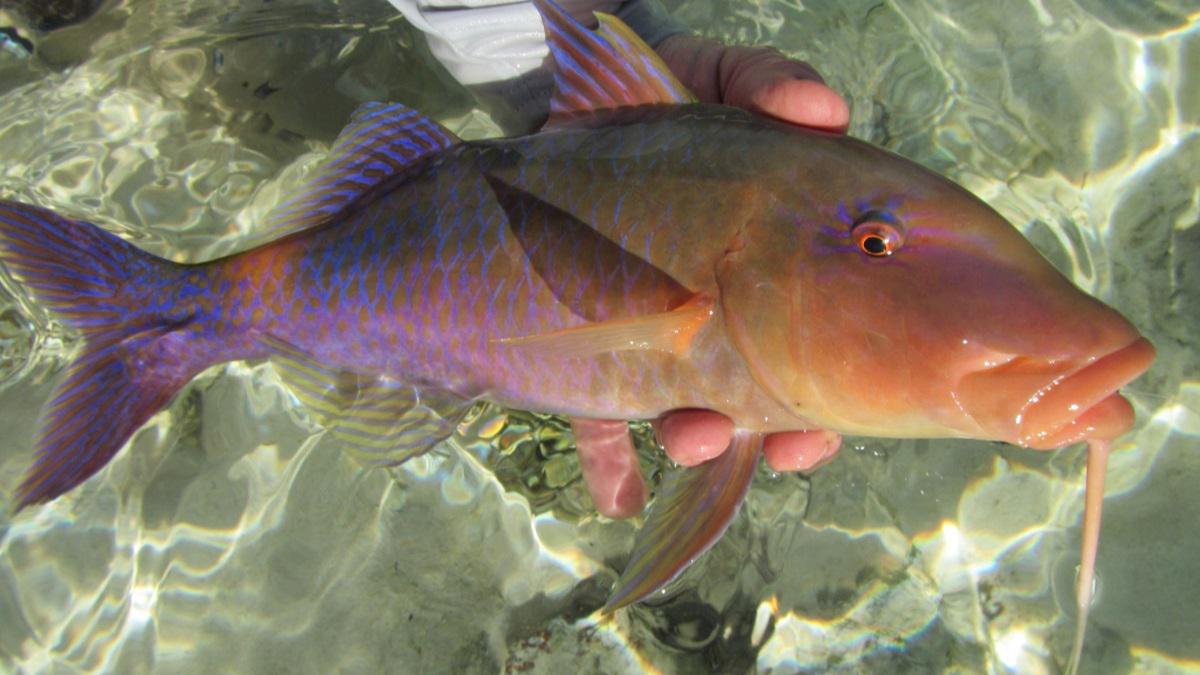
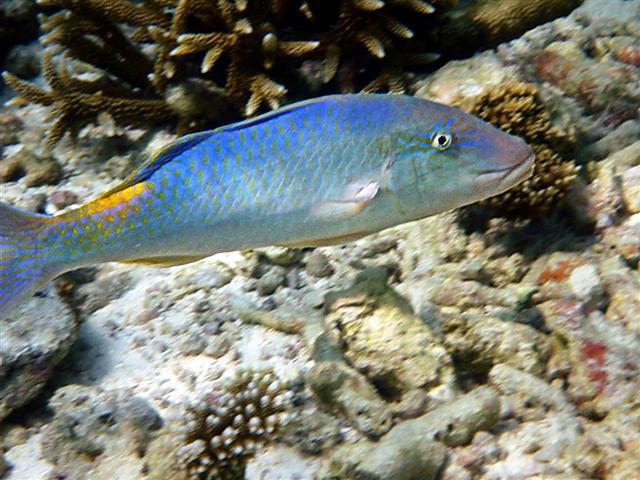
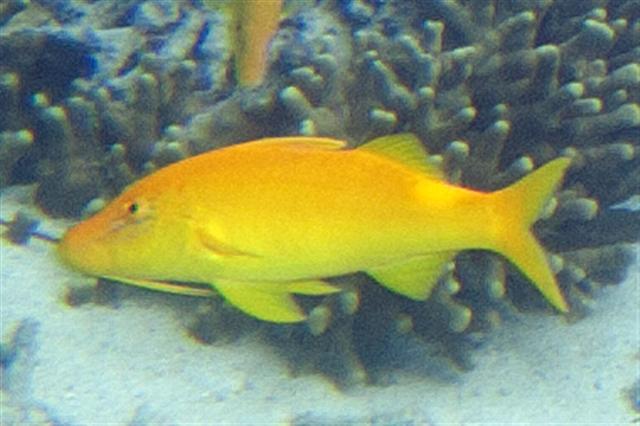
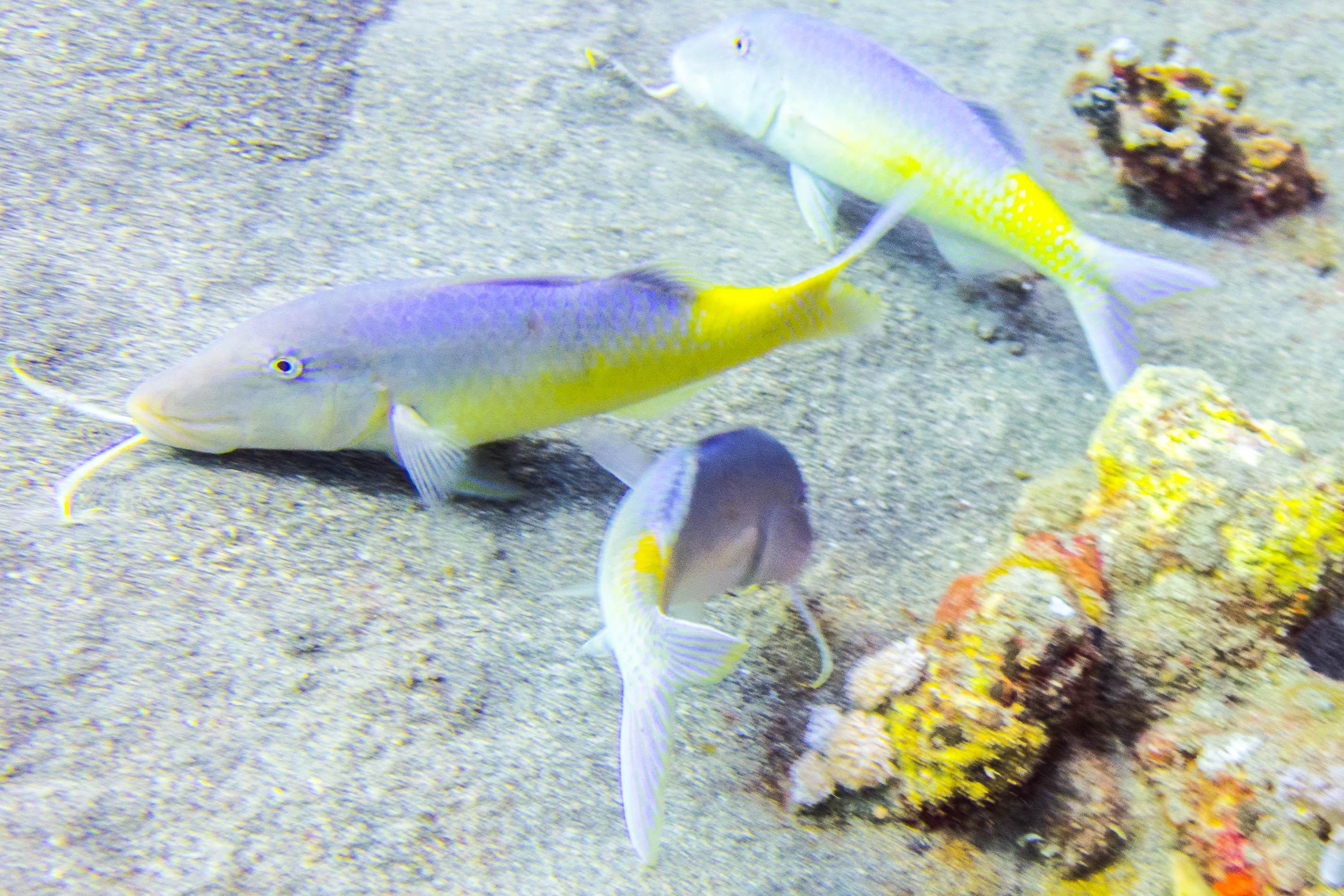
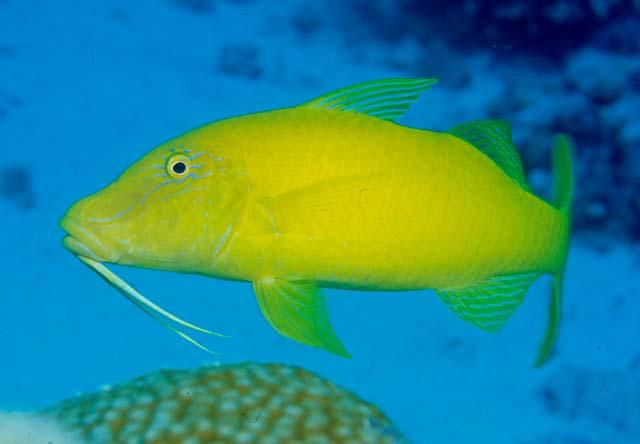
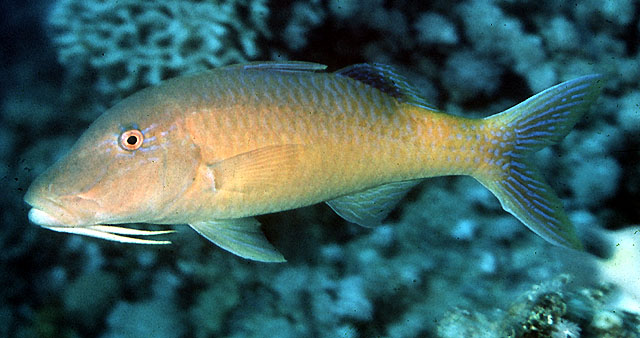
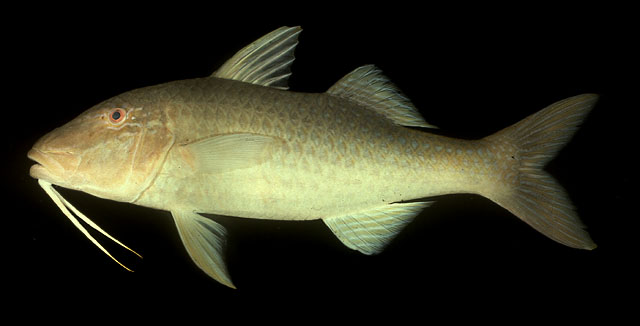
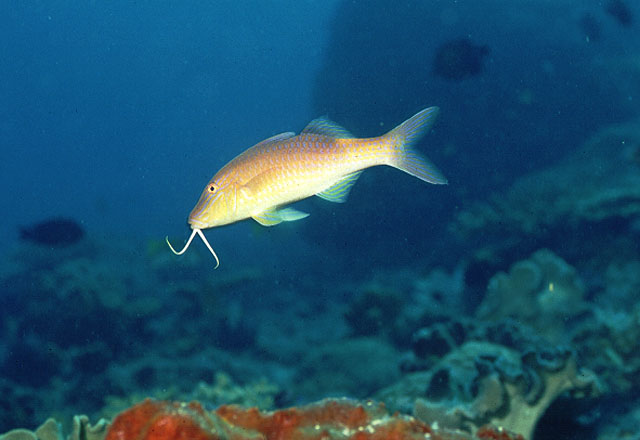
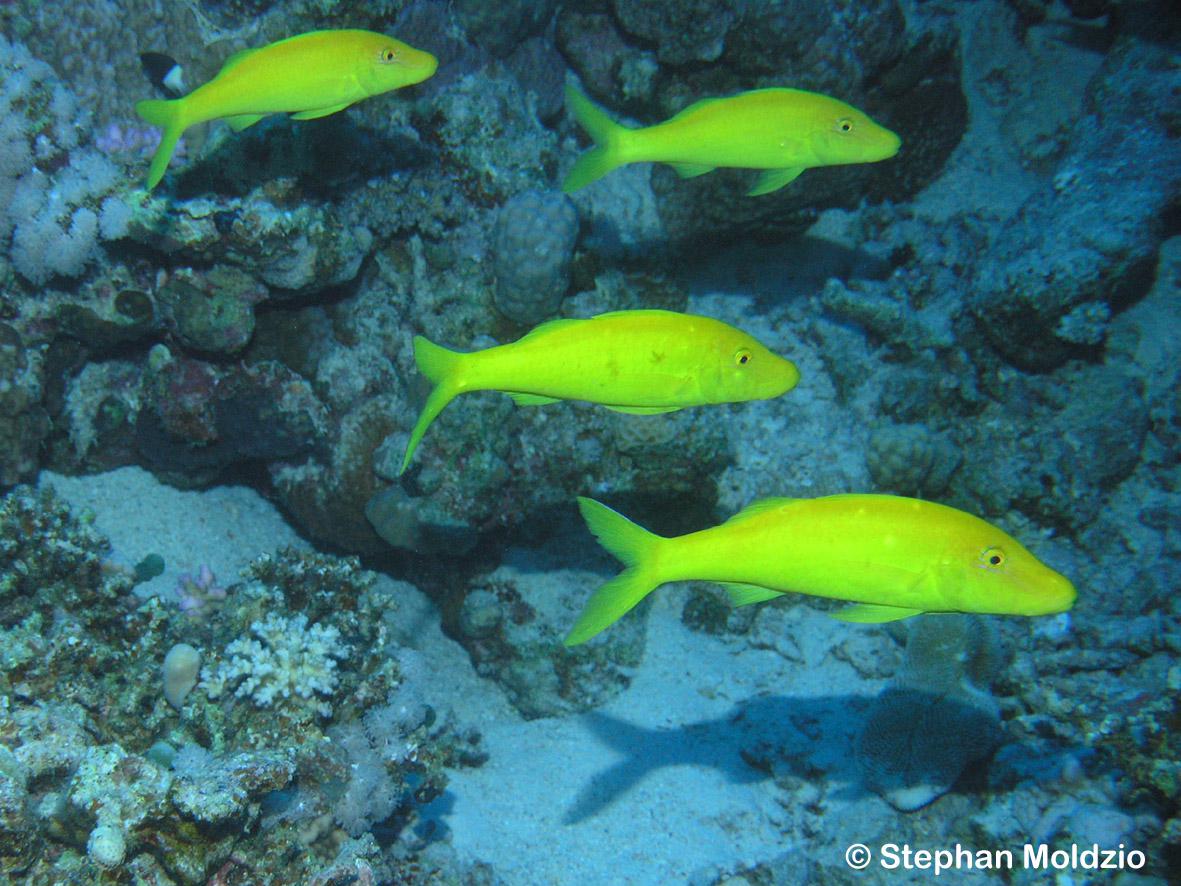
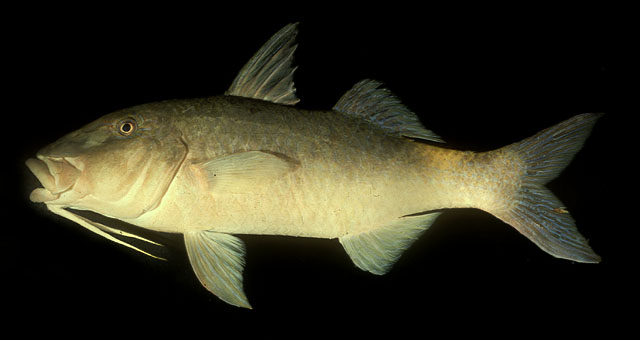
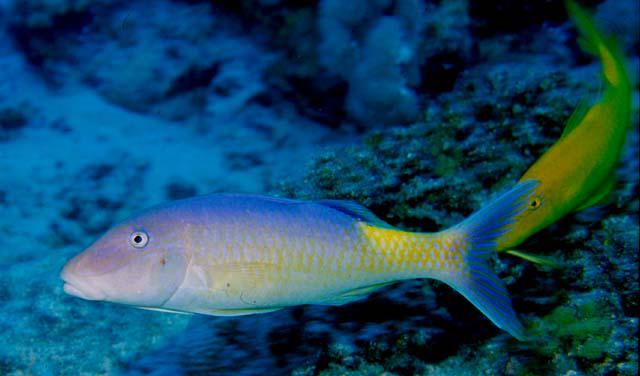
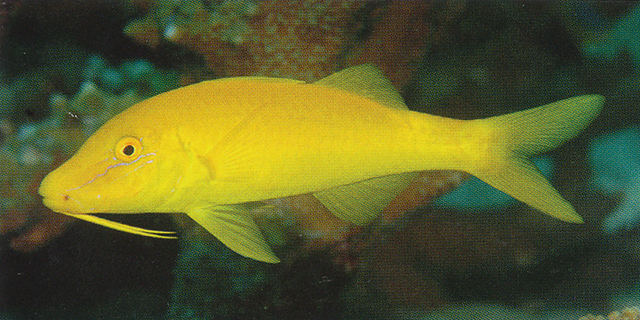
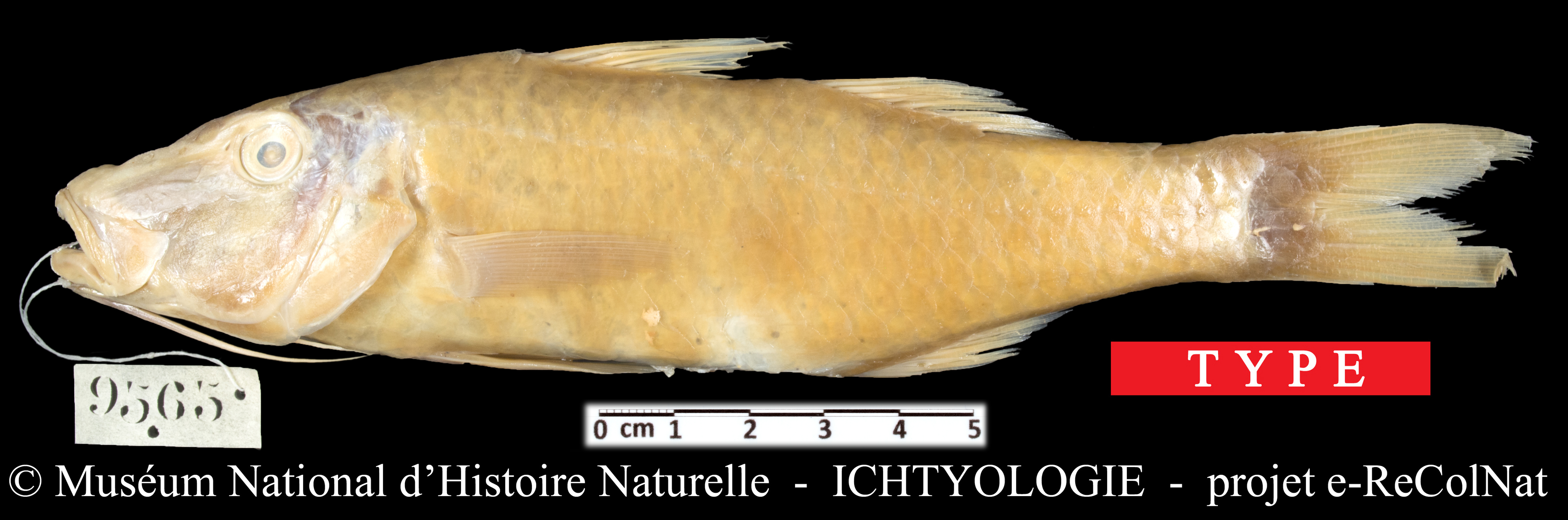
Dorsal spines (total): 8; Dorsal soft rays (total): 9; Anal spines: 1; Anal soft rays: 7. This species is distinguished by the following characters: pectoral rays 16 (rarely 15 or 17); gill rakers 6-7 + 22-26 = 29-33; body depth 3.25-3.8 in SL (body deeper with growth); head length (HL) 2.85-3.1 in SL; snout long, its length 1.61.8 in HL; eye small, the orbit diameter 5.3-8.95 in HL (SL 118-392 mm); barbels very long, 1.15 in HL to longer than head; longest dorsal spine 1.5-1.7 in HL; penultimate dorsal ray 1.1-1.2 in length of last dorsal ray; pectoral-fin length 1.5-1.7 in HL; pelvic-fin length 1.35-1.55 in HL. Colour of large adults yellowish gray, edges of the scales bright blue except ventrally, edges more broadly blue posteriorly; a large, hemispherical, saddle-like, yellow spot covering most of upper half of caudal peduncle; region around eye yellow with radiating short narrow blue bands; caudal fin with longitudinal blue bands; second dorsal and anal fins with narrow oblique blue bands; a second smaller color phase entirely yellow, with dorsal peduncular spot sometimes apparent by being brighter yellow than rest of body (Ref. 54393).
Common Names
Taxonomic Hierarchy
Kingdom: Animalia
Phylum: Chordata
Class: Teleostei
Order: Mulliformes
Family: Mullidae
Genus: Parupeneus
Species: Parupeneus cyclostomus (Lacepède, 1801)
Climate Zone
Biology
Found on coral (Ref. 58652), rocky, or rubble bottoms of reef flats, lagoons, and seaward reefs (Ref. 3921). Benthopelagic (Ref. 58302). Juveniles form schools, adults usually solitary. Feed primarily on small fishes, crustaceans, peanut worms, shrimps, crabs, octopi, and small gastropods during the day (Ref. 3921). Minimum depth reported taken from Ref. 128797.
Habitat
associated
Conservation Status
Least Concern
Threat to Humans
Reports of ciguatera poisoning
Parupeneus cyclostomus (Lacepède, 1801)