Parupeneus crassilabris (Valenciennes, 1831)
Description
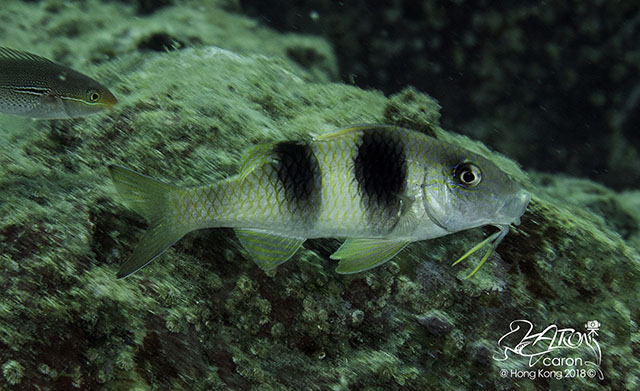
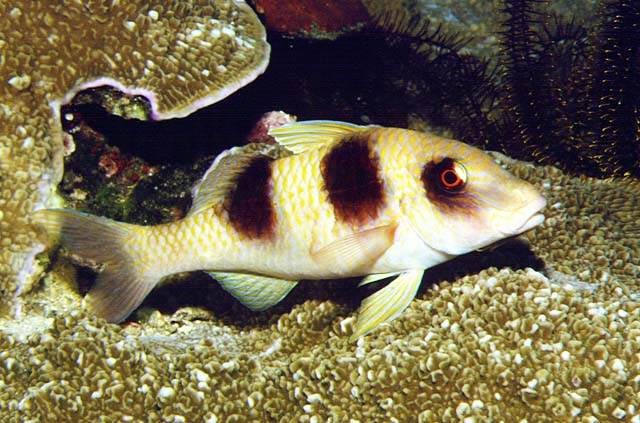
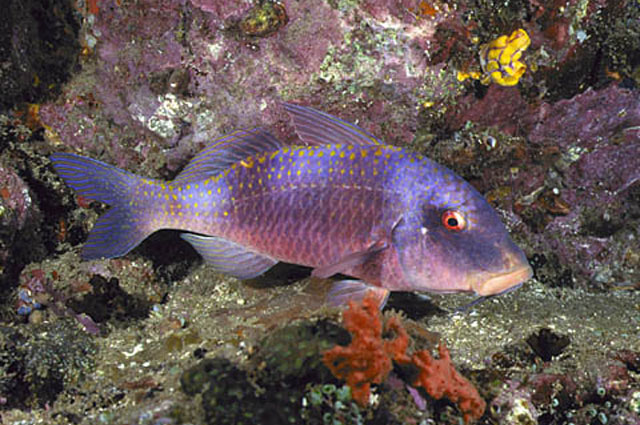
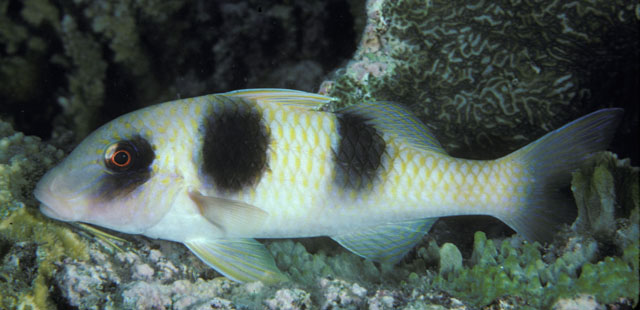
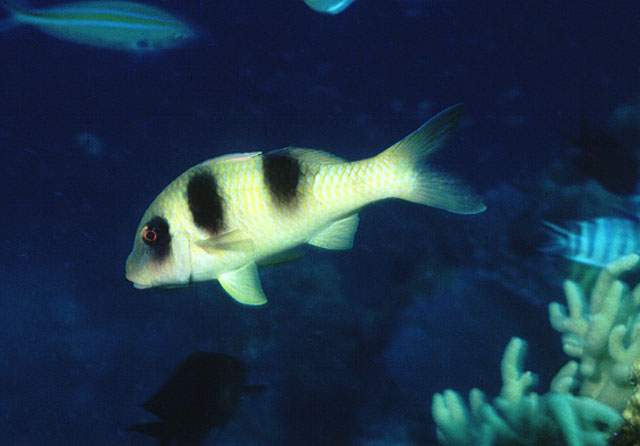
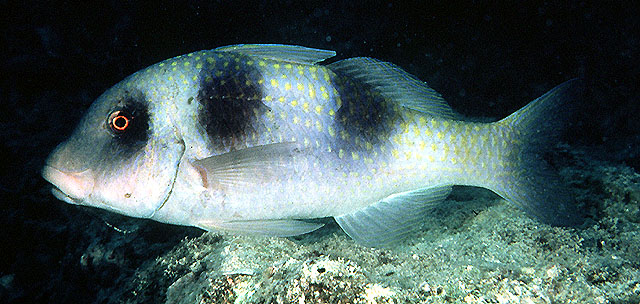
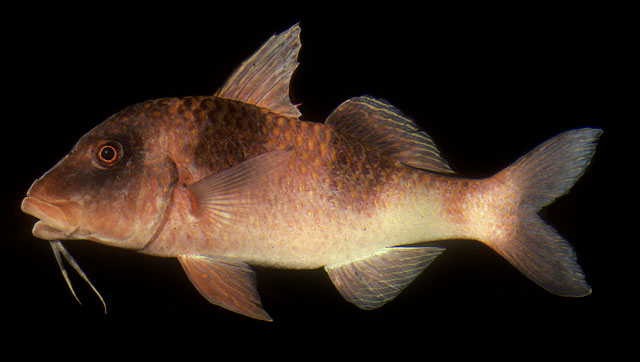
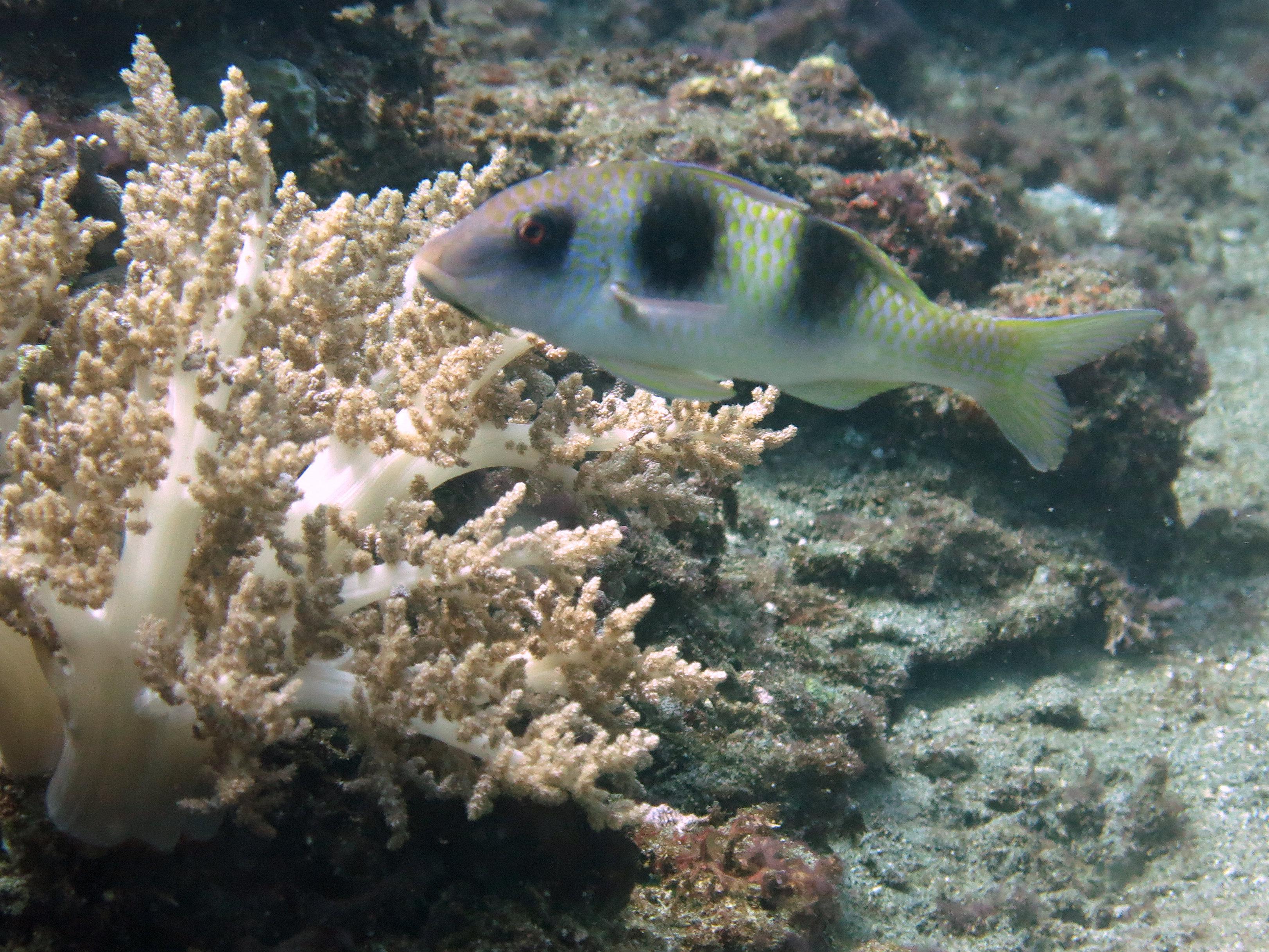
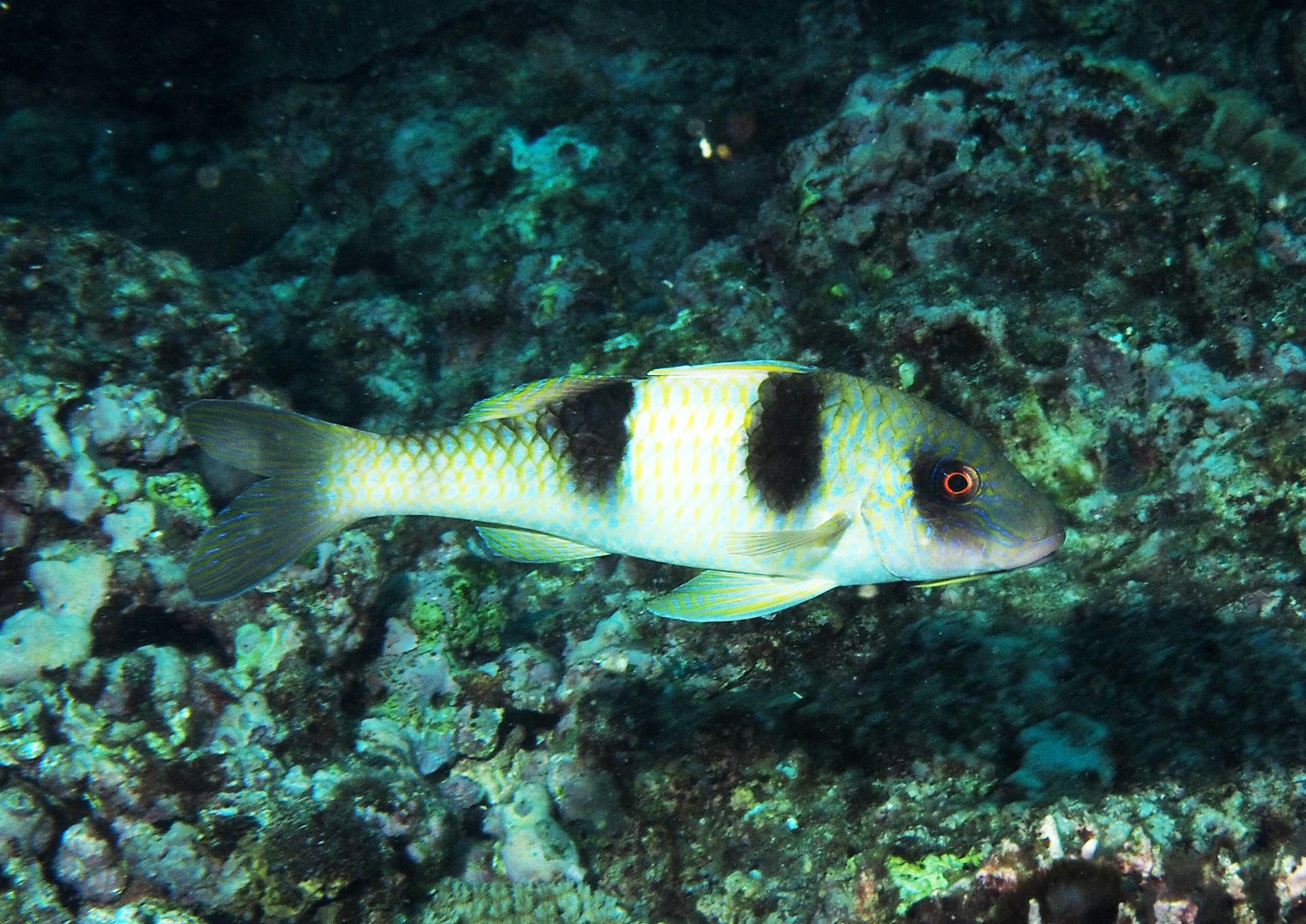
Dorsal spines (total): 8; Dorsal soft rays (total): 9; Anal spines: 1; Anal soft rays: 7. Diagnosis: Pectoral rays 15-16 (rarely 15). Gill rakers 7-10 + 27-31 (total 35-40). Body depth 2.653.1 in SL (deeper body with growth); head length (HL) 2.8-3.15 in SL; snout length 1.75-1.95 in HL; barbels short, 1.45-1.75 in HL; longest dorsal spine 1.4-1.6 in HL; penultimate dorsal ray 1.2-1.5 in length of last dorsal ray; pectoral-fin length 1.25-1.45 in HL; pelvic-fin length 1.2-1.4 in HL. Color white, the scale edges yellow or yellowish gray, the posterior edge often enlarged to a distinct yellow spot; upper two-thirds of body with two very large oval black spots, the first centered below anterior spines of first dorsal fin and the second below anterior half or more of second dorsal fin and extending into basal part of fin; a large black spot on head behind and enclosing part of eye, extending diffusely toward comer of mouth; broad outer part of second dorsal and anal fins blue with narrow oblique dark-edged yellow bands; caudal fin streaked with dull blue and yellow; inner rim of iris bright red (Ref. 54393).
Common Names
Taxonomic Hierarchy
Kingdom: Animalia
Phylum: Chordata
Class: Teleostei
Order: Mulliformes
Family: Mullidae
Genus: Parupeneus
Species: Parupeneus crassilabris (Valenciennes, 1831)
Climate Zone
Biology
Coastal to outer reef habitats. Juveniles usually in shallow surge channels on reef slopes adjacent to drop-offs. Adults usually seen resting on corals on reef crests (Ref. 48636).
Habitat
associated
Conservation Status
Least Concern
Threat to Humans
Harmless
Parupeneus crassilabris (Valenciennes, 1831)